
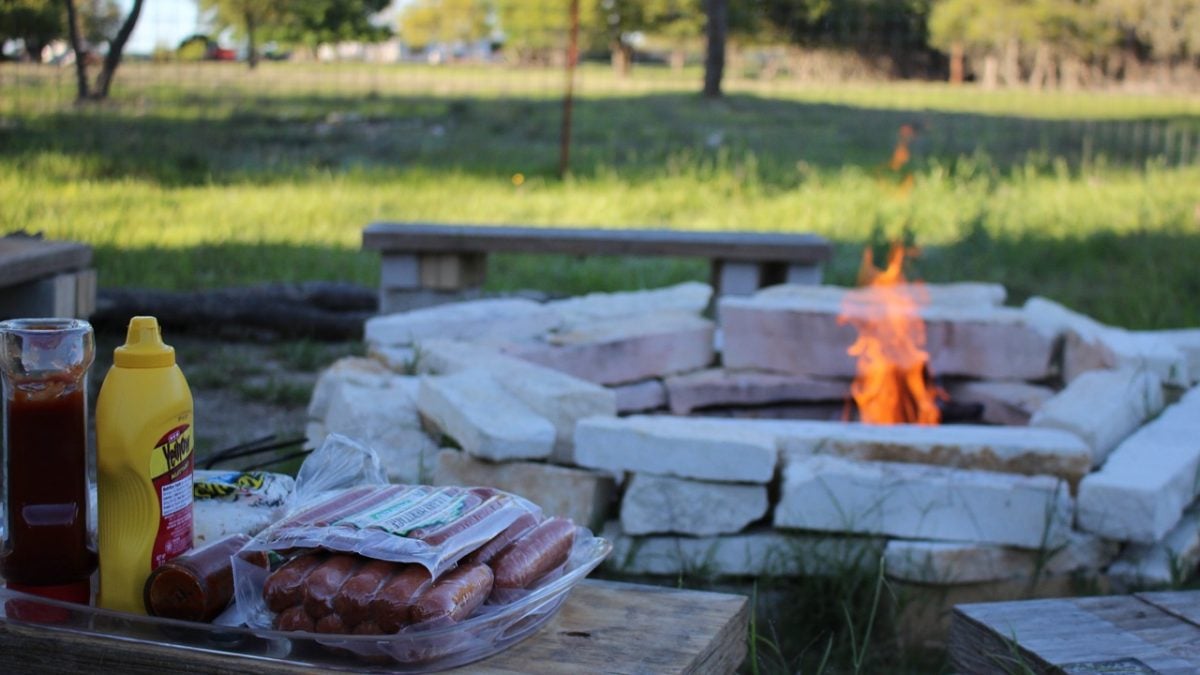
Updated October 2026. Placement and burning rules checked against the Ohio Fire Code text published by the City of Oxford, Ohio, and the EPA’s Burn Wise guidance, read October 29, 2026.
To choose a backyard fire pit, decide on the fuel first (wood, propane or natural gas), then the size and seating, then where it can legally sit. Placement rules are local. As an example, the Ohio Fire Code, as quoted by the City of Oxford in October 2026, keeps recreational fires at least 25 feet from a structure or anything combustible, and requires someone to watch the fire until it’s out.
Jump to: 🪜 Fuel type · 📸 Size and seating · 📍 Placement rules · ⏱️ Burning and care · 🏠 Buying and selling · ❓ FAQ
Key takeaways
- Wood gives the crackle; propane and natural gas give less smoke and an off switch.
- Ohio’s fire code: recreational fires 25 feet from structures; fires in approved containers at least 15 feet.
- Someone must attend the fire, with an extinguisher rated at least 4-A, a garden hose or similar on hand (Ohio Fire Code 307.5).
- The EPA’s Burn Wise guidance says to burn seasoned wood at about 20 percent moisture, and never trash or construction waste.
A fire pit is the cheapest way to make a backyard feel like a place people want to stay. Friends gather, phones go down, and somebody starts telling stories; the Los Angeles Times covered research suggesting firelight conversation may have shaped how early humans shared knowledge. It also stretches the outdoor season into colder weather. Here’s how to pick one you’ll still like in five years.
Wood, propane or natural gas: which fire pit fuel is right?
Wood-burning. Real flames, real smell, real marshmallows. It’s also the most smoke, the most cleanup and the most rules. Wood pits come as steel bowls, cast-iron kettles, stone or block rings, and laser-cut steel designs. Shops like MAX Fire Pits show how far custom cut-steel styles go.
Propane. You light it with a knob and turn it off when you’re done. There’s no ash, and a 20-pound tank tucks under many fire tables. The heat is gentler than a big wood fire, and you’ll be swapping tanks.
Natural gas. The same convenience without tanks, but you need a gas line run by a licensed pro, and the pit stays where it’s plumbed. It’s the most permanent choice.
The EPA’s Burn Wise program notes that switching to natural gas or propane reduces harmful air pollutants, and that kits to convert existing fire rings to gas are sold at hearth and patio stores. That’s worth knowing if you have neighbors close by or anyone at home with asthma.
What size fire pit do you need?
Start with the people, not the pit. Count how many you usually host, then plan the seating circle and work inward.
| Typical group | Pit style that fits | Space to plan for |
|---|---|---|
| 2–4 people | Small steel bowl or tabletop propane | A compact patio corner with chairs around it |
| 4–6 people | Mid-size wood ring or propane fire table | A dedicated seating circle |
| 6–10 people | Large built-in stone or gas pit | A full patio or gravel pad |
These are our rough planning ranges, not a code. Leave a clear walkway behind the chairs so nobody squeezes past the fire. Low fire tables work for drinks and conversation. Taller, deeper bowls are better for real wood fires and cooking.
Material matters too. Thin steel is light and cheap but can rust through in a few seasons. Cast iron and thick steel last longer. Stone and concrete block look built-in and handle heat well; a steel insert ring protects the blocks. If you’re building a pad first, compare surfaces in our guide to concrete vs stone patio materials.
Where can you put a fire pit in your yard?
Your local fire code decides, and many cities add their own ordinances, permits or seasonal burn bans. Here’s one real example, from the Ohio Fire Code text the City of Oxford, Ohio, publishes for residents:
- Recreational fires can’t be within 25 feet of a structure or combustible material, and anything that could spread fire within 25 feet must be cleared before lighting (307.4.2).
- Fires in approved containers need at least 15 feet from a structure (307.4, exception 1).
- Attendance: the fire must be constantly attended until it’s out, with at least one portable extinguisher rated 4-A, or other approved equipment such as dirt, sand, a water barrel or a garden hose, ready to use (307.5).
Other places use different numbers, so call your fire department’s non-emergency line or check your city’s website. HOAs and leases can be stricter still. A few placement habits help everywhere: flat, level ground; nothing overhead (branches, eaves, umbrellas, pergolas); and a clear area around the pit with no dry leaves, mulch or wood piles.
Gas pits follow the manufacturer’s clearances and your local gas and building codes. Don’t put any fire pit on a wood deck unless the product’s instructions say it’s rated for that use.
How do you burn safely and care for a fire pit?
The EPA’s Burn Wise guidance for backyard fires is short and practical:
Sell smarter
List your home on the MLS from $99
A flat fee instead of a percentage, and $0 to Beycome at closing. You stay in control of your sale.
Sell your home →Buy smarter
Get up to 2% back at closing
On homes listed by other agents, Beycome credits you up to 2% of the price at closing (1% kept, $1,499 minimum; not on FSBO homes or homes listed by Beycome sellers).
Buy a home →- Burn only seasoned, dry wood. A moisture meter should read about 20 percent.
- Cover stacked firewood, but keep air moving so it dries.
- Never burn green wood, construction waste, plastic, garbage or yard waste.
- Skip the fire on air quality alert days, and think about wind direction and your neighbors.
Putting a wood fire out takes longer than lighting it. Stop adding wood about an hour before you want to go inside. Spread the embers with a shovel, soak them with water, stir, and soak again until nothing hisses. Feel for heat with the back of your hand held above the ashes, not on them. If it’s still warm, it isn’t out. A gas pit is easier: turn the knob off, then close the valve on the tank or the line.
Kids and pets need a rule they can remember. Ours is simple: nobody steps inside the ring of chairs while the fire is lit. A spark screen on wood pits stops most popping embers from landing on shoes and blankets.
Then the care routine. Let ashes cool completely before you scoop them into a metal can. Keep a cover on steel pits when they’re not in use, since standing rainwater is what rusts them out. Check gas pits for cracked hoses and clogged burners each spring. A little high-heat paint on a steel bowl every couple of years keeps it looking new.
Want to build your own instead of buying? Our step-by-step guide shows how to Update Your Backyard Experience With A Homemade Firepit. For the rest of the yard, see 4 Ways To Improve Your Backyard and Backyard Bonanza.
Does a fire pit matter when you buy or sell a home?
It can help a yard photograph like a place to live, not just a lawn. Outdoor first impressions count: in NAR’s March 2023 Remodeling Impact Report on outdoor features, 97% of REALTORS® said curb appeal is important in attracting a buyer. A clean, safe fire pit area with chairs set around it is easy, cheap staging. Our guide to staging your outdoor space for a home sale covers the rest, and How to Make Your Outdoor Space More Luxurious has bigger ideas.
Shopping for a house with a yard you’ll actually use? Beycome’s buyer program is open to every buyer on homes listed by other agents. There’s no upfront fee; Beycome keeps 1% of the price (minimum $1,499) and credits the rest of the buyer-agent commission at closing, with lender approval. The credit can’t apply where no buyer-agent commission is offered, like most FSBO homes, or on homes listed by Beycome sellers. Before you fall for a built-in gas pit, ask whether it was permitted.
Selling? Beycome lists homes on the major home search sites and the MLS with flat fee MLS packages from $99 and $0 Beycome fee at closing, in 17 states and DC. 22,000+ homeowners have sold with Beycome, with over $225 million saved (Beycome internal data, October 2026).
Backyard fire pits: questions
How far should a fire pit be from a house?
It depends on your local code. Ohio’s fire code, for example, says 25 feet for recreational fires and 15 feet for fires in approved containers. Check your city’s rules.
Is a propane fire pit better than wood?
Propane is easier, cleaner and quicker to shut off. Wood gives bigger heat and the classic crackle. The EPA notes gas reduces harmful air pollutants.
Can I put a fire pit on a wood deck?
Only if the product’s instructions say it’s rated for that use and your local code allows it. Most wood-burning pits are not.
What wood should I burn in a fire pit?
Seasoned, dry firewood at about 20 percent moisture, per the EPA. Never burn green wood, trash, plastic or construction waste.
Do I need a permit for a backyard fire pit?
Some cities require one or ban open burning at certain times. Call your fire department’s non-emergency line before you build.
Should I leave a fire pit burning overnight?
No. Codes like Ohio’s require constant attendance until the fire is fully out.
Fire code distances are an example from the Ohio Fire Code (rule 1301:7-7-03) as published by the City of Oxford, Ohio; your local rules may differ. Burning guidance from the U.S. EPA Burn Wise program (no longer updated since October 30, 2025); curb appeal figure from NAR’s Remodeling Impact Report: Outdoor Features (March 2023); all read October 29, 2026. General information, not legal advice.
Beycome prices as of October 2026. “$0 at closing” means no Beycome fee at closing; other closing costs still apply. Buyer credit: no upfront fee; Beycome keeps 1% of the price (minimum $1,499); credited at closing with lender approval; not on FSBO homes or homes listed by Beycome sellers.
Sources
- City of Oxford, Ohio, Fire Department FAQs: Recreational Fires, read October 29, 2026.
- U.S. EPA Burn Wise, Backyard recreational fires, read October 29, 2026.
- NAR, Remodeling Impact Report: Outdoor Features, March 2023, read October 29, 2026.
- Beycome, listing package features, October 2026.
Disclosure & Disclaimer
Beycome provides real estate services through affiliated licensed brokerages and has a commercial interest in the services and business models discussed on this blog. Content reflects Beycome’s perspective and may promote our services; it should not be treated as independent or neutral reporting.
Articles are provided for general informational and educational purposes only, not as financial, tax, legal, or investment advice or a recommendation for your particular situation. Reading this blog does not create a brokerage, advisory, or other professional relationship.
Information, opinions, pricing, service descriptions, and comparisons reflect the sources and information available when an article was published or last updated and may change. Although we aim for accuracy, we do not guarantee that all content is complete, current, or applicable to your circumstances. Laws, market conditions, and service availability vary by location. Examples and estimated savings are illustrative, depend on stated assumptions, and do not guarantee individual results.
Verify relevant information directly and consult qualified professionals before making decisions. Beycome services are subject to applicable agreements, eligibility requirements, and state-specific terms.

