
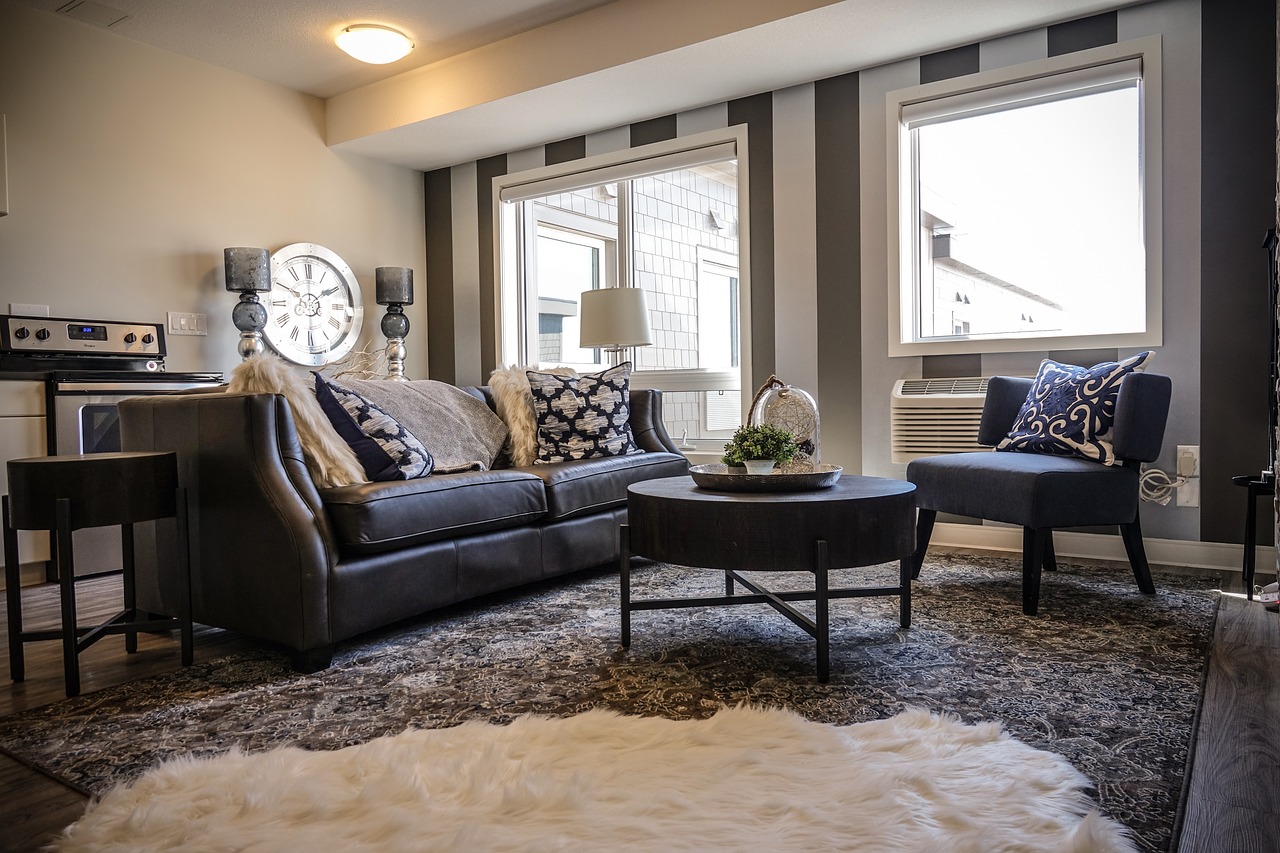
Updated November 2026. How to size, place and pick a living room rug, and how rugs help when you photograph or stage a home for sale.
To choose the right rug for a room, measure the furniture group first, then pick the size, then the color and material. In most living rooms that means an 8×10 rug, with the front legs of every seat on it and 12 to 18 inches of bare floor around it (common designer rule, November 2026). Small rooms often take a 5×8; large ones a 9×12.
Jump to: 📸 Rug sizes · 🛏️ Other rooms · 🪜 Placement · 🎨 Color · 🏠 Materials · 💲 Rugs when selling · ❓ FAQ
Key takeaways
- Measure the seating group, not the room. The rug should reach at least the front legs of every main seat.
- Common sizes are 5×8, 8×10 and 9×12 feet. When you’re between two sizes, the larger one usually looks better.
- The living room is the room most often staged for a sale: 91% of sellers’ agents who stage named it in NAR’s 2025 Profile of Home Staging.
- More than one in four adults 65 or older fall each year, per the National Institute on Aging. A non-slip pad under every rug is cheap insurance.
A rug does a lot of quiet work. It softens sound, protects wood floors, warms up tile, and tells your eye where the living room ends in an open plan. Get the size wrong, though, and even a beautiful rug makes the room look smaller. Here’s how to get it right, and what to do with your rugs if you’re getting ready to sell.
What size area rug do you need for a living room?
Start with a tape measure, not a catalog. Measure the length of your sofa and the space your seating group takes up, from the back of the sofa to the front of the chairs facing it. Then add 6 to 12 inches on each side so the rug extends a little past the furniture.
| Room or setup | Rug size that usually works | Why |
|---|---|---|
| Small living room or apartment (under about 12 x 12 ft) | 5×8 ft | Fits under the coffee table with the sofa’s front legs on it. |
| Standard living room with a sofa and two chairs | 8×10 ft | Front legs of all seats on the rug; room for a walkway. |
| Large room or sectional | 9×12 ft | Holds the whole seating group without looking like an island. |
| Open plan, living area only | 8×10 or 9×12 ft | Defines the zone; leave bare floor between it and the dining area. |
| Odd-shaped room or bay window | Custom size or round rug | Standard rectangles leave awkward gaps. |
A rule of thumb many designers use: leave 12 to 18 inches of floor between the rug and the walls in a typical room, and as little as 8 inches in a small one. That border frames the room. A rug that touches the walls looks like carpet; one that floats in the middle looks lost.
Custom sizes versus standard sizes
Custom rugs make sense when your room has angles, columns or a fireplace hearth that eats into floor space. They cost more and take longer to arrive. For most rectangular rooms, a standard size that’s one step larger than you think you need does the job. If you’re still planning how you plan to use the space, sketch the furniture layout on paper first.
How do you choose the right rug size for any room?
The method is the same everywhere: size the rug to the furniture it serves, then leave a border of floor. These are the starting points designers use most.
| Room | Size that usually works | Rule of thumb |
|---|---|---|
| Living room | 8×10 ft (5×8 small, 9×12 large) | Front legs of every seat on the rug. |
| Bedroom, queen bed | 8×10 ft | About 18 to 24 inches showing on each side and at the foot. |
| Bedroom, king bed | 9×12 ft | Same side border; start the rug just in front of the nightstands. |
| Dining room | Table size plus about 24 inches on every side | Chairs stay on the rug when pulled out. |
| Hallway | Runner, 2.5 to 3 ft wide | A few inches of floor on each side. |
| Entry | 3×5 ft or a round | The door must clear it when it swings. |
If you’re torn between two sizes, tape the outline of the larger one on the floor with painter’s tape and leave it for a day. You’ll know fast whether it fits the way you live in the room.
Where should a rug go under the sofa and chairs?
There are three common layouts, and none is wrong. Pick the one that fits your room and budget.
- All legs on: every piece of furniture sits fully on the rug. It looks rich and pulled together, but it needs a big rug, often 9×12 or larger.
- Front legs on: the front legs of the sofa and chairs sit on the rug, the back legs on the floor. This is the most flexible layout and works with an 8×10.
- Coffee table only: a smaller rug under the coffee table, with furniture around it. It suits small rooms but can make a big room feel choppy.
Center the rug on the seating group, not on the room. If your sofa faces a TV or fireplace, the rug should line up with that focal point. In an open plan, square it with the sofa so the living zone reads as one block.
Keep walkways in mind. A rug edge in the path from the kitchen to the hall gets kicked up and walked on all day. Either pull the rug fully into the seating area or let the walkway run over the rug’s flat middle.
Which rug material works best for a living room?
The material affects how the rug feels, how long it lasts, and how hard it is to clean. It also affects the rug’s environmental footprint, if that matters to you: natural fibers like wool and jute break down over time, while synthetics last longer but are made from plastics.
| Material | Best for | Watch out for |
|---|---|---|
| Wool | Soft feel, long life, resists dirt. | Higher price; some shedding at first; moths. |
| Nylon | Busy rooms, kids and pets. | Can feel less natural than wool. |
| Polyester | Bright colors on a budget. | Flattens faster under heavy traffic. |
| Polypropylene | Spills, basements, playrooms. | Less plush; can look shiny. |
| Jute or sisal | Natural texture, coastal looks. | Rough underfoot; stains are hard to remove. |
| Viscose | Silky sheen at a lower price. | Water marks and wear in busy rooms. |
| Leather or cowhide | Low-traffic spots, a warm natural look, wipe-clean spills. | Fades in strong sun; can’t be soaked; higher price. |
For a living room that gets used every day, wool or nylon is the usual pick. If you have pets or small kids, a washable or low-pile rug saves a lot of stress. Browse a wide range of area rugs to compare sizes and prices before you decide, and check the pile height: low pile is easier to vacuum and safer for chair legs and walkers.
Are leather rugs a good choice?
They can be. Leather rugs, often woven from strips or made from a single cowhide, wipe clean and don’t trap dust the way a deep pile does. They’re best by a sofa or in a study, out of direct sun. Avoid them in a spot that gets wet, like an entry in a rainy climate.
How do I select a rug color that complements my flooring?
Go for contrast with the floor, then harmony with the room. A rug that matches the floor tone disappears; one that contrasts frames the seating area.
- Dark wood floors: lighter rugs, such as cream, light gray or soft blue.
- Light wood or white oak: deeper tones, like rust, navy, charcoal or a rich pattern.
- Gray tile or concrete: warm colors and texture, like wool in ivory, terracotta or a jute weave.
- Busy floors, such as patterned tile: a solid or low-pattern rug.
Color and pattern
Pull one color from the room you already have, such as the sofa, curtains or a piece of art. A patterned rug hides crumbs and pet hair. A solid rug calms a room with busy furniture. If you’re unsure, look at our ideas on interior design you can do yourself, or our guide to choosing a living room rug for more style examples.
How do you keep a rug safe and in place?
A rug pad is the one accessory you shouldn’t skip. It keeps the rug from sliding, stops corners from curling, and protects the floor underneath. The National Institute on Aging lists tripping on a rug among the simple accidents behind falls, and says more than one in four people age 65 or older fall each year.
Sell smarter
List your home on the MLS from $99
A flat fee instead of a percentage, and $0 to Beycome at closing. You stay in control of your sale.
Sell your home →Buy smarter
Get up to 2% back at closing
On homes listed by other agents, Beycome credits you up to 2% of the price at closing (1% kept, $1,499 minimum; not on FSBO homes or homes listed by Beycome sellers).
Buy a home →Use a pad that’s an inch or two smaller than the rug on every side so it doesn’t show. Tape down curled corners, and skip small throw rugs on stairs or at the top of a staircase. If an older parent visits or lives with you, check every rug edge in the walking path.
For bedrooms, where you want softness at the side of the bed, see our tips on choosing a bedroom carpet. For more finishing touches, browse these decor ideas for a new home.
Should you keep your rugs when selling your home?
Yes, usually, and here’s why. Listing photos are the first showing of your home. A well-sized rug makes a living room look finished and gives buyers a sense of scale. In NAR’s 2025 Profile of Home Staging, 83% of buyers’ agents said staging made it easier for buyers to picture the home as their own, and the living room was the most staged room, at 91%.
A few rules for rugs in a home you’re selling:
- Roll up rugs that are worn, stained or too small. A bare, clean floor beats a tired rug.
- If you have hardwood, show it. A rug that leaves a wide border of wood lets buyers see the floor they’re paying for.
- Pick neutral colors for photos. Bold patterns can pull the eye away from the room.
- Remove rugs that hide floor damage. A buyer’s inspector will lift them, and you’ll have to disclose known defects anyway.
Our home staging tips cover the rest of the room, and our guide to listing photos that sell shows how to shoot it.
Do rugs stay with the house?
Area rugs are personal property, so they usually leave with you. Wall-to-wall carpet is attached and usually stays. If a buyer wants your rug, write it into the contract or a separate bill of sale so there’s no surprise on moving day. Deciding what to leave behind? Our guide on selling a house furnished or unfurnished helps.
When the room is ready, a flat fee MLS listing with Beycome puts those photos on your local MLS for $99 in most states, with $0 at closing. The Basic package includes the maximum number of photos the MLS allows, so the living room you just styled gets seen.
Frequently asked questions
How do I choose the right rug for a room?
Measure the furniture group, choose a size that reaches at least the front legs of each seat with a border of floor showing, then pick a color that contrasts with the floor and a material that suits the traffic.
How do I select a rug color that complements my flooring?
Contrast it: light rugs on dark wood, deeper tones on light wood, warm colors and texture on gray tile or concrete.
Are leather rugs good for a living room?
Yes, in a dry spot out of strong sun. They wipe clean and don’t trap dust, but they fade in sunlight and can’t be soaked.
What is the most common area rug size for a living room?
8×10 feet. It lets the front legs of a sofa and two chairs sit on the rug in a standard living room, with a border of bare floor around it.
Is a 5×8 rug too small for a living room?
In a small room or apartment, no. In a standard room with a full sofa and chairs, a 5×8 often floats under the coffee table and makes the room look smaller.
How do custom rugs compare to standard sizes?
Custom rugs fit odd shapes, bay windows and hearths, but cost more and take longer. For rectangular rooms, the next standard size up usually works.
How far should a rug be from the wall?
A common rule of thumb is 12 to 18 inches in a typical room, and about 8 inches in a small one. The border frames the room.
What rug material is easiest to clean?
Polypropylene and nylon handle spills best. Washable low-pile rugs are a good pick for homes with pets or small kids.
Should I leave my rugs down for listing photos?
Yes, if they’re clean, neutral and the right size. Roll up worn or undersized rugs, and show off hardwood floors.
Rug sizes and spacing are common design rules of thumb, not standards; measure your own room. Beycome price as of November 2026 and subject to change; Basic is $99 in most states. “$0 at closing” means no Beycome fee at closing; taxes, title fees and any agreed buyer-agent compensation still apply. Photo count is the maximum the local MLS allows. General information only.
Sources
- NAR, 2025 Profile of Home Staging, read October 26, 2026.
- National Institute on Aging, falls and fractures in older adults, read October 26, 2026.
- Beycome, listing package features, November 2026.
Disclosure & Disclaimer
Beycome provides real estate services through affiliated licensed brokerages and has a commercial interest in the services and business models discussed on this blog. Content reflects Beycome’s perspective and may promote our services; it should not be treated as independent or neutral reporting.
Articles are provided for general informational and educational purposes only, not as financial, tax, legal, or investment advice or a recommendation for your particular situation. Reading this blog does not create a brokerage, advisory, or other professional relationship.
Information, opinions, pricing, service descriptions, and comparisons reflect the sources and information available when an article was published or last updated and may change. Although we aim for accuracy, we do not guarantee that all content is complete, current, or applicable to your circumstances. Laws, market conditions, and service availability vary by location. Examples and estimated savings are illustrative, depend on stated assumptions, and do not guarantee individual results.
Verify relevant information directly and consult qualified professionals before making decisions. Beycome services are subject to applicable agreements, eligibility requirements, and state-specific terms.

