
Updated October 2026. A first-week checklist for new homeowners, with safety figures from the EPA read on epa.gov on October 27, 2026.
As soon as you move into a new home, do these 7 things in the first week: change the locks, replace every filter, clean before the furniture arrives, check for leaks, look for pests, and find the water shutoff and the breaker box. Then test for radon. The EPA links radon to about 21,000 lung cancer deaths a year and advises fixing homes at 4 pCi/L or more.
Jump to: 🏠 Day one · 🪜 First week · ⏱️ Safety checks · 🤝 Paperwork · ❓ FAQ
Key takeaways
- Change or rekey every exterior lock on day one. You can’t know how many keys are out there.
- Use a furnace or HVAC filter rated at least MERV 13, or as high as your system takes, the EPA says.
- Dry any leak within 24 to 48 hours; in most cases mold won’t grow, per the EPA.
- Keep your closing papers, title policy and deed in one safe place. You’ll need them when you sell.
You just bought a home and you can’t wait to move in. Your head is full of paint colors and new furniture, and that’s the fun part. But a few jobs matter more in the first days, before boxes cover every floor. Here they are, in the order we’d do them.
What should you do on day one in a new home?
1. Change the locks
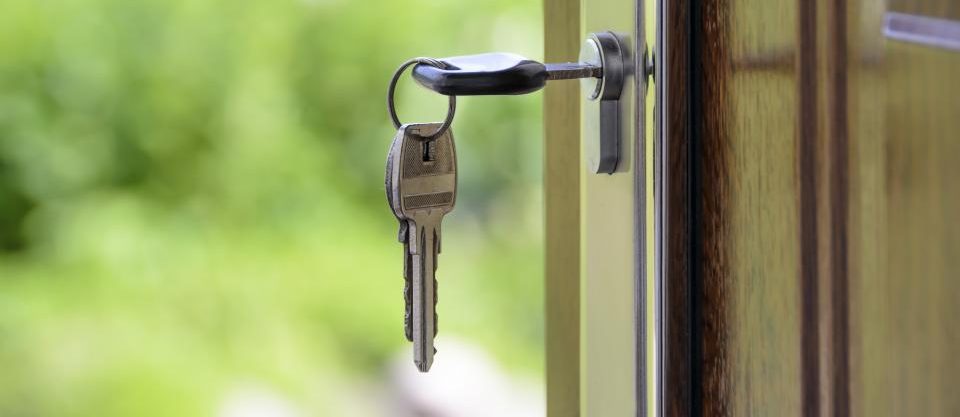
It’s the most skipped task, and the easiest to justify. You don’t know how many people have keys: past owners, their family, dog walkers, contractors. A locksmith can change or rekey the locks in a short visit. If you’d like to do it yourself, a new deadbolt is a common DIY job. Reset garage door codes and any smart lock codes too.
2. Find the water shutoff valve
If a pipe bursts, you need to stop the water fast. Find the main shutoff before you need it. It’s often where the water line enters the house, in a basement, garage or utility closet, or near the water heater. Learn the small valves too. Each toilet and sink usually has its own, so you can turn off the water completely at one fixture without shutting off the whole house.
3. Locate the breaker box
The breaker box, or electrical panel, does for power what the shutoff valve does for water. Find it, and check that the breakers are labeled. If they aren’t, flip them one at a time with a helper and write down what each controls. You’ll thank yourself during the first outage. Our guide to electrical problems that can derail a closing explains warning signs to watch for.
What should you take care of in the first week?
4. Deep clean before the furniture arrives
An empty house is the easiest house to clean. You can see every mark and reach every corner. Wipe out cabinets and closets, clean the inside of the appliances, and vacuum and steam the carpets. You can do it yourself or hire a crew for a day. While you’re there, test each built-in appliance; our guide to inspecting pre-installed appliances shows what to check.
5. Replace every filter
Old filters hold the last owner’s dust, pet dander and cooking smells. Replace the HVAC filter, the range hood filter, and any filters on faucets, the fridge or a water system. For the HVAC, the EPA suggests a filter rated at least MERV 13, or as high as your system fan and slot can handle. Change it often, because a clogged filter makes the system work harder.
6. Check for plumbing leaks
Before you fill the house with your stuff, look under every sink, around toilets and near the water heater. Watch for drips, stains, soft floors and a musty smell. One easy test: write down the water meter reading, use no water for two hours, and read it again. If it moved, something’s leaking. The EPA says drying water-damaged areas within 24 to 48 hours keeps mold from growing in most cases. Read the most important plumbing issues to address and our plumbing installation tips for what to fix first.
Closed on a brand-new home? Before you fill the new house with your stuff, walk through Miami-Dade County’s checklist for buyers of newly built homes. It’s useful wherever you live. It lists items to check once the utilities are on, such as plumbing and roof leaks, air conditioning and drains, and papers to collect from the builder.
7. Look for pests
Pests are every new owner’s worst surprise. Check the attic, garage, crawl space and kitchen cabinets for droppings, gnaw marks and nests. As the weather cools, rodents move indoors, and small signs like grease marks or scratching sounds at night tell you about unwanted guests early. Seal gaps around pipes and doors. If you find a lot, call a pro. Our guides on what to do about a pest infestation and steps if you think you have bugs cover the next steps.
Which safety checks should every new owner do?
Test for radon
Radon is a gas you can’t see or smell. The EPA calls it the second leading cause of lung cancer and the top cause among people who have never smoked, with about 21,000 deaths a year. It recommends fixing a home if radon is at 4 pCi/L or higher. A home test kit is cheap and simple. If your inspection didn’t include one, test now. Our radon guide for Florida homes explains how fixes work.
Check smoke and carbon monoxide alarms
Press the test button on every alarm. Replace batteries, and replace any alarm that’s past the date on its back. Make sure there’s one on each level and near bedrooms, and a carbon monoxide alarm if you have gas appliances or an attached garage.
Sell smarter
List your home on the MLS from $99
A flat fee instead of a percentage, and $0 to Beycome at closing. You stay in control of your sale.
Sell your home →Buy smarter
Get up to 2% back at closing
On homes listed by other agents, Beycome credits you up to 2% of the price at closing (1% kept, $1,499 minimum; not on FSBO homes or homes listed by Beycome sellers).
Buy a home →Know the age of the big systems
Write down the age of the roof, water heater, furnace and air conditioner. Your inspection report usually has them. They tell you what to budget for in the next few years. For an older house, read six things to do after moving into an old house.
| When | Task | Why it matters |
|---|---|---|
| Day 1 | Change or rekey locks | Unknown keys are out there |
| Day 1 | Find water shutoff and breaker box | Stop damage fast in an emergency |
| Days 1 to 3 | Deep clean, replace filters | Easiest before furniture arrives |
| First week | Check leaks and pests | Dry leaks within 24 to 48 hours (EPA) |
| First month | Test radon, test alarms | Fix radon at 4 pCi/L or more (EPA) |
What paperwork should you keep after moving in?
Make a folder, paper or digital, and put it all in one place. Keep the closing disclosure, the deed, your owner’s title insurance policy, the inspection report, warranties, and receipts for any work you do. Our explainer on title insurance shows why the policy matters if someone ever claims an interest in your home.
Receipts for big projects matter later too. When you sell, improvements like a new roof add to your cost basis, which can lower any taxable gain. Update your address with the post office, your bank and your insurer, and check that your homestead exemption is filed if your state offers one.
Bought in Florida or Texas? Beycome Title handles closings there today, and in Michigan, Ohio, Illinois and Indiana. Still shopping for a home? The Beycome buyer program has no upfront fee. It’s open to every buyer on homes listed by other agents (the commission credit can’t apply where no buyer-agent commission is offered, like most FSBO homes, or on homes listed by Beycome sellers). Beycome keeps 1% of the price (minimum $1,499) and credits the rest of the buyer-agent commission at closing, with lender approval.
When it’s time to sell someday, a flat fee MLS listing starts at $99. For eco-friendly upgrades once you’re settled, see the role of the water valve in eco-friendly home improvement.
Frequently asked questions about moving into a new home
What is the first thing to do when you move into a new house?
Change or rekey the exterior locks, then find the main water shutoff and the breaker box. Do it before the boxes pile up.
Should I change the locks on a newly built home?
Yes. Builders, crews and agents may have had keys or codes. Rekeying is a small cost for peace of mind.
Do I need to test a new home for radon?
It’s a good idea if your inspection didn’t. The EPA recommends fixing a home at 4 pCi/L or higher, and test kits are simple to use.
How do I check a new home for water leaks?
Look under sinks and around toilets and the water heater. Then note the water meter, use no water for two hours and check if it moved.
Which filters should I replace after moving in?
The HVAC filter, range hood filter and any faucet, fridge or water system filters. For HVAC, the EPA suggests MERV 13 or as high as your system allows.
What documents should I keep after closing?
Your closing disclosure, deed, owner’s title policy, inspection report, warranties and receipts for improvements. You’ll want them at tax time and when you sell.
Radon figures per EPA, “Health Risk of Radon”; filter guidance per EPA Guide to Air Cleaners in the Home; mold guidance per EPA, “A Brief Guide to Mold, Moisture and Your Home”. All read October 27, 2026. Hire licensed pros for electrical, gas and structural work.
Beycome prices as of October 2026. Beycome Title: Florida, Texas, Michigan, Ohio, Illinois and Indiana. Buyer credit: minimum $1,499, lender approval, not on FSBO homes or homes listed by Beycome sellers. General information only.
Sources
- EPA, health risk of radon, read October 27, 2026.
- EPA, Guide to Air Cleaners in the Home, read October 27, 2026.
- EPA, a brief guide to mold, moisture and your home, read October 27, 2026.
- Miami-Dade County, newly constructed homes, read October 27, 2026.
- Beycome Title, October 2026.
Disclosure & Disclaimer
Beycome provides real estate services through affiliated licensed brokerages and has a commercial interest in the services and business models discussed on this blog. Content reflects Beycome’s perspective and may promote our services; it should not be treated as independent or neutral reporting.
Articles are provided for general informational and educational purposes only, not as financial, tax, legal, or investment advice or a recommendation for your particular situation. Reading this blog does not create a brokerage, advisory, or other professional relationship.
Information, opinions, pricing, service descriptions, and comparisons reflect the sources and information available when an article was published or last updated and may change. Although we aim for accuracy, we do not guarantee that all content is complete, current, or applicable to your circumstances. Laws, market conditions, and service availability vary by location. Examples and estimated savings are illustrative, depend on stated assumptions, and do not guarantee individual results.
Verify relevant information directly and consult qualified professionals before making decisions. Beycome services are subject to applicable agreements, eligibility requirements, and state-specific terms.

