
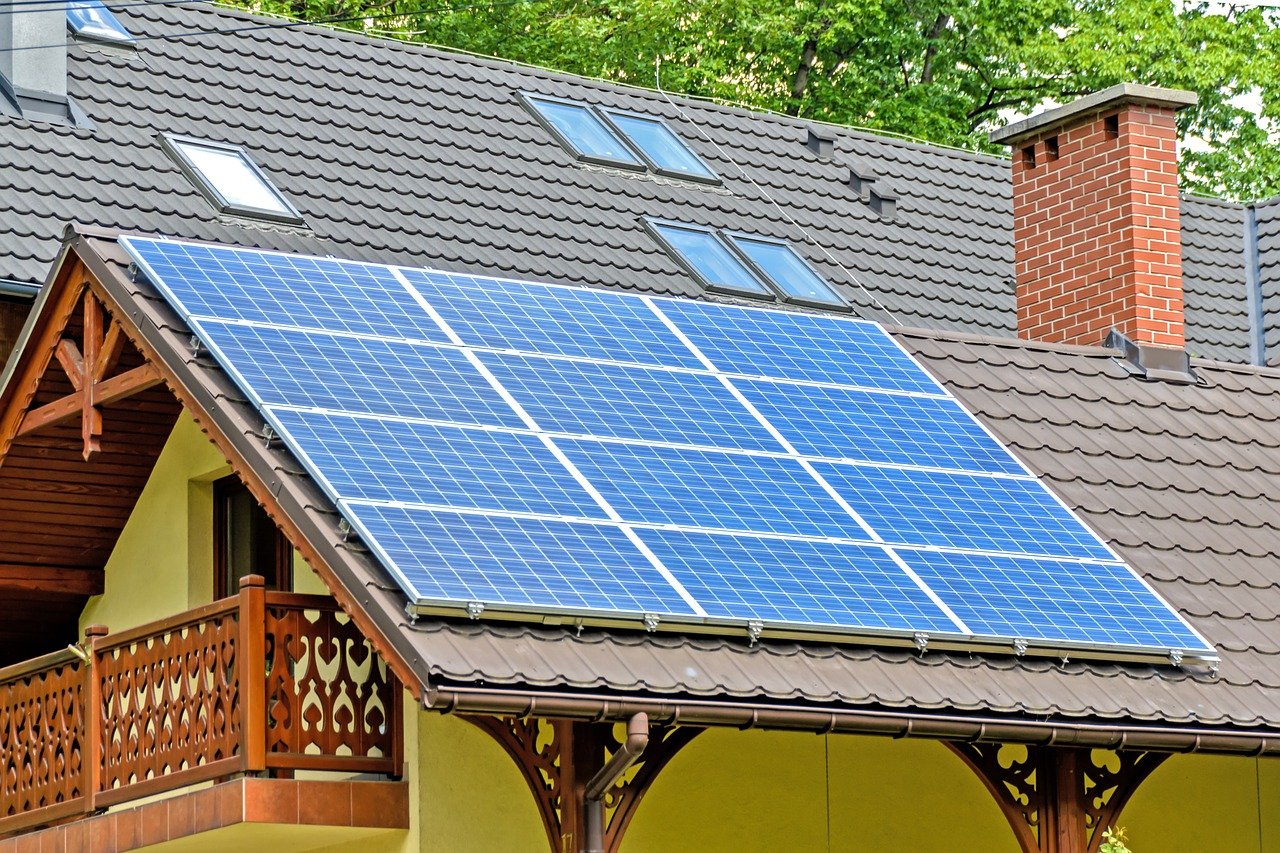
Updated October 2026. Roof vs ground mounts and roof readiness, checked against the US Department of Energy’s homeowner guide and IRS pages on October 30, 2026.
Put solar on your roof if it faces roughly south, has a slope between 15 and 40 degrees, gets little shade and has many years left before it needs replacing. The DOE names all four factors in its homeowner guide (read October 30, 2026). Pick a ground mount when the roof is shaded, too small, too old or faces the wrong way, and you have open yard to spare.
Jump to: 🏠 Roof vs ground · 🪜 Is your roof ready? · ⏱️ Installation · 📍 Ground mounts · 💲 Selling later · ❓ FAQ
Key takeaways
- The DOE says panels perform best on south-facing roofs sloped 15 to 40 degrees, though other roofs can work too.
- Roof age matters. If the roof needs replacing soon, do it before the panels go on, or you’ll pay to remove and reinstall them.
- Ground mounts are easier to reach and clean, but they need yard space, trenching and often more permits.
- No federal 30% credit for systems placed in service after December 31, 2025 (IRS), so the roof decision now carries more of the math.
Most home systems in the US sit on roofs. That’s mostly about space and cost: the roof is already there. But “already there” is exactly the catch. Panels last for decades, and they’ll ride on whatever roof is under them. So the first question isn’t really roof vs ground. It’s whether your roof can carry panels for the next 20-plus years.
Roof or ground: which setup fits your home?
| Factor | Roof mount | Ground mount |
|---|---|---|
| Space needed | Uses roof you already have | Needs open, unshaded yard |
| Angle and direction | Fixed by your roof | Set to the ideal tilt and direction |
| Access for cleaning and repair | Harder, needs a ladder or a pro | Easy to reach from the ground |
| Roof work later | Panels must come off for a re-roof | No effect on the roof |
| Looks | Low profile, blends with the house | Visible in the yard |
| Security | Out of reach | Easier to tamper with; fencing helps |
| Site work | Mounting and wiring on the house | Foundations and trenching for cable |
Security gets mentioned less than it should. Panels high on a roof are hard to steal or vandalize. Panels in a yard near a road are not, which is why the protection of panels on the ground is security worth planning for: a fence, a camera, or a spot away from the street.
If none of it works, the DOE points renters and owners with unsuitable roofs to community solar, where people share a single array installed on or off site.
Is your roof ready for solar panels?
Walk through these five checks before you ask for quotes.
- Age and condition. The DOE tells homeowners to consider how long the roof has until it needs replacing. Find your last roof permit or invoice. If you don’t know, have the roof inspected.
- Direction. South-facing does best in the US. East and west roofs can work, with lower output.
- Slope. The DOE’s range is 15 to 40 degrees. Flat roofs can take tilted racks.
- Shade. Trees near the house can cut output enough that the DOE says rooftop panels may not be the most ideal option there.
- Size and shape. Vents, chimneys, skylights and fire-code setbacks eat usable space. Ask the installer for a layout drawing.
Our guide to why roof inspections matter lists what a roofer looks for. If you’re replacing the roof anyway, see eco-friendly roofing options in 2026 before you pick a material.
Should you replace an old roof before installing solar?
Often, yes. Here’s the reasoning. Once panels are on, any re-roof means taking them off, storing them and putting them back, usually by the solar company. That’s labor you pay twice. If your roof is near the end of its life, doing it first lets both jobs run on one schedule.
Ask both contractors about warranties in writing. Some roof warranties change when someone else drills into the roof. Ask the solar installer who warrants the roof penetrations and for how long.
What happens when solar goes on an existing roof?
The steps are similar from one installer to the next:
- Site visit. They measure the roof, check the rafters and look at your electrical panel.
- Design and permits. Most towns need a building or electrical permit, and your utility needs an interconnection application.
- Mounting. Racking attaches to the rafters through flashed mounts that keep water out.
- Wiring and inverter. Panels connect to an inverter, then to your electrical panel.
- Inspection and permission to operate. The town inspects, then the utility approves before you switch on.
Before work starts, ask for three things in writing: the panel layout on your roof, the number of roof attachments, and who comes back if a leak shows up around one of them. A clear answer to the last question tells you a lot about the company.
The DOE recommends a certified installer and points to NABCEP as the industry standard. It also says to read reviews and get more than one quote. On August 7, 2024, Treasury, the CFPB and the FTC put out a consumer advisory on solar scams, per the DOE. Read it before you sign.
When is a ground mount the better choice?
A ground mount earns its place when the roof faces north, sits under tall trees, is small or crowded, or is made of a material that’s hard to mount on. You can aim the panels at the ideal tilt and direction, and reaching them for cleaning or repair is easy.
Sell smarter
List your home on the MLS from $99
A flat fee instead of a percentage, and $0 to Beycome at closing. You stay in control of your sale.
Sell your home →Buy smarter
Get up to 2% back at closing
On homes listed by other agents, Beycome credits you up to 2% of the price at closing (1% kept, $1,499 minimum; not on FSBO homes or homes listed by Beycome sellers).
Buy a home →The trade-offs are real. You give up yard space. The installer digs foundations and trenches a cable back to the house. Setback and zoning rules may limit where it can go, so check with your town early. And it’s in plain view, which some neighbors and HOAs care about.
A finished basement or garage near the array can make wiring shorter. If you’re planning that kind of project, our piece on how a comfortable basement adds value and efficiency is worth a read. For how panels make power and how to size a system, start with our solar energy 101.
Does roof or ground solar matter when you sell?
Buyers ask three things: who owns the system, how old the roof under it is, and what it produces. Keep the install contract, the roof invoice and 12 months of production data in one folder. An owned system with a newer roof is easy to explain. A leased system needs the lease terms in the listing packet.
With a Beycome flat fee MLS listing, you put those details on the major home search sites and the MLS from $99, with $0 due to Beycome at closing, and you can update them anytime at no charge. Curious how solar affects your price? Run the home value calculator and read how solar lowers electricity bills for the savings side. Beycome has helped 22,000+ homeowners save over $225 million (Beycome internal data, October 2026).
Roof and ground solar questions
Is it better to put solar panels on the roof or the ground?
Roof mounts suit most homes with a sunny, south-facing roof in good shape. Ground mounts make sense when the roof is shaded, small, old or faces north and you have open yard.
What is the best roof angle for solar panels?
The DOE says panels typically perform best on south-facing roofs sloped between 15 and 40 degrees. Other roofs can still work with lower output.
Should I replace my roof before installing solar?
If the roof is near the end of its life, usually yes. Otherwise the panels must come off and go back on for the re-roof, which you pay for separately.
Can solar panels go on an old roof?
They can, but it’s risky. Have the roof inspected first and compare the cost of re-roofing now with removing and reinstalling panels later.
Are ground-mounted solar panels cheaper?
Not always. They skip roof work but add foundations, trenching and sometimes extra permits. Compare quotes for the same system size.
Is there still a federal tax credit for rooftop solar?
No, not for new systems. The IRS says the 30% Residential Clean Energy Credit isn’t available for property placed in service after December 31, 2025.
General information, not engineering or tax advice. Have a licensed roofer and a certified solar installer assess your home; permit and zoning rules vary by town and HOA.
DOE and IRS pages as read October 30, 2026.
Prices as of October 2026: Basic $99, Enhanced $399, Concierge $999 until November 2, 2026 (list price $1,399); from November 2, 2026, Concierge is $1,399 and Basic is $129 in California and Illinois. “$0 at closing” means no Beycome fee at closing; other closing costs, taxes and title fees still apply. Beycome lists in 17 states and DC.
22,000+ homeowners and over $225 million saved: Beycome internal data, October 2026.
Sources
- US Department of Energy, Homeowner’s guide to solar, read October 30, 2026.
- IRS, Residential Clean Energy Credit, read October 30, 2026.
- Beycome, listing package features, October 2026.
Disclosure & Disclaimer
Beycome provides real estate services through affiliated licensed brokerages and has a commercial interest in the services and business models discussed on this blog. Content reflects Beycome’s perspective and may promote our services; it should not be treated as independent or neutral reporting.
Articles are provided for general informational and educational purposes only, not as financial, tax, legal, or investment advice or a recommendation for your particular situation. Reading this blog does not create a brokerage, advisory, or other professional relationship.
Information, opinions, pricing, service descriptions, and comparisons reflect the sources and information available when an article was published or last updated and may change. Although we aim for accuracy, we do not guarantee that all content is complete, current, or applicable to your circumstances. Laws, market conditions, and service availability vary by location. Examples and estimated savings are illustrative, depend on stated assumptions, and do not guarantee individual results.
Verify relevant information directly and consult qualified professionals before making decisions. Beycome services are subject to applicable agreements, eligibility requirements, and state-specific terms.

