
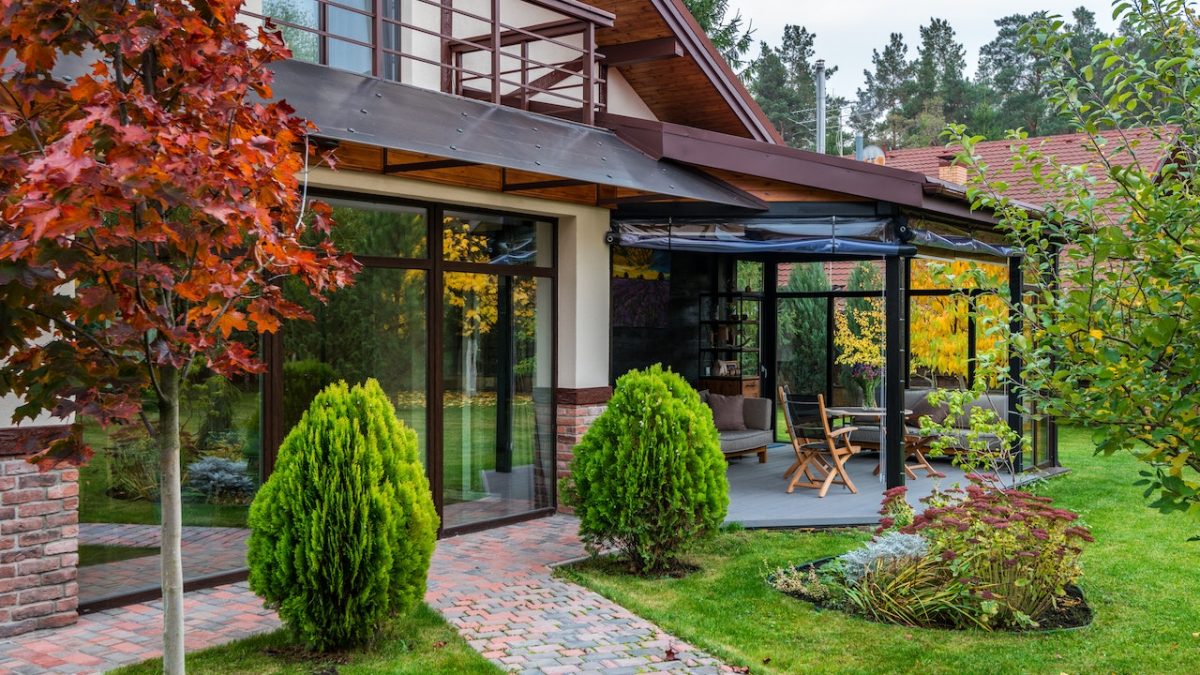
Updated November 2026. This page used to share six simple ways to spruce up a property exterior. The first of those ideas, the trees, raised the biggest question from sellers: cut them down or keep them? It now answers that first, then keeps the quick exterior fixes. Sources read November 13, 2026.
Usually, don’t cut down healthy trees before selling: trim them. A 2010 U.S. Forest Service study in Portland, Oregon found street trees added $8,870 to a home’s sale price on average and cut time on market by 1.7 days. Remove only trees that are dead, dying or a real risk to the house, ideally after an arborist looks.
Jump to: 🪓 Cut or keep · 💲 Do trees add value · ⚠️ Risky trees · 🔍 Inspection and disclosure · 🏠 Quick exterior fixes · ❓ FAQ
Key takeaways
- Healthy, well-placed trees are usually worth more standing than gone.
- Trim branches off the roof, gutters and windows, and clear dead wood before photos.
- Dead or leaning trees near the house can worry buyers, inspectors and insurers. Get an arborist’s opinion before you pay for removal.
- Call 811 a few business days before you dig to plant, stump-grind deep or set a fence post.
A big tree is the first thing buyers see in many listing photos. It can frame the house beautifully, or it can hide the front door and drop branches on the roof. Sellers often guess wrong both ways: they pay to remove a healthy oak that buyers would have loved, or they leave a dead pine that shows up in the inspection report. Here’s how to tell the difference.
Should you cut down trees before selling your house?
Use this quick sort before you call anyone.
| What you see | Before you list |
|---|---|
| Healthy tree, good spot, shade on the house | Keep. Trim and clean up under it. |
| Branches touching the roof, gutters or wires | Trim them back. Have a utility handle anything near power lines. |
| Dead tree, or large dead limbs | Remove or prune. They read as a hazard in photos and reports. |
| Tree leaning toward the house, cracks in the trunk | Have an arborist assess it first. |
| Roots lifting the driveway or near the foundation | Get an opinion; root work can harm the tree or the slab. |
| Overgrown shrubs hiding windows or the door | Cut back hard. Buyers want to see the house. |
Remove the right ones, not the big ones. The International Society of Arboriculture suggests hiring an arborist when a tree is dead or dying, an unacceptable risk, causing an obstruction, or crowding other trees. Many cities also require a permit to remove larger trees, so check before you cut. A local tree service in Houston or wherever you live can quote pruning and removal side by side.
Do trees add value to a home?
The best-known data says yes. In a peer-reviewed 2010 paper, “Trees in the city: valuing street trees in Portland, Oregon,” U.S. Forest Service researchers estimated that street trees added $8,870 to sale prices and cut time on market by 1.7 days. They also found the benefit spilled over to neighboring houses. It’s one city and one type of tree, so treat it as a direction, not a promise for your street.
Trees also help in ways buyers notice on a hot afternoon: shade on the windows, privacy from the street, a yard that feels finished. A newly cleared lot can look raw in photos for a year. If you want to add green instead, our guide to garden upgrades that can raise property value and the one on low-maintenance landscaping help you choose.
Do dead or risky trees affect a home sale?
They can. A dead tree over the roof shows up in photos, in the buyer’s inspection and sometimes in the buyer’s insurance quote. It becomes a negotiating item: a credit, a removal before closing, or a buyer who walks. Dealing with it before you list keeps the conversation on the house.
- Get a written opinion from an ISA Certified Arborist on any tree you’re unsure about.
- Keep the receipt for any pruning or removal and share it with buyers.
- In storm areas, clear dead limbs before hurricane or ice season. Our Florida tree maintenance tips cover timing.
- Planning to plant or grind a stump deep? Contact 811 a few business days before you dig so buried utilities get marked.
Not sure where your lot ends? A tree on the line raises questions about who maintains it. Our guide on how to find your property lines explains the survey and plat route.
Does a home inspection check trees?
A home inspection focuses on the house: roof, structure, systems. Many inspectors will still note trees touching the roof, roots near the foundation or limbs over the house, because those affect the structure. A full tree assessment is an arborist’s job, not the inspector’s.
If you know a tree has damaged the roof, a pipe or the foundation, that’s a disclosure question, not a landscaping one. Disclosure rules vary by state, so read your state’s form. Selling with Beycome? State forms are in the dashboard under Legal Forms. Our guide on which exterior renovations increase property value covers what’s worth fixing first.
What else should you fix outside before selling?
Once the trees are handled, these small jobs finish the front of the house. Each one shows up in the first listing photo.
Fence panels
Replace broken or leaning sections instead of the whole fence. A single new fence panel stained to match can make a tired yard look kept. Check your HOA rules on height and color first.
Sell smarter
List your home on the MLS from $99
A flat fee instead of a percentage, and $0 to Beycome at closing. You stay in control of your sale.
Sell your home →Buy smarter
Get up to 2% back at closing
On homes listed by other agents, Beycome credits you up to 2% of the price at closing (1% kept, $1,499 minimum; not on FSBO homes or homes listed by Beycome sellers).
Buy a home →Pots by the entry
Group two or three planters by the door. Using unique materials like clay or ceramic pots adds warmth, and potted plants outlast cut flowers on a porch. Our outdoor staging checklist has the rest.
Mailbox and house numbers
USPS guidelines put a curbside mailbox 41 to 45 inches from the road surface to the bottom of the box, and 6 to 8 inches back from the curb, with your house number on it. Big, clear numbers on the house help buyers and delivery drivers find you.
Paint, doors and stone
The 2025 Cost vs. Value report found a garage door replacement recouped 268% of its cost at resale on average, a steel entry door 216% and manufactured stone veneer 208%. Those are national averages; local numbers vary. A fresh coat on the front door costs far less; see our guide to painting a home’s exterior and our curb appeal tips by budget.
When the yard is ready, how do you list?
Shoot the exterior on a clear day with the trees trimmed, the lawn cut and the lights on. With Beycome, you can add, change or delete photos from the dashboard at any stage, so you can swap in a better front shot after the arborist’s visit. A complete file goes live on the major home search sites and the MLS within 2 business days. Basic starts from $99 in most states (see your state page), with $0 due to Beycome at closing, and showings run through ShowingTime where the MLS offers it. See the Beycome flat fee MLS listing packages. 22,000+ homeowners have used Beycome (Beycome internal data, October 2026).
More ideas: six bigger projects for an empty garden, how to increase the value of your property, useful items that make living at home easier and ways to spruce up your kitchen without breaking the bank.
Trees and selling a house: questions
Should I cut down trees before selling my house?
Usually not if they’re healthy. Trim them and remove only dead, dying or risky trees, ideally after an arborist’s opinion.
Do trees add value to a home?
Often yes. A 2010 Forest Service study in Portland found street trees added $8,870 to sale prices on average and cut time on market by 1.7 days.
Do dead trees affect a home sale?
They can. A dead tree near the house shows up in photos and inspections and often becomes a credit or removal request.
Does a home inspection check trees?
Not fully. Inspectors focus on the house but often note trees touching the roof or roots near the foundation. An arborist assesses tree health.
Do I need a permit to remove a tree?
Sometimes. Many cities require one for larger or protected trees. Check with your city or county before you cut.
How high should a mailbox be?
USPS guidelines say 41 to 45 inches from the road surface to the bottom of the box, set 6 to 8 inches back from the curb.
Tree value figures are from Donovan and Butry (2010), a U.S. Forest Service study of Portland, Oregon; results elsewhere may differ. Arborist guidance is from the International Society of Arboriculture. Mailbox rules are from USPS; digging rules from 811. Resale figures are 2025 national averages from Cost vs. Value (Zonda, JLC). General information, not legal advice. All sources read November 13, 2026.
Beycome prices as of November 2026: Basic from $99 in most states ($129 in California and Illinois; see your state page), Enhanced $399, Concierge $1,399. “$0 at closing” means no Beycome fee at closing; other closing costs still apply. ShowingTime is included where the MLS offers it.
Sources
- U.S. Forest Service, Trees in the city: valuing street trees in Portland, Oregon (Donovan and Butry, 2010), read November 13, 2026.
- International Society of Arboriculture, Why hire an arborist, read November 13, 2026.
- 811, Before you dig, read November 13, 2026.
- USPS, Mailbox guidelines, read November 13, 2026.
- Cost vs. Value Report 2025 (Zonda, JLC), read November 13, 2026.
- Beycome, listing package features, November 2026, read November 13, 2026.
Disclosure & Disclaimer
Beycome provides real estate services through affiliated licensed brokerages and has a commercial interest in the services and business models discussed on this blog. Content reflects Beycome’s perspective and may promote our services; it should not be treated as independent or neutral reporting.
Articles are provided for general informational and educational purposes only, not as financial, tax, legal, or investment advice or a recommendation for your particular situation. Reading this blog does not create a brokerage, advisory, or other professional relationship.
Information, opinions, pricing, service descriptions, and comparisons reflect the sources and information available when an article was published or last updated and may change. Although we aim for accuracy, we do not guarantee that all content is complete, current, or applicable to your circumstances. Laws, market conditions, and service availability vary by location. Examples and estimated savings are illustrative, depend on stated assumptions, and do not guarantee individual results.
Verify relevant information directly and consult qualified professionals before making decisions. Beycome services are subject to applicable agreements, eligibility requirements, and state-specific terms.

