
Updated October 2026. Five ways to make or save your own energy at home, rechecked for 2026: the federal 30% credit has ended, and we show what that changes. Pages read October 28, 2026.
The five realistic ways to harness your own energy at home are rooftop solar panels, solar water heating, a small wind turbine, biomass heat and solar-assisted cooling. The big 2026 change: the IRS says the 30% Residential Clean Energy Credit isn’t available for property placed in service after December 31, 2025. With US home power averaging 18.16 cents per kWh in August 2026 (EIA), bill savings now carry the case.
Jump to: 💲 Rooftop solar · 🏠 Solar water heating · 🪜 Small wind · ⏱️ Biomass · 🤝 Selling a home with it · ❓ FAQ
Key takeaways
- The federal 30% clean energy credit ended for systems placed in service after December 31, 2025 (IRS).
- Residential electricity in August 2026: 18.16 cents per kWh nationally, 14.99 in Florida, 15.91 in Texas, 29.75 in California (EIA).
- A home wind turbine generally needs 1 acre or more and a good wind resource (DOE WINDExchange).
- Biomass supplied about 5% of US primary energy use in 2025 (EIA).
Clean energy at home used to come with a big tax credit attached. That’s gone for new systems, so the question is simpler now: what pays for itself on your roof, in your climate, at your power rate? Here’s each option, with the numbers that matter.
How much does power cost where you live?
Start here, because it decides everything else. The higher your rate, the faster any system pays back. These are EIA’s average residential prices for August 2026:
| Area | Aug. 2026 (cents/kWh) | Aug. 2025 (cents/kWh) |
|---|---|---|
| US average | 18.16 | 17.57 |
| California | 29.75 | 30.92 |
| New York | 28.65 | 26.64 |
| Michigan | 22.99 | 20.73 |
| Texas | 15.91 | 15.40 |
| Florida | 14.99 | 15.33 |
Pull a year of your own bills too. Monthly use in kWh, not dollars, is what an installer needs for an honest quote.
1. Are rooftop solar panels still worth it in 2026?
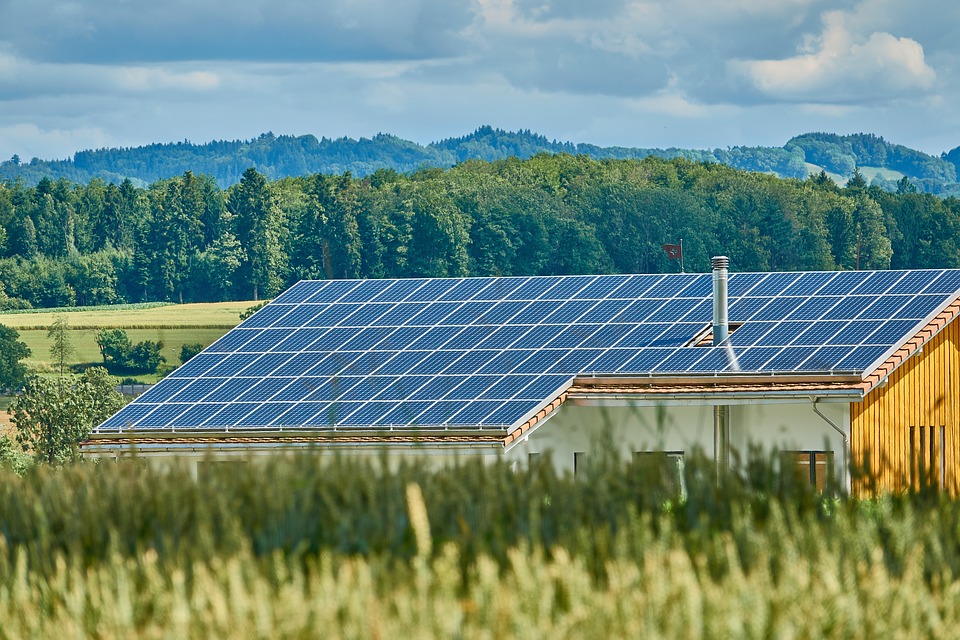
They can be, but run the math without the credit. Panels turn sunlight into electricity that your home uses first. Extra power can go to the grid; under net metering, the Department of Energy explains, owners are paid or credited for the solar power they export. Batteries are optional and add cost.
Panel type matters a bit. Local installers, like the team at shoalhavensolar.com.au in Australia, start with a site visit and then design a system for your roof. Most home systems use monocrystalline or polycrystalline panels. Performance is close, but monocrystalline panels tend to be a little more efficient and cost more. Roof space, the direction it faces and shade decide how much you’ll make.
Read every contract before you sign. DOE’s homeowner’s guide lists separate checklists for buying panels, signing a lease, a power purchase agreement or a solar subscription, because the terms are very different. For a deeper look, see our Solar Energy 101 guide and how using solar energy can lower your electricity bills.
2. Is solar water heating a cheaper option?
Usually cheaper than a full panel system, with a narrower job: it heats water, not the whole house. Collectors on the roof warm water or a fluid that heats a storage tank. A backup heater covers cloudy days.
It fits best where water heating is a big part of the bill and the sun is strong, like much of Florida and Texas. Before you choose, compare the main types of water heaters: tank, tankless, heat pump and solar. A heat pump water heater is often the simpler swap.
3. Can a small wind turbine power a home?
Only on the right property. DOE’s WINDExchange guide says turbines big enough to cover a good share of an average home’s power generally need 1 acre of land or more. You also need a good wind resource and zoning that allows a tower. As one example, it says a 1.5-kW turbine can meet the needs of a home using 300 kWh a month where the average wind speed is 14 mph.
For most suburban lots, that rules wind out. For rural homes with open land, it’s worth a wind assessment.
4. What is biomass energy at home?
EIA defines Biomass as renewable organic material from plants and animals. At home, that mostly means wood or pellet stoves and boilers. Biomass was the largest source of US energy until the mid-1800s, and it still made up about 5% of US primary energy use in 2025, EIA says.
It makes sense if you have cheap, local wood or pellets and a home that needs a lot of heat. Check local air rules and your insurer first; some areas limit wood burning on bad air days.
Sell smarter
List your home on the MLS from $99
A flat fee instead of a percentage, and $0 to Beycome at closing. You stay in control of your sale.
Sell your home →Buy smarter
Get up to 2% back at closing
On homes listed by other agents, Beycome credits you up to 2% of the price at closing (1% kept, $1,499 minimum; not on FSBO homes or homes listed by Beycome sellers).
Buy a home →5. What about solar air conditioning?
Cooling is one of the biggest energy users in hot-climate homes. Solar-assisted AC uses panels or solar heat to run or help run the system, so it does most of its work when the sun is strongest, which is also when you need it.
Ask installers for real output figures and a comparison with a high-efficiency heat pump on regular power. Sometimes the efficient heat pump plus rooftop panels is the better deal. Either way, see your options for saving on electricity bills first, since the cheapest kilowatt-hour is the one you don’t use.
What incentives are left without the federal credit?
The IRS says the Residential Clean Energy Credit equaled 30% of costs for systems installed from 2022 through December 31, 2025, and isn’t available for property placed in service after that. The separate Energy Efficient Home Improvement Credit also ended for improvements after December 31, 2025.
If you installed a system in 2025, you may still claim it, and any unused credit can carry forward. For new projects, look at state programs, utility rebates and local property tax rules. Our homeowner’s guide to solar panel incentives covers where to look.
What happens when you sell a home with solar or other systems?
Owned systems are a selling point. Leased panels or a power purchase agreement need more work, because the buyer usually has to take over the contract. Gather the paperwork early: the contract, warranty, install permits and a year of production data.
Buyers often ask about energy costs, and some go looking for green features. Our article on the top reasons to buy a house with renewable energy shows what they look for. When you list, put the system and average monthly bill in the description. Beycome’s flat fee MLS packages list your home from $99, with $0 due to Beycome at closing, in 17 states and DC. Buying instead? The Beycome buyer program has no upfront fee and credits part of the buyer-agent commission at closing on homes listed by other agents.
Home energy questions
Is there still a federal solar tax credit in 2026?
Not for new systems. The IRS says the 30% Residential Clean Energy Credit isn’t available for property placed in service after December 31, 2025.
Which is better, monocrystalline or polycrystalline solar panels?
Monocrystalline panels are slightly more efficient and usually cost more. Polycrystalline panels perform close behind for less.
How much land do you need for a home wind turbine?
Generally 1 acre or more, plus a good wind resource and zoning that allows it, according to DOE’s WINDExchange guide.
What is the average electricity rate in the US?
18.16 cents per kWh for homes in August 2026, up from 17.57 cents a year earlier, according to EIA.
Is biomass a renewable energy source?
Yes. EIA calls it renewable organic material from plants and animals. It supplied about 5% of US primary energy use in 2025.
Do solar panels help sell a house?
Owned systems with low bills are a plus. Leased systems can slow a sale, since the buyer must usually take over the contract.
Credit end dates are from the IRS pages for the Residential Clean Energy Credit and the Energy Efficient Home Improvement Credit. Power prices are from EIA Electric Power Monthly, Table 5.6.A (August 2026). Wind figures are from DOE’s WINDExchange Small Wind Guidebook. Biomass figures are from EIA’s Biomass explained page. Net metering and contract guidance are from DOE’s Homeowner’s Guide to Going Solar. All read October 28, 2026. General information, not tax advice.
Beycome prices as of October 2026. “$0 at closing” means no Beycome fee at closing; other closing costs still apply. Sellers can list with Beycome in 17 states and DC. Buyer credit: no upfront fee; Beycome keeps 1% of the price (minimum $1,499); lender approval required; not on most FSBO homes or homes listed by Beycome sellers.
Sources
- IRS, Residential Clean Energy Credit, read October 28, 2026.
- IRS, Energy Efficient Home Improvement Credit, read October 28, 2026.
- EIA, Electric Power Monthly, Table 5.6.A, read October 28, 2026.
- EIA, Biomass explained, read October 28, 2026.
- DOE WINDExchange, Small Wind Guidebook, read October 28, 2026.
- DOE, Homeowner’s Guide to Going Solar, read October 28, 2026.
- Shoalhaven Solar, solar panel installation, read October 28, 2026.
Disclosure & Disclaimer
Beycome provides real estate services through affiliated licensed brokerages and has a commercial interest in the services and business models discussed on this blog. Content reflects Beycome’s perspective and may promote our services; it should not be treated as independent or neutral reporting.
Articles are provided for general informational and educational purposes only, not as financial, tax, legal, or investment advice or a recommendation for your particular situation. Reading this blog does not create a brokerage, advisory, or other professional relationship.
Information, opinions, pricing, service descriptions, and comparisons reflect the sources and information available when an article was published or last updated and may change. Although we aim for accuracy, we do not guarantee that all content is complete, current, or applicable to your circumstances. Laws, market conditions, and service availability vary by location. Examples and estimated savings are illustrative, depend on stated assumptions, and do not guarantee individual results.
Verify relevant information directly and consult qualified professionals before making decisions. Beycome services are subject to applicable agreements, eligibility requirements, and state-specific terms.

