
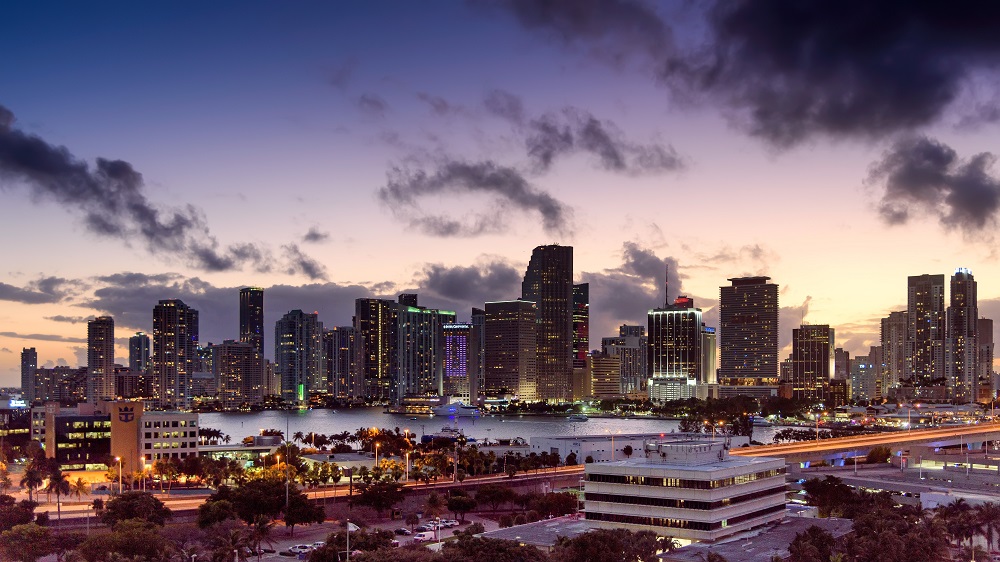
Updated November 2026. For young professionals moving to Miami, renting first or ready to buy, including a lot of New Yorkers.
The best neighborhoods for young professionals in Miami, as of November 2026, are Brickell, Downtown and Edgewater, Wynwood and Midtown, Coconut Grove, Little Havana, Coral Gables and Miami Beach. Brickell and Downtown win for living without a car, thanks to the free Metromover’s 21 stations. The typical City of Miami home was worth $583,700 in September 2026 (Zillow).
Jump to: 📍 Neighborhoods · 💲 Prices compared · ⏱️ Getting around · 🚋 Midtown vs Wynwood · 🏢 For New Yorkers · 🏠 Buying · ❓ FAQ
Key takeaways
- Metromover is free and runs three loops through Brickell, Downtown and the Omni area, per Miami-Dade County.
- Metrorail runs 25 miles from Kendall through South Miami, Coral Gables and Downtown to Miami International Airport.
- Zillow’s typical home value: Miami $583,700, Miami Beach $530,600, Coral Gables $1,571,100, New York City $825,900 (September 2026).
- Florida’s constitution bars a state tax on the income of residents, which is a big draw for people coming from New York.
We help people buy and sell homes all over South Florida, and our team is based in South Miami. The neighborhoods below are the ones young buyers ask us about most. We kept the descriptions to what you’d notice on a first visit and backed the numbers with public data.
Which Miami neighborhoods suit young professionals?
1. Brickell
Brickell is Miami’s financial district: high-rise condos, offices, gyms and restaurants within a few blocks. If you work downtown, you may not need a car. The free Metromover’s Brickell Loop runs right through it, and Metrorail stops at Brickell station. The tradeoff is traffic at rush hour and HOA fees in the towers.
2. Downtown and Edgewater
Downtown and Edgewater sit just north of Brickell along Biscayne Bay. Edgewater has newer towers with bay views, and the Omni Loop of Metromover reaches its south end. It’s a little quieter than Brickell at night, and you’re close to the Arsht Center and Margaret Pace Park.
3. Wynwood and Midtown
Wynwood is known for its street murals, galleries, breweries and weekend crowds. Midtown, next door, has mid-rise apartments and big-box shopping. It’s lively and walkable, but parking is tight and it can be loud on weekends. Most people here drive or ride-share to work.
4. Coconut Grove
The Grove is leafy and bayfront, with sailing clubs, parks and older homes mixed with condos. It suits people who want a slower pace and still want to be 15 minutes from Brickell. Metrorail’s Coconut Grove station is at its western edge.
5. Little Havana
Little Havana, west of Brickell, has some of the closest-in prices, Calle Ocho’s restaurants and music, and a strong Cuban identity. Housing is older and mostly low-rise. It’s a good pick if you want character and a shorter commute without Brickell prices.
6. Coral Gables
Coral Gables is its own city, with tree-lined streets, Mediterranean-style homes and a walkable downtown on Miracle Mile. It’s also the priciest on this list: Zillow’s typical Coral Gables home value was $1,571,100 in September 2026. Metrorail stops at Douglas Road and University stations on its edge.
7. Miami Beach
Miami Beach is a separate city across the bay. South Beach is the busy, nightlife-heavy part; Mid-Beach and North Beach are calmer. Zillow’s typical Miami Beach value was $530,600, lower than the City of Miami’s, because much of the stock is older condos. The commute over the causeways is the catch.
Other names worth a look: Doral for people who work near the airport, and North Bay Village for lower condo prices with water views.
How do Miami neighborhoods compare on price?
Zillow publishes home values by city, not by neighborhood, so the table uses the city each area sits in. Brickell, Downtown, Edgewater, Wynwood, Midtown, Coconut Grove and Little Havana are all inside the City of Miami.
| Place | Typical home value, Sept. 2026 | 1-year change | Best for |
|---|---|---|---|
| City of Miami (Brickell, Downtown, Wynwood, the Grove, Little Havana) | $583,700 | +1.4% | Car-light living near work |
| Miami Beach | $530,600 | +1.8% | Beach life, older condos |
| Coral Gables | $1,571,100 | +8.3% | Quiet streets, higher budgets |
| Doral | $548,800 | -0.7% | Airport-area jobs |
| North Bay Village | $392,100 | +1.3% | Lower condo prices on the water |
| New York City (for comparison) | $825,900 | +4.3% | Where many movers come from |
Figures are Zillow Home Value Index values for September 2026, from Zillow Research. They cover all home types, so a one-bedroom condo in a tower can sit well below the typical value.
Can you live in Miami without a car?
In a few places, yes. Miami-Dade County’s Metromover is a free, elevated people mover. The county says it serves 21 stations from the Financial District station in Brickell to the School Board station in the Omni area, on three loops: Omni, Inner and Brickell. Check the county’s Metromover page for service alerts before you rely on it.
Metrorail is the county’s 25-mile rail line. It runs from Kendall through South Miami, Coral Gables and Downtown to the Civic Center area and Miami International Airport. Living near a station in Brickell, the Grove or the Gables makes a car-light life realistic.
To compare blocks, many renters look at Walk Score; Redfin explains how Walk Score works and shows it on listings. Wynwood, Midtown and Miami Beach are walkable inside the neighborhood but harder to commute from without a car.
Is Midtown or Wynwood better for renting without a car?
Midtown, by a small margin. Neither has a Metrorail or Metromover station, so both lean on the City of Miami’s free trolley. Midtown is served by two routes, and Wynwood by one.
| Midtown | Wynwood | |
|---|---|---|
| Free trolley routes | Wynwood route (Midtown Shopping stop) and Biscayne route | Wynwood route |
| Link to Metromover | Both routes reach Adrienne Arsht station | Wynwood route reaches School Board and Adrienne Arsht stations |
| Sunday trolley | Biscayne route, 8 a.m. to 8 p.m. | No Sunday service listed |
| Daily errands on foot | Groceries and big-box stores at the Midtown shops | Restaurants, bars and galleries; fewer everyday stores |
| Feel | Mid-rise apartments, a bit calmer | Busy nights and weekend crowds |
Both trolley routes run 6:30 a.m. to 11 p.m., Monday to Saturday, per the City of Miami trolley page, read November 1, 2026. If your office is in Brickell, budget extra time for the transfer to Metromover, or look at Edgewater instead.
Where should a young professional rent first? For a car-free commute downtown, start in Brickell or Edgewater. For nightlife, Wynwood. For space and trees, the Grove. Sign a 12-month lease, learn the city, then decide where to buy.
Sell smarter
List your home on the MLS from $99
A flat fee instead of a percentage, and $0 to Beycome at closing. You stay in control of your sale.
Sell your home →Buy smarter
Get up to 2% back at closing
On homes listed by other agents, Beycome credits you up to 2% of the price at closing (1% kept, $1,499 minimum; not on FSBO homes or homes listed by Beycome sellers).
Buy a home →Which Miami neighborhoods do New Yorkers like?
New Yorkers moving down tend to start in Brickell or Edgewater. Towers, doormen, gyms and the Metromover feel familiar. Those who want a neighborhood feel, more like Brooklyn, look at the Grove, Wynwood-Midtown or Miami Beach.
The money is part of the pull. Article VII, section 5 of the Florida Constitution says the state can’t levy a tax on the income of natural persons who are residents. Homes cost less too: Zillow’s typical City of Miami value was about 29% below New York City’s in September 2026.
Expect tradeoffs. Hurricane season runs through the fall, and condo and home insurance costs are a real line in the budget. Ask for the HOA’s budget and reserve plan before you buy in a tower.
Should young professionals rent or buy in Miami?
Rent first if you’re new to the city or not sure you’ll stay three to five years. Buy when you know which neighborhood fits and your job is stable. Nationally, NAR’s 2025 Profile of Home Buyers and Sellers found the median first-time buyer was 40 and first-time buyers made up just 21% of buyers, a record low. Buying in your late 20s or 30s puts you ahead of that curve.
If you buy and live in the home, Florida’s homestead exemption can cut its taxable value by up to $50,000, per the Florida Department of Revenue. It also caps future increases in assessed value through Save Our Homes. Our guide to finding a Florida property tax number helps you look up any home’s tax bill before you offer.
Short on a down payment? Our guide to buying with bad credit and little cash covers programs worth asking a lender about. If your savings are in stocks, read how capital gains from stocks affect home buying.
Getting money back when you buy
The Beycome buyer program in Miami is open to every buyer on homes listed by other agents (the commission credit can’t apply where no buyer-agent commission is offered, like most FSBO homes, or on homes listed by Beycome sellers), with no upfront fee. Beycome collects the buyer-agent commission the seller offers, keeps 1% of the price (minimum $1,499) and credits the rest to you at closing. On a $400,000 condo with 3% offered, that’s $8,000 back.
That 3% is an example only. Commissions are not set by law or NAR rules and are fully negotiable. Sellers choose whether to offer any buyer-agent compensation, and how much, and since August 17, 2024, such offers can’t be shown on the MLS. Our guide to buyer’s agent commission explains how it works now.
You can browse Miami homes for sale on Beycome. Some owners sell directly; our guide to buying from an owner covers those deals. When it’s time to sell, our ranking of flat fee MLS companies in Miami compares the options.
Frequently asked questions
What are the best neighborhoods for young professionals in Miami?
Brickell is the most common pick for people who work downtown, thanks to the free Metromover and Metrorail. Edgewater, Wynwood-Midtown and Coconut Grove are close behind, depending on budget and pace.
Is Midtown or Wynwood better for renting without a car?
Midtown, slightly. It has two free City of Miami trolley routes, including Sunday service on the Biscayne route, and everyday shops within walking distance. Wynwood has one route and no Sunday trolley listed.
What are the best Miami neighborhoods to rent for young professionals?
Brickell and Edgewater for a car-free commute downtown, Wynwood and Midtown for nightlife, and Coconut Grove for a slower pace near the bay.
Where do young adults live in Miami on a budget?
Little Havana, parts of Edgewater and North Bay Village tend to cost less than Brickell or the Gables. Zillow’s typical North Bay Village value was $392,100 in September 2026.
Which Miami neighborhoods are best for New Yorkers?
Brickell and Edgewater feel most like Manhattan high-rise living. Coconut Grove, Wynwood-Midtown and Miami Beach suit people who want more of a neighborhood feel.
Can you live in Miami without a car?
In Brickell and Downtown, mostly yes. Metromover is free, and Metrorail runs 25 miles to Coral Gables, Kendall and the airport. Elsewhere, most people drive.
Does Florida have a state income tax?
No. Article VII, section 5 of the Florida Constitution bars a state tax on the income of residents. Federal income tax still applies.
How much is a home in Miami in 2026?
Zillow’s typical City of Miami home value was $583,700 in September 2026. Condos often cost less; single-family homes in Coral Gables cost far more.
Home values are Zillow Home Value Index figures for September 2026 (all homes, smoothed, seasonally adjusted) and are reported by city, not neighborhood. Transit details from Miami-Dade County, read October 22, 2026; service can change. Trolley routes and hours from the City of Miami, read November 1, 2026.
Buyer program: open to every buyer on homes listed by other agents (the commission credit can’t apply where no buyer-agent commission is offered, like most FSBO homes, or on homes listed by Beycome sellers); no upfront fee; Beycome keeps 1% of the price (minimum $1,499); the rest of the buyer-agent commission offered is credited at closing, subject to lender approval; if the commission offered is below the minimum, the buyer covers the gap at closing. General information, not tax or legal advice.
Sources
- Miami-Dade County, Metromover, read October 22, 2026.
- Miami-Dade County, Metrorail, read October 22, 2026.
- City of Miami, trolley maps and routes, read November 1, 2026.
- Zillow Research, ZHVI, September 2026.
- Florida Constitution, Article VII, section 5.
- Florida Department of Revenue, property tax exemptions.
- NAR, 2025 Profile of Home Buyers and Sellers.
- Beycome, buyer program terms, October 2026.
Disclosure & Disclaimer
Beycome provides real estate services through affiliated licensed brokerages and has a commercial interest in the services and business models discussed on this blog. Content reflects Beycome’s perspective and may promote our services; it should not be treated as independent or neutral reporting.
Articles are provided for general informational and educational purposes only, not as financial, tax, legal, or investment advice or a recommendation for your particular situation. Reading this blog does not create a brokerage, advisory, or other professional relationship.
Information, opinions, pricing, service descriptions, and comparisons reflect the sources and information available when an article was published or last updated and may change. Although we aim for accuracy, we do not guarantee that all content is complete, current, or applicable to your circumstances. Laws, market conditions, and service availability vary by location. Examples and estimated savings are illustrative, depend on stated assumptions, and do not guarantee individual results.
Verify relevant information directly and consult qualified professionals before making decisions. Beycome services are subject to applicable agreements, eligibility requirements, and state-specific terms.

