
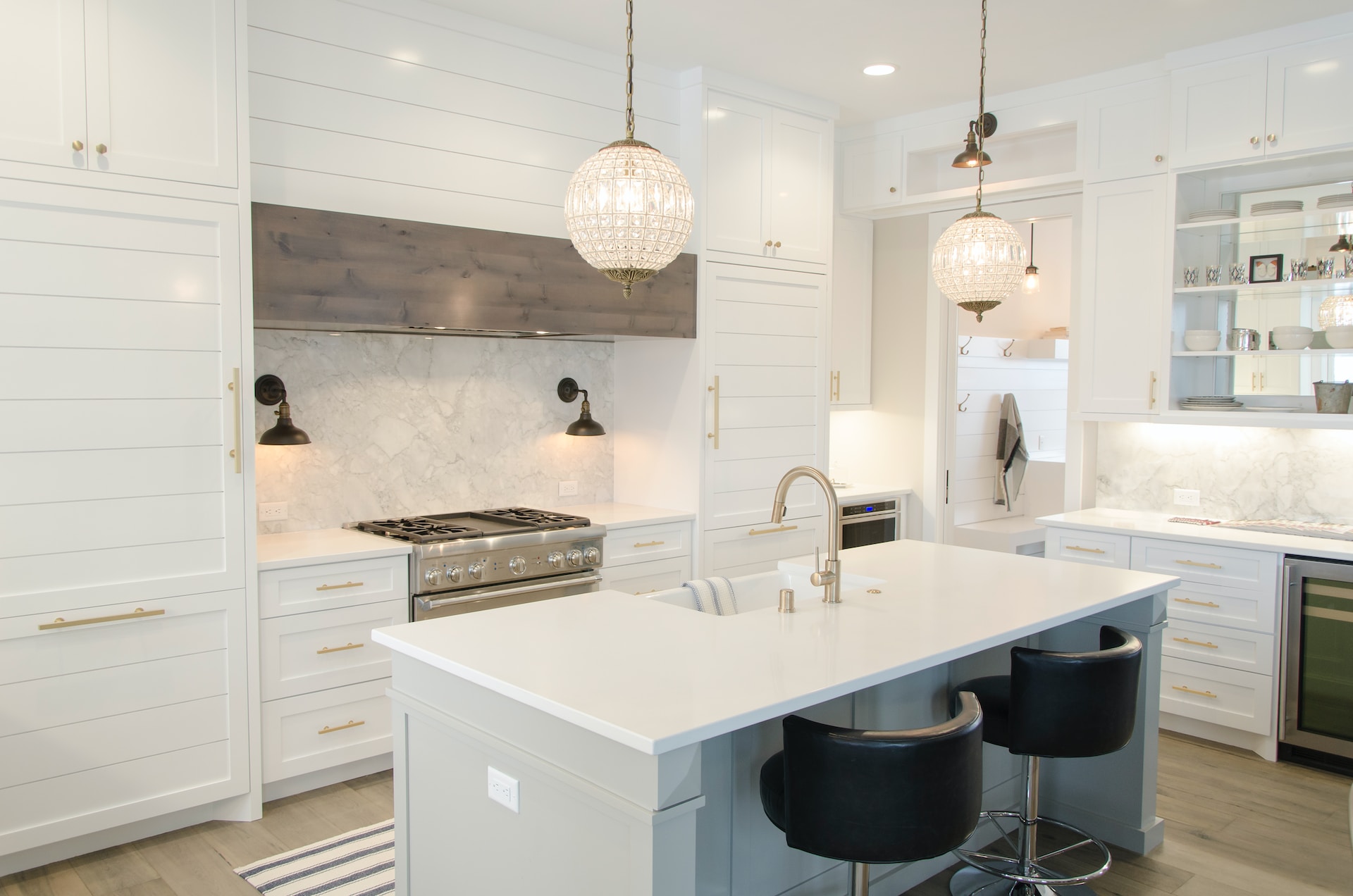
Updated November 2026. Which kitchen remodel materials hold up best, what each one asks of you, and how they look to buyers if you sell later.
The best kitchen remodel materials, as of November 2026, are the ones that match how hard you use the room: quartz or granite counters, plywood-box cabinets, porcelain tile or luxury vinyl floors, and a ceramic or porcelain backsplash. In NAR’s 2025 Remodeling Impact Report, a kitchen upgrade scored a 10 out of 10 for homeowner joy.
Thinking of selling once the work is done? A flat fee MLS listing starts at $99 in most states, with $0 due to Beycome at closing.
Jump to: 🏠 Countertops · 🪜 Cabinets · 📸 Floors & tile · 🛒 Where to buy · 💲 Budget order · ❓ FAQ
Key takeaways
- A kitchen upgrade got a Joy Score of 10, the top mark, in the 2025 NAR and NARI Remodeling Impact Report.
- Realtors saw the biggest rise in demand for kitchen upgrades (48%), ahead of new roofing (43%) and bathroom work (35%).
- 27% of homeowners said they remodel mainly to replace worn-out surfaces, finishes and materials.
- Spend first on the parts that take daily abuse: the counter, the cabinet boxes and the floor.
Picking materials is where a kitchen remodel is won or lost. Paint colors can change in a weekend. A counter, a floor or a set of cabinets is something you’ll live with for years. Here’s how we’d choose each one, and what to ask before you pay a deposit.
How do you choose materials for a kitchen remodel?
Start with three questions for every surface. How much wear will it take? How much care are you willing to give it? And if you sold in five years, would a buyer see it as a plus or as a project?
That last question matters more than people think. In the same NAR report, homeowners named durable, long-lasting materials and appliances as one of the most important results of a remodel (23%), right next to better looks (23%) and better function (28%). Pretty and tough isn’t a trade-off you always have to make, but you do have to check.
- Get samples of every finish and look at them in your kitchen light, morning and night.
- Ask what voids the warranty: heat, certain cleaners, standing water.
- Write down the care routine. If it says “seal every year,” be honest about whether you will.
The same three tests work for material selection in any renovation, from a bathroom to a laundry room. Pick the hardest-working surface first, then choose the rest around it. Our signs your kitchen is ready for a remodel help you decide how far to go.
What is the best countertop material for a kitchen?
For most kitchens it comes down to quartz or granite. Both handle daily cooking well. The difference is in care and look.
| Countertop | Good at | Watch out for | Care |
|---|---|---|---|
| Quartz (engineered stone) | Even color, stain resistance, many patterns | Direct high heat can mark it | Wipe clean; no sealing |
| Granite | Natural stone, heat and scratch resistance | Each slab varies; pick yours in person | Seal on the fabricator’s schedule |
| Marble | Classic look, cool surface for baking | Etches from lemon, vinegar and wine | Seal and wipe spills fast |
| Butcher block | Warm look, easy to sand and refinish | Water near the sink | Oil it regularly |
| Concrete | Custom shapes and colors | Hairline cracks over time | Seal and reseal |
| Laminate | Low cost, quick install | Burns and swelling at seams | Use trivets |
If you love stone, read up on granite countertops before you visit a slab yard, so you know what to look for in pits, fissures and edge finishes. Quartz is the easier pick if you want a counter you never think about.
Our take: neutral counters age better than bold ones. A busy pattern you love can look dated to the next owner. For more stone ideas beyond the counter, see ways to bring stone into your kitchen design.
Which cabinet materials last the longest?
Cabinets are the biggest line in most kitchen budgets, and the box matters more than the door. Plywood boxes hold screws well and shrug off small leaks. Particleboard and MDF are cheaper and fine in dry spots, but they swell if water gets in, which is why the sink base is where cheap cabinets fail first.
- Doors: solid wood or MDF for painted doors. MDF won’t show the seams that solid wood can crack along.
- Drawers: look for dovetail or dowel joints and full-extension soft-close slides.
- Finish: a factory-cured finish outlasts a site-painted one.
Not sure whether to buy assembled or flat-pack? Our guide to assembled vs. RTA cabinets weighs cost, time and quality. And if you’re replacing the standard boxes that came with a new build, see what to expect from builder-grade kitchen cabinets.
What flooring and tile hold up best in a kitchen?
A kitchen floor gets water, grease, dropped pans and a lot of standing. Porcelain tile and luxury vinyl plank are the two safest bets.
- Porcelain tile is dense, water resistant and easy to clean. It’s hard underfoot, so add a mat where you cook.
- Luxury vinyl plank is softer and warmer, handles spills well and costs less to install.
- Hardwood looks great and flows into other rooms, but standing water near the sink and dishwasher is its enemy.
- Natural stone such as slate or travertine adds texture. It needs sealing and can be slippery when polished.
For a contemporary room, large-format porcelain in gray or white keeps the floor calm and makes the space look bigger. For a warmer feel, travertine or slate brings texture and character.
Backsplash tile
The backsplash is where you can have fun, because it’s a small area and easy to change later. Ceramic and porcelain clean easily. Glass reflects light. Pattern is a low-cost way to add interest: chevron tiles, with their V-shaped layout, add movement behind a range without a loud color. Pick a grout color close to the tile so it doesn’t show stains.
Where should you buy kitchen remodel materials and supplies?
Most kitchens mix several sources. Retail home centers are fine for many kitchen renovation supplies, but counters and custom cabinets usually come from specialists. Here’s where each part tends to make sense:
Sell smarter
List your home on the MLS from $99
A flat fee instead of a percentage, and $0 to Beycome at closing. You stay in control of your sale.
Sell your home →Buy smarter
Get up to 2% back at closing
On homes listed by other agents, Beycome credits you up to 2% of the price at closing (1% kept, $1,499 minimum; not on FSBO homes or homes listed by Beycome sellers).
Buy a home →| Where | Good for | Watch out for |
|---|---|---|
| Big-box home center | Stock cabinets, vinyl plank, tile, sinks, faucets, lights | Limited sizes; check box material, not just the door |
| Kitchen showroom or cabinet maker | Semi-custom and custom cabinets, design help | Long lead times; get the spec sheet in writing |
| Stone slab yard or fabricator | Granite, quartz and marble counters | Pick your actual slab; ask what edge and cutouts cost |
| Tile shop | Backsplash, floor tile, trim pieces | Buy 10% to 15% extra from one batch so colors match |
| Online retailer | Pulls, faucets, lighting, ready-to-assemble cabinets | Return shipping on heavy items; damage on arrival |
Whoever you buy from, ask for the exact product name, model number and finish on the quote. That’s what lets you compare two retailers fairly, and it’s what your contractor needs to order the right thing.
How should you split your kitchen materials budget?
Put money where wear is highest and swaps are hardest. Here’s the order we’d follow when the budget is tight:
- Cabinet boxes and drawer hardware, because they’re the hardest to replace.
- Countertops, since they take the most daily abuse and set the look.
- Flooring, especially if it runs under the cabinets.
- Sink and faucet, which you touch dozens of times a day.
- Backsplash, lighting and pulls, which are easy to upgrade later.
Compare at least three written quotes, and ask each one to price the same materials so you can compare line by line. Most homeowners in the NAR report paid for remodels with home equity loans or lines of credit (54%) or savings (29%). If you’re borrowing, add the interest to the real cost of each upgrade.
On a smaller budget? These ways to spruce up your kitchen without breaking the bank get you most of the look for less.
Should you remodel your kitchen before selling?
Not always. Our guide on whether a kitchen renovation is worth it before selling goes deeper. The NAR report found that the projects Realtors most often suggest before listing are cheaper ones: painting the whole home (50%), painting one room (41%) and new roofing (37%). A full kitchen remodel right before a sale often costs more than it adds.
If you’re selling soon, fix what’s broken, deep clean, swap dated hardware and lights, and let buyers see a clean, working kitchen. Price it with our CMA property value calculator, then compare your costs to sell with the sell my home calculator.
When you’re ready, a flat fee MLS listing with Beycome puts your home on the major home search sites and the local MLS from $99 in most states ($129 in California and Illinois), with the most photos the MLS allows and $0 due to Beycome at closing, so your new kitchen gets seen.
Buying your next place instead? The Beycome buyer program has no upfront fee: Beycome keeps 1% of the price (minimum $1,499) and credits the rest of the buyer-agent commission at closing, with lender approval. It’s open to every buyer on homes listed by other agents (the credit can’t apply where no buyer-agent commission is offered, like most FSBO homes, or on homes listed by Beycome sellers). It isn’t offered in Alabama or Tennessee, where state law bars rebates.
Kitchen materials FAQ
What are the best materials for a kitchen remodel?
For most homes: quartz or granite counters, plywood cabinet boxes, porcelain tile or luxury vinyl floors, and a ceramic or porcelain backsplash. They balance looks, wear and care.
How do I choose materials for a kitchen remodel?
Test each surface for wear, care and resale. Start with the counter or floor, get samples, and view them together in your kitchen light.
Where can I buy kitchen renovation supplies?
Home centers carry stock cabinets, flooring, tile and fixtures. Slab yards, tile shops and kitchen showrooms are better for stone counters and custom cabinets.
Is quartz or granite better for kitchen counters?
Quartz needs no sealing and has even color. Granite is natural stone, takes heat well and needs sealing. Both last if you care for them.
What is the most durable kitchen flooring?
Porcelain tile is the toughest against water and wear. Luxury vinyl plank is close and softer underfoot.
How do I choose materials for a luxury kitchen remodel?
Use the same tests: wear, care and resale. Luxury usually means natural stone, custom cabinets and better hardware. Pick finishes that will still look good in ten years.
Should I get material samples before a kitchen remodel?
Yes. Look at counter, cabinet and floor samples together in your own kitchen light, and keep them until the job is done.
Does a new kitchen raise my home’s value?
It can help a home sell, but a full remodel rarely pays back its whole cost. Before listing, Realtors in NAR’s 2025 report more often recommend painting and new roofing.
Material notes are general guidance, not product warranties; follow each maker’s care and warranty terms. Survey figures are from the 2025 NAR and NARI Remodeling Impact Report as published by NAR. Beycome price as of November 2026 and subject to change: Basic $99 ($129 in California and Illinois). “$0 at closing” means no Beycome fee at closing; taxes, title fees and any agreed buyer-agent compensation still apply. Photo count is the maximum the local MLS allows. Buyer credit: minimum $1,499 kept by Beycome, lender approval required; not on FSBO homes or homes listed by Beycome sellers. General information only.
Sources
Disclosure & Disclaimer
Beycome provides real estate services through affiliated licensed brokerages and has a commercial interest in the services and business models discussed on this blog. Content reflects Beycome’s perspective and may promote our services; it should not be treated as independent or neutral reporting.
Articles are provided for general informational and educational purposes only, not as financial, tax, legal, or investment advice or a recommendation for your particular situation. Reading this blog does not create a brokerage, advisory, or other professional relationship.
Information, opinions, pricing, service descriptions, and comparisons reflect the sources and information available when an article was published or last updated and may change. Although we aim for accuracy, we do not guarantee that all content is complete, current, or applicable to your circumstances. Laws, market conditions, and service availability vary by location. Examples and estimated savings are illustrative, depend on stated assumptions, and do not guarantee individual results.
Verify relevant information directly and consult qualified professionals before making decisions. Beycome services are subject to applicable agreements, eligibility requirements, and state-specific terms.

