
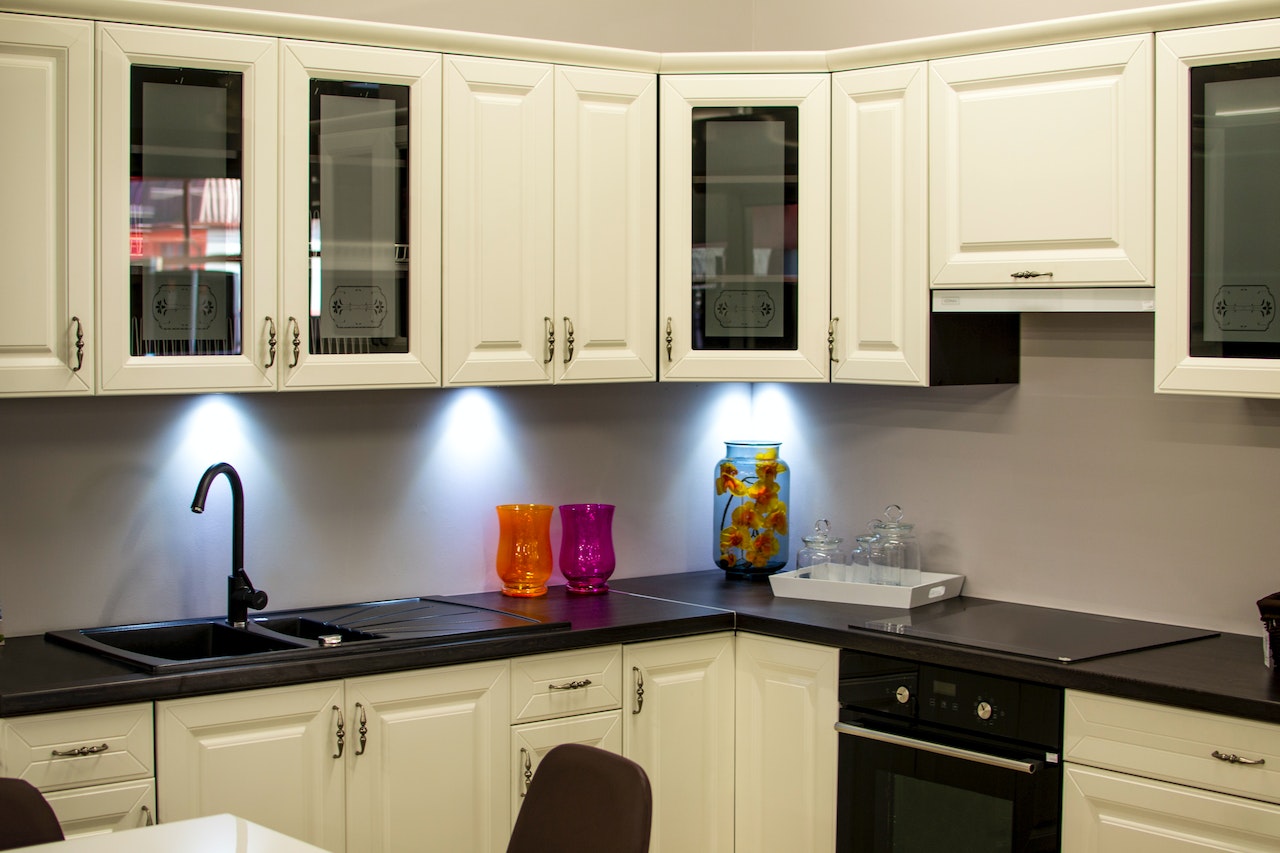
Updated October 2026. We rewrote this comparison so you can decide between assembled and ready-to-assemble (RTA) cabinets by time, skill, total cost and resale. Quality and safety standards come from KCMA and EPA, and buyer demand from NAR’s 2025 Remodeling Impact Report, read this month.
Assembled cabinets arrive built and cost more; RTA cabinets arrive flat-packed and cost less, but you trade money for hours of assembly. As of October 2026, both can be well made. Look for the KCMA A161.1 seal, which means a cabinet line passed 14 tests, including a 600-pound load test, and for EPA’s TSCA Title VI label on composite wood.
Jump to: 💲 Side by side · 🏠 Assembled · 🪜 RTA · 📸 Quality checks · 🤝 Resale · ❓ FAQ
Quick decision guide
- Short on time or tools: assembled. Handy, patient and on a budget: RTA.
- KCMA-certified cabinets passed 14 tests, including a 600-pound load test (KCMA).
- Since March 22, 2019, composite wood products sold in the U.S. must be labeled TSCA Title VI compliant (EPA).
- Kitchen upgrades drew the biggest rise in buyer demand, per 48% of Realtors in NAR’s 2025 report.
Cabinets are usually the biggest line in a kitchen budget, so the assembled-or-RTA choice matters. The boxes can come from the same kinds of factories. The difference is who puts them together, how long it takes and how much room you have for mistakes. Here’s how we’d weigh it.
Assembled vs RTA cabinets: how do they compare?
| Factor | Assembled | RTA |
|---|---|---|
| Upfront price | Higher | Lower |
| Arrives | Built, ready to hang | Flat-packed panels and hardware |
| Your time | Install only | Assembly plus install |
| Shipping | Bulky, more chance of dings | Compact boxes |
| Squareness | Set at the factory | Depends on your assembly |
| Best for | Tight timelines, pro installs | DIYers, rentals, budget remodels |
Neither is the high-end option by default. Semi-custom and custom cabinets, which are built to your sizes, are a separate category above both. The high-quality materials guide from The Spruce explains the box materials you’ll see in both types: solid wood, plywood, MDF and particleboard.
What are the pros and cons of assembled cabinets?
The big plus is time. They arrive square and glued, so the installer can level, shim and fasten them the same day. That matters if you’re living in the house during the remodel, or if you’re trying to get a home on the market by a certain date. Factory assembly is also more consistent than a weekend in the garage.
The downsides are price and logistics. You pay for the labor already done, and the boxes take up a lot of space in shipping and in your home before install. A dinged corner on a built cabinet is harder to fix than a scratched panel you haven’t assembled yet. Stock assembled lines also come in fixed widths, so fillers make up the gaps in an odd-sized kitchen.
If you’re working with a contractor, ask what they prefer. Many installers charge more to build RTA boxes than the savings are worth to you.
What are the pros and cons of RTA cabinets?
RTA cabinets cost less and ship in flat boxes, which is cheaper and easier to store. Good RTA lines use cam locks or dowels and glue, with clear instructions. If you’re handy, the first box is slow and the rest go faster once you get the rhythm.
Plan for the real work, though. A 25-cabinet kitchen is a lot of boxes. You need a flat, clean space, a drill, clamps, a square and patience. Check every box when it arrives and before you start, so missing parts don’t stall you mid-week. Take the time to get each one square; a slightly racked box will make doors hang crooked forever.
RTA is a strong fit for a rental, a basement kitchenette or a budget flip, where every dollar counts. Our post on builder-grade kitchen cabinets covers what you get at the lower end.
How do you check cabinet quality before you buy?
Look for third-party proof. The KCMA A161.1 seal means a cabinet line passed tests of structural strength, drawer and door integrity and finish durability. KCMA says certified cabinets pass 14 tests, including a 600-pound load test. Its Severe Use certification, first developed by HUD, targets the heavy wear in apartment kitchens.
Check the label on composite wood. EPA says that since March 22, 2019, hardwood plywood, MDF and particleboard sold in the U.S. must be labeled TSCA Title VI compliant, which limits formaldehyde emissions. Then check the parts you touch:
- Drawer boxes: dovetail or doweled joints hold up better than staples.
- Slides: full-extension, soft-close slides with a stated weight rating.
- Hinges: adjustable in three directions.
- Back and sides: thicker panels resist sagging.
Pick finishes and counters together; see how to choose materials for your kitchen reno and Improve Your Kitchen With These Useful Items.
Sell smarter
List your home on the MLS from $99
A flat fee instead of a percentage, and $0 to Beycome at closing. You stay in control of your sale.
Sell your home →Buy smarter
Get up to 2% back at closing
On homes listed by other agents, Beycome credits you up to 2% of the price at closing (1% kept, $1,499 minimum; not on FSBO homes or homes listed by Beycome sellers).
Buy a home →Do new cabinets help when you sell?
They can, if they look good and work well. In NAR and NARI’s 2025 Remodeling Impact Report, 48% of Realtors saw rising demand for kitchen upgrades, more than any other project, and a kitchen upgrade earned a top Joy Score of 10 from homeowners. Buyers don’t ask whether the cabinets came flat-packed. They notice doors that close well, drawers that glide and a layout that works.
If you’re selling soon, you may not need new boxes at all. Painting or refacing, new hardware and soft-close hinges often get most of the effect. Our home renovation checklist and home features that increase value help you prioritize, along with our guide on how to increase the value of your home.
When the kitchen is done, show it off. A Beycome flat fee MLS listing starts at $99, with $0 due to Beycome at closing, and Basic lets you upload the maximum photos your MLS allows. Buying instead? Check the kitchen closely with our guide to inspecting pre-installed appliances, and see the Beycome buyer program: no upfront fee, Beycome keeps 1% of the price (minimum $1,499) and credits the rest of the buyer-agent commission at closing, with lender approval. It’s open to every buyer on homes listed by other agents (the commission credit can’t apply where no buyer-agent commission is offered, like most FSBO homes, or on homes listed by Beycome sellers).
Here’s a simple way to settle it for your kitchen. Count the cabinets on your plan, then make a generous guess at how many evenings assembly will take you, especially if you’ve never built one. Ask a friend who has done it for a reality check. Put a dollar value on those evenings. If the RTA savings beat it comfortably, and you have the space and tools, go RTA.
If the numbers are close, or the kitchen has to be finished by a closing date, pay for assembled and spend your time on the parts only you can do, like picking finishes and checking the delivery. Either way, order one or two spare door hinges and a touch-up kit. They cost little and save a trip later.
Cabinet questions
Are RTA cabinets good quality?
Many are. Look for plywood or quality MDF boxes, solid drawer joints, good hinges and slides, and the KCMA A161.1 seal.
Is it cheaper to buy RTA or assembled cabinets?
RTA is cheaper upfront. If you’d pay an installer to assemble them, the savings shrink, so compare the total installed cost.
How long does it take to assemble RTA cabinets?
It depends on the line and your experience. Plan for several days for a full kitchen, plus install time.
What does KCMA certification mean?
The cabinet line passed KCMA’s A161.1 tests for structure, doors, drawers and finish, 14 tests in all, including a 600-pound load test.
Do new kitchen cabinets increase home value?
They help a kitchen show well, and kitchen upgrades saw the biggest rise in buyer demand per NAR. Refacing or painting can give much of the effect for less.
Are there formaldehyde rules for cabinets?
Yes. Composite wood products like plywood, MDF and particleboard sold in the U.S. must be labeled TSCA Title VI compliant (EPA).
Certification: KCMA, Cabinet Certifications. Formaldehyde: EPA, Formaldehyde Emission Standards for Composite Wood Products. Buyer demand: NAR and NARI, 2025 Remodeling Impact Report. Prices for cabinets vary by brand, size and region. General information, not construction advice.
Beycome prices as of November 2026 and subject to change: Basic $99, Enhanced $399; Concierge is $1,399. Basic is $129 in California and Illinois ($99 elsewhere). “$0 at closing” means no Beycome fee at closing; taxes, title and any buyer-agent compensation you agree to still apply. Buyer credit: minimum $1,499, lender approval, not on most FSBO homes or homes listed by Beycome sellers.
Sources
- KCMA, Cabinet Certifications, read October 28, 2026.
- EPA, Formaldehyde Emission Standards for Composite Wood Products, read October 28, 2026.
- NAR, Top Remodeling Projects for Homeowner Satisfaction and Cost Recovery, read October 28, 2026.
- Beycome, listing package features, October 2026.
Disclosure & Disclaimer
Beycome provides real estate services through affiliated licensed brokerages and has a commercial interest in the services and business models discussed on this blog. Content reflects Beycome’s perspective and may promote our services; it should not be treated as independent or neutral reporting.
Articles are provided for general informational and educational purposes only, not as financial, tax, legal, or investment advice or a recommendation for your particular situation. Reading this blog does not create a brokerage, advisory, or other professional relationship.
Information, opinions, pricing, service descriptions, and comparisons reflect the sources and information available when an article was published or last updated and may change. Although we aim for accuracy, we do not guarantee that all content is complete, current, or applicable to your circumstances. Laws, market conditions, and service availability vary by location. Examples and estimated savings are illustrative, depend on stated assumptions, and do not guarantee individual results.
Verify relevant information directly and consult qualified professionals before making decisions. Beycome services are subject to applicable agreements, eligibility requirements, and state-specific terms.

