
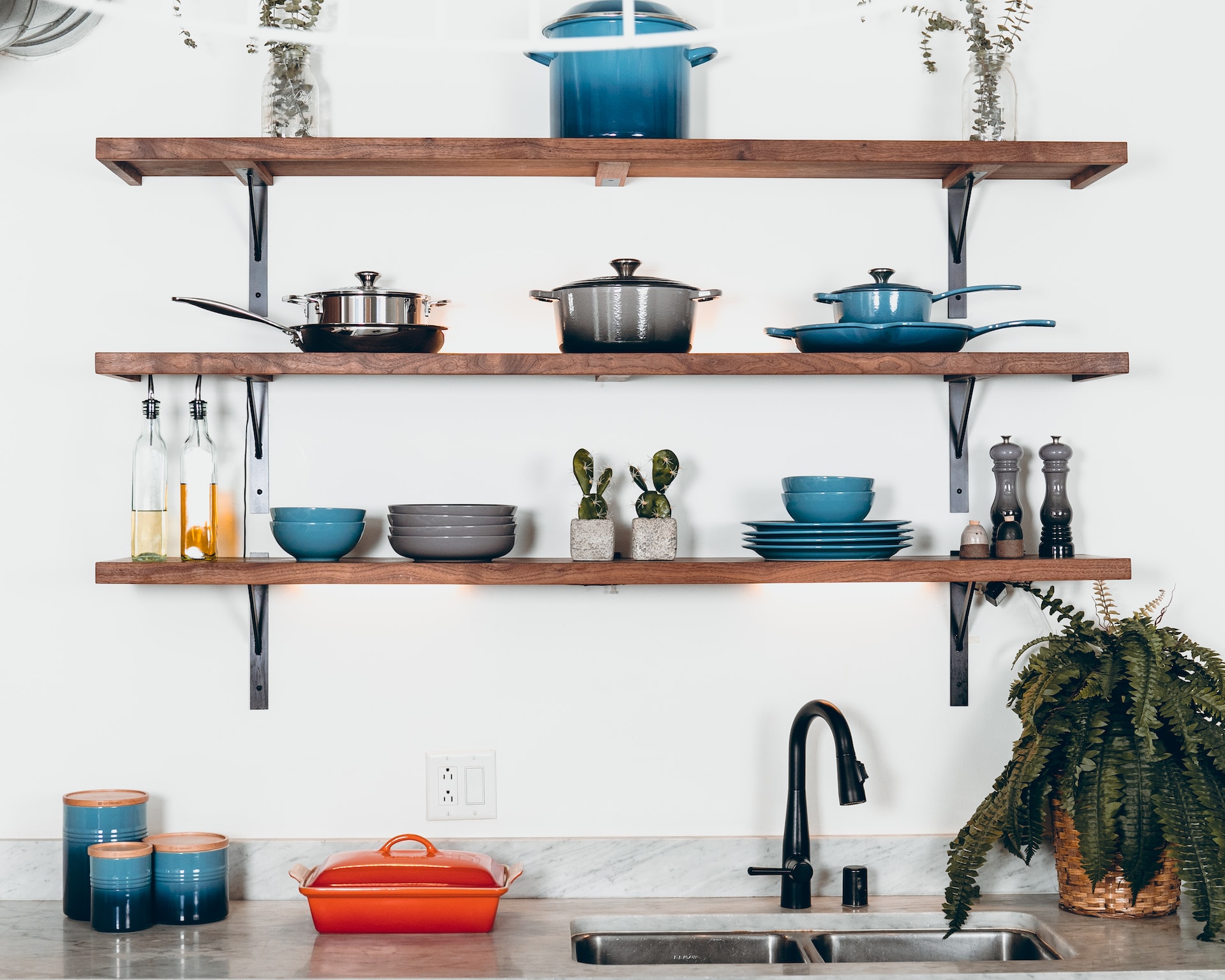
Updated October 2026. Useful kitchen tools and storage items, sorted by the job they do, with food-safety, energy and fire figures from FoodSafety.gov, ENERGY STAR and NFPA, read October 29, 2026.
The most useful items to improve a kitchen are small and cheap: a fridge thermometer (40°F or below, freezer 0°F, per FoodSafety.gov), a lid kept by the stove, pull-out organizers, drawer dividers, a magnetic knife strip and one open shelf near the cooktop. As of October 2026, NFPA says ranges and cooktops start 51% of home cooking fires, so start with safety items.
Jump to: 🤝 Safety items · ⏱️ Food storage · 🏠 Cabinet storage · 💲 Small appliances · 📸 Before you sell · ❓ FAQ
Key takeaways
- Keep the fridge at 40°F or below and the freezer at 0°F; cooked leftovers last 3 to 4 days in the fridge (FoodSafety.gov).
- Ranges and cooktops account for 51% of home cooking fires; unattended cooking is a factor in 25% (NFPA).
- A fridge over 15 years old could cost about $95 a year more to run than a new certified one (ENERGY STAR).
- Most storage fixes, like pull-outs, dividers and risers, need no remodel.
This isn’t a remodel guide. If you’re moving walls, read our six layout rules for a kitchen that works first, then tips for planning a kitchen makeover. This page is about the things you can buy this week and use tonight.
Which safety items should every kitchen have?
NFPA’s numbers make the case. In 2020-2024, kitchen and cooking equipment was involved in an estimated 48% of home structure fires. Two-thirds of cooking fires started when food or cooking materials caught fire. Ranges and cooktops were behind 51%.
- A lid that fits your biggest pan, kept within reach. NFPA says to slide it over a small grease fire, turn off the burner and leave it covered until it cools.
- A kitchen timer, even if your phone has one. NFPA advises using a timer and staying in the kitchen while food cooks.
- A fire extinguisher mounted near the exit, not over the stove, so you can reach it while moving away from a fire.
- A working smoke alarm nearby, but not so close to the range that it goes off every time you sear something.
- Oven mitts that reach the wrist, kept in a drawer by the oven, not on the cooktop.
What helps you store food safely?
The single most useful item here costs a few dollars: an appliance thermometer. Built-in dials can be off. FoodSafety.gov’s cold storage chart lists 40°F (4°C) or below for the fridge and 0°F (-18°C) or below for the freezer.
Clear, labeled containers come next. Write the date on leftovers with a marker. FoodSafety.gov gives cooked meat or poultry leftovers 3 to 4 days in the fridge and 2 to 6 months frozen. A roll of masking tape by the fridge does the labeling job.
For pantry goods, airtight bins keep flour, rice and cereal fresh and pest-free. Put older items in front. A two-tier shelf riser in the pantry doubles the space you can see. If the fridge is old, check it too. ENERGY STAR says certified models are about 9% more efficient than the federal minimum, and a fridge older than 15 years could be costing about $95 a year more to run.
The freezer is where food gets lost. Freeze soups and sauces flat in zip bags, then stand them up like files in a bin. Keep a short list on the door of what’s inside and when it went in. Cleaning out a forgotten bag of shrimp from last spring is the moment most people start doing this.
Which storage items make cabinets work harder?
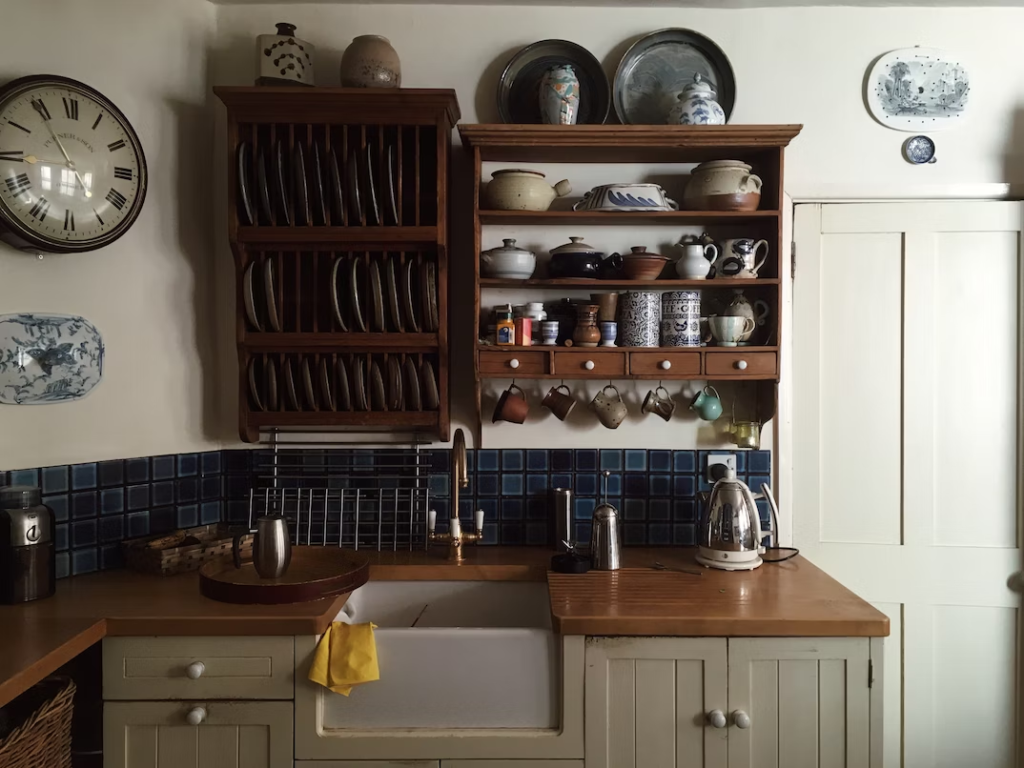
Most kitchens don’t need more cabinets. They need the ones they have to stop hiding things. Here’s what we’d add, in order:
- Pull-out drawers for deep base cabinets. You stop kneeling on the floor to find a pot.
- Drawer dividers for utensils and tools, so the drawer closes.
- A vertical rack for baking sheets, cutting boards and lids.
- A lazy Susan in a corner cabinet or on a pantry shelf.
- An under-sink organizer that fits around the pipes, plus a drip tray to catch leaks early.
- A magnetic knife strip on the wall by the prep counter, out of kids’ reach.
- One open shelf near the stove for oil, salt and the spices you use daily.
If the cabinet boxes themselves are tired, our guide to kitchen cabinets explains when builder-grade boxes are worth keeping and refacing. Inserts fit most standard boxes, so measure the inside width before you buy.
Which small appliances earn their counter space?
Counter space is the scarcest thing in most kitchens. Before you buy a gadget, ask how often you’d use it. Once a week is our rough cutoff for leaving it out. Everything else lives in a cabinet.
Items many cooks use daily: a good kettle, a coffee or espresso maker, a toaster or air fryer, and a stand or hand mixer for bakers. Brands like Gevi Household sell espresso machines and other countertop appliances; compare size, wattage and warranty before you buy. Pick one finish for everything on display. Matching appliances make a small counter look calmer.
Group appliances near an outlet you can switch, and keep cords short. A small tray under the coffee station keeps grounds off the counter. A dish rack that folds away clears space after dinner.
Sell smarter
List your home on the MLS from $99
A flat fee instead of a percentage, and $0 to Beycome at closing. You stay in control of your sale.
Sell your home →Buy smarter
Get up to 2% back at closing
On homes listed by other agents, Beycome credits you up to 2% of the price at closing (1% kept, $1,499 minimum; not on FSBO homes or homes listed by Beycome sellers).
Buy a home →Which items make a kitchen easier for kids and older adults?
A kitchen that works for a 6-year-old and a 76-year-old works for everyone. Most of these items are cheap and install with a screwdriver.
- Stove knob covers for homes with toddlers, plus latches on the cabinet with cleaners.
- A sturdy step stool with a handle, so nobody climbs the counter for the top shelf.
- Pull-down shelf inserts for upper cabinets, which bring the top shelf to eye level.
- A lever-handle faucet, easier for small hands and stiff fingers than two knobs.
- A non-slip mat in front of the sink, where splashes make the floor slick.
- Brighter task lights under the upper cabinets, so you can see what you’re cutting.
Move everyday plates and glasses to a low drawer. Kids can set the table on their own, and grandparents don’t have to reach. It’s the cheapest accessibility upgrade there is: rearranging what you already own.
Renting out the home, or setting it up for a relative? Label the breaker for the kitchen circuits and tape the appliance manuals inside a cabinet door. The next person will thank you.
Do kitchen items help when you sell your home?
Not directly. Buyers don’t pay for your knife strip. But a tidy kitchen with organized cabinets photographs better, and buyers do open cabinet doors at showings. A cluttered counter makes the room look smaller than it is.
Before photos, clear the counters down to one or two items, tuck appliances away and wipe the cabinet fronts. Pair that with a few outside touches from our curb appeal upgrade guide and the tips for selling your house fast. If a bigger change is on your mind, check whether a kitchen renovation pays off before selling.
Beycome lists your home on the major home search sites and the MLS from $99, with $0 due to Beycome at closing. Support is 7 days a week, and Artur AI is there 24/7 for listing questions. See how a Beycome listing works.
Useful kitchen item questions
What temperature should a refrigerator be?
40°F (4°C) or below, and the freezer at 0°F (-18°C) or below, per FoodSafety.gov. An appliance thermometer is the easy way to check.
How long do leftovers last in the fridge?
FoodSafety.gov lists 3 to 4 days for cooked meat or poultry leftovers, or 2 to 6 months in the freezer.
How do you put out a grease fire in a pan?
NFPA says to slide a lid over the pan, turn off the burner and leave it covered until it cools. Never use water.
What is the best way to add kitchen storage without remodeling?
Add pull-out drawers to deep cabinets, drawer dividers, a vertical rack for trays and boards, a corner lazy Susan and one open shelf near the stove.
Is it worth replacing an old refrigerator?
Often, if it’s over 15 years old. ENERGY STAR says such a fridge could cost about $95 a year more to run than a new certified model.
Where should a kitchen fire extinguisher go?
Near the kitchen exit, away from the stove, so you can grab it while moving away from the fire.
Food storage figures from FoodSafety.gov; fire figures from NFPA (2020-2024 estimates); refrigerator figures from ENERGY STAR. All read October 29, 2026. Brand mentions are examples, not endorsements. Beycome Basic is $99 as of October 2026; “$0 at closing” means no Beycome fee at closing. General information, not safety-code advice.
Sources
- FoodSafety.gov, Cold Food Storage Chart, read October 29, 2026.
- NFPA, Cooking safety and statistics, read October 29, 2026.
- ENERGY STAR, Refrigerators, read October 29, 2026.
- Beycome, listing package features, October 2026.
Disclosure & Disclaimer
Beycome provides real estate services through affiliated licensed brokerages and has a commercial interest in the services and business models discussed on this blog. Content reflects Beycome’s perspective and may promote our services; it should not be treated as independent or neutral reporting.
Articles are provided for general informational and educational purposes only, not as financial, tax, legal, or investment advice or a recommendation for your particular situation. Reading this blog does not create a brokerage, advisory, or other professional relationship.
Information, opinions, pricing, service descriptions, and comparisons reflect the sources and information available when an article was published or last updated and may change. Although we aim for accuracy, we do not guarantee that all content is complete, current, or applicable to your circumstances. Laws, market conditions, and service availability vary by location. Examples and estimated savings are illustrative, depend on stated assumptions, and do not guarantee individual results.
Verify relevant information directly and consult qualified professionals before making decisions. Beycome services are subject to applicable agreements, eligibility requirements, and state-specific terms.
