
Updated October 2026. Room-by-room ways to improve the lighting in your home, with brightness (lumens) and color (Kelvin) targets and a quick cost check, based on ENERGY STAR, National Grid, Energy Trust and EIA figures read October 29, 2026.
To improve lighting in your home, layer three kinds of light in each room (overall, task and accent), pick bulbs by lumens instead of watts, and match color to the room: about 2700K for living rooms and bedrooms, about 3500K for kitchens and work spaces. An 800-lumen LED gives the light of an old 60-watt bulb on about 10 watts (read October 2026).
Jump to: 🪜 The basics · 🏠 Room by room · 💲 Cost · 📍 Daylight · 📸 Showings · ❓ FAQ
Key takeaways
- Brightness is measured in lumens: 450 lumens replaces a 40-watt bulb, 800 a 60-watt, 1,100 a 75-watt and 1,600 a 100-watt (National Grid).
- Around 2700K feels warm and relaxing; around 3500K is better for kitchens and work spaces (Energy Trust).
- LEDs make light up to 90% more efficiently than incandescent bulbs, which give off 90% of their energy as heat (ENERGY STAR).
- Swapping one 60-watt bulb used 3 hours a day for a 10-watt LED saves about $10 a year at the August 2026 U.S. average rate.
What makes good lighting in a home?
Good lighting has layers. Designers talk about three, and they’re easy to remember.
- Ambient light fills the room: ceiling fixtures, recessed lights, a big floor lamp.
- Task light goes where you work or read: under-cabinet strips, a desk lamp, a vanity light.
- Accent light adds depth: wall sconces, picture lights, a lamp on a bookshelf.
Most rooms that feel dull have only the first layer. One bright ceiling light flattens everything and casts shadows right where you need to see. Adding a lamp or two at eye level fixes more than a stronger bulb ever will. Then size each shade to its base with our lampshade size guide.
Then read the box. Watts tell you how much power a bulb uses. Lumens tell you how bright it is. National Grid’s chart is a handy guide: 450 lumens matches an old 40-watt bulb, 800 lumens a 60-watt, 1,100 a 75-watt and 1,600 a 100-watt. The LED versions use about 8, 10, 15 and 20 watts.
How should you light each room?
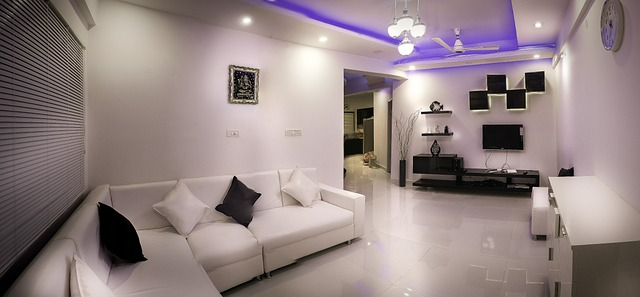
Color temperature is the other number on the box, in Kelvin. Energy Trust explains that home bulbs run from about 2200K to 6500K. Lower numbers look warm and yellow. Higher numbers look cool and white or bluish. People usually like about 2700K where they relax, and about 3500K where they work.
| Room | Color | Layers that help most |
|---|---|---|
| Living room | About 2700K | Ceiling light on a dimmer, two lamps, one accent |
| Bedroom | About 2700K | Bedside lamps, soft overhead |
| Dining room | About 2700K | Pendant or chandelier over the table, dimmable |
| Kitchen | About 3500K | Bright overhead plus under-cabinet task lights |
| Home office | About 3500K | Desk lamp to the side, not behind the screen |
| Bathroom | Your pick, kept the same in the room | Vanity lights on both sides of the mirror |
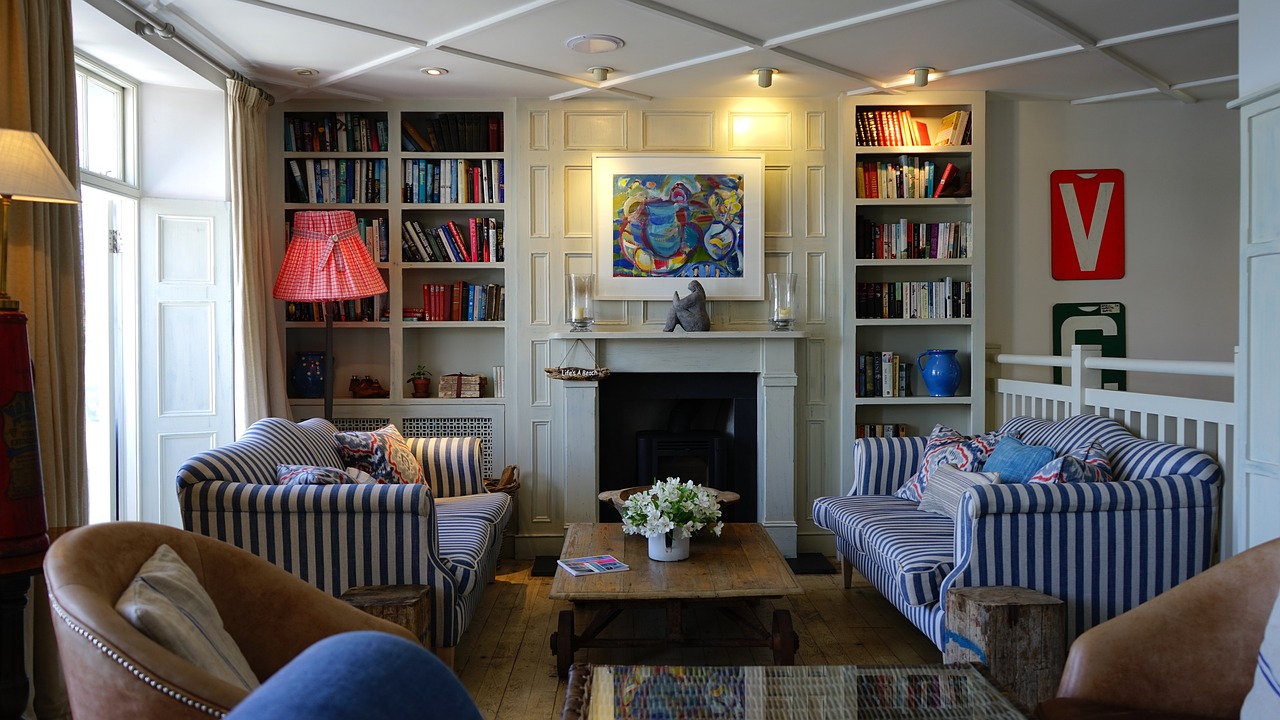
Living rooms. Put lamps in at least two corners so light comes from more than one side. Wall sconces add warmth in colder months without eating floor space. Online home lighting guides help you work out sconce styles and heights before you buy.
Kitchens. The ceiling light sits behind you when you’re at the counter, so you cook in your own shadow. Under-cabinet LED strips solve it for little money. Over an island, pendant lights give task light and a focal point. Our piece on smartly designed kitchen cabinets pairs well with this.
Bathrooms. A single light above the mirror throws shadows on your face. Vanity lights on each side, at about face height, light it evenly. For the mirror itself, see the rule for bathroom mirrors. Whether you prefer sconces or pendant lights by the mirror, keep the color the same as the overhead.
Outside. Porch, path and security lights matter for safety and for evening curb appeal. See 4 main types of outdoor lighting for the options.
Lighting mistakes we see in a lot of homes
Mixed colors are the big one. A warm lamp next to a cool ceiling bulb makes a room look patchy, and it shows badly in photos. Pick one color per room and stick with it when you replace bulbs.
The second is shades that block the light. A dark, heavy lampshade turns a good bulb into a glow. Lighter fabric or a wider shade sends more light into the room. The third is the wrong height. Wall sconces hung too high light the ceiling, not the people. In a hallway or beside a bed, aim for light that lands around face and shoulder level.
Last, don’t forget closets, stairs and entry halls. They’re the places people trip, and the places buyers open during a showing. A small motion-sensor LED in a closet is cheap and fixes both problems at once.
Sell smarter
List your home on the MLS from $99
A flat fee instead of a percentage, and $0 to Beycome at closing. You stay in control of your sale.
Sell your home →Buy smarter
Get up to 2% back at closing
On homes listed by other agents, Beycome credits you up to 2% of the price at closing (1% kept, $1,499 minimum; not on FSBO homes or homes listed by Beycome sellers).
Buy a home →How much do better bulbs save?
ENERGY STAR says LEDs produce light up to 90% more efficiently than incandescent bulbs, which release 90% of their energy as heat. If you still have old bulbs, switching to LED or CFL options is the cheapest upgrade in this article.
Here’s the math for one bulb. A 60-watt incandescent swapped for a 10-watt LED saves 50 watts. At 3 hours a day, that’s about 55 kWh a year. At the U.S. average residential price of 18.16 cents per kWh in August 2026 (EIA), it’s about $10 a year, per bulb. Twenty bulbs is about $200.
Dimmers add control and can stretch savings further, but check that the LED says “dimmable” on the box, or it may flicker. Over a dining table, the dimmer matters most; here’s how high to hang a chandelier over a dining table. For more swaps that pay off, read Energy Efficiency 101 and 4 advantages of LED lighting.
How can you get more daylight into a room?
Daylight is free and flattering. A few small changes help a lot.
- Clean the windows, inside and out. It’s the fastest win.
- Swap heavy drapes for light, sheer panels, or hang rods wider than the frame so curtains clear the glass.
- Place a large mirror across from or beside a window to bounce light deeper into the room.
- Trim shrubs and branches that shade the windows.
- Choose lighter wall colors with some sheen in dark rooms.
Small homes and cottages gain the most. Our ideas on making a cottage more cozy show how light and color work together.
How does lighting help when you sell?
Buyers decide fast, and lighting is a big part of the feeling. Before listing photos and showings, replace every burned-out bulb, use the same color temperature within each room, and turn on all the lights, even in daytime. A room lit from several sides looks bigger and cleaner in photos.
It’s one of the cheapest prep jobs on any list. See 6 tips to increase the value of your home and how to add instant wow factor to your living room. When the house is ready, Beycome lists it on the major home search sites and the MLS from $99, and you keep control of your price and showings. See how flat fee listing works.
Home lighting questions
How can I improve the lighting in my home?
Add layers: ambient, task and accent light in each room. Choose bulbs by lumens, keep one color temperature per room, and let in more daylight with clean windows and lighter curtains.
What color temperature is best for a living room?
Around 2700K, a warm white, according to Energy Trust. Kitchens and work spaces usually do better around 3500K.
How many lumens do I need to replace a 60-watt bulb?
About 800 lumens. National Grid lists a 10-watt LED as giving the same light as a 60-watt incandescent.
How much do LED bulbs save?
Swapping one 60-watt incandescent for a 10-watt LED used 3 hours a day saves about 55 kWh a year, or about $10 at the August 2026 U.S. average rate.
How do I light a dark room with no windows?
Use several sources at different heights, a warm color temperature, light wall colors, and a mirror to spread the light. Avoid relying on one ceiling fixture.
Does lighting help sell a house?
It helps how the house looks in photos and showings. Replace dead bulbs, match colors in each room and turn on every light before buyers arrive.
Lumen and color figures come from National Grid, Energy Trust and ENERGY STAR pages read October 29, 2026. Savings use the EIA average residential price for August 2026 and are estimates; your rate and use differ. Beycome Basic is $99 as of October 2026, with $0 at closing (no Beycome fee at closing; other closing costs still apply). Beycome lists in 17 states and DC. General information, not professional advice; hire a licensed electrician for new wiring.
Sources
- National Grid, Lighting Tips, read October 29, 2026.
- Energy Trust, Color matters when choosing light bulbs, read October 29, 2026.
- ENERGY STAR, Learn About LED Lighting, read October 29, 2026.
- EIA, Electric Power Monthly, Table 5.6.A, August 2026, read October 29, 2026.
- Beycome, listing package features, October 2026.
Disclosure & Disclaimer
Beycome provides real estate services through affiliated licensed brokerages and has a commercial interest in the services and business models discussed on this blog. Content reflects Beycome’s perspective and may promote our services; it should not be treated as independent or neutral reporting.
Articles are provided for general informational and educational purposes only, not as financial, tax, legal, or investment advice or a recommendation for your particular situation. Reading this blog does not create a brokerage, advisory, or other professional relationship.
Information, opinions, pricing, service descriptions, and comparisons reflect the sources and information available when an article was published or last updated and may change. Although we aim for accuracy, we do not guarantee that all content is complete, current, or applicable to your circumstances. Laws, market conditions, and service availability vary by location. Examples and estimated savings are illustrative, depend on stated assumptions, and do not guarantee individual results.
Verify relevant information directly and consult qualified professionals before making decisions. Beycome services are subject to applicable agreements, eligibility requirements, and state-specific terms.
