
Updated October 2026. The four main types of outdoor lighting (task, accent, decorative and ambient), where each one goes, and how to light a yard without glare. Figures from ENERGY STAR, EIA and local dark-sky guidance, read October 29, 2026.
Outdoor lighting comes in four main types: task lighting for doors, steps and paths; accent lighting for trees and walls; decorative lighting such as string lights and lanterns; and soft ambient light for patios. As of October 2026, local dark-sky guides recommend shielded fixtures and bulbs at 3000K or warmer, and an all-night LED porch light costs about $6 a year to run.
Jump to: 🏠 Task lighting · 📸 Accent lighting · 🤝 Decorative lighting · 📍 Ambient lighting · 💲 Cost and bulbs · ❓ FAQ
Key takeaways
- Lynnfield, Massachusetts, and Park City, Utah, both advise fully shielded fixtures that aim down and outdoor bulbs at 3000K or below.
- ENERGY STAR LED lighting makes light up to 90% more efficiently than incandescent bulbs.
- Swapping a 60-watt porch bulb for a 10-watt LED left on 10 hours a night saves about 183 kWh, or about $33 a year at August 2026’s average price.
- Federal rules define “seasonal and decorative lighting products” as portable, plug-in, temporary 120-volt lighting (16 CFR 1120).
What is outdoor task lighting?
Task lighting lights the places where you do something: open the door, climb the steps, park the car, take out the trash. It’s the most important layer, because it’s about safety, not looks. Wall sconces by the door, step lights, a light over the garage and path lights along the walk all count.
Aim for even light where your feet go, not bright light in people’s eyes. A row of low path lights spaced so their pools of light just meet looks better and works better than one flood on the corner of the house. At the front door, a fixture on each side lights faces and the lock without shadows.
Businesses use the same idea on a bigger scale. Well-lit entries and parking areas help customers and staff see where they’re going, and the team behind ledlightexpert.com recommends task lighting for any business, big or small. At home, think of your driveway and front walk as your own small parking lot.
How does accent lighting work outside?
Accent lighting picks out features: a tree, a stone wall, the texture of brick, a sculpture or a flower bed. These lights usually sit low and point up or across. They add depth, so the yard doesn’t look like a flat black space with a lit house in the middle.
Use them sparingly. Two or three lit features look intentional. Ten look like a theme park. Point uplights so the beam hits the tree or wall and stops there, and use shields or hoods so the light doesn’t spill into the sky or a neighbor’s bedroom. Lynnfield’s light-pollution page puts it simply: use only the light you need, aimed at what you want to see.
Around a patio or deck, a few accent lights on planters or posts create a warm edge to the space. Combined with the other layers, they make the yard feel bigger at night.
What counts as decorative outdoor lighting?
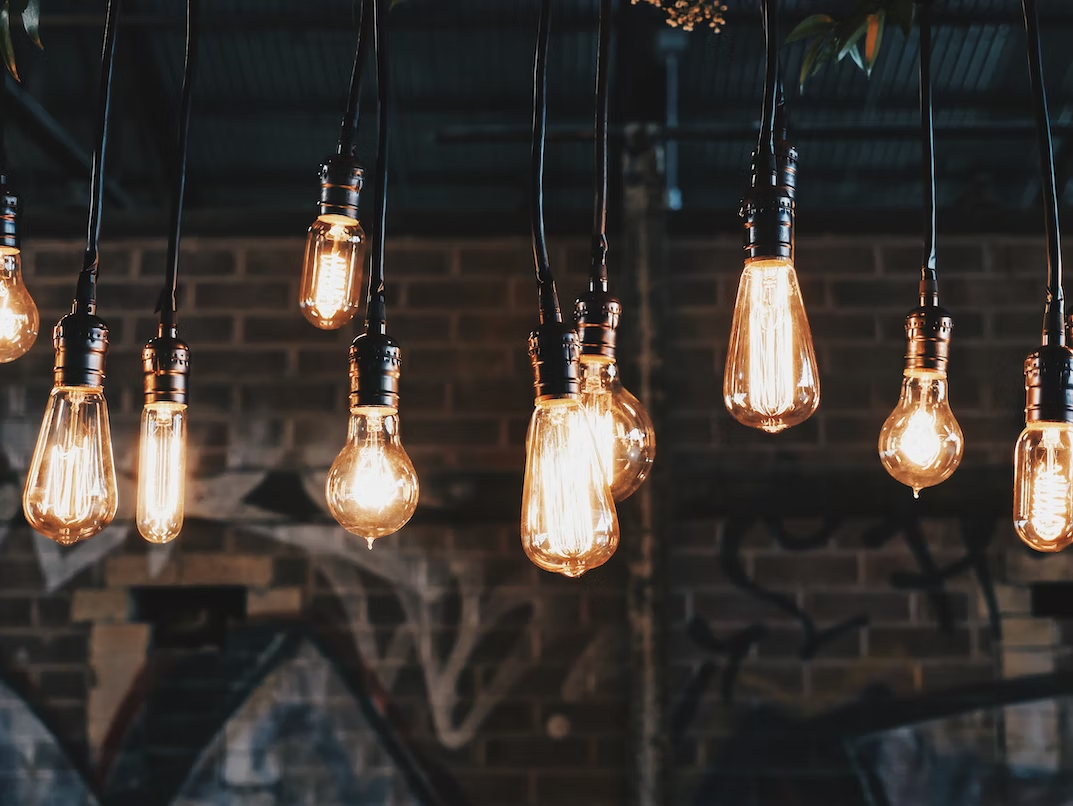
Decorative lighting is the fun layer: string lights over the patio, lanterns on the path, lights wrapped in a tree for a party, solar-powered stakes in the garden. These fixtures come in metal, glass, plastic and paper in nearly any style.
There’s even a legal definition. Under federal safety rules, a Decorative lighting product, written as “seasonal and decorative lighting product,” means portable, plug-connected, temporary-use lighting with a nominal 120-volt input. In plain terms: the string lights and plug-in sets you put up for a season, not the fixtures wired into the house.
That distinction matters for safety. Use sets marked for outdoor use, plug them into a GFCI-protected outdoor outlet, keep connections off the wet ground, and take temporary lights down when the season ends. For permanent string lights, have an electrician add a proper outlet and a switch or timer.
What is ambient outdoor lighting?
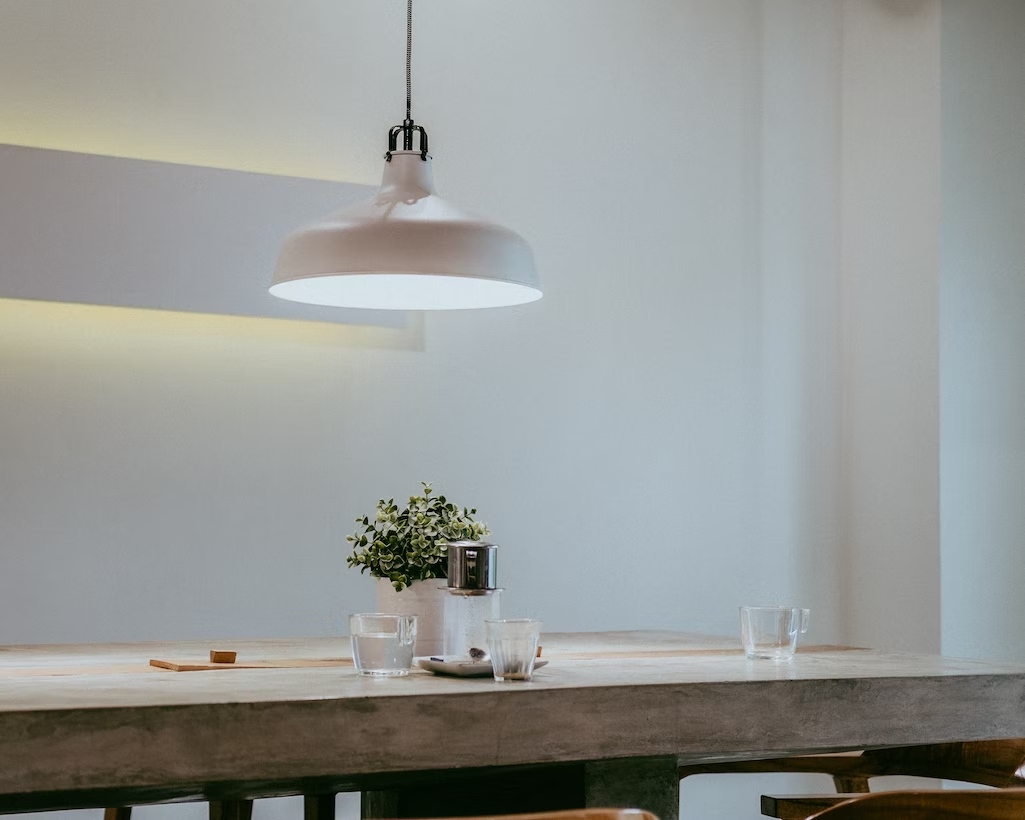
Ambient lighting is the soft, general glow that lets you see the whole space: a wall lantern on the patio, post lights along a long drive, a dim downlight under the eaves. It’s the outdoor version of the ambient light in a living room, the layer everything else sits on.
Keep it low and warm. Mount fixtures at different heights and angles so light comes from more than one place, and keep one color temperature across the yard. Bright, cool white light outside tends to look harsh. Park City’s dark-sky guidance asks for outdoor bulbs of 3,000 Kelvin or less and fixtures that are fully shielded and direct light downward.
Sell smarter
List your home on the MLS from $99
A flat fee instead of a percentage, and $0 to Beycome at closing. You stay in control of your sale.
Sell your home →Buy smarter
Get up to 2% back at closing
On homes listed by other agents, Beycome credits you up to 2% of the price at closing (1% kept, $1,499 minimum; not on FSBO homes or homes listed by Beycome sellers).
Buy a home →Pick a fixture style that matches the house. Classic wall lanterns suit traditional homes. Simple cylinders and boxes suit modern ones. With a few warm fixtures, a patio feels calm instead of lit up like a stadium.
How much does outdoor lighting cost to run, and which bulbs work best?
Less than most people think, once you switch to LED. ENERGY STAR says LED lighting makes light up to 90% more efficiently than incandescent bulbs, and certified LED fixtures use 90% less energy than traditional incandescent models.
Here’s one porch light. A 60-watt incandescent swapped for a 10-watt LED, left on 10 hours a night, saves 50 watts for 3,650 hours a year. That’s about 183 kWh. At the U.S. average residential price of 18.16 cents per kWh in August 2026 (EIA), it’s about $33 a year saved, and the LED itself costs about $6 a year to run. Five fixtures is real money.
Controls add more. Dusk-to-dawn sensors turn lights on only when it’s dark. Motion sensors suit security lights, which don’t need to burn all night. Timers handle decorative lights. Lynnfield’s list adds dimmers and turning lights off when you’re not using them.
Choosing bulbs for outside
- Color: about 2700K to 3000K for a warm look that’s easier on neighbors and wildlife.
- Brightness: check lumens, not watts. Path lights need far less than a garage flood.
- Rating: use bulbs and fixtures rated for damp or wet locations, as the box says.
- Solar: fine for accent and path markers in sunny spots; less reliable for steps and doors after cloudy days.
For indoor rooms, our guide to improving the lighting in your home covers lumens and color by room, and we’ve also listed four advantages of LED lighting.
Does outdoor lighting help sell a house?
It helps the evening photo and the evening drive-by. Many buyers check out a house after work, in the dark. A lit path, a lit front door and readable house numbers make the place look cared for. Before twilight photos, replace any dead bulbs, match the color of every fixture, and turn everything on. Our tips on making your home stand out from the street and listing photos go further, and our backyard ideas show where lights fit in a yard.
When you list, Beycome puts your home on the major home search sites and the MLS. See how listing from $99 works, with $0 to Beycome at closing.
Outdoor lighting questions
What are the main types of outdoor lighting?
Task lighting for doors, steps and paths; accent lighting for trees and walls; decorative lighting like string lights and lanterns; and ambient lighting for a soft overall glow on patios and drives.
What color temperature is best for outdoor lights?
Warm white, about 3000K or lower. Local dark-sky guides in Lynnfield, Massachusetts, and Park City, Utah, recommend 3000K or below to cut glare and harm to wildlife.
How much does it cost to leave a porch light on all night?
A 10-watt LED on for 10 hours a night uses about 37 kWh a year, roughly $6–7 at August 2026’s U.S. average price. A 60-watt incandescent costs about six times as much.
What does “fully shielded” mean for outdoor fixtures?
The fixture covers the bulb so light points down, not up or sideways into the sky or your neighbor’s windows.
Are solar outdoor lights worth it?
For path markers and accents in sunny spots, yes. For steps, doors and security, wired LED fixtures on a sensor are more reliable.
Can I leave string lights up all year?
Plug-in seasonal sets are made for temporary use. For year-round lights, use fixtures rated for permanent outdoor use and have an electrician add a proper outlet and switch.
Cost examples use EIA’s August 2026 average residential price and are estimates; your rate and hours differ. Lighting guidance is from local government pages and ENERGY STAR, read October 29, 2026; check your own city or HOA rules. Use a licensed electrician for new wiring. Beycome Basic is $99 as of November 2026 (Basic is $129 in California and Illinois), with $0 to Beycome at closing; other closing costs still apply. Beycome lists in 17 states and DC.
Sources
- Town of Lynnfield, Light Pollution, read October 29, 2026.
- Park City, Be a Dark Sky Steward FAQs, read October 29, 2026.
- ENERGY STAR, Learn About LED Lighting, read October 29, 2026.
- ENERGY STAR, Light Fixtures, read October 29, 2026.
- EIA, Electric Power Monthly, Table 5.6.A, August 2026, read October 29, 2026.
- Cornell LII, definition from 16 CFR 1120.2, read October 29, 2026.
- Beycome, listing package features, October 2026.
Disclosure & Disclaimer
Beycome provides real estate services through affiliated licensed brokerages and has a commercial interest in the services and business models discussed on this blog. Content reflects Beycome’s perspective and may promote our services; it should not be treated as independent or neutral reporting.
Articles are provided for general informational and educational purposes only, not as financial, tax, legal, or investment advice or a recommendation for your particular situation. Reading this blog does not create a brokerage, advisory, or other professional relationship.
Information, opinions, pricing, service descriptions, and comparisons reflect the sources and information available when an article was published or last updated and may change. Although we aim for accuracy, we do not guarantee that all content is complete, current, or applicable to your circumstances. Laws, market conditions, and service availability vary by location. Examples and estimated savings are illustrative, depend on stated assumptions, and do not guarantee individual results.
Verify relevant information directly and consult qualified professionals before making decisions. Beycome services are subject to applicable agreements, eligibility requirements, and state-specific terms.
