
Updated October 2026. Four ways to organize your belongings from home: give things away by pickup, use a storage unit, hide things in deep storage, and sort by type. IRS, EPA, NAR and WebMD sources were read on October 28, 2026.
You can clear a crowded house without leaving it much: book a doorstep donation pickup, move seasonal things to a storage unit, put everyday clutter into closed “deep storage”, and group the rest by type. Do it room by room, one weekend each. The US generated about 17 million tons of textile waste in 2018, per the EPA, so a lot of what you clear can go to someone who’ll use it.
Jump to: 🤝 Give it away · 🏠 Storage unit · 🪜 Deep storage · 📸 Sort by type · 💲 Before you sell · ❓ FAQ
Key takeaways
- Start with what you don’t use. Every item you give away is one you never have to store, clean or move.
- For a tax deduction, donated clothing and household items generally must be in good used condition or better (IRS Publication 526).
- A storage unit works best for bulky, seasonal or “not yet” items, not for things you’ll need every week.
- Selling soon? Stagers focus on the living room (91%), primary bedroom (83%) and dining room (69%), per NAR.
Clutter isn’t just a looks problem. A cluttered environment can wear on you: WebMD’s medically reviewed overview points to a study where women who saw their homes as cluttered had higher levels of the stress hormone cortisol through the day. You also lose time hunting for keys, chargers and the one screwdriver that fits. The four steps below fix most of it without hauling things across town.
How do you get rid of things you don’t use without leaving home?
Give them away, and let someone else do the driving. Many charities and thrift chains run doorstep or curbside pickups: you book a date online, leave bags and boxes outside, and they collect. Local “buy nothing” groups and neighborhood apps work too; neighbors often come to your porch the same day.
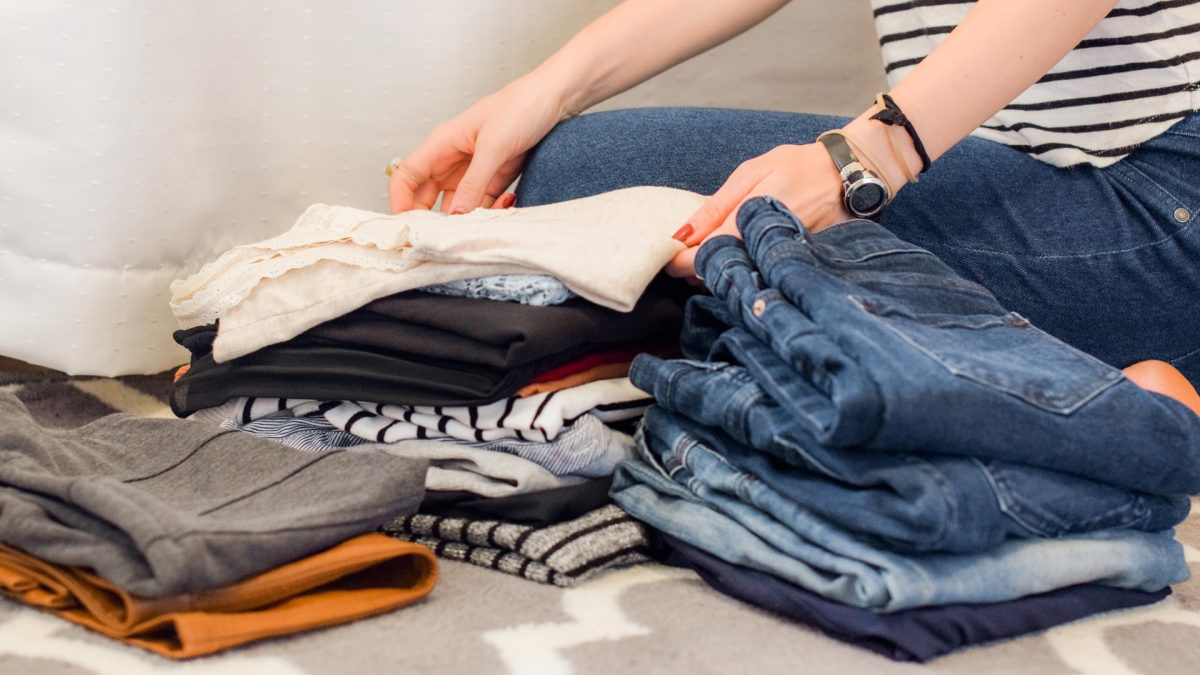
Make it simple. Keep one box by the door. When you touch something you haven’t used in a year, it goes in the box. When the box is full, book the pickup. Clothes, books, kitchen gear, toys and small furniture move fastest.
Can you deduct donated items?
Sometimes. For 2025 returns, IRS Publication 526 says you generally have to itemize on Schedule A to deduct charitable gifts. Clothing and household items, which include furniture, electronics, appliances and linens, must be in good used condition or better. The exception is an item worth more than $500 that comes with a qualified appraisal. Ask the charity for a receipt and keep a list of what you gave. Rules change, so check the current Publication 526 or ask a tax pro.
What can’t be donated can often be recycled. The EPA estimates textiles were 5.8% of all municipal solid waste in 2018, mostly discarded clothing (EPA). Many towns run textile drop-off bins or curbside textile collection; your city’s waste page will list them.
When does renting a storage unit make sense?
When the items are worth keeping but don’t need to live in your rooms. Think holiday decorations, camping gear, a crib for the next baby, the dining set you’ll want in a bigger house, boxes of keepsakes. Moving them out frees closets and makes rooms feel bigger right away.

Storage helps most during a transition: a renovation, a move, downsizing from a house to a condo, or the weeks your home is on the market. Many facilities offer month-to-month terms, and some companies deliver a portable container to your driveway and pick it up full, so you barely leave the house. Before you sign, compare the monthly price with what the items are worth. Paying for years to store a $200 sofa rarely adds up.
Our guide to organizing and storing your stuff before a move has a packing order that works for storage units too, and if you’re hiring help, see how to pick the right moving company.
What is deep storage, and how do you use it?
Deep storage means closed places that keep things out of sight: drawers, cabinets, lidded bins, under-bed boxes, high shelves in a closet. The point is calm surfaces. What’s behind a door doesn’t look like clutter, even if it’s full.
Use it for things you need a few times a year: tax files, spare bedding, tools, gift wrap, the fondue set. Label every bin on the front and the top. Put the least-used items highest or lowest, and the things you reach for often at waist height.
The garage is the biggest deep-storage space many homes have. Shelving and ceiling racks get boxes off the floor so the car fits again. Our post on making your garage more convenient has layouts, and four fixes for a lack of storage covers small homes and apartments.
Why sort your belongings by type?
Because you’ll always know where to look. Put all the batteries in one bin, all the chargers in another, all the first-aid supplies in one box. Grouping by type also shows you how much you have. Most people who gather every pair of scissors in the house find five.
Sell smarter
List your home on the MLS from $99
A flat fee instead of a percentage, and $0 to Beycome at closing. You stay in control of your sale.
Sell your home →Buy smarter
Get up to 2% back at closing
On homes listed by other agents, Beycome credits you up to 2% of the price at closing (1% kept, $1,499 minimum; not on FSBO homes or homes listed by Beycome sellers).
Buy a home →A second sort, by how often you use things, decides where each group lives:
- Daily: within reach, in the room where you use it.
- Weekly: in a nearby closet or cabinet.
- A few times a year: in deep storage, labeled.
- Once a year or less: in the garage, attic or a storage unit, or out the door.
Clear bins help you see what’s inside, and color-coding helps a family: one color per person, or per season. Keep a simple rule after the big sort. Something new comes in, something old goes out.
Should you declutter before you sell or move?
Yes, and earlier than you think. Buyers have to picture their own things in your rooms. In NAR’s 2025 Profile of Home Staging, 83% of buyers’ agents said staging made it easier for buyers to visualize the home as their future home, and the rooms most often staged were the living room (91%), primary bedroom (83%) and dining room (69%) (NAR). Clearing those three rooms is free staging.
It also cuts moving costs, since movers price by weight, volume or hours. Anything you give away now is something you don’t pay to pack. Our storage solutions guide helps you decide what stays.
When the house is ready, Beycome lists it on your local MLS from $99 with $0 at closing; see the flat fee MLS plans. Buying your next place? The Beycome buyer program is open to every buyer on homes listed by other agents (the commission credit can’t apply where no buyer-agent commission is offered, like most FSBO homes, or on homes listed by Beycome sellers). Beycome keeps 1% of the price, minimum $1,499, and credits the rest at closing, with lender approval.
Frequently asked questions
How do I organize my belongings without leaving the house?
Book a doorstep donation pickup for what you don’t use, have a portable storage container delivered for bulky items, move the rest into closed bins and drawers, and group what’s left by type.
What should I get rid of first when decluttering?
Start with things you haven’t used in a year, duplicates, and items that are broken or don’t fit. Clothes, books and kitchen gear are the quickest wins.
Is a storage unit worth it?
It’s worth it for valuable, bulky or seasonal items during a move, renovation or home sale. It’s rarely worth it for cheap items you’d replace for less than a few months of rent.
Can I deduct clothes I donate?
Generally only if you itemize, and the items must be in good used condition or better, per IRS Publication 526. Keep the charity’s receipt and a list of what you gave.
What is deep storage?
Closed storage that keeps items out of sight: drawers, cabinets, lidded bins, under-bed boxes and high closet shelves. Use it for things you need only a few times a year.
Does clutter affect your health?
It can. WebMD’s medically reviewed overview cites a study linking a cluttered home to higher daytime levels of the stress hormone cortisol, and clutter makes it harder to focus.
Tax rules: IRS Publication 526 (2025) is general information; rules can change, ask a tax professional. Waste figures: EPA, 2018 data. Staging figures: NAR 2025 Profile of Home Staging. All read October 28, 2026.
Prices as of October 2026 and subject to change. Basic $99 and Enhanced $399; Concierge is $1,399. Basic is $129 in California and Illinois ($99 elsewhere). “$0 at closing” means no Beycome fee at closing; taxes, title, escrow and any buyer-agent compensation you agree to still apply.
Buyer credit: no upfront fee; Beycome keeps 1% of the price (minimum $1,499) and credits the rest of the buyer-agent commission at closing, with lender approval. It applies to homes listed by other agents, not to most FSBO homes (no buyer-agent commission offered) or homes listed by Beycome sellers. General information, not legal, tax or financial advice; rules vary by state and MLS.
Sources
- IRS, Publication 526, Charitable Contributions, read October 28, 2026.
- EPA, textiles: material-specific data, read October 28, 2026.
- NAR, 2025 Profile of Home Staging, read October 28, 2026.
- WebMD, how clutter can affect your health, read October 28, 2026.
- The Independent, IndyBest furniture storage reviews, read October 28, 2026.
- Beycome, listing package features, October 2026.
Disclosure & Disclaimer
Beycome provides real estate services through affiliated licensed brokerages and has a commercial interest in the services and business models discussed on this blog. Content reflects Beycome’s perspective and may promote our services; it should not be treated as independent or neutral reporting.
Articles are provided for general informational and educational purposes only, not as financial, tax, legal, or investment advice or a recommendation for your particular situation. Reading this blog does not create a brokerage, advisory, or other professional relationship.
Information, opinions, pricing, service descriptions, and comparisons reflect the sources and information available when an article was published or last updated and may change. Although we aim for accuracy, we do not guarantee that all content is complete, current, or applicable to your circumstances. Laws, market conditions, and service availability vary by location. Examples and estimated savings are illustrative, depend on stated assumptions, and do not guarantee individual results.
Verify relevant information directly and consult qualified professionals before making decisions. Beycome services are subject to applicable agreements, eligibility requirements, and state-specific terms.
