
Updated November 2026. Six everyday items that make a home easier to run, what each one really saves you, and what happens to them when you move.
To equip your home for an easier daily life, six items do most of the work as of November 2026: a robot or cordless vacuum, a weatherproof mailbox, a smart thermostat, a smart lock, motion sensor lights and an electric pressure cooker. Heating and cooling cost the average US household more than $900 a year, per ENERGY STAR, so start with the thermostat.
Jump to: 🏠 The 6 items · ✅ What a house needs · 💲 What they save · 🤝 When you move · ❓ FAQ
Key takeaways
- Almost half of a typical US home energy bill goes to heating and cooling, more than $900 a year, per ENERGY STAR. A smart thermostat targets that line.
- Americans spend about 90% of their time indoors, per the EPA, which is why regular vacuuming matters for the air you breathe at home.
- USPS asks for curbside mailboxes 41 to 45 inches from the road and 6 to 8 inches back from the curb.
- Items attached to the house, like a smart lock or thermostat, usually stay with it when you sell unless the contract says otherwise.
Most homes don’t need a full smart-home overhaul. A few well-chosen things take care of the chores you repeat every day: cleaning, mail, temperature, keys, lights and dinner. Here’s what each one does, what to look for, and what to do with it if you sell.
How do you equip your home to make life easier?
Pick the chores you repeat most and give each one a tool that runs on its own. These six cover the daily basics.
1. A vacuum that runs without you
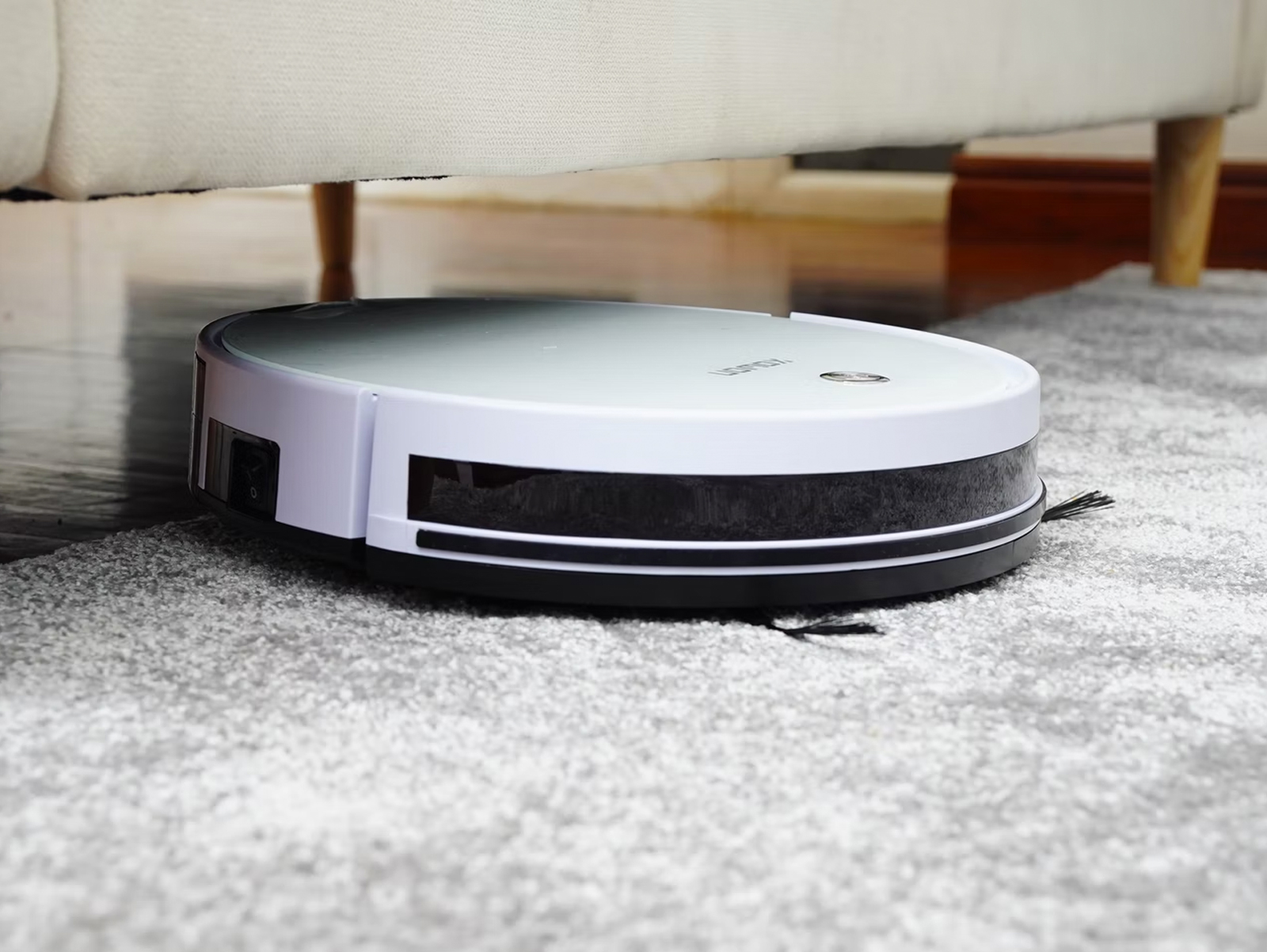
Floors collect dust, pet hair and crumbs faster than anything else in a house. A robot vacuum can run on a schedule while you’re at work, and a cordless stick vacuum handles quick spills without dragging out a cord. Both cut a weekly chore down to a few minutes.
There’s a health side too. The EPA says Americans spend about 90 percent of their time indoors, where some pollutant levels are often 2 to 5 times higher than outdoors. Regular vacuuming with a good filter helps keep dust down. Read more about the vacuum cleaner and its health benefits, or pick up home cleaning tips from the pros.
2. A weatherproof outdoor mailbox
Mail still brings checks, tax forms and packages. A mailbox with a sealed lid keeps rain and wind off them, and a locking one protects against theft. You can choose from many styles of letter boxes: wall-mounted, post-mounted or set into a fence.
If you install a curbside box, follow the USPS rules: 41 to 45 inches from the road surface to the bottom of the box, 6 to 8 inches back from the curb, with your house number on it. A larger box that takes small parcels saves trips to the post office.
3. A smart thermostat
This is the item with the clearest payoff. ENERGY STAR says almost half of the average household’s energy bill goes to heating and cooling, more than $900 a year. A smart thermostat learns your schedule, sets back the temperature when you’re asleep or away, and lets you adjust it from your phone. Some also use your phone’s location to warm or cool the house before you get home.
Look for an ENERGY STAR certified model, and check that it works with your heating and cooling system before you buy. Many utilities offer rebates; ENERGY STAR has a rebate finder by ZIP code. Smart thermostats and other gadgets are easy to browse online, but compatibility comes first.
4. A smart door lock
No more hunting for keys. A smart lock opens with a code, a phone or a fingerprint, and many send an alert when the door is opened or left unlocked. You can give a code to a dog walker or a contractor and delete it when the job’s done. Pick one that still has a physical key backup in case the battery dies.
5. Motion sensor lights
Motion sensor lights turn on when you walk in and off when you leave. Indoors, they’re handy in hallways, closets and garages where your hands are often full. Outdoors, they light the path to the door and make it harder for anyone to approach the house unseen. Pair them with LED bulbs and they cost very little to run. For more ideas, see these home improvements for your safety.
6. An electric pressure cooker
After a long day, dinner is one more job. An electric pressure cooker cooks stews, beans, rice and tough cuts of meat much faster than a pot on the stove, and you don’t have to stand over it. Many also slow-cook, steam and sauté, so one appliance replaces several on the counter.
What things does a house need before the extras?
Gadgets come second. If you’ve just moved in, check that these things for a house that you need are in place first. They’re cheap, and several are about safety.
Sell smarter
List your home on the MLS from $99
A flat fee instead of a percentage, and $0 to Beycome at closing. You stay in control of your sale.
Sell your home →Buy smarter
Get up to 2% back at closing
On homes listed by other agents, Beycome credits you up to 2% of the price at closing (1% kept, $1,499 minimum; not on FSBO homes or homes listed by Beycome sellers).
Buy a home →- Smoke alarms in every bedroom, outside each sleeping area and on every level, including the basement, per the U.S. Fire Administration. Test them monthly and replace each alarm every 10 years.
- A carbon monoxide alarm if you have gas appliances, a fireplace or an attached garage.
- A fire extinguisher in the kitchen, and everyone in the house knowing where it is.
- A basic toolkit: screwdrivers, a hammer, a tape measure, pliers, a plunger and a flashlight.
- Know your shutoffs: find the main water valve and the electrical panel before you need them.
Once those are covered, the six items above are what make day-to-day life from home easier. Short on room for all of it? Our ideas to create more space in your home help.
Which items save the most time or money?
| Item | Main benefit | Install | Stays when you sell? |
|---|---|---|---|
| Robot or cordless vacuum | Time and cleaner air | None | No, it’s personal property. |
| Outdoor mailbox | Protects mail and parcels | Mount or post | Usually yes, if attached. |
| Smart thermostat | Lower heating and cooling bills | Wiring; check compatibility | Usually yes, it’s attached. |
| Smart lock | No keys; access codes | Replaces the deadbolt | Usually yes, it’s attached. |
| Motion sensor lights | Safety and less wasted power | Bulbs or fixtures | Fixtures yes, plug-in lamps no. |
| Electric pressure cooker | Faster dinners | None | No, it’s personal property. |
If you’d like to go further and automate more of the house, our guide on ways to automate parts of your home covers lighting scenes, blinds and voice control. For the devices worth the money, see our list of smart home devices worth having.
What happens to these items when you sell or move?
Here’s the rule of thumb most purchase contracts follow: things attached to the house are fixtures and stay, things you can pick up and carry are personal property and go with you. A smart thermostat, a wired smart lock, a mounted mailbox and hardwired motion lights are usually fixtures. A robot vacuum and a pressure cooker are yours.
If you want to take a fixture, like a pricey smart lock, say so in the listing and write it into the contract as an exclusion. Or swap it for a standard lock before showings. Our guide to for sale by owner contracts shows where “what conveys” goes.
- Before closing, remove your accounts from smart devices and reset them to factory settings.
- Leave manuals, model numbers and any warranty details in a kitchen drawer.
- Delete all access codes from the smart lock and tell the buyer how to set new ones.
Smart features can also help a listing. Mention the thermostat, lock and outdoor lighting in your description. When you’re ready to sell, a Beycome flat fee MLS listing puts your home on the major home search sites and the local MLS, from $99 in most states (see your state page), with $0 due to Beycome at closing. If you’d like an expert working with you from listing to closing, while every decision stays yours, see Concierge (see current price).
Just moved in?
New owners often buy these items in the first month. If you bought an older home, start with our checklist of things to do after moving into an old house, and our ideas to spruce up your property exterior. Still house hunting? The Beycome buyer program has no upfront fee: Beycome keeps 1% of the price (minimum $1,499) and credits the rest of the buyer-agent commission at closing, with lender approval. It’s open to every buyer on homes listed by other agents (the credit can’t apply where no buyer-agent commission is offered, like most FSBO homes, or on homes listed by Beycome sellers).
Frequently asked questions
What do you need to equip a new home?
Start with cleaning tools, a working thermostat, good locks, outdoor lighting and basic kitchen appliances. Smart versions of the thermostat and lock add the most day-to-day convenience.
What things make life easier at home?
Items that automate a daily chore: a robot vacuum, a smart thermostat, a smart lock, motion sensor lights and an electric pressure cooker.
Is a smart thermostat worth it?
For most homes, yes. Heating and cooling run more than $900 a year for the average household, per ENERGY STAR, and a smart thermostat sets back the temperature automatically.
How high should a curbside mailbox be?
USPS says 41 to 45 inches from the road surface to the bottom of the box, and 6 to 8 inches back from the curb.
What things do you need for a house?
Before any gadget: smoke alarms on every level and in every bedroom, a carbon monoxide alarm if you have gas, a kitchen fire extinguisher, a basic toolkit and knowing where the water shutoff is.
How can I make my home easier to run?
Automate the chores you repeat every day. A robot vacuum handles floors, a smart thermostat handles temperature, and a smart lock means no more lost keys.
Does a smart lock stay with the house when you sell?
Usually, because it’s attached. If you want to keep it, exclude it in writing in the purchase contract or replace it before you list.
Product details are general guidance, not endorsements; check compatibility and local rules before installing. Fixture rules depend on your contract and state law. Beycome prices as of November 2026 and subject to change: Basic from $99 in most states (see your state page), Concierge (see current price); “$0 at closing” means no Beycome fee at closing (taxes, title fees and any agreed buyer-agent compensation still apply). Buyer credit: minimum $1,499 kept by Beycome, lender approval required; not on FSBO homes or homes listed by Beycome sellers.
Sources
- ENERGY STAR, smart thermostats, read October 26, 2026.
- EPA, indoor air quality, read October 26, 2026.
- USPS, mailbox guidelines, read October 26, 2026.
- U.S. Fire Administration, smoke alarms, read November 2, 2026.
- Beycome, listing package features, November 2026.
- Beycome Concierge, November 2026.
Disclosure & Disclaimer
Beycome provides real estate services through affiliated licensed brokerages and has a commercial interest in the services and business models discussed on this blog. Content reflects Beycome’s perspective and may promote our services; it should not be treated as independent or neutral reporting.
Articles are provided for general informational and educational purposes only, not as financial, tax, legal, or investment advice or a recommendation for your particular situation. Reading this blog does not create a brokerage, advisory, or other professional relationship.
Information, opinions, pricing, service descriptions, and comparisons reflect the sources and information available when an article was published or last updated and may change. Although we aim for accuracy, we do not guarantee that all content is complete, current, or applicable to your circumstances. Laws, market conditions, and service availability vary by location. Examples and estimated savings are illustrative, depend on stated assumptions, and do not guarantee individual results.
Verify relevant information directly and consult qualified professionals before making decisions. Beycome services are subject to applicable agreements, eligibility requirements, and state-specific terms.

