
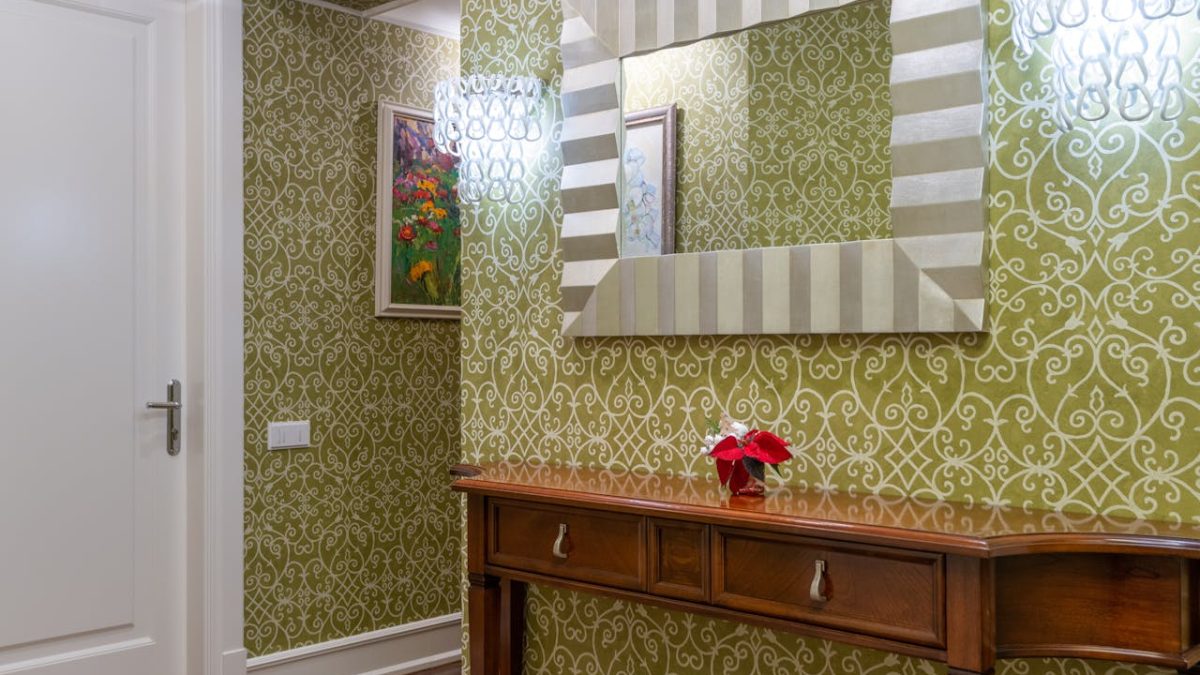
Updated November 2026. This page used to be about adding peel-and-stick wallpaper. Sellers kept asking the opposite question, so it now answers when to take wallpaper down before you list, how to remove each kind, and what can stay. Sources read November 12, 2026.
Should you remove wallpaper before selling? Usually yes for bold, dated or peeling paper: take it down, patch and paint a light neutral. A small, calm accent in good shape can stay. In NAR’s 2025 Remodeling Impact report, 50% of Realtors recommended painting the whole home before listing and 41% painting a single room. Peel-and-stick comes off in minutes; old pasted paper can take a weekend.
Jump to: 🤔 Remove or keep · 💲 Does it hurt value · 🪜 Peel-and-stick · 🧱 Old pasted paper · 🖌️ Painting over it · 📸 Before photos · ❓ FAQ
Key takeaways
- Remove anything bold, dated, peeling or very personal. Keep only small, calm accents in perfect shape.
- 83% of buyers’ agents say staging helps buyers picture the home as their own (NAR, 2025), and plain walls make that easier.
- In homes built before 1978, scraping can disturb lead paint under the paper; paid contractors must be EPA-certified for that work.
- Never use wallpaper to hide a crack, stain or mold you know about. Disclose it or fix it.
Wallpaper is personal. That’s the whole point of it, and it’s also the problem when you sell. The buyer walking through your dining room isn’t thinking about your taste. They’re thinking about the weekend they’d spend steaming it off. Here’s how to decide, room by room, and how to get it down without wrecking the wall.
Should you remove wallpaper before selling or keep it?
Decide by condition and by how loud it is. A tidy grasscloth wall in a home office reads as a feature. Faded borders in the kitchen read as work.
| What’s on the wall | Before you list |
|---|---|
| Bold print in a main room (living, kitchen, primary bedroom) | Remove, patch and paint. |
| Peeling seams, stains or bubbles anywhere | Remove. It signals neglect in photos. |
| Borders and dated patterns from the 1980s or 1990s | Remove. |
| Kids’ themes or very personal designs | Remove, or swap for paint. |
| A small, calm accent in perfect shape (powder room, back of a bookcase) | Can stay. |
| Peel-and-stick anywhere | Easy to take down; remove unless it’s a quiet accent. |
If you’re on the fence, take a phone photo of the room the way it would look online. If your eye goes to the wall before the room, it goes.
Does wallpaper decrease home value?
There’s no national data that puts a dollar figure on wallpaper. What the data does show is how much buyers and agents care about clean, neutral walls. NAR’s 2025 Remodeling Impact report lists painting the entire home (50%) and painting one interior room (41%) as the top projects Realtors recommend before listing.
Staging data points the same way. In NAR’s 2025 Profile of Home Staging, 83% of buyers’ agents said staging made it easier for a buyer to picture the home as their own, and the living room was the most important room to stage (37%), ahead of the primary bedroom (34%) and kitchen (23%). Those are exactly the rooms where loud wallpaper does the most harm.
So think of it as friction, not a price cut. A buyer who has to mentally repaint three rooms may offer less, or simply book the next showing. For which colors to use once the paper’s gone, see our guide to paint colors that help a house sell and the one on whether painting increases home value.
How do you remove peel-and-stick wallpaper?
This is the easy one. Start at a top corner and pull slowly downward, close to the wall, at a low angle. If a panel resists, warm it for a few seconds with a hair dryer to soften the glue. Wipe any sticky residue with warm, soapy water and let the wall dry.
The risk is the paint underneath. On fresh or thin paint, the glue can lift it, so test a hidden corner first. Small lifted spots just need a dab of spackle and touch-up paint. If you rent, take before-and-after photos for your landlord.
Moving on and want a fresh look at the new place? Removable panels are a fast way to make a room yours without paste. A search for wallpaper on Amazon shows how many styles and price points exist; order a sample before you buy a full room’s worth.
How do you remove old pasted wallpaper?
First, find out what you’ve got. Pry up a corner with a putty knife and pull. “Strippable” paper comes off in one piece. “Peelable” paper leaves a backing layer you soak off later. If nothing moves, it’s traditional paper bonded with paste, and that takes water and patience.
- Cover the floor, turn off power to outlets in the work area, and remove switch plates.
- Peel off any top layer you can by hand.
- Soak the backing with warm water and a little dish soap from a sprayer, or use a rented wallpaper steamer.
- Scrape gently with a wide, flexible blade, working with the wall, not into it.
- Wash off leftover paste, let the wall dry for a day, then patch gouges and prime.
Go easy on drywall. Its paper face tears if you soak it too long or scrape too hard, and then you’re repairing the wall instead of painting it. Plaster walls in older homes handle water better.
Older homes: check for lead first
In a house built before 1978, there may be lead paint under the paper. The EPA says about three-quarters of U.S. homes built before 1978 still contain some lead-based paint, and that any renovation or painting project in a pre-1978 home with lead paint can easily create dangerous lead dust. Under its Renovation, Repair and Painting Rule, anyone you pay to disturb painted surfaces there must be certified in lead-safe work. Selling a pre-1978 home also brings the federal lead disclosure; see our guide to lead paint disclosure for sellers.
Sell smarter
List your home on the MLS from $99
A flat fee instead of a percentage, and $0 to Beycome at closing. You stay in control of your sale.
Sell your home →Buy smarter
Get up to 2% back at closing
On homes listed by other agents, Beycome credits you up to 2% of the price at closing (1% kept, $1,499 minimum; not on FSBO homes or homes listed by Beycome sellers).
Buy a home →Can you paint over wallpaper instead of removing it?
You can, but it’s a shortcut with a cost. Paint can make old paper bubble, and every seam tends to show through, especially in listing photos taken with a wide lens and a flash. If you must, the paper has to be firmly stuck everywhere, seams glued down, and sealed with a primer made for the job before you paint.
Buyers and inspectors can usually tell. A painted-over wall is fine for a quick refresh you’ll live with. Before a sale, removal is the cleaner answer.
One rule beats every style question. Don’t cover cracks, water stains or mold you know about, with wallpaper or paint. Most states require sellers to disclose known defects. If a wall has a real problem, price the repair instead, as our guide to what you lose selling a house as is explains.
What should you do between removing wallpaper and taking listing photos?
Give it a full week if you can. Wallpaper removal, patching, priming and two coats of paint each need drying time, and fresh patches show in photos if you rush.
- Patch and sand, then prime the patched spots so the paint dries evenly.
- Use one light neutral across connected rooms so the house reads as one.
- Stage the living room, primary bedroom and kitchen first, the rooms buyers care about most.
- Shoot in daylight with the lights on.
Our room-by-room staging checklist and the list of major upgrades to do before listing help you finish the prep. For the full pre-sale order, see what to fix, clean and paint first.
When the walls are ready, Beycome puts your home on the major home search sites and the MLS from $99 in most states, with $0 due to Beycome at closing. You can add, change or delete your photos yourself from the dashboard at any stage, even after the listing is live, so painted rooms can replace the “before” shots in minutes. Want them shot by a pro? Basic sellers can add professional photos for $189. See the listing packages.
Buying your next place at the same time? Beycome’s buyer program has no upfront fee on homes listed by other agents. Beycome keeps 1% of the price (minimum $1,499) and credits the rest of the buyer-agent commission at closing, with lender approval. It can’t apply where no buyer-agent commission is offered, like most FSBO homes, or on homes listed by Beycome sellers, and rebate rules vary by state. 22,000+ homeowners have used Beycome (Beycome internal data, October 2026).
Wallpaper and selling: questions
Should I remove wallpaper before selling my house?
Usually, if it’s bold, dated, peeling or very personal. Patch and paint a light neutral. A small, calm accent in good shape can stay.
Does wallpaper decrease home value?
No national data puts a price on it, but 50% of Realtors recommend painting the whole home before listing (NAR, 2025). Loud wallpaper adds work buyers notice.
Is it better to paint over wallpaper or remove it?
Removing it is cleaner before a sale. Painting over paper can bubble and show seams in photos.
How do you remove old wallpaper?
Peel off the top layer, soak the backing with warm soapy water or a steamer, scrape gently, wash off the paste, then patch and prime.
Is peel-and-stick wallpaper easy to remove?
Yes. Pull it slowly at a low angle from a top corner, warm stubborn spots with a hair dryer, and wipe off residue. Test a corner first on fresh paint.
Can removing wallpaper expose lead paint?
In homes built before 1978, yes. Paid contractors who disturb painted surfaces there must be EPA-certified in lead-safe work.
Pre-listing and staging figures come from NAR’s 2025 Remodeling Impact report and 2025 Profile of Home Staging releases; lead figures from the EPA. All read November 12, 2026. Removal steps are Beycome guidance; follow the product maker’s instructions. Disclosure rules vary by state; general information, not legal advice.
Beycome prices as of November 2026: Basic from $99 in most states ($129 in California and Illinois; see your state page), Enhanced $399, Concierge $1,399; professional photos for Basic $189. “$0 at closing” means no Beycome fee at closing; other closing costs still apply. Buyer credit: Beycome keeps 1%, minimum $1,499, lender approval needed, not on FSBO homes or homes listed by Beycome sellers; not offered in Alabama or Tennessee.
Sources
- NAR, 2025 Remodeling Impact Report release, April 9, 2025, read November 12, 2026.
- NAR, 2025 Profile of Home Staging release, May 6, 2025, read November 12, 2026.
- US EPA, Lead Renovation, Repair and Painting Program, read November 12, 2026.
- Beycome, listing package features, read November 12, 2026.
Disclosure & Disclaimer
Beycome provides real estate services through affiliated licensed brokerages and has a commercial interest in the services and business models discussed on this blog. Content reflects Beycome’s perspective and may promote our services; it should not be treated as independent or neutral reporting.
Articles are provided for general informational and educational purposes only, not as financial, tax, legal, or investment advice or a recommendation for your particular situation. Reading this blog does not create a brokerage, advisory, or other professional relationship.
Information, opinions, pricing, service descriptions, and comparisons reflect the sources and information available when an article was published or last updated and may change. Although we aim for accuracy, we do not guarantee that all content is complete, current, or applicable to your circumstances. Laws, market conditions, and service availability vary by location. Examples and estimated savings are illustrative, depend on stated assumptions, and do not guarantee individual results.
Verify relevant information directly and consult qualified professionals before making decisions. Beycome services are subject to applicable agreements, eligibility requirements, and state-specific terms.

