
Updated October 2026. Ten small home cleaning habits that keep a house tidy without whole weekends of scrubbing, with EPA moisture and ventilation guidance and FDA refrigerator temperatures checked this month.
The home cleaning tips that work best are small daily habits: make the bed, put things back where they live, sweep or vacuum high-traffic floors, and pick one bigger chore each week. Clean the fridge before each big shopping trip and keep it at 40°F or below (FDA). As of October 2026, EPA advice for damp climates is to keep indoor humidity under 60%, ideally 30% to 50%.
Jump to: ⏱️ Daily habits · 🪜 Weekly chores · 🏠 Fridge and kitchen · 📍 Your climate · 💲 Before you sell · ❓ FAQ
Worth remembering
- Keep the fridge at 40°F or below and the freezer at 0°F, checked with a cheap appliance thermometer (FDA).
- Dry leaks and spills within 24 to 48 hours, and in most cases mold won’t grow (EPA).
- Indoor humidity: below 60%, ideally 30% to 50%; a $10 to $50 meter measures it (EPA).
- More than 106 million people in the U.S. have allergies, about 1 in 3 (AAFA), so dust and dander control helps a lot of households.
A clean house feels calmer, and it’s easier to live in. The trouble is finding the time between work, school and everything else. The trick isn’t a marathon Saturday. It’s a handful of small habits that stop mess from piling up, plus help from a pro for the jobs you’d rather not do. If you want the “why” behind all this, read why you should clean your house regularly. This page is the “how”.
Which daily habits keep a house clean?
1. Make your bed every morning. It takes two minutes and the whole bedroom looks finished. It’s also a small win to start the day, and it sets the tone for how your home looks the rest of the day.
2. Put things where they go. Scissors back in the drawer, mail in the mail tray, socks in the hamper, keys on the hook. Put things where they belong, not where it’s convenient for the next five seconds. Most clutter is just stuff that never made it home.
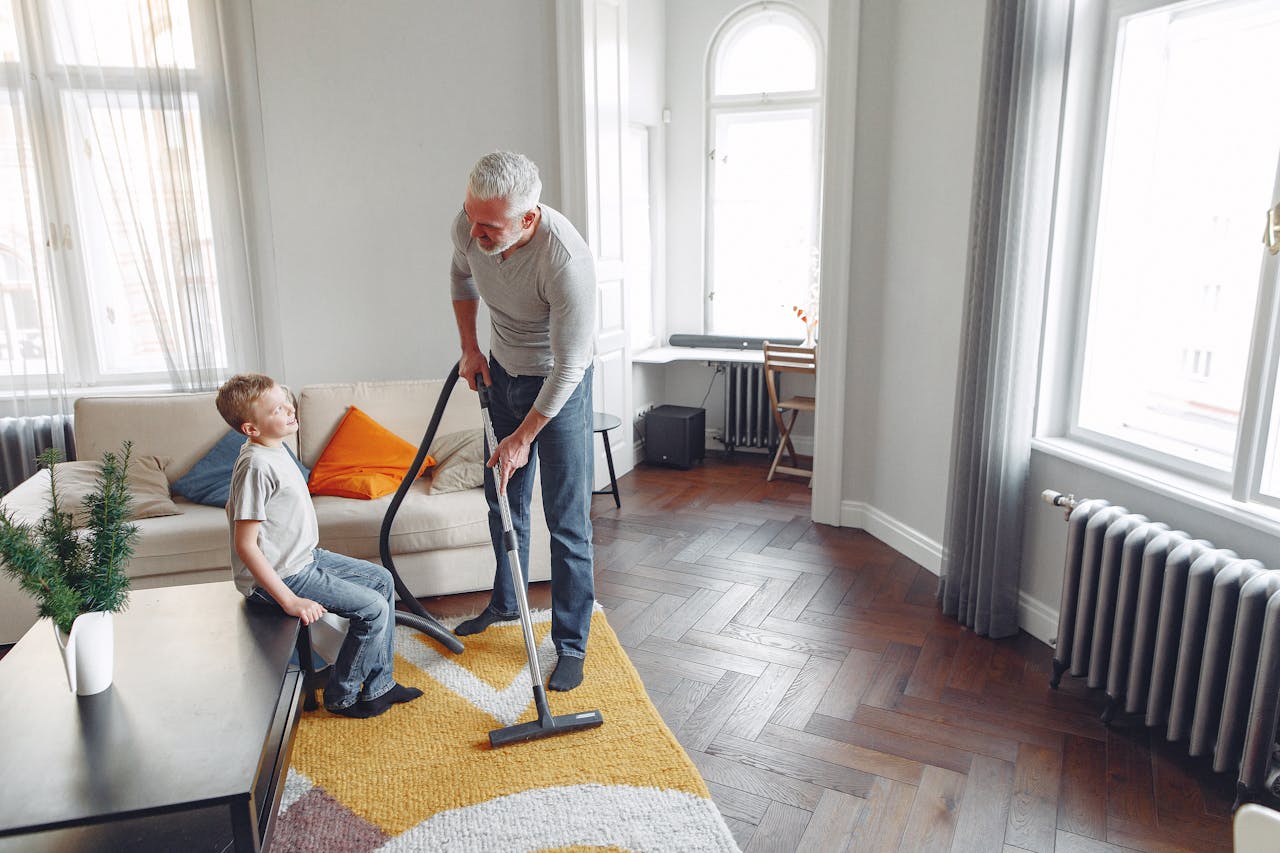
3. Sweep or vacuum the busy floors. Entry, kitchen and the main living area. Daily sweeping keeps grit from scratching hard floors and carpet from matting, which helps your flooring last as long as it should. Shoes off at the door cuts the job in half.
4. Reset the kitchen at night. Dishes done or in the dishwasher, counters wiped, trash out if it’s full. Waking up to a clean kitchen makes the next day easier, and it doesn’t leave crumbs for pests.
How do you handle the bigger chores?
Daily habits keep the surface clean. The deeper jobs still need a slot, or they wait until the house feels grimy and the whole family spends a Saturday catching up. Spread them out instead. A short list on the fridge, with one item crossed off each week, works better than any app.
5. Pick one major chore a week. A major chore is one you don’t do often: wiping walls and baseboards, cleaning out the garbage can, organizing a closet, washing windows. Put one on the calendar each week. They get done, and none of them grows into a weekend project.
6. Declutter one room at a time. Trying to tackle a cluttered home all at once is how people give up. Start small, with a pantry or guest bathroom, then move on. A few rules that help:
- Use three boxes: keep, donate, toss. Decide on each item once.
- If you haven’t used it in a year and it isn’t sentimental, let it go.
- Give everything you keep a set home.
- Take the donate box to the car the same day.
For more, see decluttering your home done right, and if you’re renovating, how to handle waste during a remodel.
7. Wash the linens you forget. Sheets and towels get washed weekly, but curtains, duvet covers, throw blankets, pillow covers and tablecloths hold dust and odors for months. Wash or professionally clean them a few times a year. AAFA counts more than 106 million people in the U.S. with allergies, and dust collects in fabric.
How should you clean the fridge and kitchen?
8. Clean out the fridge before each big shopping trip. Toss leftovers and expired items, wipe shelves and drawers, then shop. You’ll have room for fresh food and a clear view of what you actually need. It’s also a good way to avoid ending up with three bottles of ketchup. The Family Handyman list of tips to clean out your fridge and the rest of the house in a day is a good companion.
Sell smarter
List your home on the MLS from $99
A flat fee instead of a percentage, and $0 to Beycome at closing. You stay in control of your sale.
Sell your home →Buy smarter
Get up to 2% back at closing
On homes listed by other agents, Beycome credits you up to 2% of the price at closing (1% kept, $1,499 minimum; not on FSBO homes or homes listed by Beycome sellers).
Buy a home →Check the temperature while you’re there. FDA says to keep the refrigerator at 40°F or below and the freezer at 0°F, and since few fridge dials show the actual temperature, put an inexpensive appliance thermometer inside. FDA also says to avoid overpacking, so cold air can circulate, and to wipe up spills right away.
How does your climate change your cleaning?
9. Clean for the weather you live in. Every home has different needs depending on where it is. In humid places like Hawaii or Florida, the fight is against moisture, mold and mildew. EPA says to keep indoor humidity below 60%, ideally between 30% and 50%, and to dry wet areas within 24 to 48 hours. Run bathroom fans, keep AC drip pans clean, and act quickly on condensation on windows or pipes.
In places with drier weather and big pollen seasons, like Kansas, dust and pollen are the bigger problem. Vacuum with a HEPA filter, change HVAC filters on schedule and wipe surfaces with a damp cloth. Larger spaces like offices or rental buildings often hire help: janitorial services in Kansas City and nearby areas handle carpets, floors and dusting on a schedule, so allergens don’t build up.
10. Air the house out. EPA explains that poor ventilation can raise indoor pollutant levels, because not enough outdoor air comes in to dilute what’s released inside, from cleaning products to cooking. Open windows in stuffy rooms when the weather allows, run kitchen and bath fans, and get ducts checked so the heating and AC run cleanly. A few houseplants, like a snake plant or a fern, make rooms feel fresher too, though they don’t replace ventilation.
What should you clean before selling your home?
Everything buyers touch or see in photos. Windows, baseboards, light switches, grout, the inside of the oven and cabinets, and the front entry. Plants are a cheap way to make rooms look inviting in listing photos. Our guides on home cleaning tips from the pros, keeping your home looking fresh and how lawn care can boost value cover inside and out. For cheap fixes beyond cleaning, see cheap ways to improve home value fast.
When the house is ready to place it on the market, a Beycome flat fee MLS listing starts at $99 with $0 due to Beycome at closing, in 17 states and DC. Every package includes unlimited listing updates, so you can swap in new photos after a deep clean, and ShowingTime scheduling where the MLS offers it.
Home cleaning questions
What are the most important home cleaning tips?
Make the bed, put things away, sweep busy floors daily, reset the kitchen at night and do one bigger chore each week.
How often should I clean out my fridge?
Before each big shopping trip is an easy rhythm. Keep it at 40°F or below and the freezer at 0°F, per FDA.
How do I keep a humid house from getting moldy?
Keep humidity below 60%, ideally 30% to 50%, run fans, fix leaks and dry wet areas within 24 to 48 hours, as EPA advises.
How can I keep my house clean with a busy schedule?
Ten to fifteen minutes of daily habits plus one weekly chore, and hire help for the jobs you never get to.
How often should curtains and linens be cleaned?
Sheets and towels weekly; curtains, duvet covers and throws a few times a year, or professionally cleaned.
Should I deep clean before listing my home?
Yes. A deep clean before photos and showings makes the house look cared for, and it costs mostly time.
Refrigerator temperatures: FDA, Refrigerator Thermometers. Moisture and humidity: EPA, A Brief Guide to Mold, Moisture and Your Home. Ventilation: EPA, Introduction to Indoor Air Quality. Allergy figure: AAFA, Allergy Facts. Beycome prices as of October 2026; “$0 at closing” means no Beycome fee at closing (other closing costs, taxes and title fees still apply). From November 2, 2026, Basic is $129 in California and Illinois ($99 elsewhere). General information; follow product labels.
Sources
- FDA, Refrigerator Thermometers: Cold Facts about Food Safety, read October 27, 2026.
- EPA, A Brief Guide to Mold, Moisture and Your Home, read October 27, 2026.
- EPA, Introduction to Indoor Air Quality, read October 27, 2026.
- AAFA, Allergy Facts, read October 27, 2026.
- Beycome, listing package features, October 2026.
Disclosure & Disclaimer
Beycome provides real estate services through affiliated licensed brokerages and has a commercial interest in the services and business models discussed on this blog. Content reflects Beycome’s perspective and may promote our services; it should not be treated as independent or neutral reporting.
Articles are provided for general informational and educational purposes only, not as financial, tax, legal, or investment advice or a recommendation for your particular situation. Reading this blog does not create a brokerage, advisory, or other professional relationship.
Information, opinions, pricing, service descriptions, and comparisons reflect the sources and information available when an article was published or last updated and may change. Although we aim for accuracy, we do not guarantee that all content is complete, current, or applicable to your circumstances. Laws, market conditions, and service availability vary by location. Examples and estimated savings are illustrative, depend on stated assumptions, and do not guarantee individual results.
Verify relevant information directly and consult qualified professionals before making decisions. Beycome services are subject to applicable agreements, eligibility requirements, and state-specific terms.

