
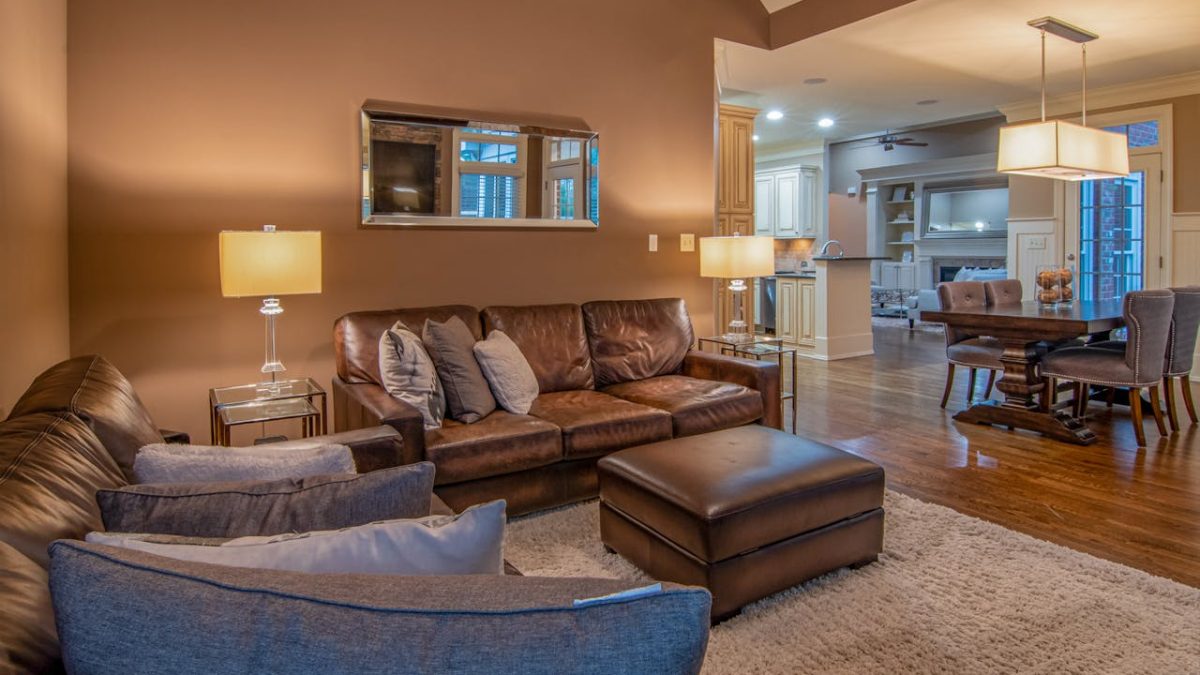
Updated November 2026. How to size a lampshade to its lamp, with the measuring rules published by Lux Lampshades and Lighting New York, The Spruce’s fitter guide and ENERGY STAR’s LED page, all read November 12, 2026.
Measure the lamp base, then use two rules of thumb. The shade should be about two-thirds as tall as the base, measured from the bottom to the socket, and about twice as wide at the bottom as the base’s widest point. As of November 2026, Lux Lampshades gives the example of an 18-inch base taking a 12-inch-tall shade.
Jump to: 📏 The size rules · 📐 How to measure · 🔩 Fitter · 💡 Shape and style · 🏠 Photos and selling · ❓ FAQ
Key takeaways
- Height: about two-thirds of the base height, socket down. Lighting New York allows up to three-quarters.
- Width: the bottom of the shade is about twice the widest part of the base.
- Measure straight across, never around. Leave out the harp, the bulb and the finial.
- Check the fitter before you buy: spider, uno, Euro or clip-on.
- From your seat, you shouldn’t see the socket or the harp under the shade.
This guide started as eight ways to revamp a room with a new lampshade: bold color, pleats, natural materials, a pair of matching shades. All good ideas, and they’re still below. But every one of them fails if the shade is the wrong size. A shade that’s too small looks like a hat on a bowling ball. One that’s too big swallows the lamp. So let’s start with the numbers.
What size lampshade do I need?
Start with two rules of thumb and adjust by eye.
| Measurement | Rule of thumb | Example |
|---|---|---|
| Shade height | About 2/3 of the base height (bottom of lamp to bottom of socket) | 18-inch base, 12-inch shade |
| Bottom width | About 2 times the widest part of the base | 6-inch base, 12-inch bottom |
| Top width | Narrower than the bottom on a tapered shade | Set by the shape you pick |
| Fitter | Must match the lamp: spider, uno, Euro or clip-on | Harp on the lamp means spider |
Lux Lampshades uses the two-thirds height rule and the “about twice the base width” rule, with the examples above (Lux Lampshades, how to measure a lamp for a lampshade). Lighting New York gives a slightly wider range for height: two-thirds to three-quarters of the base (Lighting New York, how to size a lampshade to a lamp). If your base is slim and tall, lean toward the bigger number. If it’s a round jar, two-thirds usually looks settled.
Then do the sofa test. Sit where you usually sit. If you can see the socket or the harp, the shade is too short or sits too high.
How do you measure a lamp for a new shade?
Grab a tape measure and write down four numbers.
- Base height: from the bottom of the lamp to the bottom of the socket. Leave out the harp, bulb and finial.
- Base width: straight across the widest part.
- Old shade, if you liked its size: the top and bottom widths, straight across.
- Slant height on a tapered shade: along the outside edge from top rim to bottom rim.
Lux Lampshades says never to measure around the edge, and to measure to the nearest quarter inch. It also notes that many returns come from picking the wrong fitter, not the wrong size. So check the fitter next.
Honestly, the fastest way is to carry the lamp into the store. Second-fastest: a phone photo of the lamp next to a tape measure. Shop from that.
Which lampshade fitter do you need?
The fitter is the metal part that holds the shade to the lamp. The Spruce’s guide, updated January 28, 2026, lists four types (The Spruce, A Guide to Lampshade Fittings).
| Fitter | How it attaches | Best for |
|---|---|---|
| Spider | Sits on a harp, held by a finial | Table and floor lamps with a harp, vintage lamps |
| Uno | Sits on the socket, under the bulb | Lamps without a harp |
| Euro | Like uno, wider with a thinner ring | Lamps without a harp |
| Clip-on | Clips onto the bulb | Small shades on sconces and chandeliers |
The Spruce says the spider is the most common type. Love a shade with the wrong fitter? Converters exist. The Spruce puts them at about $10 to $20, which beats buying a second shade. Uno-to-spider converters come in sizes such as 7 and 10 inches, and a bigger shade needs a bigger harp. Clip-on fitters come in two sizes: a small one for candelabra bulbs and a larger one for regular bulbs.
Which shade shape and style suits your lamp?
Match the shape to the base. Lighting New York suggests round or empire shades on round bases and square or rectangular shades on square bases, with drums working on many styles. Then pick a look. Here are the eight ideas this post began with:
- Go bold with color. One emerald shade in a gray-and-white room becomes the first thing you see.
- Try pleats. They soften the light and hide small marks better than a flat drum.
- Use one pattern per room. Pull a color from the rug so it looks planned.
- Go natural. Rattan, linen and paper throw dappled light and warm up hard surfaces.
- Change the shape. A straight drum makes a fussy lamp look modern in ten seconds.
- Buy two. Matching lamps and shades on each side of a bed or sofa look finished.
- Go dark in a reading corner. A black shade with a light lining sends light down onto the page.
- Pay for quality once. Cheap shades warp and yellow; makers of luxury lampshades also sell custom sizes for odd bases.
Prefer to make one? Covering a plain shade with fabric is a good first DIY project. For a dining room chandelier with clip-on shades, see our ideas to revamp your dining room.
Sell smarter
List your home on the MLS from $99
A flat fee instead of a percentage, and $0 to Beycome at closing. You stay in control of your sale.
Sell your home →Buy smarter
Get up to 2% back at closing
On homes listed by other agents, Beycome credits you up to 2% of the price at closing (1% kept, $1,499 minimum; not on FSBO homes or homes listed by Beycome sellers).
Buy a home →Which bulb works best under a fabric or paper shade?
LEDs. ENERGY STAR says LED lighting produces light up to 90% more efficiently than incandescent bulbs (ENERGY STAR, Learn About LED Lighting). InterNACHI’s chart lists LED bulbs at 30,000 to 50,000+ hours, against 1,000 to 2,000+ for incandescents (InterNACHI, Standard Estimated Life Expectancy Chart). Fewer bulb changes, and a lower bill: U.S. homes paid an average of 18.16 cents per kWh in August 2026 (EIA, Electric Power Monthly table 5.6.A). Always check the lamp’s maximum wattage label, and never go above it.
Warm white suits living rooms and bedrooms. Keep color temperature the same across a room, or one corner will look yellow and another blue. Our guides to improving the lighting in your home and the advantages of LED lighting go room by room. Lamps you control room by room also let you live with the overhead lights off, which pairs well with tips on managing your home temperature.
Do lampshades matter when you sell?
More than you’d think, because of photos. Listing photos are often shot with every lamp on, and a yellowed, dented or crooked shade shows up in every frame. A matching set of clean, neutral shades in the right size costs little and makes rooms look cared for. It’s the same idea as a stylish entry door: small, visible, cheap.
Two photo tips. Turn every lamp on and keep the bulbs the same color. And check shiny bases and mirrors for reflections: MLS rules block photos that show people, and our FAQ explains why listing photos get flagged. Our home staging tips and list of ways to increase the value of your property cover the bigger fixes.
When you’re ready, Beycome lists your home on the major home search sites and the MLS from $99 in most states ($129 in California and Illinois), with $0 due to Beycome at closing. You upload your photos yourself and can add, change or reorder them from the dashboard at any time. 22,000+ homeowners have saved over $225 million with Beycome, with a home sold every 30 minutes (Beycome internal data, October 2026).
Rooms looking right? See Beycome listing packages.
Lampshade size questions
What size lampshade do I need?
About two-thirds as tall as the base (bottom to socket) and about twice as wide at the bottom as the base’s widest point. Then check that the socket is hidden from your seat.
How tall should a lampshade be on a table lamp?
Roughly two-thirds of the base height; Lighting New York allows up to three-quarters. An 18-inch base takes about a 12-inch shade.
How wide should a lampshade be?
About twice the widest part of the base at the bottom of the shade. A 6-inch base suits a shade about 12 inches across the bottom.
How do I measure a lampshade?
Measure the top and bottom straight across, never around, and the slant height along the outside edge. Round to the nearest quarter inch.
How do I know what lampshade fitter I need?
See a U-shaped wire around the bulb? That’s a harp, so you need a spider. No harp means uno or Euro. Small sconce shades clip on.
Can I put any lampshade on any lamp?
No. The fitter must match and the size has to suit the base. Converters, about $10 to $20 per The Spruce, fix some fitter mismatches.
What bulb should I use with a fabric lampshade?
An LED, never above the wattage printed on the lamp. ENERGY STAR puts LEDs at up to 90% more efficient than incandescents.
Sizing rules are rules of thumb from Lux Lampshades and Lighting New York; fitter types and converter prices from The Spruce (updated January 28, 2026); LED figures from ENERGY STAR and InterNACHI; all read November 12, 2026. Follow the lamp maker’s wattage label. Beycome prices as of November 2026: Basic from $99 in most states ($129 in California and Illinois); “$0 at closing” means no Beycome fee at closing. General information only.
Sources
- Lux Lampshades, How do you measure a lamp for a lampshade?, read November 12, 2026.
- Lighting New York, How to size a lampshade to a lamp, read November 12, 2026.
- The Spruce, A Guide to Lampshade Fittings (updated January 28, 2026), read November 12, 2026.
- ENERGY STAR, Learn About LED Lighting, read November 12, 2026.
- InterNACHI, Standard Estimated Life Expectancy Chart, read November 12, 2026.
- EIA, Electric Power Monthly table 5.6.A (August 2026), read November 12, 2026.
- Beycome FAQ, Why are my photos invalid?, read November 12, 2026.
Disclosure & Disclaimer
Beycome provides real estate services through affiliated licensed brokerages and has a commercial interest in the services and business models discussed on this blog. Content reflects Beycome’s perspective and may promote our services; it should not be treated as independent or neutral reporting.
Articles are provided for general informational and educational purposes only, not as financial, tax, legal, or investment advice or a recommendation for your particular situation. Reading this blog does not create a brokerage, advisory, or other professional relationship.
Information, opinions, pricing, service descriptions, and comparisons reflect the sources and information available when an article was published or last updated and may change. Although we aim for accuracy, we do not guarantee that all content is complete, current, or applicable to your circumstances. Laws, market conditions, and service availability vary by location. Examples and estimated savings are illustrative, depend on stated assumptions, and do not guarantee individual results.
Verify relevant information directly and consult qualified professionals before making decisions. Beycome services are subject to applicable agreements, eligibility requirements, and state-specific terms.

