
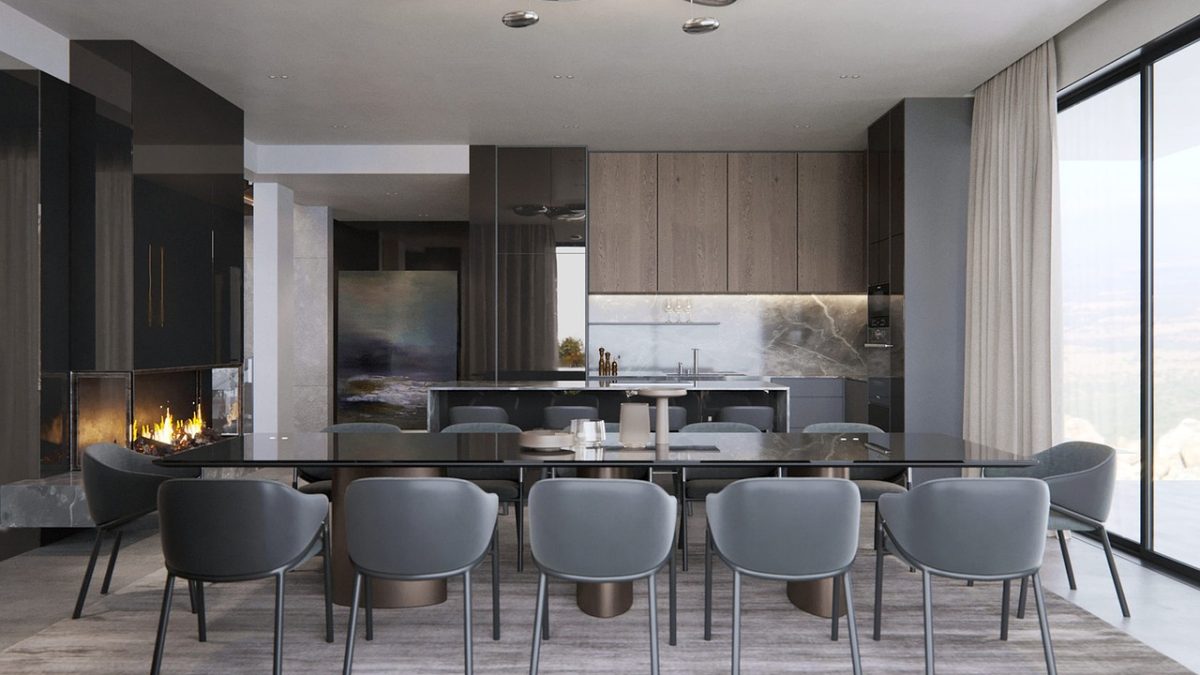
Updated November 2026. How high to hang a dining room chandelier, how big it should be and how to light the room around it. Sizing rules from Lighting New York, LED figures from ENERGY STAR and the August 2026 electricity price from the EIA, all read November 13, 2026.
Hang a dining chandelier so its bottom sits 30 to 36 inches above the tabletop under an 8-foot ceiling, and add about 3 inches for each extra foot of ceiling. That’s the starting rule Lighting New York gives as of November 2026. A 10-foot ceiling puts the fixture about 36 to 42 inches above the table.
Jump to: 📏 Hanging height · 📐 Chandelier size · 🎯 Centering · 💡 Bulbs and dimmers · 🏠 The rest of the room · 📸 Photos and selling · ❓ FAQ
Key takeaways
- Measure from the tabletop, not the floor: 30 to 36 inches under an 8-foot ceiling.
- Add about 3 inches per foot of ceiling above 8 feet.
- Over a rectangular table, a fixture about one-half to two-thirds the table’s length is a good starting point.
- Center the light on the table, then put it on a dimmer.
- LEDs use up to 90% less energy to make the same light as incandescent bulbs, per ENERGY STAR.
This post used to be a six-step plan to revamp a dining room, starting with the least expensive jobs. Lighting was step one, and it still is. It’s the update you notice every single night, and it’s the one people get wrong most often. A beautiful fixture hung 50 inches up looks like it’s floating away. Hung too low, it blocks the person across from you. So here are the numbers first, then the other five updates.
How high should a chandelier hang over a dining table?
Start at 30 to 36 inches between the tabletop and the bottom of the fixture, under an 8-foot ceiling. Lighting New York calls this a starting point, not a law. For ceilings above 8 feet, it says to add 3 inches for each additional foot.
| Ceiling height | Bottom of fixture above the table | Notes |
|---|---|---|
| 8 feet | 30 to 36 inches | Lean toward 30 in a small, cozy room |
| 9 feet | 33 to 39 inches | Adds 3 inches |
| 10 feet | 36 to 42 inches | Adds 6 inches |
| 12 feet | 42 to 48 inches | Adds 12 inches; a taller fixture fills the extra space |
The table above simply applies that 3-inch rule. Then test it with people. Sit down, have someone else sit across from you, and look at each other. If the fixture cuts through your line of sight, raise it. If you can see bare bulbs from your chair, lower it a little or pick shades.
Two things change the answer. A wide table can take a fixture hung slightly higher, so the light spreads over more of it. A tall, ornate chandelier needs more vertical room, so its bottom edge may sit at the top of the range. Use painter’s tape on the ceiling and a helper holding a box at the right height before anyone drills.
What size chandelier do you need for a dining room?
Size it to the table first, then check it against the room. Lighting New York gives three rules of thumb:
- Room check: add the room’s length and width in feet. Read the total as inches. A 12 by 14 foot room suggests a fixture about 26 inches across.
- Round or square table: a diameter of about one-half the table’s width.
- Rectangular or oval table: about one-half to two-thirds of the table’s length, which is why linear fixtures and rows of pendants suit long tables.
| Table | Suggested fixture size | What usually works |
|---|---|---|
| 48-inch round | About 24 inches across | One round chandelier |
| 6-foot rectangle | About 36 to 48 inches long | A linear fixture or two pendants |
| 8-foot rectangle | About 48 to 64 inches long | A linear fixture or three pendants |
| 10-foot rectangle | About 60 to 80 inches long | Three pendants or a long linear piece |
Rectangle sizes are Lighting New York’s own examples. If the room check and the table rule disagree, the table wins, because that’s what the light sits over. Still, keep a few inches of table showing past each end of the fixture, so nobody stands up into it.
Shopping for the table too? Our guide to the best wood for a dining table covers sizes and clearances, and a long rectangle like the rectangular dining table styles from James & James is exactly where a linear fixture shines.
Should a dining chandelier be centered on the table or the room?
On the table. You eat under the light, not under the middle of the ceiling. If the junction box is off-center, an electrician can move it, or you can swag the fixture with a ceiling hook. A swag is the cheap fix, and it looks deliberate when the chain runs straight.
Moving the table later? Center the light on where the table will live most of the year, not where it sits for holidays with every leaf in. Extendable tables are the reason linear fixtures and pendant rows are so popular: they look right over both lengths.
Which bulbs and dimmers work best over a dining table?
LEDs on a dimmer. ENERGY STAR says LED lighting produces light up to 90% more efficiently than incandescent bulbs. A chandelier with six or eight bulbs adds up, and U.S. homes paid an average of 18.16 cents per kWh in August 2026, according to the EIA’s Electric Power Monthly table 5.6.A.
The dimmer is what makes one fixture do two jobs. Bright for homework or a puzzle, low for dinner. Check that the bulbs are labeled dimmable and the dimmer is rated for LEDs, or you’ll get flicker and buzz. Warm white bulbs suit most dining rooms. Our room-by-room guide to improving the lighting in your home lists color temperatures, and the advantages of LED lighting covers lifespans.
Add a second, softer source. A pair of sconces or a lamp on the sideboard lets you turn the chandelier down without eating in the dark. Shades on those lamps need sizing too; here’s what size lampshade you need.
What else revamps a dining room after the light?
The other five updates from the original plan, still in the order we’d do them:
Sell smarter
List your home on the MLS from $99
A flat fee instead of a percentage, and $0 to Beycome at closing. You stay in control of your sale.
Sell your home →Buy smarter
Get up to 2% back at closing
On homes listed by other agents, Beycome credits you up to 2% of the price at closing (1% kept, $1,499 minimum; not on FSBO homes or homes listed by Beycome sellers).
Buy a home →- Paint. Dining rooms can take deep greens, navy or terracotta, because you’re mostly there in the evening. Pick eggshell or satin so chair scuffs wipe off.
- Rug. Big enough that chairs stay on it when someone pulls back to stand up.
- Seating. Recover solid chairs instead of replacing them; HomeGuide’s furniture reupholstery cost guide breaks down prices by piece. Our post on whether to reupholster or buy new does the math.
- Storage. A sideboard gives the mail, chargers and homework a home that isn’t the table.
- Finishing touches. Art at seated eye level, curtains hung high and wide, a centerpiece low enough to talk over.
If the dining area opens to the kitchen, the finishes should talk to each other. Martha Stewart’s list of ideas that organize your area works in the room next door too, and our advice on improving your kitchen pairs well with this list. Traditional furniture? Victorian dining sets have their own lighting logic: crystal and brass, hung at the top of the range.
Does dining room lighting matter when you sell?
It matters for the photos. In NAR’s 2025 Profile of Home Staging, the dining room was staged in 69% of staged homes, behind the living room (91%) and the primary bedroom (83%). A cleared table under a well-hung light is most of a staged dining room.
Photo day tips: turn every light on, match the bulb colors so one corner isn’t yellow and another blue, and wipe the fixture. Crystal shows dust in a wide-angle shot. Mirrors and glass shades can catch the photographer, and MLS rules flag photos that show people; our FAQ explains why listing photos get rejected. Our home staging tips cover the other rooms.
When you’re ready, Beycome lists your home on the major home search sites and the MLS from $99 in most states (see your state page), with $0 due to Beycome at closing. You upload your own photos and can add, change or reorder them from the dashboard at any stage. Keeping the chandelier? Write it into the listing as included. Taking it with you? Swap it before the photos, so buyers don’t fall for a fixture that won’t be there. 22,000+ homeowners have saved over $225 million with Beycome (Beycome internal data, October 2026).
Dining room ready for its close-up? See Beycome listing packages.
Shopping for a home with a real dining room? The Beycome buyer program has no upfront fee and is open to every buyer on homes listed by other agents. The commission credit can’t apply where no buyer-agent commission is offered, like most FSBO homes, or on homes listed by Beycome sellers, and rebate rules vary by state.
Dining chandelier questions
How high should a chandelier hang over a dining table?
About 30 to 36 inches from the tabletop to the bottom of the fixture under an 8-foot ceiling. Add about 3 inches for each foot of ceiling above 8 feet.
How high should a chandelier be with a 10-foot ceiling?
About 36 to 42 inches above the table, using the 3-inches-per-foot rule. Check sight lines from a seated position before you fix it in place.
What size chandelier should go over a rectangular table?
About one-half to two-thirds of the table’s length. Lighting New York suggests about 36 to 48 inches for a 6-foot table.
How do I size a chandelier to my dining room?
Add the room’s length and width in feet and read the total in inches. A 12 by 14 foot room suggests about 26 inches across. Then check it against the table.
Should the chandelier be centered on the table or the room?
On the table. Move the box or swag the fixture from a ceiling hook if the table isn’t centered in the room.
Should a dining room light be on a dimmer?
Yes. Use dimmable LED bulbs and an LED-rated dimmer, so the same light works bright for homework and low for dinner.
Do you leave the dining chandelier when you sell?
It’s your call, but decide before you list. Your purchase contract sets what stays with the house, so if you want to keep the fixture, swap it before photos and say so in the listing and the contract.
Hanging heights and sizes are rules of thumb from Lighting New York, read November 13, 2026; the 9-, 10- and 12-foot rows apply its 3-inches-per-foot rule. LED figures from ENERGY STAR; electricity price from EIA table 5.6.A (August 2026, released October 23, 2026); staging figures from NAR’s 2025 Profile of Home Staging (May 6, 2025). Have a licensed electrician move a junction box or install a heavy fixture.
What stays with a house is set by your contract and local practice. Beycome prices as of November 2026: Basic from $99 in most states (see your state page); “$0 at closing” means no Beycome fee at closing. Buyer program: Beycome keeps 1% of the price (minimum $1,499) and credits the rest of the buyer-agent commission at closing, subject to lender approval; not available where state law bars rebates. General information only.
Sources
- Lighting New York, How high do you hang a chandelier over a table?, read November 13, 2026.
- Lighting New York, Find the perfect dining table chandelier size, read November 13, 2026.
- ENERGY STAR, Learn About LED Lighting, read November 13, 2026.
- EIA, Electric Power Monthly table 5.6.A (August 2026), read November 13, 2026.
- NAR, 2025 Profile of Home Staging press release (May 6, 2025), read November 13, 2026.
- Beycome FAQ, Why are my photos invalid?, read November 13, 2026.
- Beycome, listing package features, November 2026.
Disclosure & Disclaimer
Beycome provides real estate services through affiliated licensed brokerages and has a commercial interest in the services and business models discussed on this blog. Content reflects Beycome’s perspective and may promote our services; it should not be treated as independent or neutral reporting.
Articles are provided for general informational and educational purposes only, not as financial, tax, legal, or investment advice or a recommendation for your particular situation. Reading this blog does not create a brokerage, advisory, or other professional relationship.
Information, opinions, pricing, service descriptions, and comparisons reflect the sources and information available when an article was published or last updated and may change. Although we aim for accuracy, we do not guarantee that all content is complete, current, or applicable to your circumstances. Laws, market conditions, and service availability vary by location. Examples and estimated savings are illustrative, depend on stated assumptions, and do not guarantee individual results.
Verify relevant information directly and consult qualified professionals before making decisions. Beycome services are subject to applicable agreements, eligibility requirements, and state-specific terms.

