
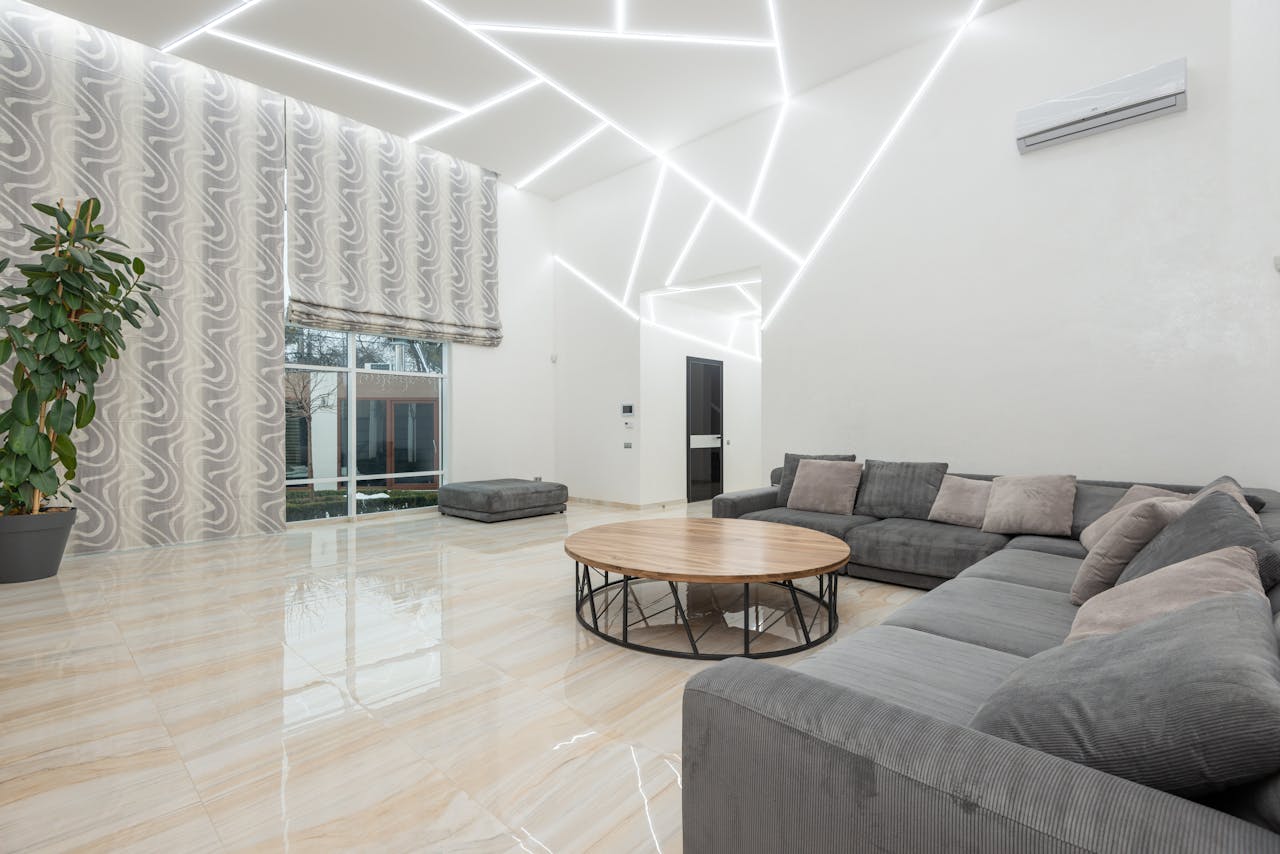
Updated October 2026. Four flooring trends judged the way a buyer or appraiser would see them: how long each floor lasts, how it photographs, what it costs to live with. Lifespans from InterNACHI, read October 28, 2026.
The flooring trends that hold their value in 2026 are the durable, easy-care ones. InterNACHI puts tile at 75 to 100 years, wood and bamboo at 100+ years, vinyl at about 25 and carpet at only 8 to 10. Stone looks, eco materials, heated floors and luxury vinyl plank all have a place. The right pick depends on the room and how long you’ll stay.
Jump to: ⏱️ Lifespans · 🏠 Stone and tile · 🪜 Eco floors · 💲 Heated and smart · 🤝 Floors and resale · ❓ FAQ
Key takeaways
- Expected life varies tenfold: carpet 8 to 10 years, laminate 15 to 25, tile 75 to 100, wood 100+ (InterNACHI).
- Upgrading worn-out surfaces was the top reason people remodeled, at 27% (NAR and NARI, 2025).
- Composite wood products sold in the US must be labeled TSCA Title VI compliant for formaldehyde since March 22, 2019 (EPA).
- If you’ll sell within a few years, pick neutral, durable floors that photograph well over a bold trend.
Trend lists change every spring. A floor stays for decades. That gap is why we judge each trend here on three plain questions: will it last, will it still look current when you sell, and what does it ask of you in between? For the newest colors and finishes, our top flooring trends for 2026 has the roundup.
How long does each type of flooring last?
InterNACHI, the home inspectors’ association, publishes standard life expectancy figures for home components. They depend on foot traffic and care, but they’re a useful starting point.
| Floor | Expected life (years) | Best rooms |
|---|---|---|
| Solid wood, exotic wood | 100+ | Living areas, bedrooms |
| Bamboo | 100+ | Living areas, bedrooms |
| Marble, granite | 100+ | Entries, baths |
| Tile | 75 to 100 | Kitchens, baths, hot climates |
| Engineered wood | 50+ | Over slabs, condos |
| Linoleum | 25 | Kitchens, laundry |
| Vinyl | 25 | Kitchens, baths, basements |
| Laminate | 15 to 25 | Low-moisture rooms |
| Carpet | 8 to 10 | Bedrooms |
Two things jump out. Carpet wears out roughly ten times faster than tile or wood. And real wood’s long life assumes you refinish it now and then; a worn finish is not a worn floor. Our guide to satin vs semi-gloss hardwood finishes covers that choice.
Are marble, stone and stone-look tile worth it?
The old pull toward “underfoot luxury” is real. Marble, travertine and exotic hardwood still read as high-end in listing photos. They also last: InterNACHI rates marble and granite at 100+ years. The catch is cost and care. Marble etches with acids like lemon juice and wine, and natural stone needs sealing.
That’s why porcelain tile with a stone look has taken over so many kitchens and baths. You get the veined or textured look with far less upkeep. Specialist retailers such as Quorn Stone sell porcelain in stone and textured finishes, and comparing a few samples at home, in your own light, beats choosing from a screen.
In hot climates like Florida and Texas, tile has one more point in its favor: it stays cool and shrugs off sandy feet and spills. In colder states, buyers often prefer wood or a warm-toned tile in living areas.
Which eco-friendly floors hold up?
As the importance of sustainability grows in building, bamboo, cork and reclaimed wood get more attention. TWI defines sustainability as meeting today’s needs without using up the resources future generations will need. Flooring fits that idea when it lasts a long time and comes from fast-growing or reused material.
Bamboo grows fast and InterNACHI puts it in the 100+ year group with wood. Cork is soft and quiet underfoot, which suits bedrooms and home offices. Reclaimed wood brings character and keeps old timber in use. If green building is your thing, our talk with eco-conscious home builders goes further.
Indoor air matters too. Engineered floors, laminate and many plank products use composite wood cores. The EPA says that since March 22, 2019, composite wood products sold in the US, including hardwood plywood, MDF and particleboard, must be labeled TSCA Title VI compliant under formaldehyde emission standards. Look for that label on the box.
Are heated and smart floors a trend worth buying?
Digital advancements have reached the floor. The Enterprisers Project describes digital transformation as building technology into everything you do, and homes are following. Built-in radiant heating is the most common “smart” floor feature. Sensor-linked lighting and app-controlled thermostats under tile are newer.
For most homes, radiant heat is a comfort upgrade in one or two rooms, usually a bathroom or a cold basement, not a whole-house project. It pairs best with tile and stone, which hold warmth. Before you buy, ask how repairs work: a fault under tile can mean lifting the floor.
Interactive or lighted floors are still rare. They can be fun in a media room, but buyers won’t pay extra for them yet, so treat them as a personal choice.
Sell smarter
List your home on the MLS from $99
A flat fee instead of a percentage, and $0 to Beycome at closing. You stay in control of your sale.
Sell your home →Buy smarter
Get up to 2% back at closing
On homes listed by other agents, Beycome credits you up to 2% of the price at closing (1% kept, $1,499 minimum; not on FSBO homes or homes listed by Beycome sellers).
Buy a home →Why is luxury vinyl plank everywhere?
Luxury vinyl plank (LVP) copies the look of wood, resists water and scratches, and costs less to install than most hardwood. That makes it popular in kitchens, baths, basements and rentals. InterNACHI gives vinyl about 25 years.
The trade-offs: vinyl can dent under heavy furniture, can fade in strong sun, and quality varies a lot between brands. A thicker wear layer lasts longer. In an older home with uneven subfloors, ask the installer about leveling, or the planks may click and gap.
Which floor goes in which room?
Most homes end up with two or three floor types, and that’s fine. Match the floor to what happens in the room.
- Kitchen: tile or vinyl handle water, dropped pans and daily mopping. Wood works if you wipe spills fast.
- Bathrooms and laundry: tile or vinyl. Skip solid wood and laminate, which swell when wet.
- Living and dining rooms: wood, engineered wood or LVP in one continuous run so the space reads as one.
- Bedrooms: carpet for warmth and quiet, or cork and wood with a rug.
- Basement or slab: engineered wood, vinyl or tile, since solid wood dislikes moisture from below.
- Entry and mudroom: porcelain or stone that can take grit and wet boots.
Keep transitions few and simple. Every change of floor height is a trip point and a visual break in photos. If you have pets, look for scratch-resistant finishes and avoid soft woods in high-traffic halls. Rentals and homes with kids get the most value from vinyl and tile: they forgive a lot.
One more test before you order: lay a big sample in the room for a week. Look at it in the morning, at noon and under lamps at night. A floor that looks warm in the showroom can turn orange or gray in your light.
Which floors help when you sell?
NAR and NARI’s 2025 Remodeling Impact Report found the top reason people remodel is upgrading worn-out surfaces, finishes and materials (27%), with 18% preparing to sell within two years. Floors are a big part of that. Buyers notice stained carpet and scratched wood in the first photo.
If you plan to sell soon, think listing photos. Consistent, light-toned floors that run through the main rooms make spaces look bigger. Refinishing existing hardwood is often cheaper than replacing it. Our list of the flooring options that can raise resale value compares them.
When the floors are done, the home has to be seen. A Beycome flat fee listing puts it on the major home search sites and the MLS for $99, with $0 due to Beycome at closing. See the flat fee MLS packages. If you’re shopping instead, visit homes at a few times of day; our note on visiting a home at different times of day explains why light changes how floors look. Outside, our simple ideas to spruce up your exterior finish the job.
Flooring trends: questions
What flooring lasts the longest?
Wood, bamboo, marble and granite, rated 100+ years by InterNACHI, followed by tile at 75 to 100 years.
Is luxury vinyl plank a good choice for resale?
It’s widely accepted in kitchens, baths and basements because it resists water. InterNACHI gives vinyl about 25 years. In main living areas, many buyers still prefer wood.
How long does carpet last?
About 8 to 10 years, according to InterNACHI, depending on traffic and care.
Is bamboo flooring eco-friendly?
Bamboo grows quickly and lasts a long time (100+ years per InterNACHI). Check the product label for TSCA Title VI compliance if it uses a composite core.
Should I replace flooring before selling?
Replace only what looks worn in photos. Refinishing wood or replacing stained carpet in a few rooms usually beats a full redo.
Are heated floors worth it?
In a bathroom or basement, many owners love them. Buyers rarely pay much extra, so install them for your own comfort.
Lifespans are InterNACHI’s standard estimates and vary with traffic, climate and care. Remodeling data from the NAR and NARI 2025 Remodeling Impact Report release. Beycome prices as of October 2026; “$0 at closing” means no Beycome fee at closing, while other closing costs still apply. General information, not professional advice.
Sources
- InterNACHI, Standard Estimated Life Expectancy Chart for Homes, read October 28, 2026.
- NAR, 2025 Remodeling Impact Report release, read October 28, 2026.
- EPA, Formaldehyde emission standards for composite wood products, read October 28, 2026.
- TWI, What is sustainability?, read October 28, 2026.
- Beycome, listing package features, October 2026.
Disclosure & Disclaimer
Beycome provides real estate services through affiliated licensed brokerages and has a commercial interest in the services and business models discussed on this blog. Content reflects Beycome’s perspective and may promote our services; it should not be treated as independent or neutral reporting.
Articles are provided for general informational and educational purposes only, not as financial, tax, legal, or investment advice or a recommendation for your particular situation. Reading this blog does not create a brokerage, advisory, or other professional relationship.
Information, opinions, pricing, service descriptions, and comparisons reflect the sources and information available when an article was published or last updated and may change. Although we aim for accuracy, we do not guarantee that all content is complete, current, or applicable to your circumstances. Laws, market conditions, and service availability vary by location. Examples and estimated savings are illustrative, depend on stated assumptions, and do not guarantee individual results.
Verify relevant information directly and consult qualified professionals before making decisions. Beycome services are subject to applicable agreements, eligibility requirements, and state-specific terms.

