

Updated October 2026. How to make a roof replacement easy, from picking the contractor to the cleanup, which jobs are safe to do yourself, and what a new roof means for insurance, taxes and resale, with figures from NAR, the EPA, the IRS and Triple-I.
To make a roof replacement easy, hire a licensed and insured roofer with a written contract, prepare the house inside and out the week before, and keep 10% to 20% extra in the budget for rotten decking found under the old shingles. It pays off at resale too: as of October 2026, 37% of Realtors recommend new roofing before listing (NAR, 2025).
Jump to: 🪜 Before · 🏠 Prepare the house · 📸 DIY or pro · 💲 Insurance and taxes · ❓ FAQ
Roof replacement, in numbers
- 37% of Realtors recommend new roofing before listing; 43% saw buyer demand for new roofs rise (NAR, 2025).
- New roofing is one of the top three projects for homeowner joy in NAR’s Remodeling Impact Report.
- Wind and hail deductibles are often a percentage of the home’s insured value, typically 1% to 5% (Triple-I).
- The IRS lists a new roof as an improvement that adds to your home’s basis (Pub. 523).
Every homeowner gets there eventually. The shingles are curling, a leak came back, or an inspector wrote “near end of life.” A roof replacement is loud and messy for a few days, but it doesn’t have to be stressful. Most of the trouble comes from things you can settle before the first shingle comes off.
What should you know before a roof replacement?
The team at Equity Roofing points out that the basic process is the same whether the roof is metal, slate or shingle: tear-off, deck inspection and repair, underlayment, flashing, then the new roof. What changes is the material, the price and how long the crew is on site.
Research your home’s style
Start planning your roof replacement before you call anyone. Look at what suits the house and the neighborhood, and check HOA rules if you have one; some limit colors or materials. You’ll ask better questions and spot an upsell faster.
Choose your contractor carefully
Get three written quotes. Ask each roofer for a license number where your state requires one, proof of liability and workers’ comp insurance, the permit plan, and both the manufacturer’s and the workmanship warranty in writing. Pick someone who does roof repair and maintenance as well as installation, so you have a call to make if a leak shows up later.
Keep a project folder
Contracts, warranty papers, permit, photos, change orders and receipts go in one folder, paper or digital. You’ll want them for the insurer, for taxes and for the next buyer.
Have an emergency budget
Hidden problems show up once the old roof is off: soft decking, rot around a chimney, a sagging rafter. They have to be fixed before the new roof goes on, and they’re usually priced separately. Keep 10% to 20% extra so you can say yes without stopping the job. For a cost breakdown, see how to calculate the cost of a roof restoration.
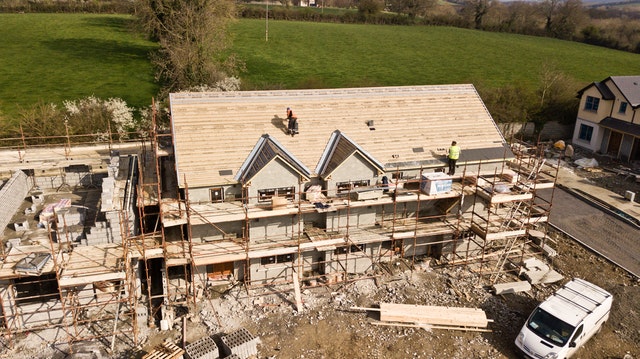
How do you prepare the house for the crew?
- Inside, cover furniture, beds and clothes near exterior walls. Hammering shakes dust loose.
- Take pictures and mirrors off walls on the top floor, and anything fragile off shelves.
- In the attic, cover stored items with tarps or move them out.
- Outside, move patio furniture, grills and potted plants away from the house.
- Ask the roofer to take down satellite dishes, antennas or solar panels before tear-off.
- Park on the street and show the crew where to put the dumpster and materials.
- Put pets in a quiet room, or with a friend, for the noisy days.
Most families don’t need to move out. Crews usually work daytime hours. If you work from home, plan calls for the afternoon of the last day or work elsewhere for a day or two.
After the job, walk the yard with a magnet sweeper for nails, check the attic for daylight and water stains after the first rain, and get the final invoice and warranty papers before the last payment.
Which roof jobs can you do yourself?
Some, if you’re comfortable on a ladder and the roof is low and not steep. Clearing gutters, washing off moss gently, replacing a few blown-off shingles and resealing a vent boot are common DIY roof restoration tasks. Do them on a dry, calm day, with a spotter.
A full tear-off is a different job. Falls are a real risk, debris is heavy, and a bad install can void the shingle warranty. Leave steep or wet roofs, structural repairs and anything near power lines to a pro. If you’re not sure how bad the roof is, our guide to identifying roof damage helps you decide, and why roof inspections matter explains what a pro inspection covers.
Sell smarter
List your home on the MLS from $99
A flat fee instead of a percentage, and $0 to Beycome at closing. You stay in control of your sale.
Sell your home →Buy smarter
Get up to 2% back at closing
On homes listed by other agents, Beycome credits you up to 2% of the price at closing (1% kept, $1,499 minimum; not on FSBO homes or homes listed by Beycome sellers).
Buy a home →A leak while you’re waiting for the crew? Don’t let it sit. The EPA says to dry water-damaged areas within 24 to 48 hours to stop mold growth; here’s how bad water damage to a house can get. Our list of house repairs you shouldn’t postpone explains why.
How does a new roof affect insurance, taxes and resale?
Insurance first. Storm damage is often covered; age and wear usually aren’t. If a storm caused the damage, call the insurer before you sign with a roofer, and know your deductible. Triple-I explains that in hail and windstorm areas, wind/hail deductibles are often a percentage of the home’s insured value, typically 1% to 5%, rather than a flat dollar amount. A new roof can also lower your premium with some insurers, so ask. Our guide to choosing home insurance covers deductibles in more detail.
Taxes next. IRS Publication 523 lists a new roof among improvements that add to your home’s basis, which can reduce a taxable gain when you sell. On a rental, Publication 527 says a new roof is depreciated on the same schedule as the house. Keep the invoice.
Then resale. In NAR’s 2025 Remodeling Impact Report, new roofing was among the top three projects for homeowner joy, 37% of Realtors recommended it before listing, and 43% saw buyer demand for it rise. Our article on why the roof is a key asset in real estate covers how buyers weigh it, and what not to fix before selling helps if you’re deciding whether to replace or price it in.
Selling soon after the job? Put “new roof, 2026” and the warranty in your listing. A Beycome flat fee MLS listing starts at $99, with $0 due to Beycome at closing, and you write the description yourself. Beycome lists in 17 states and DC.
Roof replacement questions
How do I prepare my house for a roof replacement?
Cover furniture and attic items, take fragile things off walls, move outdoor furniture and plants, clear the driveway and keep pets in a quiet room.
Do I need to leave the house during a roof replacement?
Usually not. It’s noisy during work hours, so plan quiet work elsewhere and keep pets and kids away from the drop zones.
What DIY roof restoration tips are safe?
Cleaning gutters, gently removing moss, replacing a few shingles and resealing vent boots on a low, dry roof with a spotter. Leave steep roofs and tear-offs to a pro.
How much extra should I budget for a new roof?
Keep 10% to 20% above the quote for decking or structural repairs found after tear-off.
Does homeowners insurance pay for a new roof?
Often for sudden storm damage, rarely for age or wear. Wind/hail deductibles can be 1% to 5% of insured value (Triple-I).
Is a new roof worth it before selling?
It can be. 37% of Realtors recommend it before listing (NAR, 2025). If the roof is sound, an inspection report and a fair price may be enough.
Prices as of November 2026; Basic is $129 in California and Illinois ($99 elsewhere). “$0 at closing” means no Beycome fee at closing; other closing costs, taxes and title fees still apply. General information, not roofing, insurance, tax or legal advice; licensing and permit rules vary by state and city. Contractor links are examples, not endorsements.
Sources
- NAR, 2025 Remodeling Impact Report news release, read October 27, 2026.
- Triple-I, Understanding your insurance deductibles, read October 27, 2026.
- EPA, A Brief Guide to Mold, Moisture and Your Home, read October 27, 2026.
- IRS, Publication 523, Selling Your Home, read October 27, 2026.
- IRS, Publication 527, Residential Rental Property, read October 27, 2026.
- Beycome, listing package features, October 2026.
Disclosure & Disclaimer
Beycome provides real estate services through affiliated licensed brokerages and has a commercial interest in the services and business models discussed on this blog. Content reflects Beycome’s perspective and may promote our services; it should not be treated as independent or neutral reporting.
Articles are provided for general informational and educational purposes only, not as financial, tax, legal, or investment advice or a recommendation for your particular situation. Reading this blog does not create a brokerage, advisory, or other professional relationship.
Information, opinions, pricing, service descriptions, and comparisons reflect the sources and information available when an article was published or last updated and may change. Although we aim for accuracy, we do not guarantee that all content is complete, current, or applicable to your circumstances. Laws, market conditions, and service availability vary by location. Examples and estimated savings are illustrative, depend on stated assumptions, and do not guarantee individual results.
Verify relevant information directly and consult qualified professionals before making decisions. Beycome services are subject to applicable agreements, eligibility requirements, and state-specific terms.
