
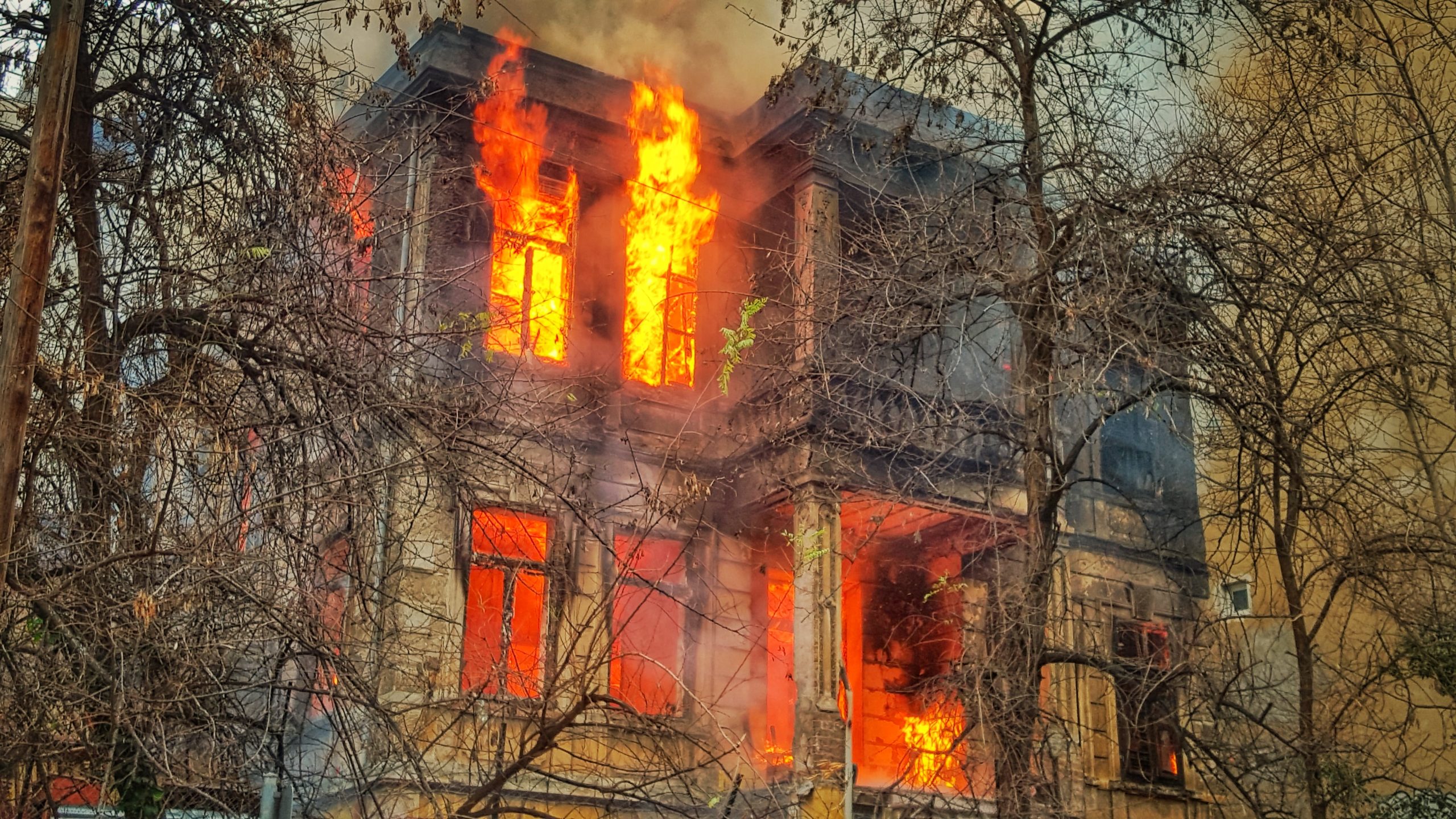
Updated October 2026. We rewrote this post for owners deciding what to do with a house after a fire, and for buyers and investors looking at one, with current fire and insurance figures.
Yes, you can still profit from a fire-damaged house, but only when the repair math works. You can repair and sell, sell as-is to an investor, or list the land and shell on the MLS. As of October 2026, the Insurance Information Institute puts the average fire and lightning homeowners claim at $88,170 (2019–2023), so the insurance payout usually sets your budget.
Jump to: ⏱️ First steps · 🪜 Your options · 💲 The math · 🏠 Buying one · ❓ FAQ
Key takeaways
- USFA estimates 344,600 residential building fires in 2023, with $11.27 billion in losses.
- Fire and lightning claims are rare (0.23 per 100 insured homes a year) but expensive: $88,170 on average, per Triple-I.
- Three exits: repair and sell, sell as-is for cash, or list the home as-is on the MLS to reach more buyers.
- Disclose the fire and the repairs in writing. Rules vary by state, so check your state’s seller disclosure form.
Nobody plans for this. One week you’re picking paint colors, the next you’re standing on the curb with a claims adjuster. The good news is that a burned house still has value: the land, the foundation, often the shell. The question is how much you keep after repairs, fees and time.
What should you do first after a house fire?
Stay out until the fire department says the building is safe. Smoke, soot and weakened floors are real risks, and going back in for belongings can do more harm than good. Then work through the basics in order.
- Call your insurer and open a claim the same day.
- Take photos and video of every room from a safe spot, before cleanup starts.
- Board up openings and tarp the roof if the insurer asks you to, and keep receipts.
- Ask about additional living expenses if you can’t live in the home.
- Get a copy of the fire department’s incident report.
Your adjuster will tell you what the policy covers and how it pays. ValuePenguin’s guide to filing a home insurance claim explains why, if the damage is total, the right course of action may be to tear the whole thing down, clear the plot and start again, and how claims for rebuilding work. Read your policy for replacement cost versus actual cash value; that one line changes the payout a lot.
What are your options for selling a fire-damaged house?
Most owners end up with one of three paths. Which one wins depends on the damage, your payout and how fast you need the money.
| Option | Speed | What you keep | Best when |
|---|---|---|---|
| Repair, then sell | Slow: months of work | Highest price, minus repair costs | Damage is limited and the payout covers the work |
| Sell as-is for cash | Fast: often weeks | A discounted price, few hassles | Damage is heavy, or you can’t manage a rebuild |
| List as-is on the MLS | Medium | Market price for the lot and shell | You want several buyers to compete |
Some cash buyers focus on burned homes. We Buy Fire Damaged Houses is one company that specializes in buying fire-damaged properties. Get more than one offer and compare each against what the lot alone would sell for.
Listing as-is on the MLS puts the home in front of investors, builders and buyers’ agents at once. With a Beycome flat fee MLS listing, Basic is $99 with $0 due to Beycome at closing, and you set the terms. Our guide to selling a home as-is covers the paperwork, and our look at we-buy-houses-for-cash companies explains how those offers are usually priced.
How much damage is too much to repair?
If the structure is unsound, it’s usually a teardown. Charred framing, a sagging roof line or walls that flex in the wind are the signs people notice first. A structural engineer and the local building department decide whether it’s safe to repair.
Smoke damage is the sneaky part. It travels through ductwork and wall cavities into rooms the flames never reached. Proper restoration means cleaning or replacing ducts, insulation and drywall, then sealing to kill the odor. Restorers who handle fire damaged properties know how to make a property safe, sound and code-compliant again. This isn’t a weekend paint job.
Electrical systems often need a full inspection, and sometimes a rewire. Our post on electrical problems that can derail a closing shows why buyers’ inspectors look there first.
How do you work out whether a repair pays off?
Write the numbers down. A simple version looks like this:
- Start with the likely sale price after repairs, from recent sales of similar homes nearby.
- Subtract the repair and restoration bids, plus 10% to 20% for surprises.
- Subtract carrying costs: mortgage, taxes, insurance and utilities for the months of work.
- Subtract selling costs, like title, transfer taxes and any agent fees you choose to pay.
- Add the insurance payout you’ll actually receive.
Compare that result with the best as-is offer. If the gap is small, take the as-is sale and get your time back. If the gap is large and you have a contractor you trust, a repair may pay. Our property value calculator gives a starting point for the after-repair price.
Sell smarter
List your home on the MLS from $99
A flat fee instead of a percentage, and $0 to Beycome at closing. You stay in control of your sale.
Sell your home →Buy smarter
Get up to 2% back at closing
On homes listed by other agents, Beycome credits you up to 2% of the price at closing (1% kept, $1,499 minimum; not on FSBO homes or homes listed by Beycome sellers).
Buy a home →Insurance is the swing factor. Triple-I’s figures for 2019–2023 show fire and lightning claims averaging $88,170, far above the $15,400 average for water damage and freezing. Fire also made up 21.6% of homeowners losses in 2023. A big claim is common; an easy one isn’t.
Should you buy a fire-damaged or restored house?
A restored home can be a solid buy. Rebuilt rooms often get new wiring, plumbing, drywall and finishes all at once. The risk is in what you can’t see, so do your homework.
- Ask for the permits and final inspections for the restoration work.
- Get the seller’s disclosure and the insurance claim history.
- Hire an inspector who has seen fire jobs, and ask about smoke odor in ducts and attics.
- Check with your insurer before you make an offer, so coverage isn’t a surprise.
Investors buying a shell should price the rebuild before the lot. Our beginner’s guide to flipping apartment buildings covers the basics of buying to renovate. If you’re buying a home listed by another agent, the Beycome buyer program has no upfront fee: Beycome keeps 1% of the price (minimum $1,499) and credits the rest of the buyer-agent commission at closing, with lender approval. It’s open to every buyer on homes listed by other agents (the commission credit can’t apply where no buyer-agent commission is offered, like most FSBO homes, or on homes listed by Beycome sellers).
How do you protect the next home?
Most of the fixes are cheap. Working smoke alarms on every level and in every bedroom, a kitchen extinguisher, and a dryer vent you clean twice a year. Our post on why to install smoke detectors covers placement.
A home warranty is a different product from homeowners insurance. It covers repair or replacement of systems and appliances that wear out, not fire damage. If you want that kind of protection for the next home, look at home warranty insurance from Armadillo. Keep your homeowners policy for fire, and review its rebuild limit every year as costs rise.
Fire-damaged house questions
Can you sell a house with fire damage?
Yes. You can repair and sell, sell as-is to a cash buyer or investor, or list it as-is on the MLS. Disclose the fire in writing as your state requires.
How much is a fire-damaged house worth?
Roughly the after-repair value minus repair, carrying and selling costs. With heavy damage, the land value often sets the floor.
What is the average homeowners claim for fire?
$88,170 for fire and lightning, averaged over 2019–2023, per the Insurance Information Institute.
Is it worth buying a restored fire-damaged house?
It can be, if the work was permitted and inspected. Ask for permits, the claim history and an inspection that checks ducts and the attic for smoke.
Do I have to tell buyers about a past fire?
Disclosure rules vary by state. Telling buyers in writing about the fire and the repairs is the safe course; check your state’s seller disclosure form.
Does a home warranty cover fire damage?
No. A home warranty covers systems and appliances that break down. Fire damage is a homeowners insurance claim.
Fire figures: USFA residential fire estimates (2023) and Triple-I homeowners loss data (2019–2023), read October 28, 2026. Repair contingency ranges are planning examples, not quotes. General information, not legal, insurance or tax advice.
Beycome prices as of November 2026 and subject to change: Basic $99, Enhanced $399; Concierge is $1,399. Basic is $129 in California and Illinois ($99 elsewhere). “$0 at closing” means no Beycome fee at closing; taxes, title and any buyer-agent compensation you agree to still apply. Listings in 17 states and DC. Buyer credit: minimum $1,499, lender approval, not on most FSBO homes or homes listed by Beycome sellers.
Sources
Disclosure & Disclaimer
Beycome provides real estate services through affiliated licensed brokerages and has a commercial interest in the services and business models discussed on this blog. Content reflects Beycome’s perspective and may promote our services; it should not be treated as independent or neutral reporting.
Articles are provided for general informational and educational purposes only, not as financial, tax, legal, or investment advice or a recommendation for your particular situation. Reading this blog does not create a brokerage, advisory, or other professional relationship.
Information, opinions, pricing, service descriptions, and comparisons reflect the sources and information available when an article was published or last updated and may change. Although we aim for accuracy, we do not guarantee that all content is complete, current, or applicable to your circumstances. Laws, market conditions, and service availability vary by location. Examples and estimated savings are illustrative, depend on stated assumptions, and do not guarantee individual results.
Verify relevant information directly and consult qualified professionals before making decisions. Beycome services are subject to applicable agreements, eligibility requirements, and state-specific terms.

