
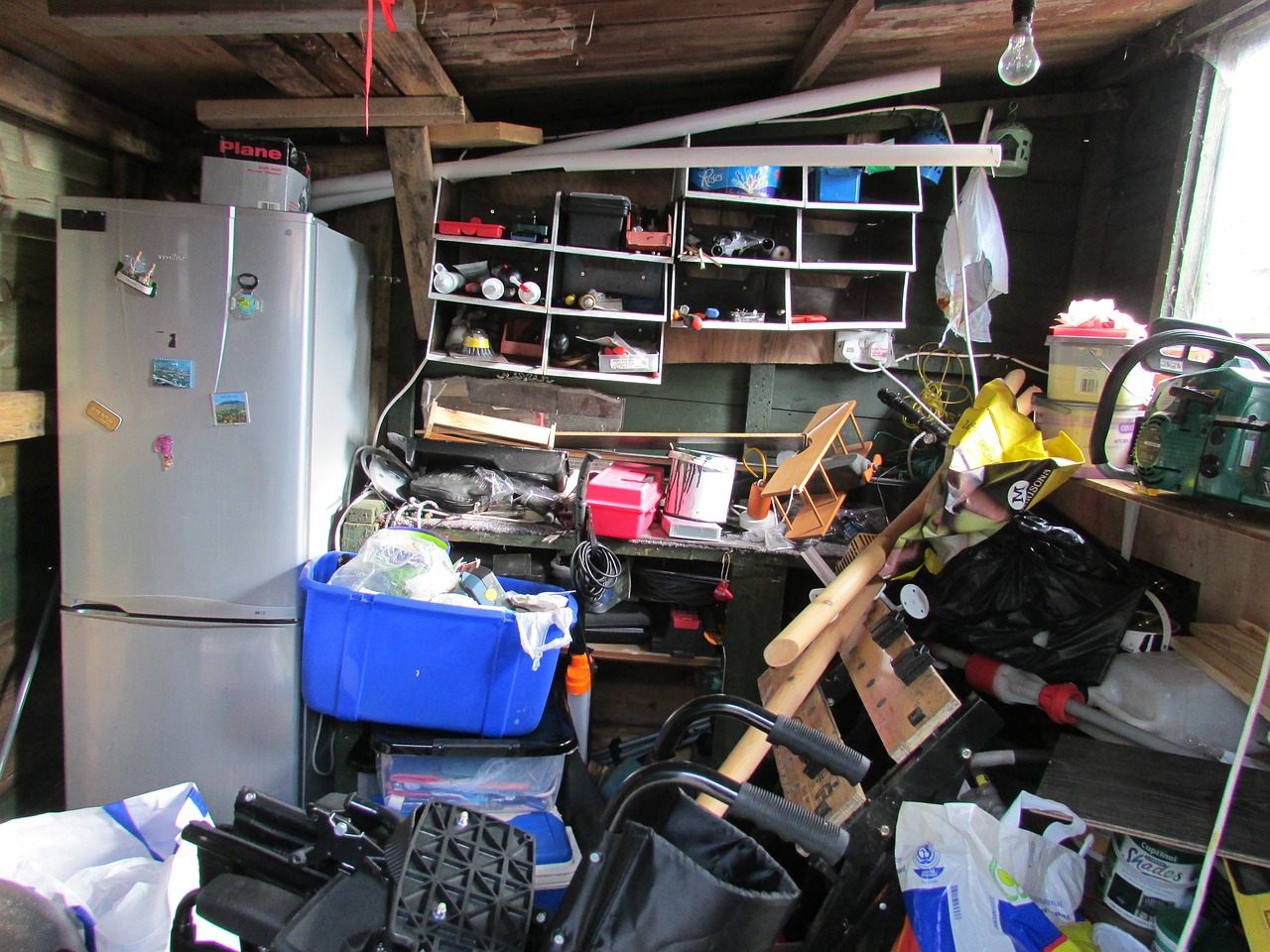
Updated October 2026. A six-step, one-room-at-a-time plan to free up space at home, with Census home sizes, IRS donation rules and EPA waste data. Sources were read on October 28, 2026.
To free up space at home, sort everything into three piles (need now, need later, don’t need), sell, donate, recycle or toss the third pile, store the second pile out of the living area, then gain room with multi-use furniture, wall-height shelving and dead corners. The typical new rental apartment finished in 2025 was just 1,000 square feet (Census), so every foot counts.
Jump to: 🪜 Three piles · 💲 Sell or donate · 🏠 Store it · 📸 Furniture · ⏱️ Go vertical · ❓ FAQ
Key takeaways
- Median size of a new single-family home completed in 2025: 2,142 square feet. New rental units: 1,000 square feet (Census).
- Work one room per session, and finish the room before starting the next one.
- Donated clothes and household goods must be in good used condition or better to be deductible (IRS Publication 526).
- Ceiling racks and floor-to-ceiling shelves add storage without using floor space.
Feeling cramped is common, and it doesn’t always mean the house is too small. Often it’s full. Clearing it out makes daily life easier, and if you plan to sell, it makes rooms look bigger in photos. The six steps below take a weekend per room. Start with the room that bothers you most; the momentum carries.
Step 1: How do you decide what to keep?
Empty one closet, cabinet or corner at a time and sort every item into three piles:
- Need now: you used it in the last month or so.
- Need later: seasonal, sentimental or for a known future use, like a crib or ski gear.
- Don’t need: broken, duplicated, outgrown, or untouched for a year.
Be strict with “need later”. It’s the pile that quietly fills garages. A useful test: if it vanished tonight, would you buy it again? If not, it goes in the third pile. Set a timer for 90 minutes so decisions stay quick, and don’t open old boxes of papers in the same session; they take their own afternoon.
Step 2: Should you sell, donate, recycle or throw it away?
Split the “don’t need” pile four ways. Sell anything worth more than your time: furniture, tools, bikes, electronics, branded clothing. Price to sell in a week, not to get top dollar. Donate the usable rest. Recycle what’s worn out. Throw away only what’s left.
If you plan to deduct donations, the rules matter. For 2025 returns, IRS Publication 526 says you generally must itemize on Schedule A, and clothing or household items (furniture, electronics, appliances, linens) must be in good used condition or better (IRS). Get a receipt.
Worn-out fabric doesn’t have to go in the trash. The EPA estimated 17 million tons of textiles were generated in 2018, 5.8% of all municipal solid waste, mostly discarded clothing (EPA). Check your city for textile drop-off bins.
Step 3: Where should you store things you don’t need right now?
Out of the rooms you live in. The garage is the obvious spot, but many are already full, and smaller homes have smaller garages. The fix is height. Wall shelving takes the boxes; ceiling racks take bins and seasonal gear above the car. This Overhead Garage Storage Made USA system is one example of racks that hang from the ceiling joists, leaving the floor and walls free.
Whatever system you use, check its rated load and mount it into framing, not drywall. Put heavy things low and light, rarely used things up top. Label bins on two sides. Our guides to a more convenient garage and fixing storage problems at home have layouts that work. No garage? A closet with full-height shelving, the space under the beds, or a small storage unit can do the same job.
Step 4: What furniture saves the most space?
Pieces that do two jobs. Choosing the right furniture starts with how a room is used, then storage:
- A storage ottoman or bench that holds blankets and toys.
- A sofa with storage under the seat cushions, or a sofa bed for a studio or guest room.
- A bed frame with drawers, or a lift-up platform.
- A drop-leaf or extending table that seats two daily and six on holidays.
- Nesting tables and stackable chairs that tuck away.
Smaller and lighter usually wins. A sofa with visible legs makes a room look bigger than one that sits on the floor. Measure doorways and walkways before you buy; you want about 30 inches to walk through. For tight apartments, our guide to maximizing small spaces has room-by-room ideas.
Step 5: How do you use vertical space?
Floors fill up; walls rarely do. Run shelves from floor to ceiling on one bedroom or living room wall and it becomes a library, a display wall or a closet without doors. Add a second rod in a closet to double hanging space for shirts and kids’ clothes. Over-the-door racks work in pantries and bathrooms.
Sell smarter
List your home on the MLS from $99
A flat fee instead of a percentage, and $0 to Beycome at closing. You stay in control of your sale.
Sell your home →Buy smarter
Get up to 2% back at closing
On homes listed by other agents, Beycome credits you up to 2% of the price at closing (1% kept, $1,499 minimum; not on FSBO homes or homes listed by Beycome sellers).
Buy a home →Anchor tall shelves and dressers to the wall, especially in homes with kids. Keep the heaviest things on the lowest shelves. Use matching bins on open shelves so the wall reads as calm rather than busy.
Step 6: Where can you find hidden storage?
Every house has dead space. Look under the stairs (drawers, a wine rack, a reading nook), above the kitchen cabinets, behind doors, at the ends of hallways, and in the gap beside the fridge, where a rolling pantry fits. A bay window can become a bench with a lift-up seat.

Then hold the line. Pick one rule and keep it: one item in, one item out, or a donation bag by the door that leaves when it’s full. Space you win back fills up again fast without a habit. Our post on organizing your belongings without leaving the house covers the upkeep side.
Does decluttering help if you plan to sell?
It helps a lot. Buyers look at space, and clutter makes rooms read smaller in photos and in person. In NAR’s 2025 staging survey, 83% of buyers’ agents said staging made it easier for buyers to picture the home as their own (NAR). If you can’t stage in person, virtual staging can show empty rooms furnished.
When you’re ready, Beycome lists your home on your local MLS from $99 with $0 at closing; see the flat fee MLS packages. If you’re moving to something smaller, our look at the advantages of condo living may help you decide.
Frequently asked questions
What is the fastest way to free up space at home?
Sort one room into three piles (need now, need later, don’t need), get rid of the third pile the same week, and move the second pile to the garage, a closet or storage. Then add vertical shelving.
How do I decide what to throw away?
Ask if you’ve used it in the past year and whether you’d buy it again today. Broken items, duplicates and things that don’t fit go first. Sell, donate or recycle before you throw away.
Can I deduct items I donate?
Generally only if you itemize, and clothing and household items must be in good used condition or better, per IRS Publication 526. Keep the receipt.
Is overhead garage storage safe?
It is when it’s installed into ceiling joists and loaded within its rated limit. Keep heavy items on low shelves and use the racks for lighter bins and seasonal gear.
What furniture saves the most space?
Pieces that do two jobs: storage ottomans, sofas with storage or sofa beds, beds with drawers, drop-leaf tables and nesting tables. Furniture with visible legs looks lighter.
How big is the average new home?
The median new single-family home completed in 2025 was 2,142 square feet, and the median new rental apartment was 1,000 square feet, per the Census Bureau.
Home sizes: Census Bureau, Highlights of 2025 Characteristics of New Housing. Tax rules: IRS Publication 526 (2025), general information; ask a tax professional. Waste figures: EPA, 2018 data. Staging: NAR 2025 Profile of Home Staging. All read October 28, 2026.
Prices as of October 2026 and subject to change. Basic $99 and Enhanced $399; Concierge is $1,399. Basic is $129 in California and Illinois ($99 elsewhere). “$0 at closing” means no Beycome fee at closing; taxes, title, escrow and any buyer-agent compensation you agree to still apply.
General information, not legal, tax or financial advice; rules vary by state and MLS.
Sources
- Census Bureau, Highlights of 2025 Characteristics of New Housing, read October 28, 2026.
- IRS, Publication 526, Charitable Contributions, read October 28, 2026.
- EPA, textiles: material-specific data, read October 28, 2026.
- NAR, 2025 Profile of Home Staging, read October 28, 2026.
- E-Z Garage Storage, overhead garage storage, read October 28, 2026.
- Beycome, listing package features, October 2026.
Disclosure & Disclaimer
Beycome provides real estate services through affiliated licensed brokerages and has a commercial interest in the services and business models discussed on this blog. Content reflects Beycome’s perspective and may promote our services; it should not be treated as independent or neutral reporting.
Articles are provided for general informational and educational purposes only, not as financial, tax, legal, or investment advice or a recommendation for your particular situation. Reading this blog does not create a brokerage, advisory, or other professional relationship.
Information, opinions, pricing, service descriptions, and comparisons reflect the sources and information available when an article was published or last updated and may change. Although we aim for accuracy, we do not guarantee that all content is complete, current, or applicable to your circumstances. Laws, market conditions, and service availability vary by location. Examples and estimated savings are illustrative, depend on stated assumptions, and do not guarantee individual results.
Verify relevant information directly and consult qualified professionals before making decisions. Beycome services are subject to applicable agreements, eligibility requirements, and state-specific terms.
