
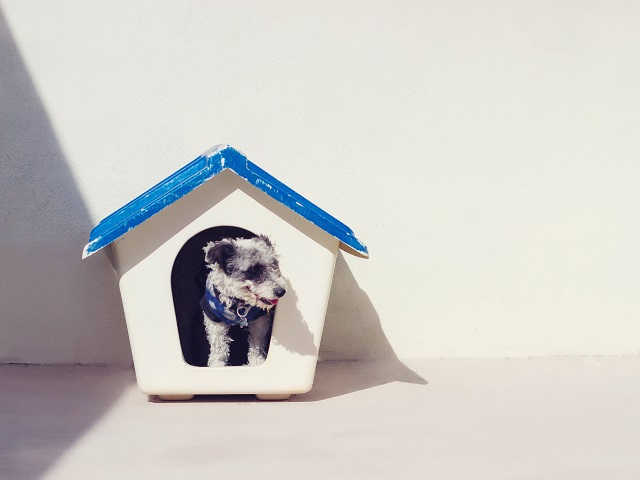
Updated October 2026. A weekend dog house plan with sizing, materials and weatherproofing, checked against the American Veterinary Medical Association’s shelter advice, read October 29, 2026.
You can build a solid dog house in one weekend with two sheets of plywood, a few 2x4s and basic tools, for about the price of a cheap store-bought kennel. Size it to your dog, raise the floor off the ground and face the door away from the wind. As of October 2026, about 95 million U.S. households own a pet, per APPA’s 2025 survey.
Jump to: 📸 Size it right · 💲 Materials · 🪜 Build steps · ⏱️ Weatherproofing · 🏠 Yards and moving · ❓ FAQ
Key takeaways
- Measure your dog first: nose to base of tail, and standing height at the top of the head.
- The AVMA says an outdoor shelter’s floor should be off the ground and its door turned away from prevailing winds.
- Thick, dry bedding that you change often matters more than fancy trim.
- Avoid space heaters and heat lamps inside; the AVMA flags burn and fire risk.
You finally found the right house, the yard is fenced, and your dog has opinions about where to nap. A dog house gives them a spot that’s theirs, and it can look like it belongs in the yard instead of looking like a plastic afterthought. Here’s how to plan one, build it and keep it comfortable.
How big should a dog house be?
Too big and it won’t hold body heat. Too small and your dog won’t use it. Start with two measurements while your dog stands:
- Length: nose to the base of the tail.
- Height: floor to the top of the head.
Our rule of thumb, not a vet standard: make the inside floor a few inches longer and wider than the length measurement, so your dog can turn around and curl up. Make the inside height a few inches taller than the head height. Cut the door just big enough for your dog to walk through without crouching hard, and set its bottom edge a few inches above the floor to keep bedding in and drafts low.
Planning for a puppy? Build for the adult size and fill the extra space with more bedding for now. If you have a large breed, our guide on how to adapt a house for a large pet covers the indoor side too.
What materials and tools do you need?
For a medium dog, this list usually covers it. Adjust the quantities to your plan.
| Item | What it’s for | Tip |
|---|---|---|
| Exterior-grade plywood (2 sheets, 3/4 inch) | Walls, floor, roof | Thicker plywood insulates better and flexes less. |
| 2×4 lumber | Base frame and roof frame | The base frame lifts the floor off the ground. |
| Exterior screws or nails, construction adhesive | Assembly | Screws make repairs easier later. |
| Roofing shingles or metal roofing | Rain protection | Leftovers from a home project work fine. |
| Exterior caulk and paint | Sealing seams | Paint and caulk the outside only. |
| Hinges | A roof that opens | Lets you clean and swap bedding. |
Tools: a circular or table saw, drill, hammer, tape measure, straight edge, square, paintbrush, and safety gear (dust mask, hearing protection and goggles).
Upcycling is the fun part. Leftover decking, siding or roofing from your own renovation can turn into a dog house that matches your home. If you cleared trees on your lot, small logs can even make a log-cabin version. Just skip wood with old paint you can’t identify; dogs chew.
How do you build a dog house, step by step?
- Draw your plan with inside dimensions, then add the plywood thickness to get the outside cuts.
- Build a rectangular 2×4 base frame. This raises the floor so it stays dry on rainy days and isn’t sitting on cold ground.
- Cut the floor and screw it to the frame.
- Cut the four walls with a straight edge guiding your saw. Cut the door in the front wall, and sand the edges smooth.
- Glue and screw the walls to the floor and to each other at the corners.
- Frame and cut the roof. A sloped or peaked roof sheds rain; attach one panel with hinges so it opens.
- Caulk every outside seam, then paint the outside with weather-resistant paint.
- Add shingles or metal roofing, plus an awning over the door if your yard gets a lot of rain or sun.
- Let everything dry and air out for a few days before your dog moves in.
Want extras? A small deck out front gives your dog a lookout, and a rooftop platform works for dogs that love to climb. If your dog sleeps inside, you can build an indoor kennel instead, with a top sturdy enough to use as an end table.
How do you make a dog house warm, cool and dry?
The American Veterinary Medical Association doesn’t recommend leaving pets outside for long in cold weather. If your dog does spend time outdoors, its advice for a shelter is specific:
- A warm, solid shelter that blocks wind.
- A floor raised off the ground to cut heat loss.
- Thick, dry bedding, changed regularly.
- A door facing away from prevailing winds.
- Fresh water that doesn’t freeze.
- No space heaters or heat lamps, and care with heated pet mats, because of burn and fire risk.
In long winters, add rigid foam insulation between the walls and an inner plywood layer so your dog can’t chew it. A flap of heavy outdoor fabric over the door helps too. In hot climates, the same house needs shade, airflow and a light roof color. A couple of small vents high on the side walls let hot air escape.
Placement matters as much as materials. Put the house on a spot that doesn’t puddle, close enough to your back door that your dog feels part of the family, and where you can see it from the kitchen window.
Sell smarter
List your home on the MLS from $99
A flat fee instead of a percentage, and $0 to Beycome at closing. You stay in control of your sale.
Sell your home →Buy smarter
Get up to 2% back at closing
On homes listed by other agents, Beycome credits you up to 2% of the price at closing (1% kept, $1,499 minimum; not on FSBO homes or homes listed by Beycome sellers).
Buy a home →Then keep it up. Open the hinged roof once a week, shake out or swap the bedding, and check for chewed corners, loose screws and leaks after big storms. A fresh coat of exterior paint every couple of years keeps the plywood from soaking up water.
Does a dog house matter when you buy or sell a home?
More than you’d think. A fenced yard and a spot for a dog are high on many buyers’ lists, and a tidy, well-built dog house reads as “pets are welcome here.” A falling-apart one reads as a repair. Before you build, check your HOA rules or local codes if you’re planning anything large or permanent.
Shopping for a home with your dog in mind? Our Tips for House Shopping With Your Pet covers yards, flooring and neighborhoods. Renting first? Read Tips to Rent One of the Best Pet-Friendly Apartments. When you’re ready to buy, Beycome’s buyer program is open to every buyer on homes listed by other agents, with no upfront fee. Beycome keeps 1% of the price (minimum $1,499) and credits the rest of the buyer-agent commission at closing, with lender approval. The credit can’t apply where no buyer-agent commission is offered, like most FSBO homes, or on homes listed by Beycome sellers.
Selling with a dog? Spell out in the contract whether the dog house stays or goes, so nobody argues about it at the walkthrough. Then deal with the smell: How To Get Rid of Pet Smell At Home and How to Make Your Home Smell Amazing help before photos. If you’re selling without big repairs, Sell Your Home As Is with Maximum MLS Exposure explains the trade-offs.
Beycome lists homes on the major home search sites and the MLS from $99 with flat fee MLS packages, with $0 Beycome fee at closing, in 17 states and DC. Moving within Florida? Our Florida listing page has the local details for when you’ve found the perfect house for your family. 22,000+ homeowners have sold with Beycome (Beycome internal data, October 2026).
One last thing for the dog bed: add washable dog pads under the bedding. They keep the floor dry and make cleanup a two-minute job.
Building a dog house: questions
What is the best wood for a dog house?
Exterior-grade plywood for the walls and floor, on a 2×4 base frame. Seal and paint only the outside.
Should a dog house be off the ground?
Yes. The AVMA says the floor should be off the ground to reduce heat loss, and it also stays drier in rain.
Which way should the dog house door face?
Away from the prevailing wind in your yard, per the AVMA’s shelter advice.
Can I put a heater in a dog house?
The AVMA advises against space heaters and heat lamps because of burns and fire, and says to use heated pet mats with caution. Insulation and dry bedding are safer.
How long does it take to build a dog house?
Most people finish a simple design in a weekend, plus a few days for paint to dry and air out.
Is a dog house enough for a dog in freezing weather?
No pet should be left outside for long periods in below-freezing weather, according to the AVMA. Bring your dog inside when it gets that cold.
Shelter advice from the American Veterinary Medical Association and pet ownership figure from APPA’s 2025 National Pet Owners Survey, both read October 29, 2026. Sizing tips are general guidance; ask your vet about your dog’s needs.
Beycome prices as of October 2026. “$0 at closing” means no Beycome fee at closing; other closing costs still apply. Buyer credit: no upfront fee; Beycome keeps 1% of the price (minimum $1,499); credited at closing with lender approval; not on FSBO homes or homes listed by Beycome sellers.
Sources
- AVMA, Cold weather animal safety, read October 29, 2026.
- APPA, Industry Trends and Stats, read October 29, 2026.
- Beycome, listing package features, October 2026.
Disclosure & Disclaimer
Beycome provides real estate services through affiliated licensed brokerages and has a commercial interest in the services and business models discussed on this blog. Content reflects Beycome’s perspective and may promote our services; it should not be treated as independent or neutral reporting.
Articles are provided for general informational and educational purposes only, not as financial, tax, legal, or investment advice or a recommendation for your particular situation. Reading this blog does not create a brokerage, advisory, or other professional relationship.
Information, opinions, pricing, service descriptions, and comparisons reflect the sources and information available when an article was published or last updated and may change. Although we aim for accuracy, we do not guarantee that all content is complete, current, or applicable to your circumstances. Laws, market conditions, and service availability vary by location. Examples and estimated savings are illustrative, depend on stated assumptions, and do not guarantee individual results.
Verify relevant information directly and consult qualified professionals before making decisions. Beycome services are subject to applicable agreements, eligibility requirements, and state-specific terms.

