
Updated October 2026. A plan for clearing piles of junk: sort it, sell or donate what’s good, recycle what you can, handle hazardous items safely and haul the rest. Facts from the EPA, the IRS and Consumer Reports, read on October 27, 2026.
To get rid of piles of junk, sort everything into keep, sell, donate, recycle, hazardous and trash, then clear one category at a time: list items for sale, book a charity pickup, drop off recycling, take paint and batteries to a hazardous waste site, and hire a hauler for what’s left. It’s a common problem. The EPA counted 292.4 million tons of household and business trash in 2018, about 4.9 pounds per person per day.
Jump to: 🪜 Sort it · 🤝 Donate or sell · 🏠 Recycle and hazards · 💲 Haul it away · ❓ FAQ
Key takeaways
- Americans recycled and composted about 32.1% of municipal waste in 2018, and about 50% went to landfills (EPA).
- Paints, cleaners, oils, batteries and pesticides count as household hazardous waste and need special disposal (EPA).
- You can only deduct donated household items that are in good used condition or better, unless one item is over $500 and appraised (IRS Publication 561).
- Clearing junk before you list a home makes rooms look bigger in photos and keeps inspectors focused on the house.
Why does junk pile up, and where do you start?
Junk builds up when nothing has a home and every decision gets put off. The pile then hides things you need, gives pests a place to live and makes cleaning harder. Our guide to dealing with a pest infestation shows how fast clutter turns into that problem.
Start small. Pick one room, or even one corner, and set a timer for an hour. Use six boxes or bags:
| Pile | What goes in it | Where it goes |
|---|---|---|
| Keep | Things you use or love | A set spot in the home |
| Sell | Furniture, tools, electronics in good shape | Online listing or a yard sale |
| Donate | Clean clothes, housewares, working items | A charity pickup or drop-off |
| Recycle | Paper, metal, cardboard, old electronics | Curbside or a drop-off center |
| Hazardous | Paint, cleaners, oil, batteries, pesticides | A household hazardous waste site |
| Trash | Broken, stained or unusable items | Curbside, a dumpster or a hauler |
Once a room is clear, give each kept item a home: a shelf, a bin, a drawer. Labeled bins in closets and the garage stop the next pile before it starts. Short on space? See 4 tips if you’re struggling with a lack of storage and storage issues in your home and how to solve them. For a room-by-room method, read How to Declutter Your Home: A Complete Thorough Guide.
What can you donate or sell?
Items in good shape are often worth more to someone else than to the landfill, and donating them is often easier than people think. Food52 has a guide on where to donate home goods.
Consumer Reports notes that charities usually accept furniture if it’s in decent shape, with no broken parts or big rips or stains. The Salvation Army and some Goodwill programs offer pickup, usually within 48 hours, with tax receipts. Habitat for Humanity ReStores and other charities take working appliances. Freecycle lets you give items away free to neighbors.
Tax deductions for donations
If you itemize, you may be able to deduct donated goods. IRS Publication 561 says household items must be in good used condition or better to qualify. The one exception is a single item you claim at more than $500, which needs a qualified appraisal and Form 8283. Value is what buyers actually pay for used items of that age and condition, which is usually far less than what you paid. Keep receipts and photos.
Selling
Sell bigger items first: furniture, tools, bikes, electronics. Photograph them in daylight, price them to move, and meet buyers in a public place or have someone with you at home. Whatever hasn’t sold in two weeks moves to the donate pile.
What should be recycled, and what needs special handling?
Plenty of junk should be recycled rather than tossed. The EPA’s 2018 figures show about 69 million tons recycled and 25 million tons composted, a 32.1% rate, while more than 146 million tons, about 50%, went to landfills.
Electronics
Phones, laptops and TVs contain metals, plastics and glass worth recovering. The EPA recommends donating working electronics or using a certified electronics recycler, and clearing your data first.
Appliances
Consumer Reports notes that when you buy a large appliance, most retailers will haul away the old one. Some retailers and utilities take part in the EPA’s Responsible Appliance Disposal program, which recovers chemicals and recycles metal, plastic and glass.
Household hazardous waste
The EPA treats leftover products that can catch fire, react, explode, corrode or poison as household hazardous waste. That includes paints, cleaners, oils, batteries and pesticides. Don’t put them in the trash or down a drain. Keep them in their original containers and take them to your city or county’s collection site or event.
Sell smarter
List your home on the MLS from $99
A flat fee instead of a percentage, and $0 to Beycome at closing. You stay in control of your sale.
Sell your home →Buy smarter
Get up to 2% back at closing
On homes listed by other agents, Beycome credits you up to 2% of the price at closing (1% kept, $1,499 minimum; not on FSBO homes or homes listed by Beycome sellers).
Buy a home →When should you hire a junk removal service?
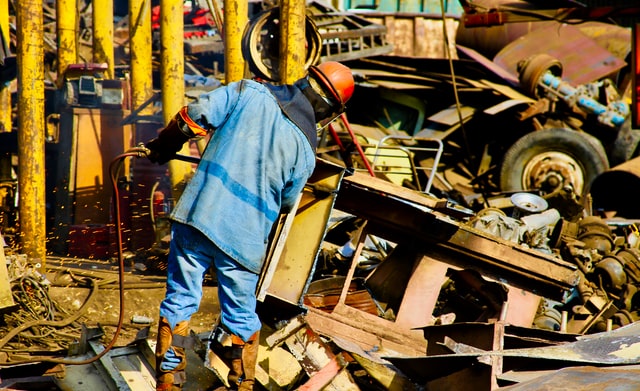
When the pile is big, heavy or urgent, a hauler saves time and your back. As professionals at Nixxit Junk Removal point out, hiring a crew means you don’t have to lift, load or drive anything to the dump. Nixxit, a locally owned company in the San Francisco Bay Area, also offers donation pickups. Look for a service that does the same where you live, so usable items get a second life.
- Get two or three quotes, and ask how the price is set.
- Ask what they donate or recycle, and what goes to the landfill.
- Check that they’re licensed and insured.
- Shred or remove personal papers, photos and drives before pickup.
- Point out anything hazardous; many haulers can’t take it.
For a lot of debris, such as a garage cleanout or a renovation, renting a dumpster may cost less than a haul. Check your city’s rules on placing one in the street or driveway.
How do you keep junk from piling up again?
A clear house stays clear with a few habits. Keep a donate bag in a closet and drop it off when it’s full. Open mail over the recycling bin. When something new comes in, something old goes out. Once a season, walk the garage, basement and spare room with a trash bag and ten minutes on a timer. Small, regular sweeps beat one exhausting weekend a year.
Clearing junk before you sell or move
Junk costs you most when you’re selling. Buyers and their photos see a smaller, darker house, and inspectors can’t reach outlets, attic hatches or the water heater. Clear rooms first, then stage. Our guide on how to prepare your house for sale covers the order, and open house tips help once it’s ready.
Moving before you’ve decided what to keep? Store the “maybe” items for a few weeks; see where to put your belongings between homes. When the house is clear, a flat fee MLS listing starts at $99 with $0 to Beycome at closing and lets you upload the most photos the MLS allows.
Frequently asked questions
How do I get rid of piles of junk fast?
Sort into keep, sell, donate, recycle, hazardous and trash, book a charity pickup, then hire a junk removal crew or rent a dumpster for the rest. One weekend can clear a garage.
What can’t junk removal companies take?
Most won’t take household hazardous waste like paint, oil, pesticides and some batteries. The EPA says these need special disposal, usually at a city or county collection site.
Where can I donate furniture and household items?
Charities like the Salvation Army, Goodwill and Habitat for Humanity ReStores take items in decent shape, and some offer pickup, per Consumer Reports. Freecycle is another free option.
Can I deduct donated household goods on my taxes?
If you itemize, yes, for items in good used condition or better, valued at what buyers pay for used goods. A single item over $500 that isn’t in good condition needs an appraisal (IRS Publication 561).
How do I recycle old electronics safely?
Wipe your data, then donate working devices or use a certified electronics recycler, as the EPA recommends.
Should I clear out junk before selling my house?
Yes. It makes rooms look larger in photos, gives inspectors access to systems, and makes moving day lighter. Clear first, then clean and stage.
Waste figures are the EPA’s latest national totals, for 2018. Donation rules summarized from IRS Publication 561; ask a tax professional about your own return. Charity pickup details from Consumer Reports and vary by area. “$0 at closing” means no Beycome fee at closing; other closing costs still apply. General information, not tax or legal advice.
Sources
- EPA, National Overview: Facts and Figures on Materials, Wastes and Recycling (read October 27, 2026).
- EPA, Household Hazardous Waste.
- EPA, Electronics Donation and Recycling.
- IRS, Publication 561, Determining the Value of Donated Property.
- Consumer Reports, How to get rid of practically anything.
- Beycome, listing package features, October 2026.
Disclosure & Disclaimer
Beycome provides real estate services through affiliated licensed brokerages and has a commercial interest in the services and business models discussed on this blog. Content reflects Beycome’s perspective and may promote our services; it should not be treated as independent or neutral reporting.
Articles are provided for general informational and educational purposes only, not as financial, tax, legal, or investment advice or a recommendation for your particular situation. Reading this blog does not create a brokerage, advisory, or other professional relationship.
Information, opinions, pricing, service descriptions, and comparisons reflect the sources and information available when an article was published or last updated and may change. Although we aim for accuracy, we do not guarantee that all content is complete, current, or applicable to your circumstances. Laws, market conditions, and service availability vary by location. Examples and estimated savings are illustrative, depend on stated assumptions, and do not guarantee individual results.
Verify relevant information directly and consult qualified professionals before making decisions. Beycome services are subject to applicable agreements, eligibility requirements, and state-specific terms.
