
Updated October 2026. A sleep-first bedroom checklist: temperature, light, noise, mattress, color and clutter, each tied to what health agencies and sleep researchers actually recommend. At the end, how the same room helps when you sell. Sources read October 29, 2026.
The fastest way to make your bedroom better for sleep is to make it cool, dark and quiet. As of October 2026, the Sleep Foundation puts the best bedroom temperature at about 65°F, and the National Heart, Lung, and Blood Institute (NHLBI) advises a room that’s “quiet, cool, and dark.” Most adults need 7 to 9 hours a night (NINDS), so the room is worth getting right.
Jump to: ⏱️ Temperature · 🏠 Light · 🪜 Mattress · 🤝 Color and scent · 💲 When you sell · ❓ FAQ
Bedroom sleep fixes, in short
- Set the thermostat near 65°F; most doctors suggest 65 to 68°F (Sleep Foundation).
- Block outside light at night and keep screens out of bed; light tells the brain it’s time to be awake (NHLBI).
- Replace a mattress that sags or leaves you sore in the morning.
- When selling, the primary bedroom is the second most staged room, at 83% of agents who stage (NAR, 2025).
This page is about sleep. If you want ideas for making the whole house calmer, from bathrooms to reading corners, see Innovative Relaxation Solutions You Can Incorporate Into Your Home. Here we stay in one room and one goal: falling asleep faster and staying asleep.
What temperature should your bedroom be for sleep?
Cooler than most people keep it. The Sleep Foundation says the best room temperature for sleep is about 65°F, give or take a few degrees per person, and that most doctors suggest 65 to 68°F. Your body temperature dips as you fall asleep, and a cool room helps that happen.
Simple ways to get there:
- Program the thermostat to drop an hour before bed, then warm up before your alarm.
- Use a ceiling fan on low; the air movement feels cooler without lowering the setting.
- Switch to breathable cotton or linen sheets in summer and add a blanket in winter instead of turning up the heat.
- Check the windows for drafts. A cold draft at 3 a.m. wakes people up as surely as heat does.
If you share the bed and run hot while your partner runs cold, two lighter blankets beat one heavy comforter. Each of you adjusts your own side.
How dark and quiet should a bedroom be?
As dark as you can make it, with a dim night light if you need one. NHLBI’s advice is plain: keep the bedroom quiet, cool and dark, and avoid screens before bed because the light may signal the brain that it’s time to be awake. The brain’s internal clock reads light directly from the eyes (NINDS), so a streetlight through a gap in the blinds matters.
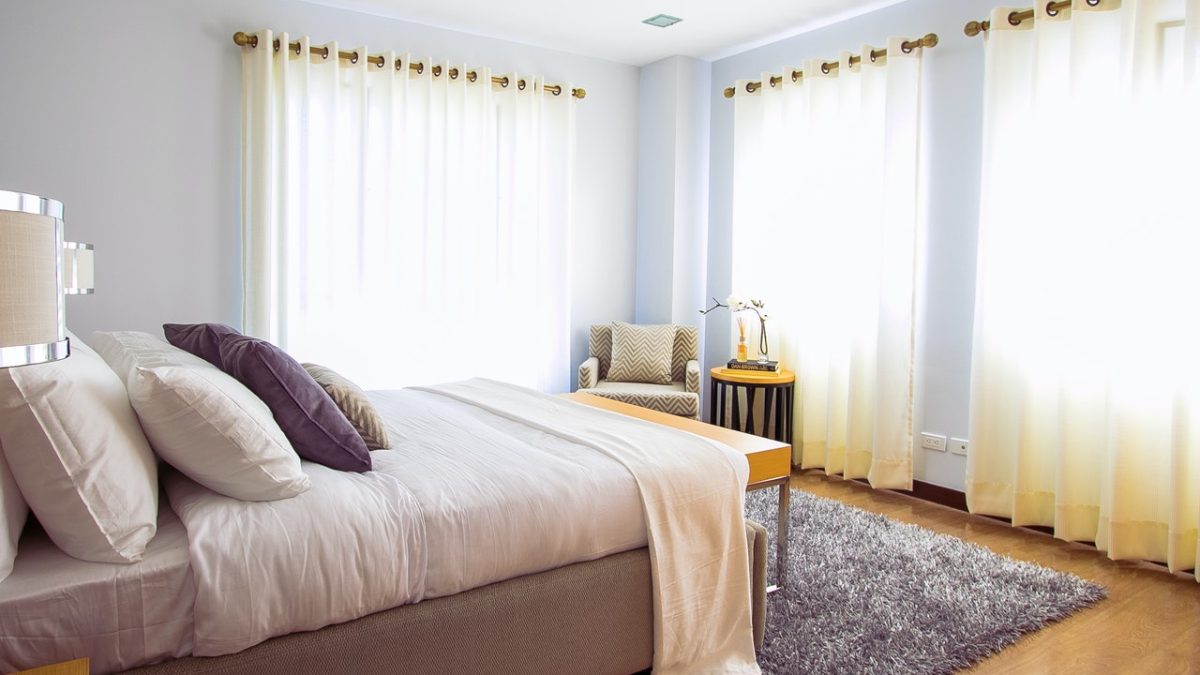
Curtains do most of the work. High curtains, hung on a rod an inch or two below the ceiling, block more light at the top and make the room look taller. Choose blackout lining, let the panels run past the window frame on each side, and let them touch the floor. During the day, open them fully; daylight helps set your clock too.
For lamps, pick warm bulbs and put the switch where you can reach it from bed. Move phone chargers across the room. Noise is the last piece. A rug, a padded headboard and heavy curtains soak up sound. If traffic or a neighbor’s dog is the problem, a fan or white-noise machine gives your ears something steady to ignore.
When is it time to replace your mattress?
When you wake up stiff, sleep better in hotel beds, or see a dip where you lie. Morning backaches are the most common signal. A mattress that sags puts pressure on your hips and shoulders and keeps you shifting all night.
Memory foam is one option worth testing. Brands such as eva.com.au make foam mattresses that spread body weight evenly and return to shape once you get up. Spring and hybrid mattresses feel bouncier and sleep cooler for some people. There’s no single right answer; lie on a few, in your usual sleep position, for more than a minute.
Pillows matter as much as people forget. Side sleepers usually need a thicker pillow to keep the neck straight; back sleepers need less height. Replace pillows that stay folded when you bend them in half.
Do color, scent and clutter really affect sleep?
They affect how calm the room feels, and a calm room makes it easier to wind down. Soft, muted colors such as gray-blue, sage or warm white read as quiet. Bright red or busy wallpaper behind the bed does the opposite. If repainting isn’t in the plan, change the bedding and one large textile, like a throw or curtains.
Sell smarter
List your home on the MLS from $99
A flat fee instead of a percentage, and $0 to Beycome at closing. You stay in control of your sale.
Sell your home →Buy smarter
Get up to 2% back at closing
On homes listed by other agents, Beycome credits you up to 2% of the price at closing (1% kept, $1,499 minimum; not on FSBO homes or homes listed by Beycome sellers).
Buy a home →Scent is personal. Some people find lavender or cedar relaxing; others find any scent distracting. Try a light one for a week and notice whether you fall asleep more easily. Skip candles near curtains, and never leave one burning while you sleep.
Clutter is the one fix that costs nothing. A desk piled with work, a treadmill used as a coat rack, laundry on a chair: each one is a small reminder of something unfinished. Give the bedroom one job, sleep, and move the rest elsewhere. NHLBI also suggests going to bed and waking up at the same time every day, weekends included, within about an hour. A tidy room makes that routine easier to keep.
Two smaller habits round it out. Caffeine’s effects can last up to 8 hours, so an afternoon coffee may still be with you at bedtime (NHLBI). And a heavy meal or alcohol close to bed tends to break up sleep later in the night.
How does a sleep-friendly bedroom help when you sell?
Buyers notice the same things you feel at night. In NAR’s 2025 Profile of Home Staging, the rooms most often staged were the living room (91%), the primary bedroom (83%) and the dining room (69%). A cool, uncluttered bedroom with good curtains and simple bedding photographs well and shows well.
If you’re getting ready to list, our guide to turning the bedroom into a selling point walks through staging on a budget. For décor ideas you can enjoy now, see Make the Bedroom Your Favorite Room and top advice to transform your bedroom. Deciding whether to leave furniture in for showings? Read furnished or unfurnished: how to sell your house.
When the room is ready, Beycome can put your home on the major home search sites and the MLS with a flat fee MLS listing from $99, with $0 due to Beycome at closing, in 17 states and DC. Listing photos are where a calm bedroom pays off. Pro photos are a $189 option on Basic and included in Enhanced ($399).
Bedroom sleep FAQ
What is the best bedroom temperature for sleep?
About 65°F, according to the Sleep Foundation, with most doctors suggesting 65 to 68°F. Adjust a degree or two for your own comfort.
Do blackout curtains help you sleep?
Yes, for most people. NHLBI recommends a dark bedroom, and light reaching the eyes affects the body clock (NINDS). Hang curtains high and wide so light can’t leak around the edges.
How many hours of sleep do adults need?
Most adults need 7 to 9 hours a night (NINDS). Needs vary by person and change with age.
How often should you replace a mattress?
There’s no fixed rule. Replace it when you regularly wake up sore, sleep better elsewhere, or see sagging where you lie.
What colors are best for a bedroom?
Soft, muted colors such as gray-blue, sage or warm white feel calm to most people. Save bold colors for rooms where you want energy.
Should I stage the bedroom before selling my house?
It’s one of the rooms agents stage most: 83% of those who stage include the primary bedroom (NAR, 2025). Clear surfaces, neutral bedding and good light go a long way.
Health information here is general and comes from the sources listed; it isn’t medical advice. Talk to a doctor about ongoing sleep problems. Brand mentions are examples, not endorsements.
Beycome prices as of November 2026: Basic $99, Enhanced $399, Concierge $1,399. Basic is $129 in California and Illinois. “$0 at closing” means no Beycome fee at closing; other closing costs still apply. Beycome lists in 17 states and DC.
Sources
- Sleep Foundation, Best Temperature for Sleep, read October 29, 2026.
- NHLBI, Healthy Sleep Habits, read October 29, 2026.
- NINDS, Brain Basics: Understanding Sleep, read October 29, 2026.
- NAR, 2025 Profile of Home Staging, read October 29, 2026.
- Beycome, listing package features, October 2026.
Disclosure & Disclaimer
Beycome provides real estate services through affiliated licensed brokerages and has a commercial interest in the services and business models discussed on this blog. Content reflects Beycome’s perspective and may promote our services; it should not be treated as independent or neutral reporting.
Articles are provided for general informational and educational purposes only, not as financial, tax, legal, or investment advice or a recommendation for your particular situation. Reading this blog does not create a brokerage, advisory, or other professional relationship.
Information, opinions, pricing, service descriptions, and comparisons reflect the sources and information available when an article was published or last updated and may change. Although we aim for accuracy, we do not guarantee that all content is complete, current, or applicable to your circumstances. Laws, market conditions, and service availability vary by location. Examples and estimated savings are illustrative, depend on stated assumptions, and do not guarantee individual results.
Verify relevant information directly and consult qualified professionals before making decisions. Beycome services are subject to applicable agreements, eligibility requirements, and state-specific terms.

