
Updated October 2026. A room-by-room checklist of the labels worth putting on your home, with the safety rules behind them and what to label before you sell or move.
The six types of labels every home should have are identification, warning, instructional, maintenance, safety and informative labels. As of October 2026, the two with hard rules behind them are smoke alarm dates (replace alarms 10 years from the manufacture date, says the U.S. Fire Administration) and a labeled breaker panel, which the electrical code requires.
Jump to: 🏠 The six types · 🪜 Room checklist · ⏱️ Safety dates · 📦 Moving and selling · ❓ FAQ
Key takeaways
- Write the install date on every smoke alarm: the U.S. Fire Administration says to test monthly and replace each alarm 10 years from its manufacture date.
- Section 408.4(A) of the National Electrical Code requires each circuit in a panel to be clearly identified, so a blank breaker list is worth fixing.
- The EPA says to keep household chemicals in their original containers and never remove the labels.
- Before you list a home, label the shutoff valves, the panel and the filter sizes. Buyers and inspectors notice.
Labels sound like a small thing. But the right ones save you time every day, prevent a few accidents, and make a home easier to hand over when you sell. Here’s what to label, room by room, and which labels come with real rules.
What are the six types of labels you should put on your home?
Most household labels fall into six groups. You don’t need all of them in every room. Use this as a menu.
| Type | What it does | Examples at home |
|---|---|---|
| Identification | Says what something is or where it goes | Pantry bins, storage boxes, file folders, keys |
| Warning | Flags a danger before someone gets hurt | “Hot surface”, “Do not unplug”, pool gate |
| Instructional | Explains how to use or set up something | Water heater relight steps, alarm codes, sprinkler timer |
| Maintenance | Records when service is due | Air filter size and date, smoke alarm date, water softener salt |
| Safety | Marks hazards and emergency gear | Gas shutoff, main water valve, fire extinguisher, chemicals shelf |
| Informative | Adds useful facts for the next person | Paint colors and brands, appliance model numbers, warranty dates |
1. Identification labels
These are the ones most people think of first. “Baking”, “Batteries”, “Holiday lights”. They cut search time and stop clutter from creeping back, because every item has a named home. Put the label where you’ll see it when the bin is on the shelf, usually the short end facing out.
Material matters more than you’d think. Paper labels are cheap and fine for a pantry. For tools, outdoor gear or anything that gets wet, a metal or engraved tag lasts for years. Companies such as Metal Marker Manufacturing make metal nameplates and tags, which suit garages, sheds and equipment. Paper or vinyl works for most indoor bins. The choice is yours.
2. Warning labels
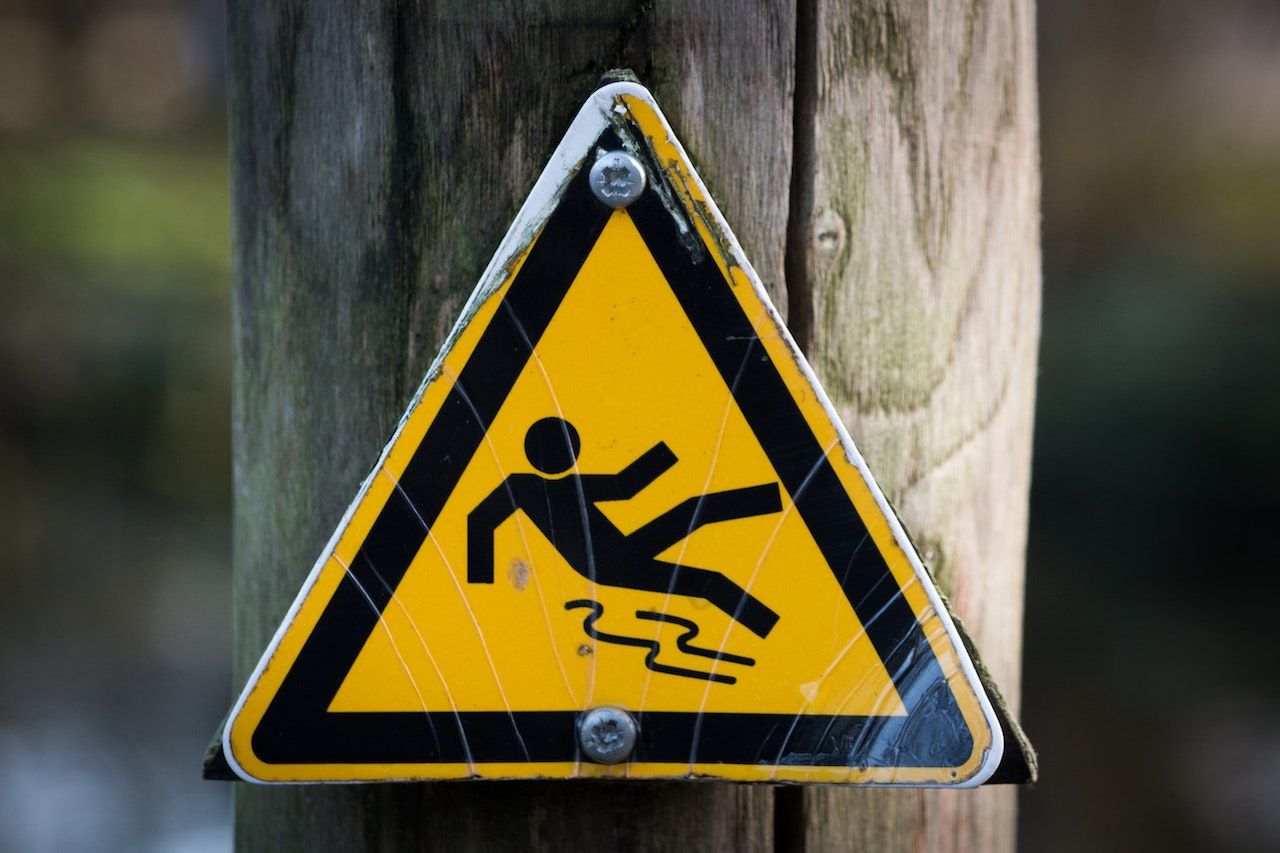
Warning labels tell people about a risk they can’t see: a cord that powers a freezer, a hot pipe, a step down in a dark hallway. Clear icons help, especially for kids and guests who don’t read English. Product designers learned this long ago; labels are a great way to identify any risks at a glance, and the same logic works at home.
3. Instructional labels
Think of the jobs you do once a year and forget each time. How to relight the water heater. How to reset the garage door opener. How to winterize the outdoor spigot. Tape short steps right on the equipment, or tape a small bag with the manual inside a cabinet door nearby.
4. Maintenance labels
A maintenance label is a date and a size. Write the filter size and the date you changed it on the furnace or air handler. Write the install date on the water heater and the smoke alarms. When something breaks, the date tells your repair person a lot.
5. Safety labels
These mark where to go in an emergency: the main water shutoff, the gas meter valve, the breaker panel, the fire extinguisher and the first aid kit. In a leak or a fire, nobody wants to guess which valve is which.
6. Informative labels
Informative labels are notes for the future. The paint brand and color code on the inside of a closet door. The model number of the dishwasher. The date the roof was replaced. They help you touch up and repair, and they help the next owner if you sell.
What should you label in each room? A complete checklist
Here’s the checklist we’d use for a typical house. Start with the safety items, then work room by room.
- Utility room: main water shutoff, water heater install date, furnace filter size and change date.
- Electrical panel: every breaker, with the room or appliance it powers.
- Kitchen: pantry bins, spice jars, a “chemicals” shelf up high, and the gas range shutoff if you have one.
- Bathrooms: the toilet and sink shutoff valves, and medicines kept out of reach.
- Bedrooms: smoke alarm install dates, and storage bins under the bed by season.
- Garage: tool walls, paint cans with the room they match, and outdoor gear.
- Office: file folders by year, warranty folder, and a labeled box for manuals.
- Outside: irrigation zones, the hose bib shutoff, and the pool or spa breaker.
A label maker is handy, but a permanent marker and masking tape do most of the job. What matters is that the label is short, readable and in a spot you’ll actually look.
Which home labels have safety rules behind them?
Most labels are about convenience. A few are about safety, and they come with clear guidance from public agencies.
Smoke alarms: test monthly, replace at 10 years
The U.S. Fire Administration says smoke alarms should be tested every month and replaced 10 years from the manufacture date. Alarms with a 9-volt battery need a new battery at least once a year. Write the install date on the alarm itself, and check the date printed on the back of older ones. The agency also notes you may have less than 2 minutes to get out once an alarm sounds.
Sell smarter
List your home on the MLS from $99
A flat fee instead of a percentage, and $0 to Beycome at closing. You stay in control of your sale.
Sell your home →Buy smarter
Get up to 2% back at closing
On homes listed by other agents, Beycome credits you up to 2% of the price at closing (1% kept, $1,499 minimum; not on FSBO homes or homes listed by Beycome sellers).
Buy a home →Breaker panel: every circuit identified
Section 408.4(A) of the National Electrical Code, summarized on UpCodes, requires each circuit in a panelboard to be clearly identified by its purpose. Many older panels have faded or blank lists. Flip breakers one at a time with a helper, or hire an electrician to map it. Our tips on finding the right electrical services help if you’d rather not do it yourself.
Household chemicals: keep the original label
The EPA’s guidance on household hazardous waste says to keep products in their original containers, never remove the labels, and never store them in food containers. Paints, cleaners, oils, batteries and pesticides all count. If you pour something into a spray bottle, label the bottle with the product name.
Poison help number
Put the national poison help number, 1-800-222-1222, on the fridge or inside the medicine cabinet. Poison Control says the call is free and confidential, and you can also use its online tool.
How should you label your things before moving or selling?
Labeling household goods for a move
For a move, label every box on two sides and the top with the room it’s going to, a box number and a short list of contents. Mark fragile boxes clearly. Keep a simple inventory on your phone that matches the box numbers. If movers pack for you, they’ll usually add their own inventory tags; compare them with your list before they leave.
A few habits help a lot. Pack one “open first” box per person with chargers, sheets, a towel and basics. Color-code rooms with tape if several people are unloading. For more, see these helpful tips from pro movers, our list of things to keep in mind when preparing to move, and more tips to help you along the way.
Labels that help when you sell your home
When you list a home, buyers, appraisers and inspectors open the panel, look for the shutoffs and check the water heater date. A clearly labeled panel and valves look like a well-kept house. Leave a labeled folder of manuals, warranties and paint colors for the new owner. It costs nothing and it’s often remembered.
Labels also help you answer disclosure questions accurately, like the age of the roof or the water heater. If roof work is on your list before selling, read how roof problems can compromise your home’s value. Clearing out first? Here are hassle-free ways to handle waste during a remodel.
If you’re selling on your own terms, a flat fee MLS listing with Beycome puts your home on the local MLS from $99, with $0 due to Beycome at closing. Moving into an older home instead? Our list of things to do after moving into an old house starts with finding and labeling the shutoffs.
Frequently asked questions about labeling your home
What is the best practice for labeling your belongings?
Keep labels short, put them where you’ll see them, and give every item a named home. Use durable tags for garages and outdoor gear, and paper or vinyl indoors.
How do you label household goods for moving?
Write the destination room, a box number and the contents on two sides and the top. Keep a matching inventory list, and mark fragile boxes clearly.
How often should smoke alarms be replaced?
Every 10 years from the manufacture date, according to the U.S. Fire Administration. Test them monthly and write the install date on each alarm.
Do I have to label my breaker panel?
The National Electrical Code, section 408.4(A), requires each circuit to be clearly identified. It also makes repairs and home inspections easier.
Can I put cleaning products in unlabeled spray bottles?
The EPA advises keeping products in their original containers with the labels on. If you must decant, label the new bottle with the product name.
What should I label before selling my house?
The breaker panel, the main water and gas shutoffs, the water heater and roof dates, and a folder of manuals and paint colors for the buyer.
Safety guidance as published by the U.S. Fire Administration, the EPA and Poison Control, read October 2026. Electrical code adoption varies by state and city; ask a licensed electrician about your panel. Beycome prices as of October 2026; “$0 at closing” means no Beycome fee at closing, while other closing costs still apply. Beycome lists in 17 states and DC. General information, not professional advice.
Sources
- U.S. Fire Administration, smoke alarms, read October 26, 2026.
- UpCodes, NEC 408.4(A) circuit directory or circuit identification, read October 26, 2026.
- EPA, household hazardous waste, read October 26, 2026.
- Poison Control, National Capital Poison Center, read October 26, 2026.
- Beycome, listing package features, October 2026.
Disclosure & Disclaimer
Beycome provides real estate services through affiliated licensed brokerages and has a commercial interest in the services and business models discussed on this blog. Content reflects Beycome’s perspective and may promote our services; it should not be treated as independent or neutral reporting.
Articles are provided for general informational and educational purposes only, not as financial, tax, legal, or investment advice or a recommendation for your particular situation. Reading this blog does not create a brokerage, advisory, or other professional relationship.
Information, opinions, pricing, service descriptions, and comparisons reflect the sources and information available when an article was published or last updated and may change. Although we aim for accuracy, we do not guarantee that all content is complete, current, or applicable to your circumstances. Laws, market conditions, and service availability vary by location. Examples and estimated savings are illustrative, depend on stated assumptions, and do not guarantee individual results.
Verify relevant information directly and consult qualified professionals before making decisions. Beycome services are subject to applicable agreements, eligibility requirements, and state-specific terms.

