
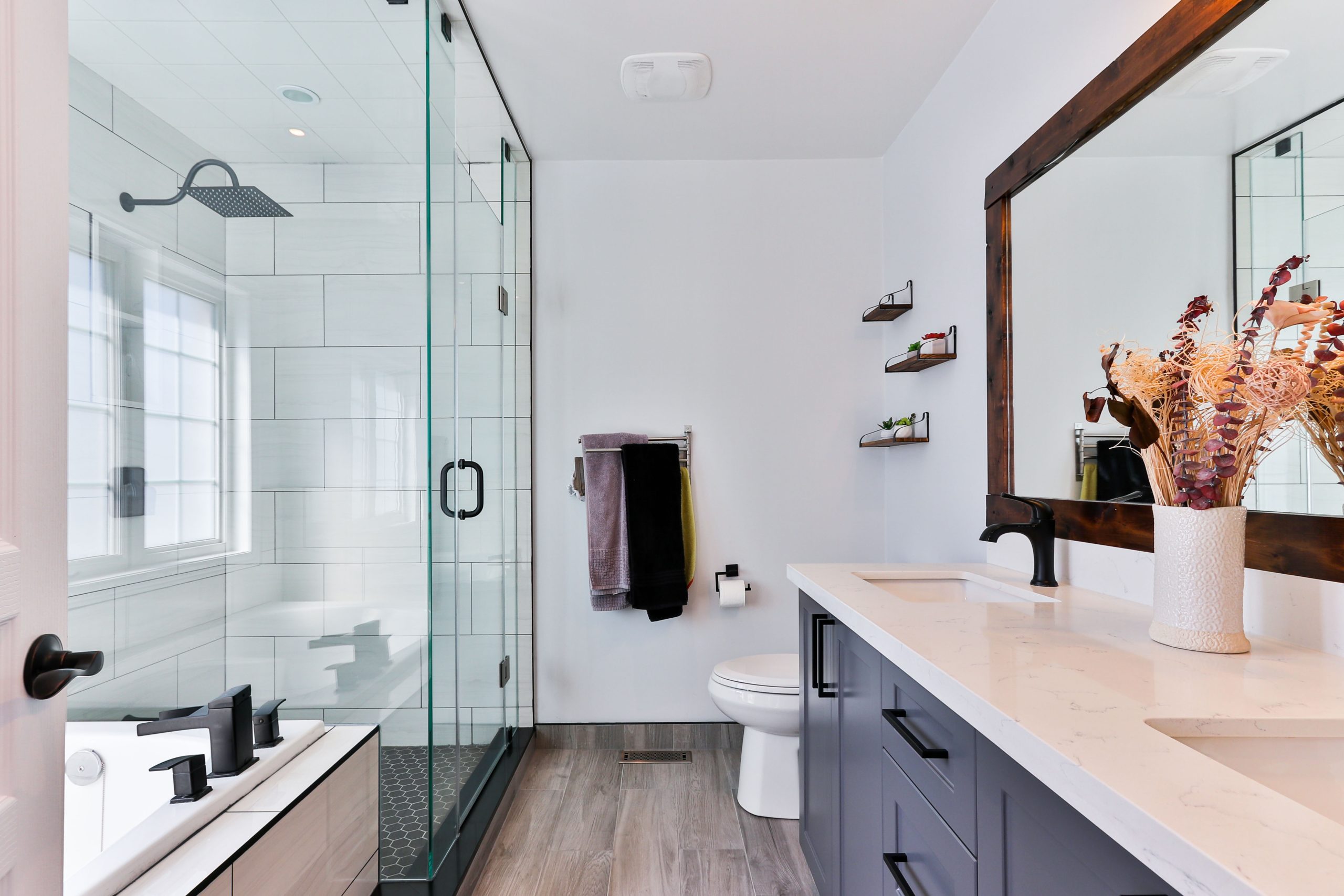
Updated October 2026. Planning points for a bathroom renovation, checked against EPA WaterSense toilet data and NAR and NARI’s 2025 Remodeling Impact Report. Sources were read on October 28, 2026.
Before a bathroom renovation, settle six things: your budget, the style, the toilet and fixtures, the wiring, the lighting and the storage. Toilets matter more than most people think. As of October 2026, EPA says they account for nearly 30% of indoor water use, and a WaterSense model can save a family about 13,000 gallons a year.
Jump to: 💲 Budget · 🏠 Style and toilet · ⏱️ Electricity · 📸 Lighting · 🪜 Storage · ❓ FAQ
Key takeaways
- WaterSense toilets use 1.28 gallons per flush or less, 20% below the 1.6-gallon federal standard (EPA).
- Swapping old toilets can cut toilet water use by 20% to 60% and save more than $170 a year (EPA).
- 35% of Realtors saw buyer demand for bathroom renovations rise over two years (NAR and NARI, 2025).
- Book the electrician before the plumber and tiler, so outlets and lights are planned in.
The bathroom is the room you use first every morning, so it’s natural to want it right. Are you only swapping the sink and toilet, or tearing out walls, tile and mirrors too? The answer drives every other choice. Look at styles online or in a showroom first, then work through the list below before anyone picks up a hammer.
How should you set a bathroom renovation budget?
Set the number before you shop. The budget decides the scope: a fixture swap, a refresh with new tile, or a full gut. Visit a few stores and ask for prices, so you’re familiar with the cost of each item you want. Get at least two written quotes for labor.
A budget also narrows the choices, which is a relief when there are hundreds of vanities. Some people care most about staying on budget; others want the best materials. You can usually do both by spending on what you touch every day, like the faucet and toilet, and saving on what you don’t. Keep 10% to 20% aside for surprises behind the walls, a common rule of thumb among remodelers.
Thinking about selling in the next couple of years? NAR and NARI’s 2025 report found 18% of homeowners who remodeled did it to prepare to sell within two years. Read should you remodel your property if you plan on selling it? before you go big, and use the home renovation checklist to keep the project on track.
How do you choose a style and a toilet?
Pick the overall style first, then buy fixtures that fit it. Tubs, sinks and toilets come in many shapes, heights and finishes. Toilets alone vary by bowl shape (round or elongated), height and flush type. If you like a classic look, buy from a supplier with plenty of options. Choosing the right model matters for years, and guides to choosing the right American Standard toilet compare models side by side.
Look for the WaterSense label. EPA says toilets are the main source of water use in the home, nearly 30% of indoor use, and older ones can use as much as 6 gallons per flush. WaterSense models use 1.28 gallons or less. EPA estimates a family that replaces old toilets can cut toilet water use by 20% to 60%, nearly 13,000 gallons a year, and save more than $170 a year in water costs.
Check for leaks while you’re at it. EPA says household leaks can waste 180 gallons a week, and toilets are often the culprit, usually from a worn flapper.
Why plan the electrical work first?
The worst surprise at the end of a renovation is realizing you forgot outlets. You’ll likely need an electrician for rewiring, new lights, an exhaust fan, a heated floor or an electric shower. Bring them in before the plumbing and tile work, so they can plan where everything goes.
Hire a licensed electrician and make sure permits are pulled where required. Bathroom outlets near water typically need ground-fault protection under local code, and an inspector will check it. Licensed work protects you if something goes wrong, and it matters later: buyers and their inspectors ask about permits.
What lighting works best in a bathroom?
Layer it. Recessed lights in the ceiling give general light. A shower trim light brightens the stall. Around the mirror, use lights at face height on both sides, or a lit mirror, so you can see clearly while shaving or doing makeup. A dimmer lets you set a softer mood for a bath.
Choose fixtures rated for damp or wet areas, and keep the color temperature the same across the room so the light looks even. LED bulbs use less power and last longer than older types.
Sell smarter
List your home on the MLS from $99
A flat fee instead of a percentage, and $0 to Beycome at closing. You stay in control of your sale.
Sell your home →Buy smarter
Get up to 2% back at closing
On homes listed by other agents, Beycome credits you up to 2% of the price at closing (1% kept, $1,499 minimum; not on FSBO homes or homes listed by Beycome sellers).
Buy a home →How can you add storage without losing space?
Cabinets beat open shelves for medicines, makeup and spare toilet paper. They’re not expensive, and they look tidier than a shallow vanity. If you have kids, put the medicine cabinet out of reach or add childproof locks.
A vanity with drawers is easier to organize than one with doors, and drawers can be cut around the plumbing. Tall cabinets over the toilet or a recessed niche in the shower add storage without using floor space. Our guide to builder-grade cabinets explains what to look for in cabinet quality.
In what order does the work happen?
Most bathroom jobs follow the same sequence, and knowing it helps you book trades without gaps. First comes demolition and a look at what’s behind the walls: old pipes, rot around the tub, or wiring that isn’t up to code. Then the “rough-in”: the plumber moves supply and drain lines, and the electrician runs new circuits and boxes. If your city requires permits, an inspector usually checks this stage before the walls close.
Next come the walls and waterproofing. Cement board and a waterproof membrane go behind tile in the shower; skipping it is how leaks start years later. Then tile, the vanity, the toilet and the fixtures, and finally paint, mirrors and lights. A simple fixture swap can take a few days. A full gut often takes several weeks, longer if you wait on custom glass or a special-order vanity.
Plan where you’ll shower in the meantime, especially if it’s your only bathroom. And keep every receipt and permit. If you sell later, buyers and their inspectors will ask what was done and who did it.
Does a bathroom renovation help when you sell?
It can help you sell, even if you don’t get every dollar back. In NAR and NARI’s 2025 report, Realtors named bathroom renovations among the top three projects with rising buyer demand (35%), after kitchen upgrades (48%) and new roofing (43%). Before listing, a fresh, clean bathroom with no leaks and working fans often matters more than luxury finishes.
When you’re ready to sell, a flat fee MLS listing puts your home on the MLS for $99 (Basic) or $399 (Enhanced), with $0 due to Beycome at closing. From November 2, 2026, Basic is $129 in California and Illinois. Beycome lists homes in 17 states and DC, and 22,000+ homeowners have saved over $225 million with us. Want to know what the renovation did for your value? Try our home value calculator.
Questions about bathroom renovations
What should I plan first in a bathroom renovation?
Your budget and scope. Then style, fixtures, electrical work, lighting and storage, in that order, so each trade knows the plan.
How much water does a new toilet save?
EPA estimates replacing old toilets with WaterSense models cuts toilet water use by 20% to 60%, nearly 13,000 gallons a year for a family.
Do I need an electrician for a bathroom remodel?
Usually, for new outlets, lights, fans or heated floors. Use a licensed electrician and pull permits where your local code requires them.
Is a bathroom renovation worth it before selling?
A full remodel rarely pays back in full, but a clean, working bathroom helps. 35% of Realtors saw demand for bathroom renovations rise (NAR and NARI, 2025).
How much should I set aside for surprises?
Many remodelers suggest 10% to 20% of the budget for problems found behind walls or under floors.
Toilet and leak figures per EPA WaterSense, Residential Toilets; remodeling figures per NAR and NARI’s 2025 Remodeling Impact Report news release. Read October 28, 2026. Building and electrical codes vary by city and county.
Beycome prices as of October 2026. “$0 at closing” means no Beycome fee at closing; other closing costs, taxes and title fees still apply. General information, not professional advice.
Sources
- EPA WaterSense, Residential Toilets, read October 28, 2026.
- NAR, 2025 Remodeling Impact Report news release, read October 28, 2026.
- Beycome, listing package features, October 2026.
Disclosure & Disclaimer
Beycome provides real estate services through affiliated licensed brokerages and has a commercial interest in the services and business models discussed on this blog. Content reflects Beycome’s perspective and may promote our services; it should not be treated as independent or neutral reporting.
Articles are provided for general informational and educational purposes only, not as financial, tax, legal, or investment advice or a recommendation for your particular situation. Reading this blog does not create a brokerage, advisory, or other professional relationship.
Information, opinions, pricing, service descriptions, and comparisons reflect the sources and information available when an article was published or last updated and may change. Although we aim for accuracy, we do not guarantee that all content is complete, current, or applicable to your circumstances. Laws, market conditions, and service availability vary by location. Examples and estimated savings are illustrative, depend on stated assumptions, and do not guarantee individual results.
Verify relevant information directly and consult qualified professionals before making decisions. Beycome services are subject to applicable agreements, eligibility requirements, and state-specific terms.

