
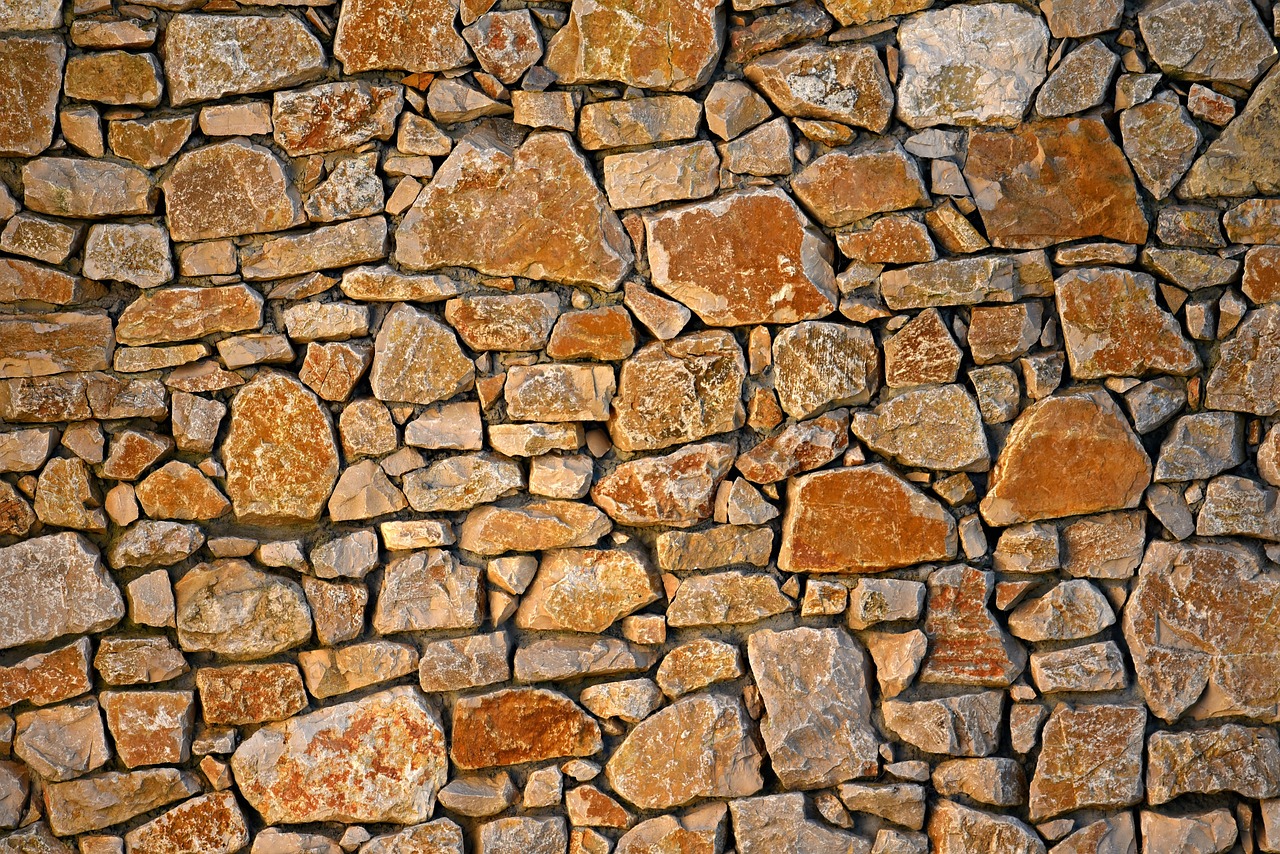
Updated October 2026. A homeowner’s guide to flagstone, sandstone and other natural stone for paths, patios and pool edges, with what it costs and what it adds at resale.
Flagstone is not one rock: it’s any stone that splits into flat slabs, most often sandstone, limestone, slate or quartzite. As of October 2026, U.S. quarries sold about 2.3 million tons of dimension stone in 2025, and sandstone made up 17% of it (USGS). A flagstone front walk was part of a $9,000 upgrade that recovered 100% at resale in NAR’s study.
Jump to: 🪜 Stone types · 📍 Where it comes from · 💲 Resale value · 🏠 Install & care · ❓ FAQ
Key takeaways
- In 2025, limestone was about 46% of U.S. dimension stone by tonnage, granite 18% and sandstone 17% (USGS, 2026).
- Texas, Wisconsin, Vermont, Indiana and Georgia led U.S. dimension stone production, with 215 quarries in 34 states.
- NAR’s outdoor study priced a landscape upgrade with a natural flagstone walk at $9,000 and estimated 100% of it recovered at sale.
- 92% of REALTORS surveyed had suggested sellers improve curb appeal before listing.
Natural stone has been used outdoors for centuries for a plain reason: it lasts. A well-laid stone path can outlive the house’s roof, siding and probably its owners. It also costs more than concrete up front and needs a good base. Here’s how to choose it, where it comes from, what it’s worth when you sell, and how to keep it looking right.
What are the main types of natural stone for landscaping?
Most landscape stone falls into a handful of families. Each behaves differently under feet, frost and pool water.
| Stone | Rock type | Common uses | What to know |
|---|---|---|---|
| Flagstone | Any stone split into flat slabs (often sandstone, limestone, slate, quartzite) | Patios, walkways, stepping stones | Irregular shapes; thickness varies |
| Sandstone | Sedimentary | Paving, wall cladding, steps | Warm colors; porous, so seal it |
| Limestone | Sedimentary | Steps, coping, walls | Even texture; sensitive to acids |
| Slate | Metamorphic | Patios, paths | Dense, dark tones; can flake if poor quality |
| Granite | Igneous | Curbs, steps, cobbles | Very hard; costs more to cut |
Flagstone
Flagstone’s appeal is its natural, irregular face. It suits cottage gardens, informal paths and patios where joints get filled with gravel or groundcover. It’s also used for pool coping, the cap along a pool’s edge, where a textured, non-slip surface matters.
Sandstone
Sandstone comes in browns, tans, reds and golds, and can be sawn into regular slabs for a more formal look. If you’re shopping, suppliers that list sandstone slabs for sale usually show thickness, finish and color range, which helps you compare before you visit a yard. Because it’s porous, sandstone takes stains more easily than granite, so a penetrating sealer is worth it near grills and planters.
Where does flagstone come from?
Flagstone is quarried from layered rock that splits along natural bedding planes. In the U.S., that stone comes out of a wide network: the U.S. Geological Survey counts 150 companies running 215 dimension stone quarries in 34 states. By tonnage, the leading states in 2025 were Texas, Wisconsin, Vermont, Indiana and Georgia, which together produced 73% of the total.
A lot of stone also comes from abroad. Between 2021 and 2024, the leading import sources for dimension stone by value were Brazil (21%), Italy (19%), China (17%) and India (16%). Imported flagstone can be cheaper or offer colors you won’t find locally; local stone usually costs less to ship and matches the regional look.
USGS also tracks how dressed stone is used. Ashlars and partially squared pieces made up half of dressed stone by tonnage in 2025, and flagging was 9%. So flagstone is a real but small slice of a $460 million market.
Does natural stone add value when you sell your home?
It can, especially at the front of the house. In NAR’s 2023 Remodeling Impact Report: Outdoor Features, landscape professionals and REALTORS priced and rated 11 outdoor projects; see what each garden upgrade pays back.
| Project (NAR, 2023) | Estimated cost | Estimated recovered at sale |
|---|---|---|
| Overall landscape upgrade, including a natural flagstone front walk 3 feet by 30 feet and two stone planters | $9,000 | $9,000 (100%) |
| New patio, 18 by 16 feet, concrete pavers dry set over gravel and sand | $10,500 | $10,000 (95%) |
The same report found 92% of REALTORS had suggested sellers improve curb appeal before listing, and 23% recommended the overall landscape upgrade before selling. NAR notes costs vary by region, property and scope, so treat these as national estimates.
For a seller, the takeaway is practical. A front walk in good shape helps the listing photos and the first ten seconds of a showing. A big backyard stone patio is something buyers enjoy, but you’re less likely to get every dollar back. If you’re deciding between materials, read our comparison of concrete vs. stone for patios, and our guide to exterior renovations that increase property value.
Planning to sell soon? Clean and reset existing stone before photos rather than starting a new project. Our tips on listing photos that sell and refreshing your pool before selling pair well with a stone cleanup. When you’re ready, a flat fee MLS listing puts the home on the MLS for $99 on Beycome Basic, with as many photos as the MLS allows and $0 due to Beycome at closing.
Sell smarter
List your home on the MLS from $99
A flat fee instead of a percentage, and $0 to Beycome at closing. You stay in control of your sale.
Sell your home →Buy smarter
Get up to 2% back at closing
On homes listed by other agents, Beycome credits you up to 2% of the price at closing (1% kept, $1,499 minimum; not on FSBO homes or homes listed by Beycome sellers).
Buy a home →How do you design a natural stone landscape?
Start with use, then style. A path people walk every day needs a flatter, more even surface than a garden path used on weekends. Consider:
- Traffic. Main walks should be at least 3 feet wide, like the walkway in NAR’s project, so two people can pass.
- Style of the house. Irregular flagstone suits cottages and ranch homes; sawn sandstone or limestone suits modern and formal houses.
- Climate. In freeze-thaw areas, choose dense stone and a well-drained base.
- Mix of materials. Plants, lighting and gravel soften stone and cut cost. Shrubs along a flagstone path add color without more paving.
Need ideas for a blank yard? See our big projects for an empty garden.
How do you install and maintain natural stone?
The base decides how long stonework lasts. Settling, cracks and wobbly pavers almost always trace back to a thin or poorly compacted base.
- Excavate and grade. Slope the area slightly away from the house so water drains off.
- Build the base. Compact gravel in layers, then add a sand or fine-gravel setting bed. NAR’s patio project used exactly this dry-set approach.
- Set the stone. Flagstone is often dry-laid on sand or gravel. Sawn slabs, like sandstone on a formal patio, may be mortared to a concrete slab.
- Fill the joints. Use polymeric sand, gravel or low groundcover.
- Seal porous stone. Sandstone and limestone benefit from a breathable sealer, renewed every few years.
For upkeep, sweep or blow off debris, wash with mild detergent and water, and avoid acid cleaners on limestone. Small DIY paths are doable in a weekend. For large patios, retaining walls or pool surrounds, hire a contractor with natural stone experience and ask to see past work.
Buying a home with stonework already in place? Ask the inspector to look at drainage around patios and walls. And if you’re house hunting now, the Beycome buyer program is open to every buyer on homes listed by other agents: no upfront fee, Beycome keeps 1% of the price (minimum $1,499) and credits the rest of the buyer-agent commission at closing, with lender approval. The credit can’t apply where no buyer-agent commission is offered, like most FSBO homes, or on homes listed by Beycome sellers.
Natural stone landscaping questions
Where does flagstone come from?
Flagstone is quarried from layered rock, usually sandstone, limestone, slate or quartzite, that splits into flat slabs. U.S. stone comes from 215 quarries in 34 states; imports come mainly from Brazil, Italy, China and India.
Is flagstone the same as sandstone?
Not always. Sandstone is a rock type. Flagstone is a shape, flat slabs, and it can be cut from sandstone or several other rocks.
What is natural hardscaping stone?
It’s quarried stone used for the hard parts of a landscape: paths, patios, steps, walls and edging, as opposed to plants and lawn.
Does a stone walkway add value to a home?
It can. NAR’s 2023 study priced a landscape upgrade with a natural flagstone front walk at $9,000 and estimated 100% recovered at sale.
Should natural stone be sealed?
Porous stones like sandstone and limestone usually benefit from a breathable sealer. Dense granite often doesn’t need one.
Is natural stone better than concrete pavers?
It depends. Natural stone lasts and looks unique but costs more. Concrete pavers are cheaper and uniform. NAR’s paver patio recovered an estimated 95% at sale.
Production and trade figures: USGS Mineral Commodity Summaries 2026, dimension stone, read October 27, 2026. Project costs and recovery: NAR 2023 Remodeling Impact Report: Outdoor Features, national estimates that vary by region and scope. General information, not professional advice.
Beycome prices as of November 2026; Basic is $129 in California and Illinois. “$0 at closing” means no Beycome fee at closing; other closing costs still apply. Beycome lists in 17 states and DC. Buyer credit: minimum $1,499, lender approval, not on FSBO homes or homes listed by Beycome sellers.
Sources
- USGS, Mineral Commodity Summaries 2026: Stone (Dimension), read October 27, 2026.
- NAR, 2023 Remodeling Impact Report: Outdoor Features, read October 27, 2026.
- Beycome, listing package features, October 2026.
Disclosure & Disclaimer
Beycome provides real estate services through affiliated licensed brokerages and has a commercial interest in the services and business models discussed on this blog. Content reflects Beycome’s perspective and may promote our services; it should not be treated as independent or neutral reporting.
Articles are provided for general informational and educational purposes only, not as financial, tax, legal, or investment advice or a recommendation for your particular situation. Reading this blog does not create a brokerage, advisory, or other professional relationship.
Information, opinions, pricing, service descriptions, and comparisons reflect the sources and information available when an article was published or last updated and may change. Although we aim for accuracy, we do not guarantee that all content is complete, current, or applicable to your circumstances. Laws, market conditions, and service availability vary by location. Examples and estimated savings are illustrative, depend on stated assumptions, and do not guarantee individual results.
Verify relevant information directly and consult qualified professionals before making decisions. Beycome services are subject to applicable agreements, eligibility requirements, and state-specific terms.

