
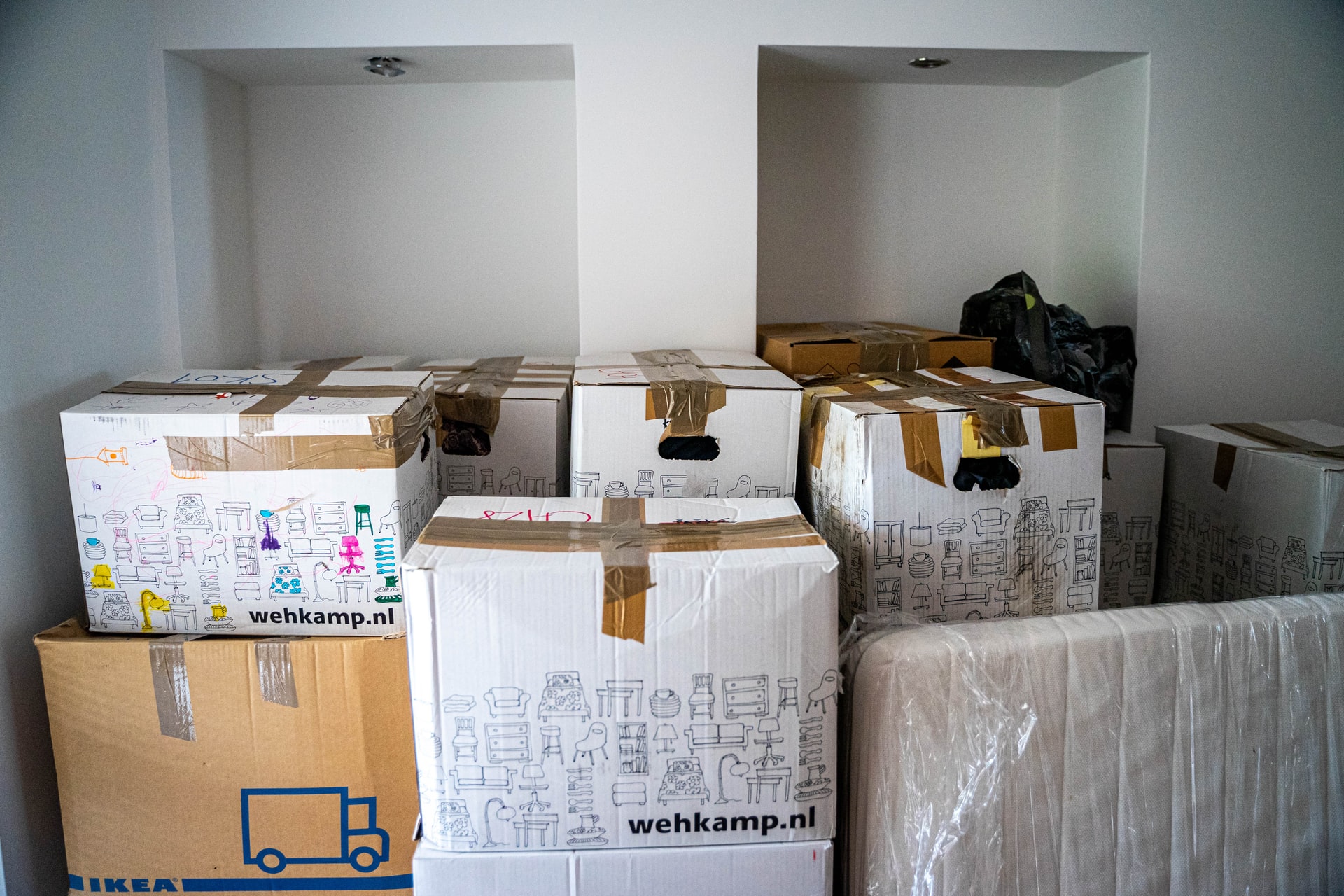
Updated October 2026. How to sort, pack and store your belongings before a move, including while your home is listed for sale.
To organize and store your stuff before moving, start six to eight weeks out: make an inventory, sort into keep, sell, donate and toss, pack rarely used rooms first, and move overflow to storage before listing photos. For an interstate move, federal rules require movers to give you two FMCSA documents explaining your rights, as of October 2026.
Jump to: 🪜 Inventory · 🏠 Packing order · 📍 Storage · 🤝 Movers · ❓ FAQ
Key takeaways
- An inventory list saves you twice: while packing, and if anything is lost or damaged.
- Pack from the least-used rooms to the most-used, and label every box with room and contents.
- Selling first? Store about a third of your things before photos so rooms look larger.
- For interstate moves, check the mover in FMCSA’s registered mover database before you sign.
How do you make a packing list that actually works?
A packing list is an inventory of what you own and where it’s going. Make it room by room. For each room, write down furniture, then boxes by category: “kitchen, plates and bowls,” “office, files 2020 to 2025.” Number the boxes and match each number to a line on the list.
Some people think better in pictures. You can generate mind maps to lay out rooms, categories and deadlines on one screen, then turn them into a checklist. A spreadsheet works too. What matters is that it lists all of your belongings, including small items like the hardware bag from the bed frame.
Take photos as you go. Snap valuables, electronics and the back of the TV before you unplug it. If something arrives damaged, photos and a numbered list make a claim far easier.
Sort before you pack
Moving costs often depend on weight and volume, so every box you don’t pack saves money and time. Sort each room into four groups: keep, sell, donate, toss. Be honest about the “maybe” pile; if you haven’t used it in a year, it probably doesn’t need to come.
What order should you pack in?
Start with the spaces you use least and finish with the ones you use daily. A typical order looks like this:
- Six to eight weeks out: attic, basement, garage, guest room and off-season clothes.
- Four weeks out: books, decor, spare linens and most of the dining room.
- Two weeks out: most of the kitchen, keeping one set of dishes per person.
- Last few days: bathroom, bedding, the rest of the kitchen and a first-night box.
Use sturdy boxes, put heavy items in small boxes and light ones in large boxes, and fill gaps so things don’t shift. Wrap glass and plates on edge. Label two sides of every box with the room, a short list of contents and the box number from your inventory.
Pack a first-night box
Keep one box or bag with you, not on the truck: chargers, medication, toiletries, a change of clothes, basic tools, paper towels, a few snacks and water, and important papers. You’ll want it before the movers finish unloading. Pack one for each person, and a small one for pets with food, bowls and leashes.
Where should you store things while you move or sell?
You have three common choices: friends and family, a garage or basement, or a self-storage unit. Free storage is great for a few boxes. For furniture or a long gap between move-out and move-in, a unit is usually easier. Look for clean, dry, well-lit sites with controlled access. Many owners use a local self-storage facility like this one, close enough to visit when they need something.
If your home is for sale
Store things before listing photos, not after. Buyers judge space from photos, and full shelves make rooms look small. A good rule is to pack up about a third of what’s on counters, shelves and closets, plus extra chairs and side tables. Keep the unit list with your inventory so you know what’s where.
Climate-controlled storage costs more, but it’s worth it for wood furniture, electronics, photos and documents in hot or humid areas. Ask about access hours and insurance before you sign.
What shouldn’t go into storage
Read the facility’s rules before you load the truck. Most units ban food, plants, fuel, paint thinner and anything flammable. Keep passports, deeds, tax records, jewelry and prescriptions with you instead. Pack the unit with the things you might need, like tools or seasonal clothes, near the door, and put furniture and labeled boxes you won’t touch at the back. Leave a narrow aisle so you can reach the middle without unloading everything.
Sell smarter
List your home on the MLS from $99
A flat fee instead of a percentage, and $0 to Beycome at closing. You stay in control of your sale.
Sell your home →Buy smarter
Get up to 2% back at closing
On homes listed by other agents, Beycome credits you up to 2% of the price at closing (1% kept, $1,499 minimum; not on FSBO homes or homes listed by Beycome sellers).
Buy a home →Staging and moving can overlap. If you’re short on room, our guides to storage problems at home and fixes for a lack of storage space have ideas that also help a house show well.
How do you choose movers and confirm the details?
Get at least three written estimates, ideally after an in-home or video survey. A price given over the phone without seeing your things is a warning sign. For interstate moves, the Federal Motor Carrier Safety Administration says movers must give you its “Your Rights and Responsibilities When You Move” booklet and its “Ready to Move” brochure. Check the company in FMCSA’s registered mover database too.
Know the difference between a mover and a broker. A broker sells your move to a carrier and doesn’t move anything itself. FMCSA explains the difference and lists red flags of moving fraud. It also notes that it can’t resolve claims against a moving company, so read the bill of lading before you sign.
Keep contact information for your movers in one place, along with numbers for friends who are helping, the storage site and both utility companies. Confirm the date, time, address and parking a week before, and again the day before.
How do you time a move around selling and buying?
The hardest part is often the gap between closing on one home and moving into the next. Ask for a closing date that leaves you a few days, or negotiate a short rent-back so you can stay after closing. Put any agreement in writing in the contract. After you accept an offer, our checklist for what to do after your offer is accepted helps you plan the weeks to closing.
If you’re selling, a $99 Beycome flat fee MLS listing puts your home on the MLS with $0 at closing, and you control showings around your packing schedule. Closing in Florida or Texas? Beycome Title handles closings with a $99 settlement fee in Florida (prepaid at checkout) and $299 per side in Texas.
Buying next? The Beycome buyer program has no upfront fee and is open to every buyer on homes listed by other agents. Beycome keeps 1% of the price, minimum $1,499, and credits the rest of the buyer-agent commission at closing, with lender approval. The credit can’t apply where no buyer-agent commission is offered, like most FSBO homes, or on homes listed by Beycome sellers. Downsizing? Read what to keep in mind when moving to a smaller home and our guide to moving from a house to a condo.
Frequently asked questions
How far ahead should I start packing for a move?
Six to eight weeks for a full house. Start with storage areas and guest rooms, and leave the kitchen and bathrooms for the last weeks.
What should go on a moving inventory list?
Every piece of furniture and every numbered box, by room, with a short list of contents. Add photos of valuables and electronics.
Should I use a storage unit when staging my home to sell?
Often, yes. Storing about a third of your things before photos makes rooms look larger and showings easier.
How do I check if an interstate mover is legitimate?
Look it up in FMCSA’s registered mover database, get written estimates, and make sure you receive the FMCSA rights booklet and brochure.
What goes in a first-night box?
Chargers, medication, toiletries, clothes, basic tools, snacks, water and important papers. Keep it with you, not on the truck.
Can I stay in my home after closing?
Only if the buyer agrees. A short rent-back can be written into the contract, with the dates and daily rate spelled out.
Beycome prices as of October 2026; “$0 at closing” means no Beycome fee at closing (other closing costs and taxes still apply). Beycome Title: Florida and Texas today; Michigan, Ohio, Illinois and Indiana starting November 1, 2026. The $99 Florida settlement fee applies when prepaid on beycome.com. Buyer program: minimum $1,499 kept by Beycome, credit at closing with lender approval, not on FSBO homes or homes listed by Beycome sellers. General information, not legal advice.
Sources
Disclosure & Disclaimer
Beycome provides real estate services through affiliated licensed brokerages and has a commercial interest in the services and business models discussed on this blog. Content reflects Beycome’s perspective and may promote our services; it should not be treated as independent or neutral reporting.
Articles are provided for general informational and educational purposes only, not as financial, tax, legal, or investment advice or a recommendation for your particular situation. Reading this blog does not create a brokerage, advisory, or other professional relationship.
Information, opinions, pricing, service descriptions, and comparisons reflect the sources and information available when an article was published or last updated and may change. Although we aim for accuracy, we do not guarantee that all content is complete, current, or applicable to your circumstances. Laws, market conditions, and service availability vary by location. Examples and estimated savings are illustrative, depend on stated assumptions, and do not guarantee individual results.
Verify relevant information directly and consult qualified professionals before making decisions. Beycome services are subject to applicable agreements, eligibility requirements, and state-specific terms.

