
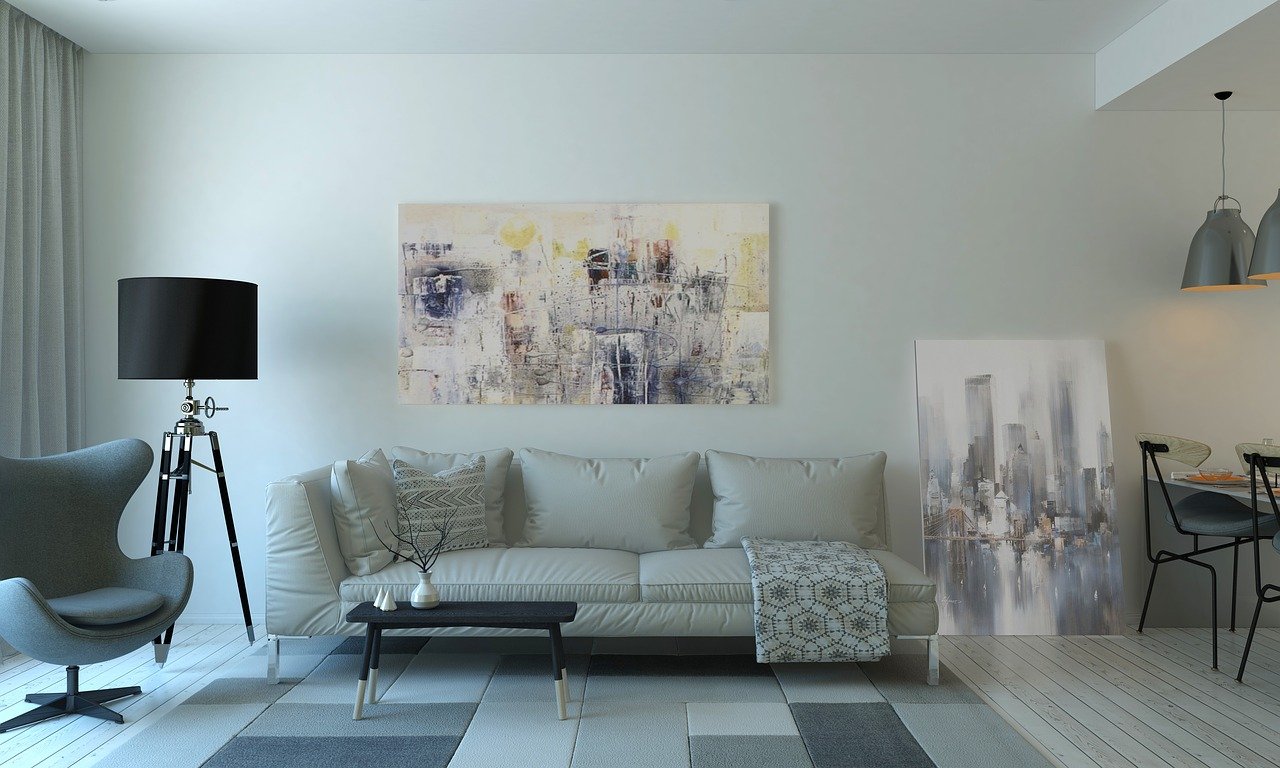
Updated October 2026. Six decorating moves that lift a room, with notes on which ones also help when it’s time to photograph and sell the house. Staging figures are from NAR’s 2025 Profile of Home Staging, read October 27, 2026.
To take your interior design to the next level, change the few things the eye lands on first: art, cushions, a rug, a textile on the wall, a layered pattern and a small group of objects you love. None needs a renovation. And if you plan to sell, 83% of buyers’ agents told NAR in 2025 that staging makes it easier for buyers to picture a home as theirs.
Jump to: 🏠 Art · 🪜 Cushions and textiles · 📍 Rugs · 📸 Pattern and objects · 💲 Decor and selling · ❓ FAQ
Decorating, in numbers
- 83% of buyers’ agents say staging helps buyers picture the property as their future home (NAR, 2025).
- The rooms staged most often: living room 91%, primary bedroom 83%, dining room 69% (NAR, 2025).
- Median cost of a staging service: $1,500, versus $500 when the agent staged it (NAR, 2025).
- Agents’ top three tips before selling: declutter (91%), clean the whole home (88%) and improve curb appeal (77%).
Most rooms don’t need new furniture. They need a focal point, some texture and a reason for your eye to move around. The six ideas below do that. They also cost far less than a remodel, and most of them pack up and come with you when you move.
How do you use art to lift a room?
Start with one wall. Pick the wall people see first when they walk in, and give it either one large piece or a tight group of smaller ones. A big piece calms a busy room. A gallery wall adds energy to a plain one.
Hang art so its center sits at roughly eye level, and keep a gallery’s spacing even. Buy what you actually like. Art is personal, and it can be expensive, so a piece you regret is a costly mistake. The Washington Post has good advice on finding and using art to decorate without overspending.
Mirrors work the same way and bounce light around a dark room. Our guide to the rules for hanging mirrors covers height and placement.
Can cushions and textiles really change a room?
Yes, and they’re the cheapest change on this list. New cushions can shift a sofa from formal to relaxed, or add the one color a room was missing. Shops like simplycushions.com.au sell them singly or in sets, so you can start with two and build from there.
A few rules of thumb:
- Mix sizes, for example two larger cushions at the ends and one smaller one in front.
- Pick one color from the room and repeat it, rather than adding three new ones.
- Vary texture: linen with velvet, or knit with cotton.
Tapestries and wall hangings do the same job on a bigger scale. A large woven piece softens echo in a room with hard floors, and it can say something about your history or culture. Buy from a maker you trust; a cheap print that fades or pills will drag the room down rather than lift it.
How do you choose and place an area rug?
An area rug is another fantastic way to pull a room together. It defines a seating area, adds warmth underfoot and gives you a base for every other color.
Size matters more than pattern. In a living room, the rug should be big enough that at least the front legs of every seat sit on it. In a dining room, chairs should stay on the rug when pulled out. A rug that’s too small makes furniture look like it’s floating.
There are various types of area rugs, from flat-woven wool to thick shag and washable synthetics. If you have kids or pets, pick something easy to clean. Our guides on choosing a living room rug and finding the right area rug for your space go into materials and sizing.
How do you layer patterns and show collectibles without clutter?
Layering patterns adds interest to a plain room. The trick is scale. Combine one large pattern, one medium and one small, and keep them in the same color family. A wide stripe on a rug, a mid-size floral on cushions and a small check on a throw can sit together comfortably.
Collectibles are the personal part. Group them instead of spreading them out: three to five pieces on one shelf look intentional, while twenty across a room look like clutter. Rotate them every few months so the display stays fresh.
Want more ideas? See our List of Amazing Home Improvement Ideas You’ll Want to Try.
Sell smarter
List your home on the MLS from $99
A flat fee instead of a percentage, and $0 to Beycome at closing. You stay in control of your sale.
Sell your home →Buy smarter
Get up to 2% back at closing
On homes listed by other agents, Beycome credits you up to 2% of the price at closing (1% kept, $1,499 minimum; not on FSBO homes or homes listed by Beycome sellers).
Buy a home →How do you pull it all together in one weekend?
Pick one room and give it two days. Trying to redo the whole house at once is how people end up with half-finished rooms and a garage full of returns.
Saturday morning, take everything off the surfaces and out of the corners. Put back only what you use or love. Most rooms look better with a third fewer things in them. Saturday afternoon, measure the floor and the main wall, then shop for the rug and the art with those numbers written down. Bring a photo of the room so you can check colors in the store.
Sunday is for placing. Lay the rug first, then set the furniture on it. Hang the art, then add cushions and a throw in one repeated color. Finish with a small group of objects on a shelf or a side table. Step back, take a photo with your phone and look at it. A photo shows clutter and empty spots your eye skips when you’re standing in the room.
If something still feels off, it’s usually lighting. Swap a cool bulb for a warmer one, or add a lamp to a dark corner. It’s cheap and it changes the mood more than people expect.
Which decorating ideas help when you sell your home?
Decorating for yourself and staging for buyers aren’t the same. When you live there, personal works. When you sell, buyers need to imagine their own life in the room. In NAR’s 2025 Profile of Home Staging, 83% of buyers’ agents said staging helped buyers picture the home as theirs. 29% of agents said staging led to a 1% to 10% increase in the amount offered, and 49% of sellers’ agents said it shortened time on the market (NAR).
| Idea from this page | When you sell |
|---|---|
| Art | Keep one or two neutral pieces; take down family photos |
| Cushions and throws | Keep; fresh, simple cushions photograph well |
| Area rugs | Keep if clean; they define rooms in photos |
| Bold layered patterns | Tone down to one pattern per room |
| Collectibles | Pack most of them away before photos |
The living room matters most to buyers. NAR found 37% of buyers’ agents named it the most important room to stage, ahead of the primary bedroom (34%) and kitchen (23%). Start there. Then get great photos, because that’s where most buyers meet your home. If the house is empty, virtual staging can fill the photos for less. Our guide to home photos that upgrade a listing and our piece on staging a house to sell show how.
When you’re ready to list, Beycome puts your home on the MLS from $99 with a flat fee MLS listing, $0 at closing, and you can update the photos as often as you like at no charge.
Interior design questions
What is the cheapest way to improve interior design?
New cushions, a rearranged room and decluttering. Each costs little and changes how a room feels right away.
How big should an area rug be in a living room?
Big enough that at least the front legs of every seat rest on it. Too small and the furniture looks like it’s floating.
How do you mix patterns in a room?
Use three scales, large, medium and small, in one color family. Repeat each color at least twice in the room.
Does staging help sell a house?
Often. In NAR’s 2025 report, 29% of agents saw a 1% to 10% higher offer and 49% of sellers’ agents saw less time on the market.
How much does home staging cost?
NAR’s 2025 report puts the median cost of a staging service at $1,500, or $500 when the agent stages the home.
Which room should I decorate or stage first?
The living room. It’s the room buyers’ agents rank most important, and it’s usually the first listing photo.
Beycome prices as of October 2026 and subject to change. “$0 at closing” means no Beycome fee at closing; other closing costs still apply. Staging results are agent survey responses, not a promise of any sale price.
General information only.
Sources
- NAR, 2025 Profile of Home Staging release, read October 27, 2026.
- NAR, Profile of Home Staging summary, read October 27, 2026.
- Beycome, listing package features, October 2026.
Disclosure & Disclaimer
Beycome provides real estate services through affiliated licensed brokerages and has a commercial interest in the services and business models discussed on this blog. Content reflects Beycome’s perspective and may promote our services; it should not be treated as independent or neutral reporting.
Articles are provided for general informational and educational purposes only, not as financial, tax, legal, or investment advice or a recommendation for your particular situation. Reading this blog does not create a brokerage, advisory, or other professional relationship.
Information, opinions, pricing, service descriptions, and comparisons reflect the sources and information available when an article was published or last updated and may change. Although we aim for accuracy, we do not guarantee that all content is complete, current, or applicable to your circumstances. Laws, market conditions, and service availability vary by location. Examples and estimated savings are illustrative, depend on stated assumptions, and do not guarantee individual results.
Verify relevant information directly and consult qualified professionals before making decisions. Beycome services are subject to applicable agreements, eligibility requirements, and state-specific terms.

