

Choosing a robot vacuum is easier when you focus on one simple principle: the best model is the one that fits your home and your routine. Floor types, layout, pets, dust levels, and how much time you want to spend on maintenance all matter more than having the longest feature list.
Instead of looking for the most advanced option available, start by evaluating how your home is used every day. Once you understand your priorities, comparing models becomes far more straightforward.
1. Match the Robot Vacuum to Your Floors and Home Layout
Your flooring and square footage should be the foundation of your decision.
Home Size and Battery Life
The size of your home directly affects how much runtime you need. In smaller apartments, a moderate battery capacity is often sufficient. In larger homes, especially multi-room layouts, longer battery life and recharge-and-resume functionality are valuable.
Navigation quality also becomes more important as space increases. A robot that follows structured cleaning paths and maps rooms accurately will clean more efficiently and reduce repeated passes.
Some DEEBOT models designed for larger homes come with longer runtime and advanced mapping to handle bigger layouts, plus multi-floor mapping and room-by-room controls in the app so you can clean specific areas without restarting the whole job.
Floor Types: Hard Surfaces vs. Carpet
If your home has mostly hard floors such as hardwood, tile, laminate, or stone, consistent suction and gentle surface contact are usually enough. Soft rollers or brushes help protect delicate finishes, and adjustable suction allows you to balance power and noise.
If carpets are common in your home, especially thicker rugs or wall-to-wall carpet, stronger suction becomes more important.
Look for models that can automatically detect carpet and increase power when needed. An effective brush system is also essential for lifting embedded dust and hair from fibers.
Homes with mixed flooring benefit from models that transition smoothly between surfaces without manual adjustments.
2. Consider Daily Habits, Pets, and Air Quality Needs
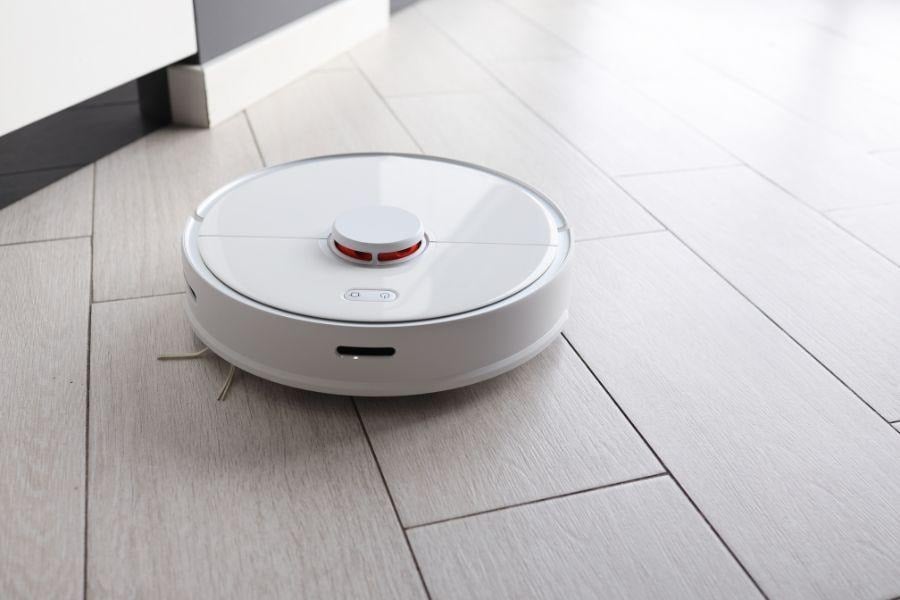
Beyond flooring and layout, your household habits influence which features matter most.
Pets and Hair Control
Pet owners should pay close attention to hair management. Shedding fur can quickly fill a dustbin and wrap around brush rolls. Features to look for include:
- Strong and consistent suction
- Tangle-resistant brush designs
- A dustbin large enough to handle frequent cleaning
If you have multiple pets or heavy shedding, you may want a model that can run daily without requiring constant maintenance.
Dust, Allergies, and Filtration
For households with allergy concerns, filtration quality plays a significant role. A well-sealed dustbin and high-efficiency filter help trap fine particles instead of releasing them back into the air.
Regular cleaning is just as important as the filter itself. Automated daily cleaning can reduce the buildup of dust and allergens over time, supporting better indoor air quality.
Obstacles and Clutter
Before choosing a robot vacuum, think about your home’s layout and how clear your floors usually are. If your space includes many table legs, narrow pathways, or tight corners, choose a model withaccurate navigation and a slim body that can move easily through confined areas.
If cables, toys, or small household items are often left on the floor,look for a robot vacuum equipped with reliable obstacle avoidance. This feature helps prevent the device from getting stuck and reduces interruptions during cleaning.
In more open and uncluttered homes, a simpler navigation system may be sufficient. Selecting a vacuum that matches your space will make daily cleaning more efficient and less frustrating.
3. Balance Convenience, Noise, and Robot Vacuum Maintenance
Performance is only part of the equation. Long-term satisfaction often depends on comfort and ease of use.
Noise Expectations
If you work from home, have young children, or prefer to run the smart vacuum in the evening, noise level matters. Many models offer adjustable suction settings that allow quieter operation for light daily cleaning.
While higher power may be louder, it is not always necessary for routine maintenance.
Maintenance Effort
Robot vacuums reduce manual cleaning, but they still require upkeep. Basic models need regular dustbin emptying, filter cleaning, and occasional brush maintenance.
In smaller homes, this may feel manageable. In larger homes or pet households, frequent emptying can become inconvenient. A self-empty station automatically transfers debris from the robot to a larger base container, reducing how often you need to handle dust.
Smart Features and App Control
Most modern robot vacuums connect to a mobile app. Features such as scheduled cleaning, room selection, no-go zones, and cleaning history can make daily use more flexible.
That said, not everyone needs complex customization. If you prefer simplicity, a reliable start button and basic schedule may be enough. The goal is to choose features that genuinely support your lifestyle.
Final Thoughts
Choosing a robot vacuum for your home is about clarity, not complexity. Start with the basics: your floor types, home size, and daily cleaning needs. Then think about pets, dust levels, clutter, noise expectations, and how much maintenance you are comfortable handling.
A model that matches your space and routine will deliver more consistent results than one chosen purely for its specifications. When you focus on practical factors first, you are far more likely to select a robot vacuum that fits naturally into your daily life and keeps your home consistently clean with minimal effort.