
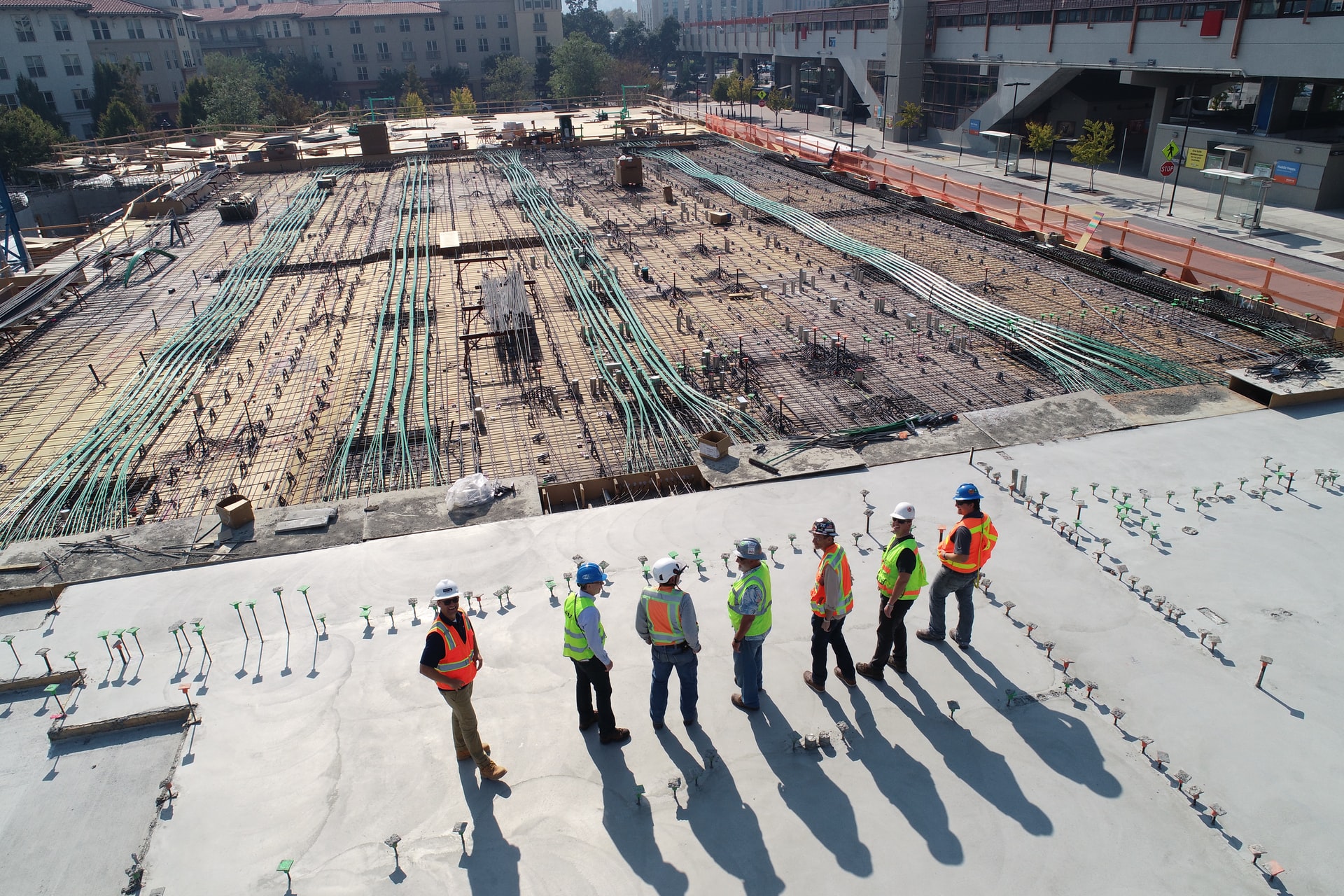
Updated November 2026. What you need before and on a construction site, for homeowners building or remodeling and the small contractors they hire, with the federal rules behind each item.
A construction site needs six things before work starts: a budget, a licensed contractor, permits, a written plan, insurance and a safety plan. On site, OSHA calls for drinking water, at least one toilet for up to 20 workers, first aid and a fire extinguisher within 100 feet. Falls caused 389 of 1,034 construction deaths in 2024.
Jump to: 🪜 Before you start · 🏠 On-site checklist · ⏱️ Safety rules · 💲 Building to sell · ❓ FAQ
Key takeaways
- OSHA requires at least 1 toilet for 20 or fewer workers, and 1 toilet seat and 1 urinal per 40 workers above that.
- A 2A-rated fire extinguisher is needed for each 3,000 square feet, with no point more than 100 feet from one.
- Falls caused 389 of 1,034 construction deaths in 2024, per OSHA’s fall prevention campaign (BLS data).
- Contact 811 a few business days before any digging, even for fence posts.
Whether you’re building a house on your own lot or opening up a kitchen wall, the work before the work decides how the job goes. Here’s what to line up first, what the site itself needs, and how it all affects the home’s value later.
What do you need before opening a construction site?
1. A realistic budget
List labor, materials, permits, equipment rental, waste removal and insurance. Get written quotes, not ballpark figures. Then add a contingency fund for surprises, because even well-planned jobs find rot, old wiring or bad soil. If you’re new to project budgets, this overview of the construction process is a good guide to creating your budget and schedule.
2. A qualified contractor
Get at least three bids. Check each contractor’s state license, insurance certificate and references from recent jobs. Ask how they handle change orders and what their payment schedule is. On larger jobs, a performance bond protects you if the contractor will perform their contract only partly or not at all. Sign a written contract that spells out scope, price, schedule and who pulls the permits.
3. The right permits
Most new building work needs a permit from your city or county. So do most additions and changes to walls, wiring, pipes or heating. Tearing down often needs its own permit. Requirements vary a lot by place, so call your local building department before you sign anything. For a small business starting out in construction, this guide to the different permits and licenses is a useful starting point.
4. A solid plan
You need drawings and specs, a timeline with inspection dates, and a site layout: where materials go, where the dumpster sits, where workers park. Plan waste early. Most residential jobs either hire a hauler or rent a dumpster. Our tips on handling waste during a remodel go further.
5. The right insurance
Ask your contractor for proof of liability and workers’ comp coverage. Get the papers in your name. Then call your own home insurer before work starts. Some plans limit what they cover during big jobs. New builds often need their own policy, called builder’s risk.
6. A safety plan
Write down the site rules, the emergency contacts, the nearest hospital and who’s in charge. Walk the site for overhead power lines and buried gas lines, and test for asbestos or lead before demolition in older homes. Review the plan with every crew before they start.
One more: talk to the neighbors and the HOA
This one isn’t on most lists, but it saves a lot of grief. If you live in an HOA, read the rules on work hours, dumpsters and parking. Some need a form signed before any outside work. Tell the people next door when the job starts, how long it should take and who to call. A short note and a phone number go a long way when a truck blocks a driveway at 7am.
Keep a simple log, too. Write down each delivery, each inspection and each change you agree to with the contractor. If there’s ever a dispute, or a buyer asks about the work years later, you’ll have the dates.
What do you need on a construction site? A checklist
Here’s the checklist we’d use for a residential job site. Federal rules apply to employers; local codes may add more.
| Item | Why it’s needed | Rule or source |
|---|---|---|
| Posted permit | Inspectors and neighbors check it | Local building department |
| Fencing and signs | Keeps the public and kids out | Local code, insurer |
| Drinking water | Required at every workplace | OSHA 1926.51(a) |
| Toilets | 1 for 20 or fewer workers | OSHA 1926.51(c) |
| First aid kit and trained person | When no clinic is reasonably close | OSHA 1926.50 |
| Fire extinguishers | 2A rating, within 100 feet | OSHA 1926.150 |
| Fall protection | Ladders, guardrails, harnesses | OSHA fall prevention |
| 811 locate marks | Avoids hitting buried lines | 811 |
| Dumpster or hauler | Keeps the site clear and safe | Local waste rules |
| Storage and security | Stops theft and weather damage | Good practice |
What safety precautions are needed on a construction site?
Start each day with the basics, then follow the federal rules below. Here are the precautions we’d check every morning on a home job.
- Walk the site for open holes, loose boards and trip hazards before the crew arrives.
- Check ladders and guardrails at every edge where someone could fall.
- Wear hard hats, eye protection and gloves where the work calls for them.
- Keep extinguishers charged, visible and close to cutting or welding.
- Lock up tools and keep kids, pets and visitors outside the fence.
- Know the address and route to the nearest emergency room.
Water, toilets and first aid
OSHA standard 1926.51 says an adequate supply of drinking water must be provided at every workplace. Its Table D-1 requires at least 1 toilet for 20 or fewer employees, 1 toilet seat and 1 urinal per 40 workers above that, and 1 per 50 workers at 200 or more. OSHA 1926.50 requires a person trained in first aid on site when no clinic or hospital is reasonably close, and easy access to first aid supplies.
Fire extinguishers
Under OSHA 1926.150, a fire extinguisher rated at least 2A is needed for each 3,000 square feet of protected building area. Nobody should have to walk more than 100 feet to reach one.
Sell smarter
List your home on the MLS from $99
A flat fee instead of a percentage, and $0 to Beycome at closing. You stay in control of your sale.
Sell your home →Buy smarter
Get up to 2% back at closing
On homes listed by other agents, Beycome credits you up to 2% of the price at closing (1% kept, $1,499 minimum; not on FSBO homes or homes listed by Beycome sellers).
Buy a home →Falls
OSHA’s fall prevention campaign calls falls the leading cause of death in construction: 389 of 1,034 construction deaths in 2024 were falls to a lower level, per BLS data. Plan ahead for ladders, guardrails and harnesses, and train the crew to use them.
Digging
811 asks you to contact it, or your state’s 811 center website, a few business days before any digging. That includes fence posts, trees and mailboxes. Utilities then mark buried lines for free.
For the day-to-day side of running a job, read how to improve construction site management.
How does a construction project affect selling the home later?
Permits matter at resale. Buyers, appraisers and lenders may ask whether work was permitted and inspected. Unpermitted work can slow a sale or force a price cut. Keep your permits, final inspection sign-offs, warranties and receipts in one folder. Many state disclosure forms ask about additions and repairs, so those records help you answer accurately.
If you’re building to sell, see our guide on how to sell new construction. For a full build, these key tips for building a house cover the phases. Planning a remodel first? Read the important things to know before renovating, or use our home renovation checklist.
When the work is done, a flat fee MLS listing with Beycome puts the home on the local MLS from $99, with $0 due to Beycome at closing. Compare the home selling sites and MLS options to see how listings reach buyers. Selling on your own? Our guide on how to sell your house without a realtor covers the steps.
Frequently asked questions about opening a construction site
What do you need for a construction site?
A permit, a fence and signs, water, toilets and first aid. Add fire extinguishers, fall gear, 811 marks and a dumpster. Before all that, get insurance and a safety plan.
How many toilets does a construction site need?
OSHA requires at least 1 for 20 or fewer workers, then 1 toilet seat and 1 urinal per 40 workers, and 1 per 50 at 200 or more.
What safety precautions are needed on a construction site?
Guard against falls. Keep a fire extinguisher within 100 feet. Have first aid on hand, mark buried lines, and go over a written safety plan with every crew.
How do you plan a construction site?
Start with drawings, a budget with a cushion, permits and a schedule. Then plan where things go: stock, trash, parking and the way in. Do it before the first truck comes.
Do I need to call 811 before digging in my yard?
Yes. 811 asks you to contact it a few business days before any digging, including fence posts and trees.
What should be posted on a construction site?
The building permit, where the local building department requires it, plus emergency contacts, the site rules and the name of the person in charge.
What do you need on a construction site every day?
Drinking water, a toilet, a first aid kit, a charged fire extinguisher, fall protection where needed, and a clear, fenced site.
Does unpermitted work affect selling a house?
It can. Buyers and lenders may ask about permits, and many disclosure forms ask about additions. Keep your permits and final inspections on file.
OSHA rules as published on osha.gov, read October 26, 2026; they apply to employers, and state plans or local codes may add requirements. Permit rules vary by city and county. Beycome prices as of November 2026; Basic is $99 in most states; “$0 at closing” means no Beycome fee at closing, while other closing costs still apply. Beycome lists in 17 states and DC. General information, not legal or safety advice.
Sources
- OSHA 1926.51, sanitation, read October 26, 2026.
- OSHA 1926.50, medical services and first aid, read October 26, 2026.
- OSHA 1926.150, fire protection, read October 26, 2026.
- OSHA, fall prevention campaign, read October 26, 2026.
- 811, before you dig, read October 26, 2026.
- Beycome, listing package features, October 2026.
Disclosure & Disclaimer
Beycome provides real estate services through affiliated licensed brokerages and has a commercial interest in the services and business models discussed on this blog. Content reflects Beycome’s perspective and may promote our services; it should not be treated as independent or neutral reporting.
Articles are provided for general informational and educational purposes only, not as financial, tax, legal, or investment advice or a recommendation for your particular situation. Reading this blog does not create a brokerage, advisory, or other professional relationship.
Information, opinions, pricing, service descriptions, and comparisons reflect the sources and information available when an article was published or last updated and may change. Although we aim for accuracy, we do not guarantee that all content is complete, current, or applicable to your circumstances. Laws, market conditions, and service availability vary by location. Examples and estimated savings are illustrative, depend on stated assumptions, and do not guarantee individual results.
Verify relevant information directly and consult qualified professionals before making decisions. Beycome services are subject to applicable agreements, eligibility requirements, and state-specific terms.

