
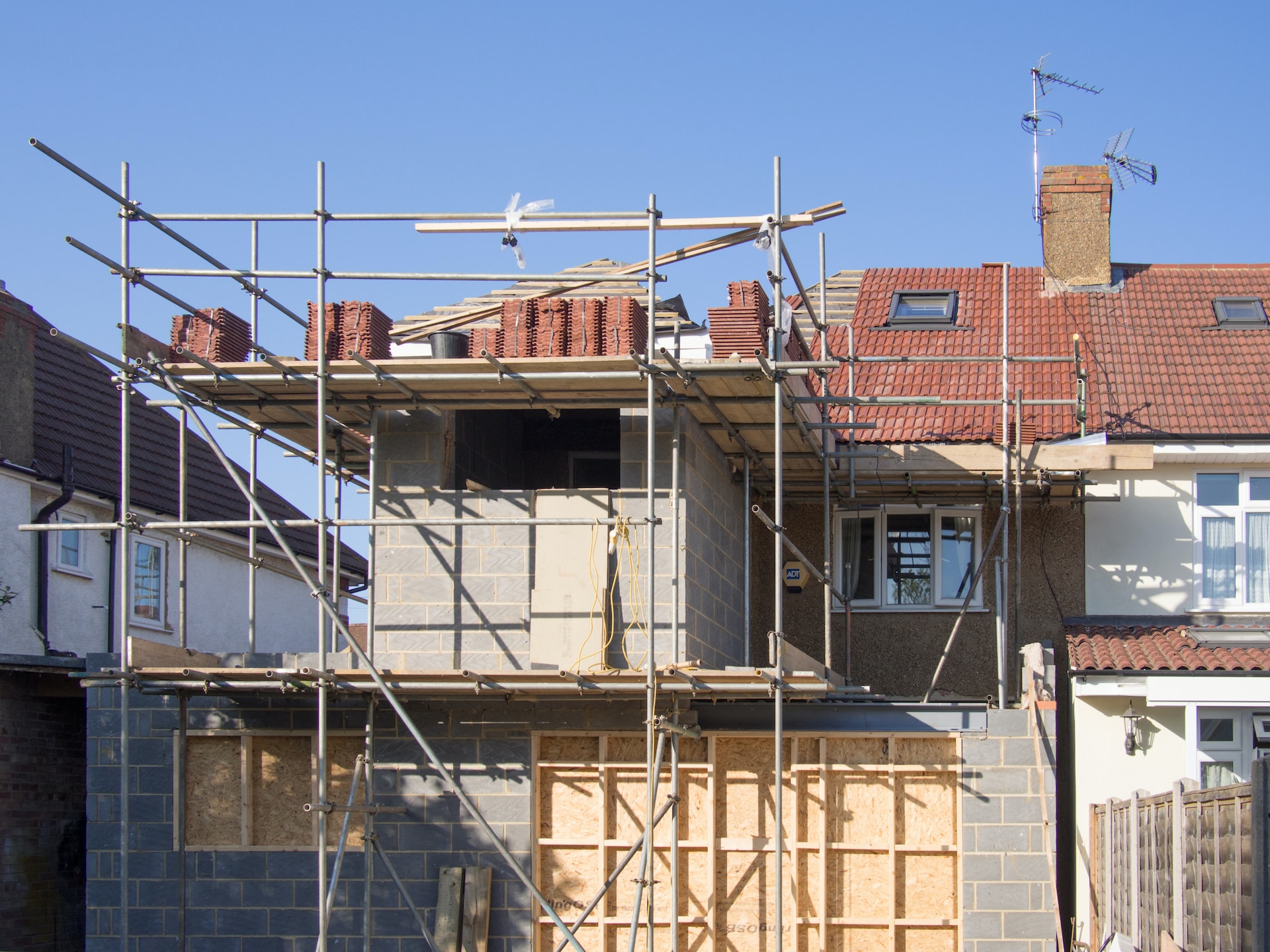
Updated November 2026. For homeowners weighing a property extension, from a kitchen bump-out to a primary suite or an ADU, and what it does to value.
Property extensions add value when they’re permitted, fit the neighborhood and fix a real gap, but they rarely return all they cost. As of November 2026, NAR’s 2025 Remodeling Impact Report gives a primary bedroom suite addition a top Joy Score of 10 out of 10, while the best cost recovery came from small jobs, like a closet redo at 83%.
Planning to sell after you build? List the finished home with every new room in the photos through a Beycome flat fee MLS listing, from $99 in most states with $0 due to Beycome at closing.
Jump to: 📖 Meaning · 🏠 Types · 💲 Value · 🪜 Appraisers · ⏱️ Before you build · 🤝 Selling · ❓ FAQ
Key takeaways
- A primary bedroom suite addition, a kitchen upgrade and new roofing each earned a 10 Joy Score in NAR’s 2025 report.
- The highest estimated cost recovery went to a new steel front door (100%), a closet renovation (83%) and a new fiberglass front door (80%).
- Fannie Mae tells appraisers to comment on any addition without a required permit, and its effect on value.
- The typical home bought in the last year had 3 bedrooms and 1,900 square feet; buyers with kids bought a median of 4 bedrooms (NAR 2025 Profile).
An extension is the biggest home project most people take on. It changes how you live and what your home is worth, but not always in the same direction. Here’s how to think about both.
What does extension mean in real estate?
In real estate, “extension” usually means one of three things. This page covers the first.
- A property extension: new floor area added to a home, like a rear addition, a second story or a converted basement.
- A listing extension: a signed change that keeps a listing agreement active past its end date. Our guide to what a listing agreement is and the types of listing agreements explain how term and renewals work.
- A contract extension: an addendum both buyer and seller sign to push back a deadline, such as the inspection period or the closing date. See how deadlines sit in a for sale by owner contract.
If you searched for a property extension deal, it’s usually the first meaning: you build now and hope the house sells for more later. The rest of this guide is about that bet.
What types of property extensions add the most value?
An extension is any build that adds floor area: out, up or down. The common ones:
| Extension | What it adds | Why buyers care |
|---|---|---|
| Kitchen extension or open plan | A bigger kitchen joined to dining or family space | The kitchen is where most buyers spend time in a showing |
| Primary suite addition | A bedroom with its own bath and closet | Brings the home up to what local buyers expect |
| Loft or attic conversion | A bedroom or office under the roof | Adds a room without using the yard |
| Basement conversion | Living space, a guest room or a rental unit | Uses space you already have |
| Accessory dwelling unit (ADU) | A small separate home, attached or in the yard | Room for family or rental income, where zoning allows it |
| Sunroom or conservatory | Light-filled space between house and garden | Popular where the weather suits it |
A conservatory is a classic in the UK, from London suburbs to towns like Sevenoaks, where the district council handles planning. A solid roof, such as a Guardian conservatory roof, can turn a room that’s too hot in summer and too cold in winter into one you use all year.
Basements are often the least expensive square feet to add. Our post on how a comfortable basement boosts your home’s value covers what to fix first.
Do extensions add value to a property?
They can, if they give buyers what they want in that area. A third bedroom on a street of three-bedroom homes is worth a lot. A fifth bedroom on a street of two-bedroom homes may not be.
NAR and NARI’s 2025 Remodeling Impact Report shows the gap between joy and money. The projects with the highest Joy Scores were a primary bedroom suite addition, a kitchen upgrade and new roofing. The ones with the highest estimated cost recovery were smaller: a steel front door (100%), a closet renovation (83%) and a fiberglass front door (80%).
| Project (NAR and NARI, 2025) | Joy Score | Estimated cost recovery |
|---|---|---|
| Primary bedroom suite addition | 10 | Not among the top three |
| Kitchen upgrade | 10 | Not among the top three |
| New steel front door | Not among the top three | 100% |
| Closet renovation | Not among the top three | 83% |
| New fiberglass front door | Not among the top three | 80% |
Americans spent an estimated $603 billion on remodeling in 2024, per the same report, and 18% of homeowners who remodeled said they were getting ready to sell within two years. So build an extension because you need the space, and treat the value boost as a bonus. NARI members’ estimates are just that; your local market sets the real number.
What makes an extension pay off
- It fixes a real gap, like too few bedrooms or no family room.
- It matches the house in style, materials and quality.
- It keeps a sensible layout, with no bedroom you reach only through another.
- It’s permitted and inspected.
- It leaves enough yard for buyers in your area.
Size matters less than fit. New single-family homes sold in 2025 had a median of 2,194 square feet, per the Census Bureau, so a modest extension can bring an older, smaller home closer to what buyers now compare it with.
Upkeep counts too. An extension on a tired house won’t impress. A good read on keeping a well-maintained property explains why small fixes matter as much as big projects.
How do appraisers value an extension?
When your buyer gets a loan, an appraiser compares your home with recent sales nearby. Fannie Mae’s Selling Guide (B4-1.3-05) sets rules most appraisers follow:
- Improvements should conform to the neighborhood in age, type, design and materials. If they don’t, the appraiser must address the effect on value.
- Unusual layouts, like bedrooms on a level with no bath, can mean “limited market appeal” and lower adjustments.
- If an addition doesn’t have a required permit, the appraiser must comment on the quality of the work and its effect, if any, on market value.
In short: permits, good work and a layout that makes sense protect your value. A comparative market analysis shows how homes like yours, with and without the extra space, have sold.
Sell smarter
List your home on the MLS from $99
A flat fee instead of a percentage, and $0 to Beycome at closing. You stay in control of your sale.
Sell your home →Buy smarter
Get up to 2% back at closing
On homes listed by other agents, Beycome credits you up to 2% of the price at closing (1% kept, $1,499 minimum; not on FSBO homes or homes listed by Beycome sellers).
Buy a home →What should you check before building an extension?
- Zoning and setbacks: how close you can build to the lot line, and how tall.
- Permits: the building department’s plan review and inspections.
- HOA rules, if you have one.
- Budget, with a buffer for surprises once walls open up.
- Financing: cash, a home equity loan or a renovation loan.
- Comparable sales: what homes with the space you’ll add sell for.
If money is tight, read up before you borrow. If you came out of a payment pause, see what to do when your mortgage forbearance ends.
Smaller ways to add value
Not every gain needs a build. If the space you need already exists in a garage or shed, read what inspectors check on detached structures before you convert it, and our home renovation guide for 2026 for budgeting. NAR’s 2025 report found Realtors most often recommend painting the whole home (50%), painting one room (41%) and new roofing (37%) before listing. Outside, see how improving your garden area adds value to your house, and our 6 steps to increase the value of your home and top tips to increase the value of your property. Adding a building instead of rooms? Read about adding a pole barn to your property.
How do you sell a home with a new extension?
Show it off with proof. Keep permits, final inspection sign-offs, plans and receipts in one folder. Buyers and appraisers will ask. List the new square footage correctly, and photograph the extension from inside and out.
Price from sales of homes that already have that space, not from what you spent. Start with the Beycome property value calculator, then check the comps.
A Beycome flat fee MLS listing puts the home on the major home search sites and the MLS from $99 in most states ($129 in California and Illinois), with $0 due to Beycome at closing and as many photos as your MLS allows, so buyers can see every new room. Want an expert with you on offers? Concierge is $1,399, and every decision stays yours. For a sense of the market, read the real estate trends shaping home buying.
Buying a home you plan to extend? The Beycome buyer program has no upfront fee and is open to every buyer on homes listed by other agents. We keep 1% of the price (at least $1,499) and credit the rest of the buyer-agent commission at closing, with lender approval; the credit can’t apply where no buyer-agent commission is offered, like most FSBO homes, or on homes listed by Beycome sellers. It isn’t offered in Alabama or Tennessee, where state law doesn’t allow it.
Frequently asked questions
What is an extension in real estate?
Most often, new floor area added to a home. The word can also mean extending a listing agreement past its end date, or a signed addendum that moves a contract deadline like closing.
Does a house extension add value?
Usually some, if it’s permitted, well built and fits the neighborhood. It rarely returns its full cost; local comparable sales decide how much.
Which extension adds the most value?
The one that fixes your home’s biggest gap for local buyers, often an extra bedroom, a primary suite or a bigger kitchen.
How much value does a property extension add?
There’s no fixed figure. Appraisers compare your home with nearby sales that have similar space, so the added value is what local buyers pay for that space, often less than the build cost.
What remodeling projects recover the most cost?
In NAR’s 2025 report, a new steel front door (100%), a closet renovation (83%) and a new fiberglass front door (80%), as estimated by NARI members.
Does an unpermitted addition hurt value?
It can. Fannie Mae requires the appraiser to comment on the quality of an unpermitted addition and its effect on market value, and buyers may ask you to permit it.
Is a property extension worth it if I plan to sell soon?
Often not, since you may not recover the cost. Paint, repairs and staging usually pay back faster before a sale.
Do I need planning permission or a permit for an extension?
Almost always. In the US, check zoning and building permits with your city or county; in the UK, check planning rules with your local council, such as Sevenoaks District Council in Kent.
Figures were read on October 23, 2026. Cost recovery and Joy Scores come from NAR and NARI’s 2025 Remodeling Impact Report and are estimates, not a promise of value; local markets vary. General information, not appraisal, legal or financial advice.
Beycome prices as of November 2, 2026: Basic $99 ($129 in California and Illinois), Concierge $1,399; $0 due to Beycome at closing (other closing costs still apply). Buyer program: no upfront fee; Beycome keeps 1% of the price, minimum $1,499, rest of the buyer-agent commission credited at closing with lender approval; doesn’t apply to most FSBO homes or homes listed by Beycome sellers, and isn’t offered in Alabama or Tennessee. Beycome lists homes in 17 states and DC.
Sources
- NAR, 2025 Remodeling Impact Report news release (April 9, 2025), read November 2, 2026.
- Fannie Mae Selling Guide, B4-1.3-05, Improvements Section of the Appraisal Report, read October 23, 2026.
- NAR 2025 Profile of Home Buyers and Sellers, read October 23, 2026.
- US Census Bureau, Characteristics of New Housing, 2025 highlights, read October 23, 2026.
- Beycome, listing package features and prices, November 2026.
- Beycome, buyer program, October 2026.
Disclosure & Disclaimer
Beycome provides real estate services through affiliated licensed brokerages and has a commercial interest in the services and business models discussed on this blog. Content reflects Beycome’s perspective and may promote our services; it should not be treated as independent or neutral reporting.
Articles are provided for general informational and educational purposes only, not as financial, tax, legal, or investment advice or a recommendation for your particular situation. Reading this blog does not create a brokerage, advisory, or other professional relationship.
Information, opinions, pricing, service descriptions, and comparisons reflect the sources and information available when an article was published or last updated and may change. Although we aim for accuracy, we do not guarantee that all content is complete, current, or applicable to your circumstances. Laws, market conditions, and service availability vary by location. Examples and estimated savings are illustrative, depend on stated assumptions, and do not guarantee individual results.
Verify relevant information directly and consult qualified professionals before making decisions. Beycome services are subject to applicable agreements, eligibility requirements, and state-specific terms.

