
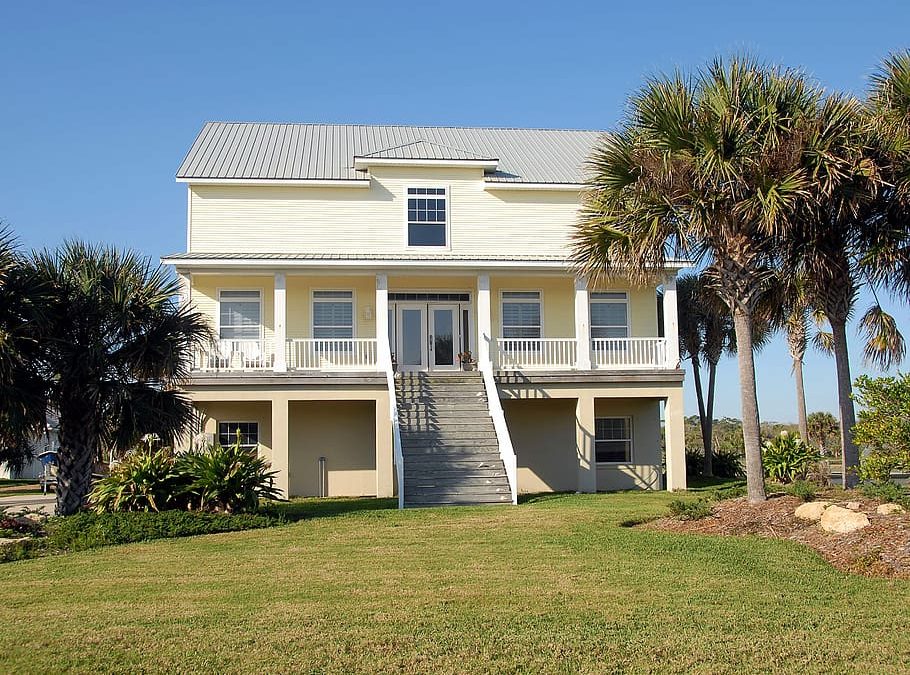
Updated October 2026. A Florida lawn routine based on UF/IFAS Extension guidance and South Florida Water Management District watering rules, plus the yard fixes that matter most when you sell. Sources read October 29, 2026.
A healthy Florida lawn comes down to mowing high, watering only when the grass asks for it and fertilizing lightly. As of October 2026, UF/IFAS Extension says standard St. Augustinegrass should be mowed at 3.5 to 4 inches and watered with ½ to ¾ inch at a time. In South Florida, watering is banned between 10 a.m. and 4 p.m. year-round.
Jump to: 🏠 Mowing · ⏱️ Watering rules · 🪜 Fertilizer · 📍 Pests and critters · 💲 Lawn and home value · ❓ FAQ
Key takeaways
- Mow standard St. Augustinegrass at 3.5 to 4 inches, dwarf types at 2.5 inches, and bahiagrass at 3 to 4 inches (UF/IFAS).
- Water when blades fold, wilt or turn blue-gray, or footprints stay visible: ½ to ¾ inch per watering.
- SFWMD’s year-round rule bans lawn watering from 10 a.m. to 4 p.m. and limits it to two or three days a week, set by your address.
- Use no more than 0.7 lb of quick-release nitrogen per 1,000 square feet at once (UF/IFAS).
Which grass do you have, and why does it matter?
St. Augustinegrass and bahiagrass are two of the grasses you’ll see most in Florida yards. They want different care, so check before you buy fertilizer or set the mower.
| Grass | Looks like | Mowing height | Good to know |
|---|---|---|---|
| St. Augustinegrass (standard, e.g. Floratam, Bitterblue) | Wide, flat blades, dense mat | 3.5–4 inches | Main pest is the southern chinch bug |
| St. Augustinegrass (dwarf types) | Same, finer | 2.5 inches | More shade-friendly cultivars exist |
| Bahiagrass | Tougher blades, V-shaped seed heads | 3–4 inches | Goes brown and dormant in drought; prefers acidic soil; needs less fertilizer |
Bahiagrass browning in a dry May isn’t dead. UF/IFAS says it goes into drought-induced dormancy and greens up when conditions improve. That’s the cheapest lawn trick in the state: don’t panic-water it.
How high should you mow a Florida lawn?
Higher than you think. UF/IFAS says mowing standard St. Augustinegrass below 3.5 to 4 inches stresses the lawn, discourages deep roots and makes scalping more likely if you miss a week. Deep roots are what carry a lawn through a dry spring.
The other rule is the one-third rule. Never take off more than a third of the blade at once. At a 4-inch height, mow before the grass reaches 6 inches. In summer, that can mean every week.
Keep the blade sharp. A dull blade tears grass, and torn tips invite disease. Check it every few mowings; a clean cut leaves no frayed, white tips.
When can you water your lawn in Florida?
Your water management district sets the days. The South Florida Water Management District‘s year-round rule bans lawn irrigation between 10 a.m. and 4 p.m. and limits watering to two or three days a week depending on the area. Your days depend on whether your address ends in an odd or even number. Hand watering with a self-canceling hose nozzle is allowed any time.
Some cities and counties have stricter rules, and the district keeps a list. Northern and central Florida fall under other districts with their own schedules, so check yours.
How much? SFWMD says a healthy yard needs only 1 to 1.5 inches a week in the summer growing season, and only to make up for missing rain. In winter, when grass slows down, it needs even less.
UF/IFAS adds the best rule of all: let the lawn tell you. Water when blades fold up, wilt or turn blue-gray, or when your footprints stay visible. Then put down ½ to ¾ inch, which wets roughly the top 8 inches of soil where most roots are. A tuna can on the lawn tells you when you’ve hit it.
For a month-by-month version, This Old House has a handy lawn care schedule. Adjust it for Florida: our growing season runs longer, and South Florida grows nearly all year.
How should you fertilize a Florida lawn?
Lightly, and on time. UF/IFAS says to follow the Florida-Friendly Landscaping best practices and gives yearly nitrogen ranges for St. Augustinegrass by region, in pounds per 1,000 square feet:
- North Florida (north of Ocala): 2 to 4 pounds a year.
- Central Florida: 2 to 5 pounds a year.
- South Florida: 4 to 6 pounds a year.
Split that into 2 to 6 applications from spring green-up through fall, or year-round in South Florida. Start around early April in Central Florida and mid-April in North Florida. Never put down more than 0.7 pound of quick-release nitrogen per 1,000 square feet at once.
Bahiagrass needs less, per UF/IFAS, so a bahia lawn fed like a St. Augustine lawn wastes money and feeds weeds.
Also check local rules. Some Florida counties and cities restrict fertilizer during the summer rainy season to protect lakes, rivers and bays. Your county extension office knows the local ordinance.
Sell smarter
List your home on the MLS from $99
A flat fee instead of a percentage, and $0 to Beycome at closing. You stay in control of your sale.
Sell your home →Buy smarter
Get up to 2% back at closing
On homes listed by other agents, Beycome credits you up to 2% of the price at closing (1% kept, $1,499 minimum; not on FSBO homes or homes listed by Beycome sellers).
Buy a home →Florida law backs the low-input approach. Section 373.185 of the Florida Statutes defines Florida-friendly landscaping as yards that conserve water, protect the environment and suit local conditions, built on right plant, right place, efficient watering and appropriate fertilization. The UF/IFAS Florida-Friendly Landscaping program has free plant lists and yard guides.
What about pests and critters?
Chinch bugs. UF/IFAS calls the southern chinch bug the major insect pest of St. Augustinegrass. Damage shows up as yellow-brown patches in sunny, hot spots, often near driveways and sidewalks. Too much quick-release nitrogen makes it worse, which is one more reason to fertilize lightly.
Disease. Gray leaf spot, large patch and take-all root rot are the common ones UF/IFAS lists for St. Augustinegrass. Ask your county extension office to confirm which one you have before you buy a fungicide.
Weeds. A thick lawn mowed at the right height crowds most weeds out. If you do spray, UF/IFAS warns against treating grass that’s drought-stressed or when temperatures pass 85°F.
Animals. Armadillos and raccoons can tear up a lawn while digging for food. Our guide on keeping wild animals out of your yard covers humane fixes.
For a local take, LawnStarter’s basic lawn care tips for Tampa Bay are a good read if you’re on the Gulf Coast.
Does a good lawn add value to a Florida home?
It mostly protects value you already have. A neat, green yard makes the first photo and the first showing work. A patchy one makes buyers wonder what else was skipped.
If you’re selling in the next few months, focus on worthwhile projects with a fast payoff:
- Fix bare patches with sod plugs or new sod at least a month before photos.
- Edge beds, walks and the driveway.
- Refresh mulch and trim shrubs away from windows.
- Replace dead plants with Florida-friendly ones that will survive the next owner’s busy summer.
- Check sprinkler heads and timers, and set them to your district’s schedule.
A yard that doesn’t need daily watering is easier for the next owner to keep up. For more ideas, read improving your lawn for a better market value and how professional lawn care can help. Late in the season? Late-summer lawn tips keep things on track.
Selling in Florida with Beycome, you list on the major home search sites and the MLS from $99 and stay in charge of pricing, showings and offers. See how flat fee MLS listing works, and check the best time to sell a house in Florida so the lawn peaks when your listing goes live. Buying here instead? Start with what to know before buying a house in Florida.
Florida lawn care questions
How high should I mow St. Augustinegrass in Florida?
3.5 to 4 inches for standard types like Floratam and Bitterblue, and 2.5 inches for dwarf types, per UF/IFAS.
How often should I water my lawn in Florida?
Only when it shows stress, with ½ to ¾ inch each time, on the days your water district allows. In South Florida that’s two or three days a week, never between 10 a.m. and 4 p.m.
When should I fertilize my lawn in Florida?
Start around early April in Central Florida and mid-April in North Florida. South Florida can fertilize through the year. Check local rainy-season restrictions.
Why is my bahiagrass turning brown?
Often drought dormancy. UF/IFAS says bahiagrass browns in dry periods and regrows when conditions improve.
What causes brown patches in St. Augustinegrass?
Commonly chinch bugs in hot, sunny spots, or diseases like large patch. Overwatering and too much quick-release nitrogen make both worse.
Does lawn care really affect home value?
It affects first impressions in photos and showings. A healthy, low-water yard helps a listing; it rarely adds more than it costs on its own.
Lawn guidance from UF/IFAS Extension publications ENH5/LH010 (St. Augustinegrass) and ENH6/LH006 (bahiagrass); watering rules from the South Florida Water Management District; definitions from section 373.185, Florida Statutes; all read October 29, 2026. Local ordinances can be stricter. Beycome Basic is $99 as of October 2026.
Sources
- UF/IFAS Extension, St. Augustinegrass for Florida Lawns (ENH5/LH010), read October 29, 2026.
- UF/IFAS Extension, Bahiagrass for Florida Lawns (ENH6/LH006), read October 29, 2026.
- South Florida Water Management District, Watering restrictions, read October 29, 2026.
- Florida Statutes, section 373.185, read October 29, 2026.
- UF/IFAS Florida-Friendly Landscaping program, read October 29, 2026.
Disclosure & Disclaimer
Beycome provides real estate services through affiliated licensed brokerages and has a commercial interest in the services and business models discussed on this blog. Content reflects Beycome’s perspective and may promote our services; it should not be treated as independent or neutral reporting.
Articles are provided for general informational and educational purposes only, not as financial, tax, legal, or investment advice or a recommendation for your particular situation. Reading this blog does not create a brokerage, advisory, or other professional relationship.
Information, opinions, pricing, service descriptions, and comparisons reflect the sources and information available when an article was published or last updated and may change. Although we aim for accuracy, we do not guarantee that all content is complete, current, or applicable to your circumstances. Laws, market conditions, and service availability vary by location. Examples and estimated savings are illustrative, depend on stated assumptions, and do not guarantee individual results.
Verify relevant information directly and consult qualified professionals before making decisions. Beycome services are subject to applicable agreements, eligibility requirements, and state-specific terms.

