
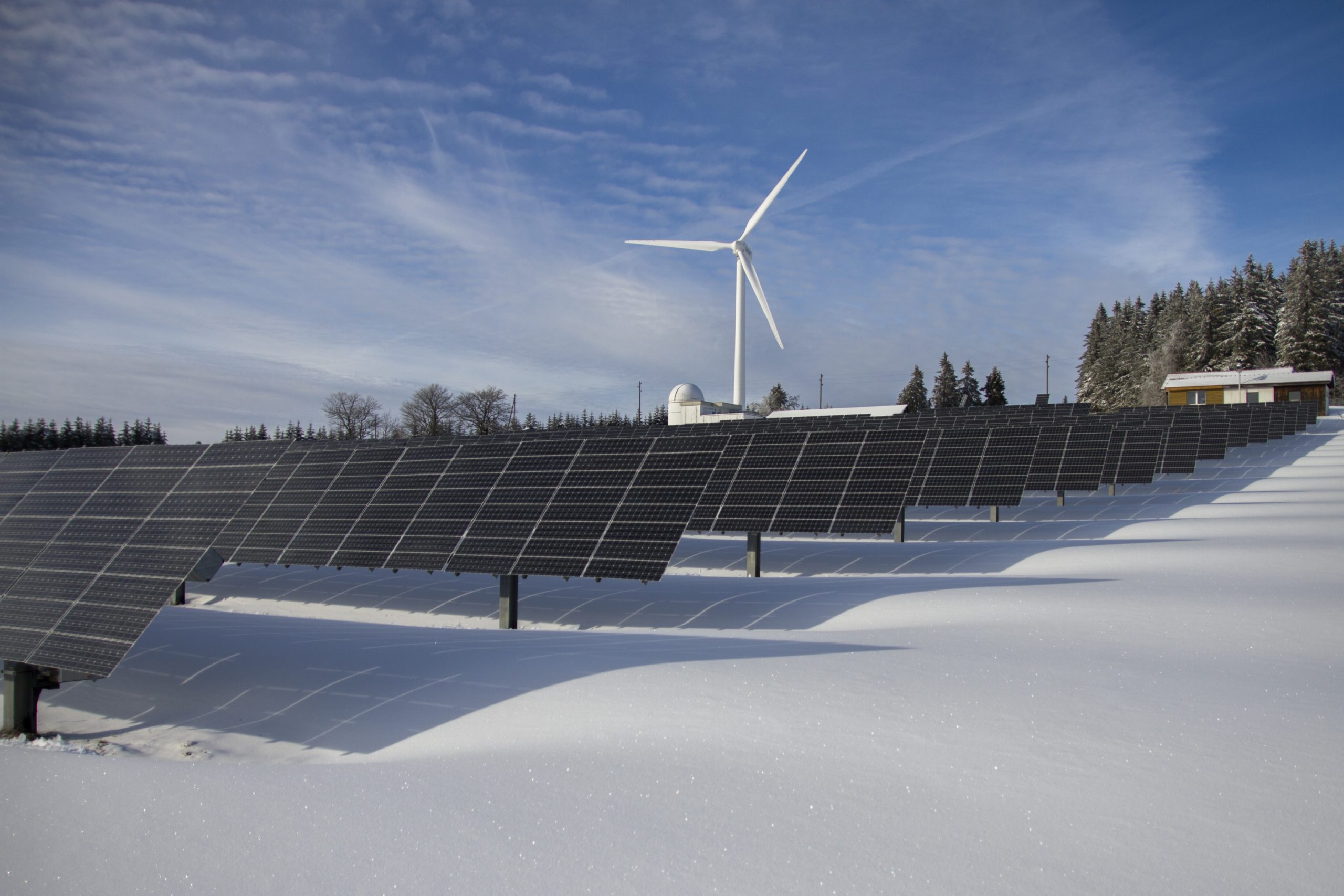
Updated October 2026. Are renewable energy sources the future? A neutral look at where US electricity comes from today, what each renewable source does well and badly, and what it means for homeowners. Data from EIA and IRS pages read October 29, 2026.
Renewables are a growing part of the future, not all of it yet. They made about 24% of US utility-scale electricity in 2025, up from about 12% in 1990, while natural gas still led at about 41% (EIA, read October 2026). For homeowners, the federal solar and efficiency tax credits ended for work placed in service after December 31, 2025 (IRS).
Jump to: ⚡ The mix today · 🌬️ Each source · ⏱️ The limits · 🏠 At home · 💲 Tax credits · ❓ FAQ
Key takeaways
- In 2025, wind made about 11% of US power, solar about 7%, hydro about 6% and biomass about 1% (EIA).
- Fossil fuels still made about 58% and nuclear about 18%, so the grid is mixed, not green or brown.
- Wind and solar don’t run on demand, which is why storage and backup matter.
- The 30% federal solar credit is gone for systems put in after December 31, 2025.
“Renewables are the future” is one of those lines that’s half slogan, half fact. The fact part is easy to check. The US Energy Information Administration publishes where every kilowatthour comes from, and the share from renewable sources has roughly doubled since 1990. The slogan part skips the hard bits: cost, weather, storage, and the plain fact that most of the grid still runs on gas, coal and nuclear.
We’ll stick to the data and let you decide. If you’ve already decided and want the case for switching, our guide to reasons to switch to a renewable energy source makes it.
Where does US electricity come from in 2025?
Here is the 2025 mix from EIA. Big power plants made about 4.43 trillion kWh in all that year.
| Source (2025) | Share of US utility-scale generation |
|---|---|
| Natural gas | About 41% |
| Nuclear | About 18% |
| Coal | About 17% |
| Wind | About 11% |
| Solar (utility-scale) | About 7% |
| Hydropower | About 6% |
| Biomass | About 1% |
| Petroleum and other | Under 1% |
All renewables together came to about 24%. Rooftop panels aren’t in that number. EIA says small solar made about 0.09 trillion kWh more on top.
Power is only part of the story. Count all energy use, with cars, heat and factories, and renewables were about 9% in 2023, says EIA. Gas for cars and gas for heat are still big.
What does each renewable source do well?
Wind. The biggest renewable by far, about 43% of renewable generation in 2025. It’s cheap to run once built. It works best on the plains and offshore, and it runs when the wind blows, not when you flip a switch.
Solar. About 28% of renewable generation from utility plants, plus rooftop panels. It scales from a single roof to a desert farm. It peaks at midday and stops at night. A local solar panel supplier can tell you how your roof and shade change the output.
Hydropower. About 23% of renewable generation. It’s the old reliable: dams can ramp up and down on demand. But few new big dams get built, and droughts cut output.
Biomass. About 4% of renewable generation. Burning wood waste or landfill gas works around the clock, but it still burns something.
Geothermal. Small on the national grid but steady, mostly in the West. At home, “geothermal” usually means a ground-source heat pump, which uses the earth’s stable temperature to heat and cool.
The Natural Resources Defense Council has a plain-English primer on the case for renewable power if you want the advocates’ view. NASA’s overview of Earth, our planet, is a reminder of why the sun and wind are there to use at all.
What holds renewables back?
Three things, mainly.
Timing. Wind and solar make power when the weather allows. Demand peaks on hot evenings, just as solar fades. Batteries, hydro and gas plants fill the gap. That’s why the grid still needs dispatchable power.
Location. The best wind and sun are often far from the cities that need the power. New transmission lines take years to permit and build.
Sell smarter
List your home on the MLS from $99
A flat fee instead of a percentage, and $0 to Beycome at closing. You stay in control of your sale.
Sell your home →Buy smarter
Get up to 2% back at closing
On homes listed by other agents, Beycome credits you up to 2% of the price at closing (1% kept, $1,499 minimum; not on FSBO homes or homes listed by Beycome sellers).
Buy a home →Materials and life span. Panels and turbines wear out. InterNACHI’s life-expectancy chart lists solar panels at 20 to 30 years and home solar batteries at 3 to 12, so plan for replacement costs, not just the install.
Cost has moved the other way. Wind and solar farms cost little to run once they’re built, since the fuel is free. The bill comes upfront, in steel, glass and land, and in the lines that carry the power to town.
None of this means renewables can’t grow. It means growth comes with a lot of supporting work: storage, wires and backup. The 1990 to 2025 jump from 12% to 24% shows it’s happening, one step at a time.
What does it mean for a homeowner?
For most people, renewables arrive through the utility first. As your utility adds wind and solar, your power gets cleaner whether you do anything or not. Electricity prices are the other side. EIA’s latest monthly table puts the average US residential price at 18.16 cents per kWh in August 2026, up from 17.57 cents a year earlier.
If you want to go further at home, the usual options are:
- Rooftop solar, bought or leased, sized to your usage and roof.
- A heat pump for heating and cooling, sometimes paired with solar.
- A green power plan from your utility, if it offers one.
- Community solar, where you subscribe to part of a shared array.
Cutting use is the cheapest first step either way. Our guide to keeping energy bills down starts there, and Practical Reasons Why You Might Want to Use Solar Energy weighs rooftop solar on its own merits.
Are there still tax credits for home solar?
Not at the federal level for new installs. The IRS says the Residential Clean Energy Credit (often called 25D) was 30% of the cost of solar and similar systems put in from 2022 through December 31, 2025. It’s gone for anything put in after that. The Energy Efficient Home Improvement Credit (25C), up to $3,200 a year, also covered improvements only through December 31, 2025.
State rebates, utility programs and local property-tax exemptions may still exist. Rules change, so check your state energy office. Our article on solar panel incentives after the federal credit ended lists where to look.
Do solar panels matter when you sell?
They can, if they’re owned outright. Leased panels mean the buyer has to take over the lease, and some lenders want to review it. Keep the paperwork, warranty and a year of production numbers ready. Our guide to solar savings at home covers what buyers ask.
When you list, Beycome gets your home on the major home search sites and the MLS from $99, with $0 owed to Beycome at closing, and you can feature the panels in your photos and description. See Beycome listing packages. Over 22,000+ homeowners have sold with Beycome (Beycome internal data, October 2026).
Renewable energy questions
What percent of US electricity is renewable?
About 24% of utility-scale generation in 2025, according to EIA. Wind was the largest renewable source at about 11% of the total.
Will renewable energy replace fossil fuels?
The share is growing, from about 12% in 1990 to about 24% in 2025, but fossil fuels still made about 58% of US electricity in 2025. Storage and transmission will decide how fast that changes.
What is the main renewable energy source in the US?
Wind. It made about 43% of the green power from big plants in 2025. Solar was next at about 28%, then hydro at about 23% (EIA).
Is the federal solar tax credit still available in 2026?
No. The IRS says the credit is gone for systems put in after December 31, 2025.
What are the downsides of renewable energy?
Wind and solar depend on the weather, the best sites are often far from cities, and equipment wears out. Storage, transmission and backup power add cost.
How long do solar panels last?
InterNACHI lists solar panels at 20 to 30 years and home solar batteries at 3 to 12 years. Warranties and climate vary.
Generation shares from EIA’s Electricity in the United States page (2025 data) and total-energy share from EIA’s Renewable Energy Explained page (2023 data), read October 29, 2026. Residential price from EIA Electric Power Monthly table 5.6.A (August 2026, released October 23, 2026). Tax credit rules from IRS pages read October 29, 2026; this is not tax advice. Life spans from InterNACHI’s chart, a general guideline. Beycome prices as of October 2026; “$0 at closing” means no Beycome fee at closing.
Sources
- EIA, Electricity in the United States, read October 29, 2026.
- EIA, Renewable energy explained, read October 29, 2026.
- EIA, Electric Power Monthly table 5.6.A, read October 29, 2026.
- IRS, Residential Clean Energy Credit, read October 29, 2026.
- IRS, Energy Efficient Home Improvement Credit, read October 29, 2026.
- InterNACHI, Standard Estimated Life Expectancy Chart, read October 29, 2026.
- Beycome, listing package features, October 2026.
Disclosure & Disclaimer
Beycome provides real estate services through affiliated licensed brokerages and has a commercial interest in the services and business models discussed on this blog. Content reflects Beycome’s perspective and may promote our services; it should not be treated as independent or neutral reporting.
Articles are provided for general informational and educational purposes only, not as financial, tax, legal, or investment advice or a recommendation for your particular situation. Reading this blog does not create a brokerage, advisory, or other professional relationship.
Information, opinions, pricing, service descriptions, and comparisons reflect the sources and information available when an article was published or last updated and may change. Although we aim for accuracy, we do not guarantee that all content is complete, current, or applicable to your circumstances. Laws, market conditions, and service availability vary by location. Examples and estimated savings are illustrative, depend on stated assumptions, and do not guarantee individual results.
Verify relevant information directly and consult qualified professionals before making decisions. Beycome services are subject to applicable agreements, eligibility requirements, and state-specific terms.

