
Updated October 2026. We first published this list of renovation trends for 2024. Here is each trend revisited two years later: what lasted, what faded and what still pays back.
Most of 2024’s renovation trends held up in 2026, but the reasons changed: owners now favor durable, practical projects over showpieces. Spending is flat. As of October 22, 2026, Harvard’s Joint Center for Housing Studies expects annual home improvement and repair spending to hover around $525 billion through the third quarter of 2027, with growth of just 1.5%.
Jump to: 🏠 2024 vs 2026 scorecard · 💲 Kitchens and cabinets · 🪜 Rooms and floors · 🤝 Outdoor and basements · ⏱️ What pays back · ❓ FAQ
Renovation trends, two years on
- Remodeling spending is expected to stay near $525 billion a year through late 2027 (JCHS LIRA, October 22, 2026).
- The top reason people remodel is replacing worn-out surfaces and materials (27%), followed by energy efficiency (19%), per NAR and NARI’s 2025 Remodeling Impact Report.
- Kitchen upgrades saw the biggest rise in buyer demand among Realtors (48%), and they scored a perfect 10 on the report’s Joy Score.
- For resale, small projects still win: a new steel front door had an estimated 100% cost recovery, a closet renovation 83%.
In 2024 we wrote about kitchen cabinets, study rooms, new floors, layered lighting, modern living rooms, outdoor kitchens, basements and multi-use rooms. Two years later, people still want most of those things. What changed is the money. Mortgage rates rose: Freddie Mac’s 30-year average was 7.24% for the week of October 29, 2026, up from 6.17% a year earlier. Remodeling budgets flattened, and owners got pickier about what’s worth doing. For the bigger 2026 picture, including how people pay for projects, see The Ups and Downs of Home Renovation in 2026. This page sticks to the trends themselves.
Which 2024 renovation trends lasted into 2026?
Here’s our honest scorecard, using the data we could check today.
| 2024 trend | Status in 2026 | What the data says |
|---|---|---|
| Kitchen cabinet upgrades | Still strong | Kitchen upgrade is Realtors’ top rising-demand project (48%) |
| Study room makeover | Became “flex room” | Buyers want rooms that switch uses |
| New flooring | Still strong | Hardwood on the main level wanted by 81% of buyers (NAHB) |
| Layered LED lighting | Now standard | Energy efficiency is the No. 2 reason to remodel (19%) |
| Living room tech and textured walls | Mixed | Security cameras up 36 points in buyer demand since 2012 |
| Outdoor kitchens and pergolas | Scaled down | Patio wanted by 86% of buyers; big builds less common |
| Basement conversions | Steady | Primary suite additions score a 10 on Joy Score |
| Multi-functional rooms | Stronger | Laundry room is the No. 1 wanted feature (86%) |
The pattern is clear. Projects that solve a daily problem kept their pull. Projects built to impress guests lost some of it.
Are kitchen cabinet upgrades still worth it in 2026?
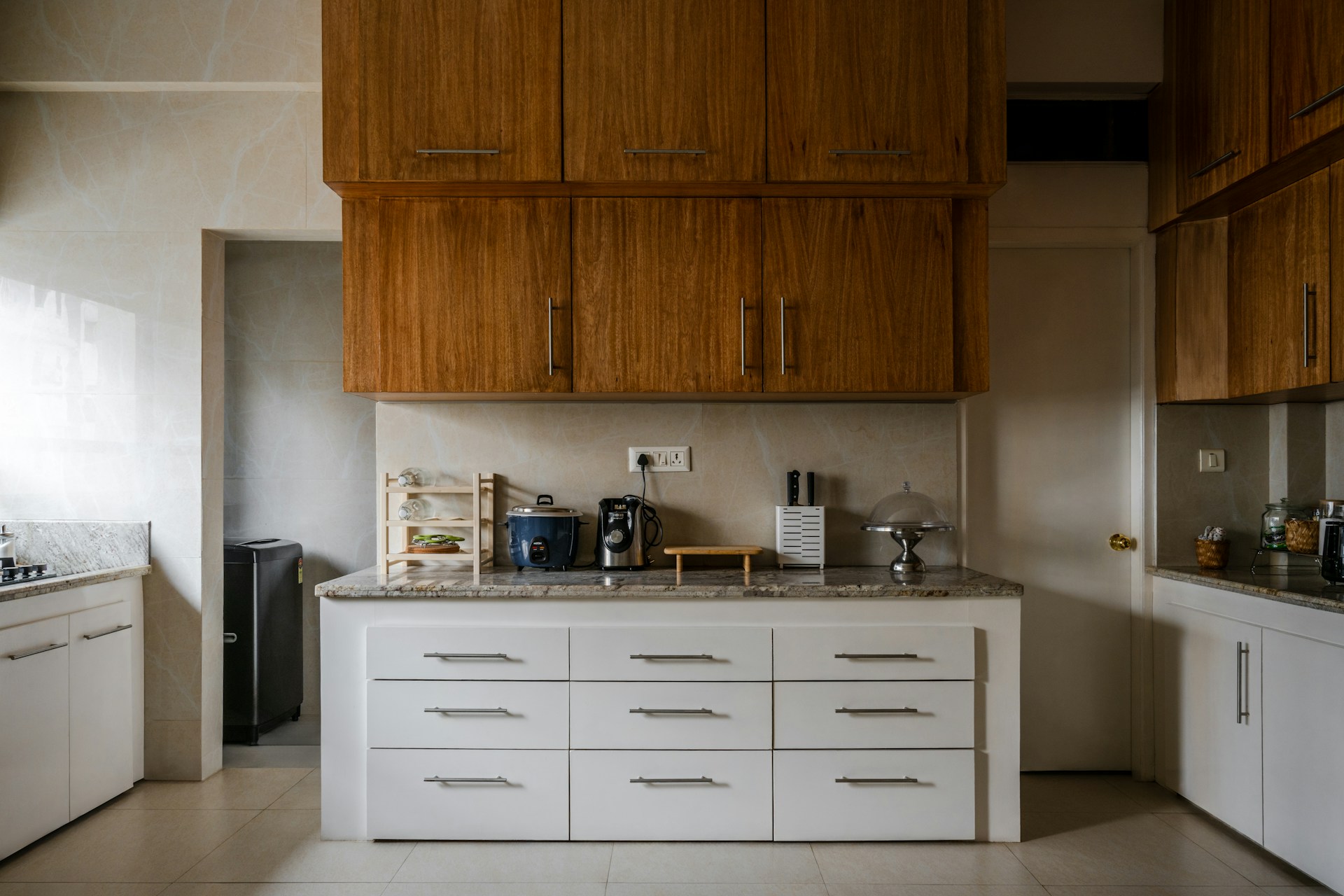
Yes, and they’re still the easiest way to change how a kitchen looks and works. NAR’s 2025 report found Realtors saw the biggest rise in demand for kitchen upgrades (48%), and homeowners gave a kitchen upgrade a Joy Score of 10 out of 10. In 2024 we suggested starting with your kitchen wall cabinets. That advice holds.
What changed is the style of upgrade. The 2024 list leaned on custom cabinets and glass fronts. In 2026, owners want storage that works more than storage that shows off.
- Pull-out shelves and deep drawers in base cabinets, so nothing hides in the back.
- Tall pantry cabinets, since a walk-in pantry is wanted by 80% of buyers (NAHB).
- Soft-close hinges and slides, a cheap retrofit that makes old boxes feel new.
- LED strips under and inside cabinets, for task light where you cook.
- Glass fronts on one or two uppers at most, not the whole wall.
If the cabinet boxes are solid, refacing or painting can get you most of the look for less. Our guides to smartly designed kitchen cabinets and upgrading builder-grade cabinets compare the options.
What happened to study rooms, floors and lighting?
Study rooms became flex rooms. The 2024 idea was a quiet study with calm paint and wood shelves. In 2026, the same room is more often an office by day and a guest room at night, with a Murphy bed or sleeper sofa. Built-in shelves still make sense. Dark “library” finishes have mostly given way to lighter wood and neutral walls.
Floors stayed a top project. NAHB’s 2024 study found 81% of buyers want hardwood on the main level. Durable, water-resistant floors in kitchens, baths and laundry rooms are the practical choice. Our guide to satin vs semi-gloss hardwood floors helps if you’re refinishing rather than replacing.
Layered LED lighting is now normal. Ambient, task and accent lighting was a 2024 trend; now it’s simply how people light a room. It also fits the second most common reason people remodel, improving energy efficiency (19% in NAR’s 2025 report). If you still have fluorescent tubes or mixed bulb colors, that’s an easy weekend fix.
Living room tech is mixed. Hidden charging spots and built-in speakers are nice, but buyers care more about security and energy tech. NAHB found security cameras are wanted by 76% of buyers, up 36 points since 2012. Textured walls such as shiplap peaked a while ago; paint is the cheaper, safer bet.
Are outdoor kitchens and basement conversions still popular?
Outdoor living is still popular, but the projects got smaller. A patio is wanted by 86% of buyers, a front porch by 81% and exterior lighting by 82% (NAHB 2024). Those are cheaper than a full outdoor kitchen with a sink and fridge. A simpler build often makes more sense: a covered patio with good lighting and a built-in grill.
Basement conversions held steady where homes have basements. The 2025 Remodeling Impact Report gave a primary bedroom suite addition a Joy Score of 10, the same as a kitchen upgrade. A basement guest suite with a bathroom is the closest version for many homes. Home theaters and game rooms are personal choices; do them for you, not for resale.
Sell smarter
List your home on the MLS from $99
A flat fee instead of a percentage, and $0 to Beycome at closing. You stay in control of your sale.
Sell your home →Buy smarter
Get up to 2% back at closing
On homes listed by other agents, Beycome credits you up to 2% of the price at closing (1% kept, $1,499 minimum; not on FSBO homes or homes listed by Beycome sellers).
Buy a home →Multi-use rooms got stronger. A laundry room topped NAHB’s list at 86%, and a combined laundry and mudroom with hooks, cubbies and a folding counter answers that want in one room. Before you plan one, read storage issues in your home and how to solve them.
Why are people renovating differently in 2026?
Because the budget is tighter and the goal is durability. JCHS’s October 2026 release says retail spending on building products has been flat to negative and remodeling permits have stagnated. It expects spending to stay near $525 billion a year through the third quarter of 2027.
NAR’s 2025 report shows the same mindset. The top reason to remodel was upgrading worn-out surfaces, finishes and materials (27%). Homeowners said the most important outcomes were better function and livability (28%) and durable, long-lasting results (23%). Most paid with home equity loans or lines of credit (54%), then savings (29%) and credit cards (10%).
In other words, 2026 renovations are less about trends and more about fixing what wears out. That’s good news for your budget.
Which renovations pay back when you sell?
If you might sell in the next couple of years, small projects still beat big ones on cost recovery. NARI members estimated these returns in the 2025 report:
- New steel front door: about 100% of its cost.
- Closet renovation: about 83%.
- New fiberglass front door: about 80%.
Realtors’ most common advice before listing was to paint the entire home (50%), paint one interior room (41%) or install a new roof (37%). Joy and payback don’t always match, as the report itself points out. Remodel for yourself if you’re staying; remodel for buyers if you’re leaving. Our ultimate home renovation checklist helps you plan either way, and common renovation mistakes when selling covers what to skip.
When you’re ready to sell, Beycome is a full platform to sell, buy and close. A flat fee MLS listing starts at $99, reaches the major home search sites and the MLS, and charges $0 at closing. Want a quick read on value first? Try the free home value tool.
Renovation trend questions
What are the biggest home renovation trends in 2026?
Practical, durable projects: kitchen storage, hardwood or water-resistant floors, LED lighting, flex rooms, laundry and mudrooms, and smaller outdoor living spaces.
Is remodeling spending going up or down?
Flat. JCHS expects about $525 billion a year through the third quarter of 2027, with growth near 1.5%.
Which 2024 trends faded?
Showpiece projects such as full outdoor kitchens, dark library-style studies and heavy textured walls. Simpler versions replaced them.
Why do people remodel?
Mostly to replace worn-out surfaces and materials (27%), improve energy efficiency (19%), for a change (18%) or to prepare to sell (18%), per NAR and NARI’s 2025 report.
Which renovation adds the most resale value?
On cost recovery, a new steel front door (about 100%) and a closet renovation (about 83%) led the 2025 Remodeling Impact Report.
Should I renovate before selling my home?
Usually only small projects like paint, repairs and curb appeal. Big remodels rarely pay back fully right before a sale.
Spending projections from JCHS’s Leading Indicator of Remodeling Activity, October 22, 2026; cost recovery and Joy Scores from the NAR and NARI 2025 Remodeling Impact Report; buyer preferences from NAHB’s What Home Buyers Really Want, 2024 Edition. National figures; local results differ. Beycome prices as of October 2026; “$0 at closing” means no Beycome fee at closing (other closing costs, taxes and title fees still apply). Cabinets Bay is a third-party retailer. General information, not legal or financial advice.
Sources
- Harvard JCHS, Remodeling Spending Continues to Stagnate (October 22, 2026), read October 29, 2026.
- NAR, 2025 Remodeling Impact Report news release (April 9, 2025), read October 29, 2026.
- NAHB Eye on Housing, most wanted features (April 3, 2024), read October 29, 2026.
- Freddie Mac, Primary Mortgage Market Survey, week of October 29, 2026, read October 29, 2026.
- Beycome, listing package features, October 2026.
Disclosure & Disclaimer
Beycome provides real estate services through affiliated licensed brokerages and has a commercial interest in the services and business models discussed on this blog. Content reflects Beycome’s perspective and may promote our services; it should not be treated as independent or neutral reporting.
Articles are provided for general informational and educational purposes only, not as financial, tax, legal, or investment advice or a recommendation for your particular situation. Reading this blog does not create a brokerage, advisory, or other professional relationship.
Information, opinions, pricing, service descriptions, and comparisons reflect the sources and information available when an article was published or last updated and may change. Although we aim for accuracy, we do not guarantee that all content is complete, current, or applicable to your circumstances. Laws, market conditions, and service availability vary by location. Examples and estimated savings are illustrative, depend on stated assumptions, and do not guarantee individual results.
Verify relevant information directly and consult qualified professionals before making decisions. Beycome services are subject to applicable agreements, eligibility requirements, and state-specific terms.

