
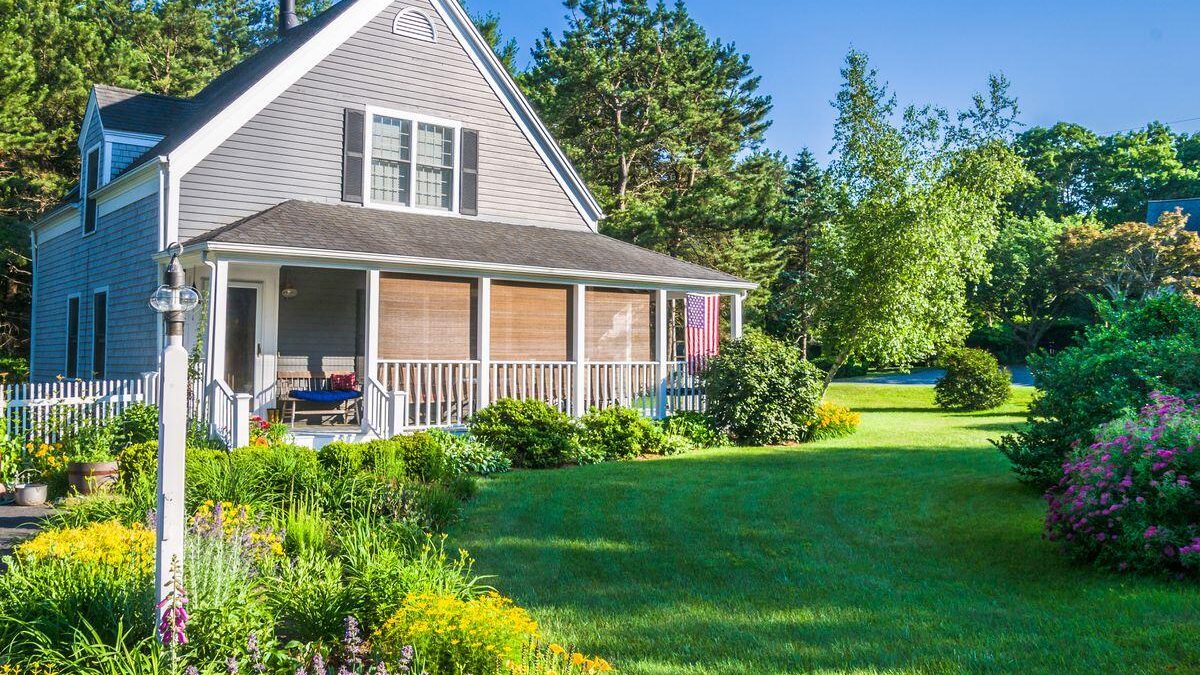
Updated October 2026. Ten lawn care tips for late summer into fall, a first-season plan for new homeowners, and what a healthy lawn is worth when you sell, with figures from the EPA, University of Minnesota Extension and NAR.
Late summer is when you set up next year’s lawn. Water deeply about one inch a week, including rain (EPA WaterSense), mow high with a sharp blade, and feed cool-season grass in August and September, at no more than 1 pound of nitrogen per 1,000 square feet each time (University of Minnesota Extension, read October 2026). Then rake, weed and fix bare spots before it gets cold.
Jump to: 🪜 10 tips · ⏱️ Watering · 📍 Feeding · 🏠 New homeowners · 💲 Value when selling · ❓ FAQ
Late summer lawn care, in numbers
- About 1 inch of water a week, including rainfall, for a typical landscape (EPA WaterSense).
- For a lightly kept cool-season lawn, one feeding a year in September; busier lawns get August and September feedings (University of Minnesota Extension).
- A $415 standard lawn care service recovers an estimated $900 when you sell, or 217% (NAR).
- Up to 50% of outdoor water can be lost to wind, evaporation and runoff from poor irrigation (EPA).
Nobody likes the neighbor’s lawn looking greener. The good news is that late summer and early fall are the best time to catch up. The heat is easing, the soil is still warm, and grass puts its energy into roots. A few weekends now pay off next spring. Here’s what to do, in order.
What are the 10 essential lawn care tips for late summer?
- Walk the lawn and take notes. Look for brown patches, thin spots and weeds. Brown patches can mean disease, insects or dry spots, so find the cause before you treat it.
- Aerate compacted soil. If the lawn feels hard or water runs off, core aeration loosens the soil so water and nutrients reach the roots.
- Rake out dead spots and reseed. Match the seed to the grass you already have. For big damaged areas, cut out the section and lay sod.
- Feed at the right time. Cool-season lawns get their main feeding in late summer and early fall. Use a slow-release product, and skip a windy day or one with rain coming.
- Water deeply, not daily. Deep, less frequent watering grows deeper roots. Water early in the day.
- Keep the mower blade sharp. A sharp blade cuts cleanly instead of tearing. Change your mowing pattern each time so the grass stands up straight.
- Leave the clippings. “Grasscycling” returns nutrients to the soil. University of Minnesota Extension notes that nutrients are lost when clippings are removed.
- Control weeds before they seed. Pull or spot-treat weeds now so they don’t spread next year.
- Rake leaves often. Don’t let them pile up and turn wet. Wet leaf mats can cause fungal problems that last into spring.
- Store and dispose of products safely. Keep fertilizer and weed killer sealed and away from kids and pets. Dispose of leftovers the way you would paint or other household chemicals.
For help telling weeds apart, a weed control guide with photos makes it much easier to pick the right fix. Spot treating is often better than a weed-and-feed product over the whole lawn, says University of Minnesota Extension.
How much should you water your lawn in late summer?
The EPA’s WaterSense program says a typical landscape needs about one inch of water a week, including rainfall. Your needs vary with your climate, soil and grass, so your local water utility or extension office can fine-tune it.
Here’s an easy test from the EPA. Set a few empty tuna cans around the lawn and time how long your sprinkler takes to fill them with half an inch of water. Then water that long twice a week and adjust for the weather. If water starts to pool, turn it off.
Timing matters as much as amount. Avoid watering at midday, when the sun evaporates much of the water. Watering too often can drown plants or keep roots shallow. And check your system: the EPA says up to 50% of outdoor water is lost to wind, evaporation and runoff from poor irrigation.
When should you fertilize in late summer?
For cool-season grasses in the North, late summer and fall are the main feeding window. University of Minnesota Extension gives a simple guide based on how much care your lawn gets:
| How you care for the lawn | Feedings a year | When |
|---|---|---|
| Watered, clippings removed | 4 | August, September, early October, May to June |
| Watered, clippings returned | 3 | August, September, May to June |
| Some watering, clippings returned | 2 | September, May to June |
| No watering, clippings returned | 1 | September |
Each feeding should stay at or below 1 pound of nitrogen per 1,000 square feet. Nitrogen is the nutrient a home lawn needs most. Many soils already have plenty of phosphorus, so add it only if a soil test says so.
Warm-season grasses in the South, like those in Texas and Florida, grow on a different calendar. In Florida, read our guide on How to Care for and Add Value to Your Florida Lawn. In Central Texas, a local service that knows proper lawn care for Hill Country soil and heat can set a schedule for you.
Is artificial turf worth it?
If you’re tired of mowing and watering, it can be. Turf needs no mowing, no fertilizer and little water, though it gets hot in full sun and costs more upfront. In dry Southern California, many owners look at artificial grass in Eastvale, CA and nearby towns for that reason. Check your HOA rules before you rip out real grass.
Just bought a home? What should a new homeowner do with the lawn?
Your first season is about learning what you have. Don’t rush to fix everything in the first month.
Sell smarter
List your home on the MLS from $99
A flat fee instead of a percentage, and $0 to Beycome at closing. You stay in control of your sale.
Sell your home →Buy smarter
Get up to 2% back at closing
On homes listed by other agents, Beycome credits you up to 2% of the price at closing (1% kept, $1,499 minimum; not on FSBO homes or homes listed by Beycome sellers).
Buy a home →- Find out what grass you have, and whether it’s cool-season or warm-season.
- Locate sprinkler heads, the timer and the shut-off valve.
- Get a soil test before you buy fertilizer.
- Mow high and leave the clippings while you watch how the lawn reacts.
- Keep a simple log of when you water, feed and seed.
Then use the 10 tips above starting in late summer. If the yard is small, see our small yard landscaping guide for layout and plant ideas. Our 6 Gardening Tips To Make Your Greenery Really Stand Out covers beds and borders, and Pro Tips On How To Maintain Your Lawn’s Ornamental Grasses helps with those tall clumps by the fence.
Does a good lawn add value when you sell?
Yes, and it’s one of the cheapest ways to add it. In NAR’s Remodeling Impact Report, a standard lawn care service cost about $415 and REALTORS® estimated it recovered $900 at sale, 217% of the cost. Landscape maintenance recovered 104%.
Design matters too. A survey covered by Turf Magazine asked home and garden show visitors in seven states to value the same house with different yards. A well-landscaped version was valued 5.5% to 11.4% higher than the lawn-only version, depending on the state. The top-rated yard had “a sophisticated design with large deciduous, evergreen and annual color plants and colored hardscape.” Shade trees also help cool the house in summer.
Before you list, read Property Tips: Improve Your Lawn to Reach a Better Market Value and How to Prepare Your Property for the Summer Heat in 4 Easy Steps. Then shoot photos on a sunny morning after a fresh mow.
Selling on your own terms? A Beycome flat fee MLS listing starts at $99, with $0 due to Beycome at closing. You get the maximum photos the MLS allows, so the yard gets its due, plus unlimited listing updates. Beycome lists in 17 states and DC and has helped 22,000+ homeowners save over $225 million. Want an expert by your side? Beycome Concierge is $1,399, with full support while you stay in control.
Late summer lawn care questions
What should I do to my lawn in late summer?
Water deeply about an inch a week, mow high with a sharp blade, aerate if the soil is hard, reseed bare spots, and feed cool-season grass in August and September.
Is late summer a good time to fertilize?
For cool-season lawns, yes. University of Minnesota Extension schedules feedings in August and September, at no more than 1 pound of nitrogen per 1,000 square feet each time.
How often should I water my lawn in late summer?
Aim for about one inch a week, including rain, split into one or two deep waterings early in the day (EPA WaterSense).
What lawn care should a new homeowner start with?
Identify your grass type, find the sprinkler controls, get a soil test, mow high and leave clippings. Start reseeding and feeding in late summer.
Should I leave grass clippings on the lawn?
Usually, yes. Clippings return nutrients to the soil, and lawns with clippings returned need less fertilizer, per University of Minnesota Extension.
Does lawn care increase home value?
It’s one of the best paybacks at sale. NAR estimated a $415 lawn care service recovers about $900 when you sell.
Prices as of November 2026; Concierge is $1,399 and Basic is $129 in California and Illinois ($99 elsewhere). “$0 at closing” means no Beycome fee at closing; other closing costs and taxes still apply. Lawn advice is general; timing and amounts vary by grass type and climate, so check your local extension office. Business links are examples, not endorsements.
Sources
- EPA WaterSense, Watering Tips, read October 27, 2026.
- EPA WaterSense, Statistics and Facts, read October 27, 2026.
- University of Minnesota Extension, Fertilizing lawns, read October 27, 2026.
- NAR, 5 Outdoor Projects That Pay Off the Most, read October 27, 2026.
- Turf Magazine, How Much Does Landscaping Really Add to a Home’s Value? (2016), read October 27, 2026.
- Beycome, listing package features, October 2026.
Disclosure & Disclaimer
Beycome provides real estate services through affiliated licensed brokerages and has a commercial interest in the services and business models discussed on this blog. Content reflects Beycome’s perspective and may promote our services; it should not be treated as independent or neutral reporting.
Articles are provided for general informational and educational purposes only, not as financial, tax, legal, or investment advice or a recommendation for your particular situation. Reading this blog does not create a brokerage, advisory, or other professional relationship.
Information, opinions, pricing, service descriptions, and comparisons reflect the sources and information available when an article was published or last updated and may change. Although we aim for accuracy, we do not guarantee that all content is complete, current, or applicable to your circumstances. Laws, market conditions, and service availability vary by location. Examples and estimated savings are illustrative, depend on stated assumptions, and do not guarantee individual results.
Verify relevant information directly and consult qualified professionals before making decisions. Beycome services are subject to applicable agreements, eligibility requirements, and state-specific terms.

