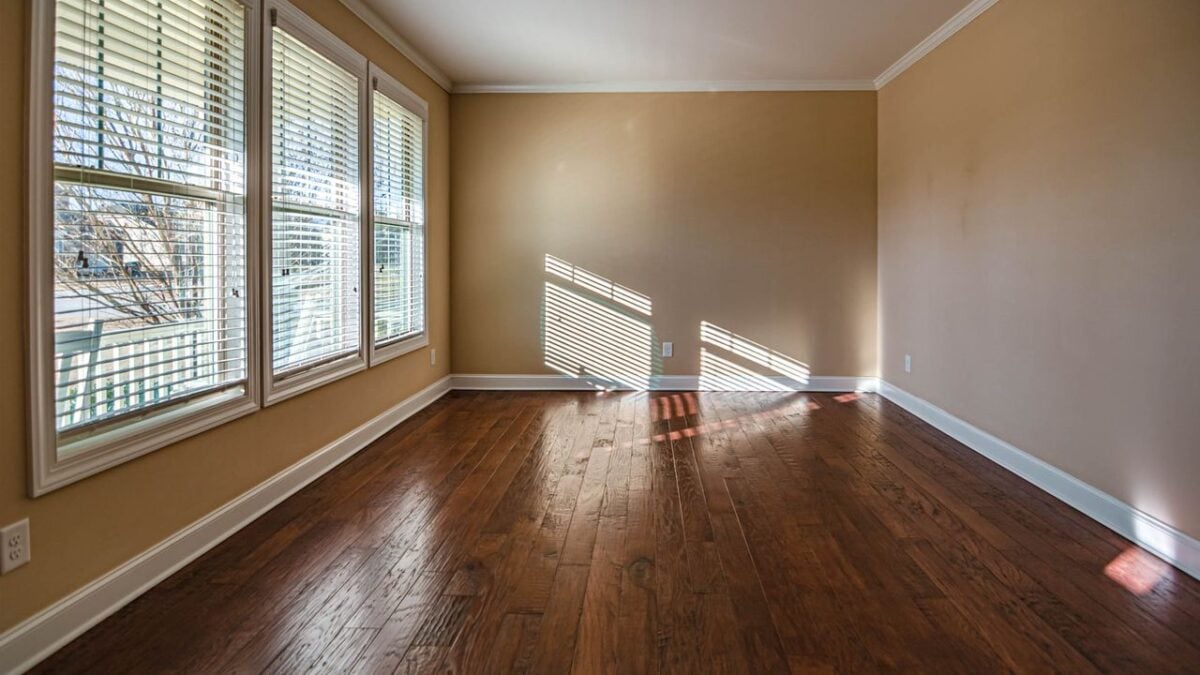
Walk into a newly renovated open-plan living room with gleaming hardwood floors, floor-to-ceiling windows, and freshly painted drywall, and the visual impression is often stunning.
But clap your hands once or say a few words aloud, and you immediately notice something off. Your voice echoes. Footsteps reverberate. Every sound lingers just a fraction too long, creating a hollow, uncomfortable acoustic environment that undermines the very comfort the renovation was meant to deliver.
This is the hidden trade-off of contemporary home design.
Hard surfaces like glass, concrete, and bare walls reflect sound instead of absorbing it, and the result is an audible problem that most buyers and sellers overlook until they actually spend time in the space.
Room echo is one of the most common acoustic problems that can dramatically affect how a space feels and functions, reducing sound clarity, speech intelligibility, and overall comfort.
The trend toward minimalist interiors and open floor plans has only intensified the issue.
Large, open-plan spaces typically have higher ceilings and fewer objects to interrupt sound waves, and minimalist interiors with limited furniture create the ideal echo chamber. What looks clean and modern on a listing photo can feel harsh and fatiguing in daily life.
The Low-Cost Fix Homeowners Are Making Before Listing
Savvy sellers have started to recognize that addressing acoustic discomfort is not just about livability—it is about marketability. In the same way that fresh paint or updated hardware signals care and quality, a room that sounds pleasant tells buyers the home is thoughtfully finished.
Over the past few years, a quiet shift has occurred in pre-sale home preparation: homeowners are turning to acoustic wall panels as a practical, visually appealing solution that doubles as décor.
These panels absorb sound waves rather than reflecting them, cutting down on the echo and muddiness that plague hard-surfaced rooms. The installation is straightforward, often requiring nothing more than adhesive backing, and the aesthetic impact is immediate.
Acoustic wall panels come in customizable shapes, colors, and patterns that integrate seamlessly into modern interiors, allowing homeowners to address the functional problem without sacrificing design intent.
Homes in move-in-ready condition tend to attract higher offers and spend less time on the market. FeltRight acoustic panels fall squarely into this category. They require minimal investment compared to structural renovations, yet they solve a sensory problem that can make or break a buyer’s emotional response during a showing.
The ROI is less about recouping exact dollar amounts and more about eliminating a friction point that could cost a sale. Buyers may not articulate that a room feels too loud, but they will remember the discomfort. Removing that discomfort keeps their focus on the positives.
Why Sound Quality Matters More Than You Think
Most home shoppers do not walk into a property with a checklist that includes acoustics. But they notice when something feels wrong.
Echo and excessive reverb happen when sound waves bounce repeatedly between hard, reflective surfaces, and that energy stacks up, smears consonants, and turns normal conversation into noise. In practical terms, this means phone calls are harder, conversations require raised voices, and even watching television becomes a challenge.
For remote workers, the problem is even more pronounced.
The typical home office setup works against you acoustically, with hard desk surfaces and computer monitors acting as reflectors, and reducing echo in a room used for calls from home has become essential. Addressing this issue before listing can be a subtle but powerful selling point, especially as more buyers prioritize functional home office space.
Understanding reverberation in domestic spaces has been studied extensively, and the science is clear:
An empty room always sounds more echoey than a fully furnished one because soft furnishings absorb sound and cause it to fade away quicker than hard surfaces. But not every seller wants to stage a home with heavy drapes and upholstered furniture. Acoustic panels offer a middle path—effective absorption without the bulk or the commitment.
Sell smarter
List your home on the MLS for $99
No listing agent, no 3% commission. Beycome handles your MLS listing so you keep more of what your home is worth.
Sell your home →Buy smarter
Get up to 2% back at closing
Buy any home with a Beycome agent and receive a rebate of up to 2% of the purchase price — paid to you at closing.
Buy a home →Other Small Changes With Outsized Impact
Acoustic treatment is not the only overlooked improvement that can shift buyer perception. Small, comfort-driven upgrades often deliver returns far beyond their price tags because they address everyday annoyance rather than cosmetic preferences.
Real-world feedback from homeowners consistently points to the same low-cost, high-impact improvements: paint, landscaping, deep cleaning, and decluttering, and 50% of realtors recommend painting the entire home before listing.
These are the baseline moves that signal care and readiness. But beyond the basics, there are targeted fixes that solve specific livability problems.
Lighting upgrades are a prime example.
Good lighting changes how a home feels, and replacing dim bulbs with bright, warm LEDs combined with neutral paint tones that reflect light can appeal to a wide range of buyers. The investment is minimal—often under a few hundred dollars for an entire home—but the perceptual shift is significant.
Energy efficiency improvements also fall into this category.
Energy efficiency has become one of the biggest selling points for modern buyers, and simple upgrades like LED lighting, programmable thermostats, new weather-stripping, or additional insulation can lower utility costs and increase comfort. These are not flashy renovations, but they communicate competence and forward-thinking maintenance.
Another area that sellers frequently undervalue is hardware and fixture updates.
Swapping brass cabinet pulls, dated light fixtures, and builder-grade faucets creates an instant update, and budgeting $300 to $800 for the highest-impact rooms like the kitchen, main bathroom, and entry can make a noticeable difference. It is the kind of detail buyers notice without consciously realizing why a space feels more polished.
Preparing a home for sale involves balancing effort, cost, and impact. The goal is not perfection—it is removing objections. Every small friction point a buyer encounters, from a squeaky hinge to a flickering bulb to an uncomfortably loud living room, chips away at their confidence in the property.
The Bigger Picture: Comfort-Driven Value
The real estate market has shifted in subtle but meaningful ways over the past decade. Buyers are more informed, more specific in their expectations, and more attuned to how a home will actually function in daily life. They have spent more time at home, worked from home, and developed strong opinions about what makes a space livable versus merely attractive.
This shift has elevated the importance of sensory experience. A home that looks beautiful but feels uncomfortable—whether due to poor lighting, harsh acoustics, or inefficient climate control—will struggle to compete against one that delivers on both fronts.
Home improvement ROI data consistently shows that the highest returns come not from luxury upgrades but from strategic fixes that align with buyer priorities.
The non-negotiable, high-ROI updates every seller should consider are relatively inexpensive but make a massive difference in how buyers perceive a property.
Acoustic treatment fits squarely within this framework. It is not about chasing trends or impressing appraisers. It is about creating an environment that feels right, and that emotional response is what drives competitive offers and smooth closings.
Takeaway: Prioritize What People Actually Experience
Selling a home is as much about psychology as it is about square footage and comparable sales. Buyers want to feel confident that the property they are considering will support their lives, not complicate them.
They may not tour a home with a sound meter, but they will notice if conversation feels strained, if a room feels cold and uninviting, or if something just feels off.
Addressing these experiential elements—acoustics, lighting, minor repairs, energy efficiency—creates a cumulative impression of quality and care. It signals that the seller understands what makes a home work, not just what makes it look good in photos.
The most successful pre-sale strategies are not the ones that chase maximum ROI on individual projects. They are the ones that remove barriers to buyer confidence. Acoustic panels, fresh paint, updated fixtures, and better lighting all serve this purpose. They are small investments that solve real problems, and in a competitive market, that distinction can make all the difference.Comfort-driven upgrades are not about adding features. They are about eliminating distractions. And in the end, the home that feels the best is the one that sells.