
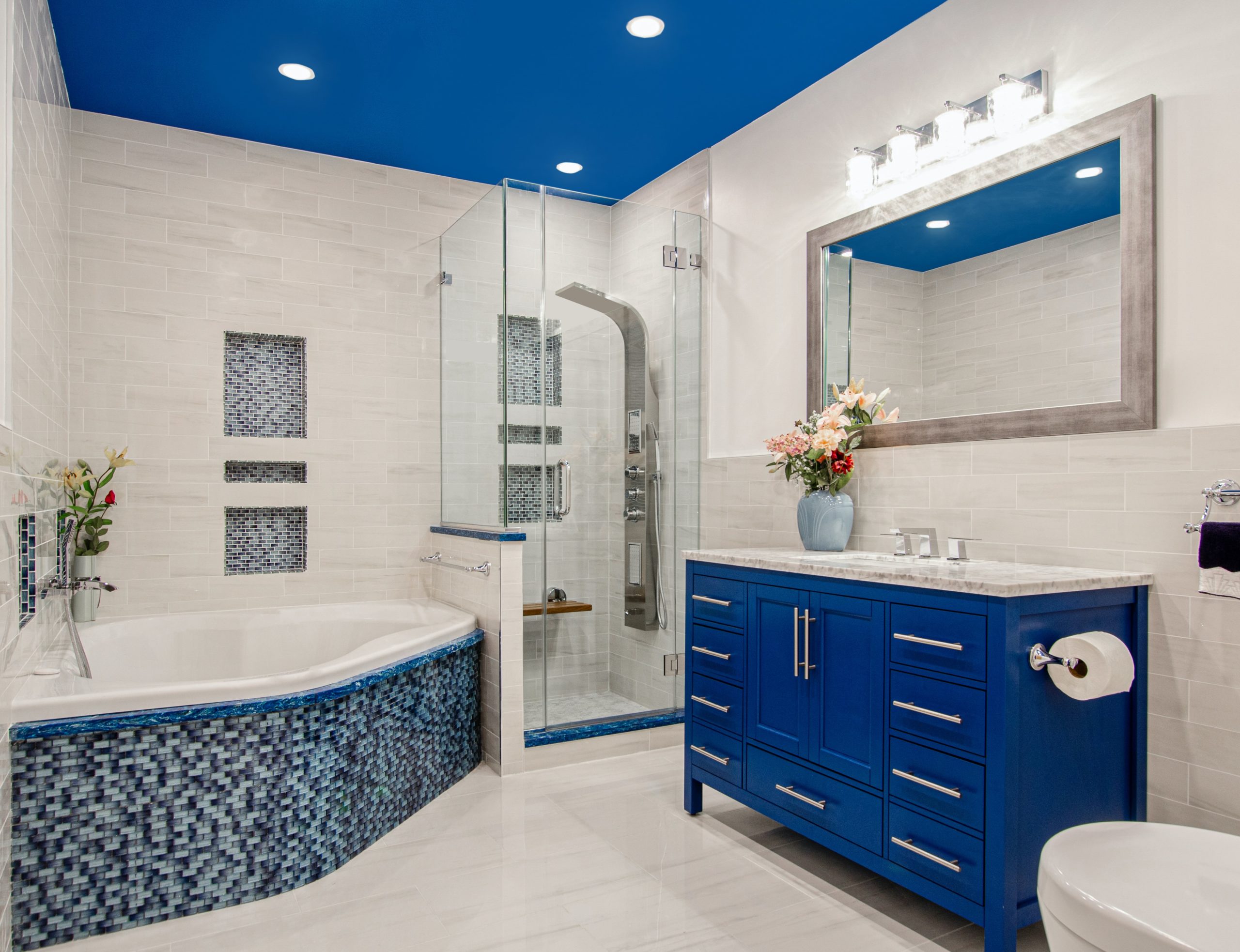
Updated October 2026. Water, fan and moisture figures checked against the EPA’s WaterSense program, ENERGY STAR and the EPA’s mold guide, read October 29, 2026.
The easiest way to improve a bathroom without a remodel is a weekend of small swaps: a WaterSense showerhead and faucet aerator, a quiet exhaust fan, new caulk, better lighting and less clutter. The numbers are real. As of October 2026, the EPA says a WaterSense showerhead uses no more than 2.0 gallons per minute, against 2.5 for a standard one, and can save the average family 2,700 gallons a year.
Jump to: ⏱️ Weekend list · 💲 Water savers · 🪜 Fan and caulk · 📸 Light and windows · 🏠 Before you sell · ❓ FAQ
Key takeaways
- WaterSense showerheads: 2.0 gpm or less; about 2,700 gallons and 330 kWh saved a year for the average family (EPA).
- WaterSense faucets and aerators: 1.5 gpm or less, cutting sink flow by 30% or more from 2.2 gpm (EPA).
- ENERGY STAR ventilation fans use about 48% less energy than standard models.
- The EPA suggests indoor humidity below 60%, ideally 30–50%, and running the fan while you shower.
Bathrooms are small, so small changes show. You don’t need to rip out the tub to make one feel newer, brighter and easier to clean. This guide sticks to low-cost upgrades you can finish in a weekend or two. If you’re planning the full gut job, read our bathroom renovation guide instead. For daily habits that keep the room healthy, see How to Make Your Bathroom Both a Room of Health and Cleanliness.
What can you upgrade in a bathroom in one weekend?
| Upgrade | Skill level | Why it’s worth it |
|---|---|---|
| WaterSense showerhead | Easy, 15 minutes | Less water and less hot-water energy |
| Faucet aerator | Easy, 5 minutes | Up to 30% less sink flow |
| Re-caulk tub and sink | Easy, half a day plus curing | Stops leaks and fixes the dingy line |
| Regrout or grout pen | Moderate | Tile looks new without new tile |
| Vanity light and mirror | Moderate; turn the breaker off | Better light for every task |
| Hardware, towel bars, hooks | Easy | Fast style change for little money |
| Exhaust fan swap | Moderate to hard; an electrician if unsure | Less moisture, less mold, less noise |
Start with what bugs you most every morning. For most people that’s a weak shower, bad light or a fan that sounds like a jet engine.
Which water-saving fixtures are worth it?
Showering is a big share of home water use. The EPA’s WaterSense program says it’s nearly 17% of indoor residential water use, close to 40 gallons a day for the average family. A WaterSense showerhead has to prove it uses 2.0 gallons per minute or less and still gives a shower at least as good as conventional models. The EPA estimates the average family saves 2,700 gallons a year and more than 330 kilowatt-hours of electricity, since you heat less water.
The sink is even easier. WaterSense bathroom faucets and aerators use a maximum of 1.5 gallons per minute, which the EPA says cuts flow by 30% or more from the standard 2.2. An aerator screws onto the tip of most faucets in a few minutes. Look for the WaterSense label on the box, and ask your water utility about rebates; the EPA notes many offer them.
While you’re down there, check under the sink for drips. A slow leak in a cabinet ruins the floor long before anyone notices.
How do you stop bathroom mold and moisture?
Moisture control is mold control. The EPA’s mold guide says to dry water-damaged areas within 24 to 48 hours and to keep indoor humidity below 60%, ideally between 30% and 50%. A cheap humidity meter tells you where you stand. Run the fan or open a window while you shower, and leave it running a few minutes after.
If your fan is loud, weak or ancient, replace it. ENERGY STAR certified ventilation fans use about 48% less energy than standard models and are built to be quieter. Models with built-in lighting use about 70% less energy on average. A same-size swap is a common DIY job, but if you’re adding wiring or a new duct, call an electrician.
Then fix the caulk. Cut out the old bead with a utility knife, clean and dry the joint, and lay a new line of mildew-resistant silicone. Let it cure as long as the tube says before the first shower. Got a small patch of mold? The EPA says areas under about 10 square feet (roughly 3 feet by 3 feet) are usually a DIY cleanup. Bigger than that, or after real water damage, bring in a pro.
How can lighting and windows make a bathroom feel better?
Lighting is where cheap changes look expensive. A single overhead bulb throws shadows on your face. Lights on both sides of the mirror, or one wide fixture above it, fix that. Color temperature matters too. Forbes has seven tips on why it’s important to pick bathroom lighting with care, worth a read before you shop. Swap the mirror while you’re at it. A frameless mirror makes a small room feel bigger and is easy to wipe.
Windows give you light and privacy at the same time, if you dress them right. Frosted film is the cheapest fix. Interior shutters are a step up and handle humidity well; ShutterCraft’s bathroom ideas website page shows plenty of styles. On the outside, roller shutters add security and block heat on a west-facing bathroom that bakes in the afternoon.
Finish with the small stuff. New towel bars, hooks and cabinet pulls in one matching finish make a dated room look planned. Clear the counter down to a soap dispenser and one tray. That’s free, and it’s often the biggest visual change of all.
Sell smarter
List your home on the MLS from $99
A flat fee instead of a percentage, and $0 to Beycome at closing. You stay in control of your sale.
Sell your home →Buy smarter
Get up to 2% back at closing
On homes listed by other agents, Beycome credits you up to 2% of the price at closing (1% kept, $1,499 minimum; not on FSBO homes or homes listed by Beycome sellers).
Buy a home →Old tile with good bones? Clean and regrout it, or use a grout pen to even out the color. Our guide to 8 simple tricks that’ll give your bathroom a totally new look has more ideas. If the tile really has to go, here’s how to hire a tile contractor.
Is a fresh coat of paint worth it in a bathroom?
Usually, yes. Paint is the biggest change per dollar in a small room, and a bathroom takes a gallon or less. Pick a paint sold for kitchens and baths, in a satin or semi-gloss finish, so it wipes clean and shrugs off steam. Wash the walls first, let them dry fully, and run the fan for a day after you finish. Light, warm whites and soft grays make a windowless bathroom feel less like a closet.
Storage is the other quick win. A shelf above the toilet, a slim cart beside the vanity or a recessed cabinet keeps the counter clear. Drawer organizers stop the pile of half-used bottles from coming back.
Know where to stop, too. Moving a toilet, adding an outlet near water, or anything that opens a wall with pipes in it is a job for a licensed plumber or electrician, and often needs a permit. A weekend upgrade should never leave you with a leak inside a wall.
Which bathroom fixes matter before you sell?
Buyers and inspectors notice the same things you do: leaks, soft spots by the tub, cracked caulk, a fan that doesn’t vent, stained grout. Fixing those beats a pricey makeover. Our list of the 10 most common repairs after a home inspection shows where bathrooms usually fail. Wondering whether a bigger project pays off? Read Should You Remodel Your Property If You Plan Selling It? first.
Clean, bright bathrooms also photograph well, and that’s what buyers see first on the major home search sites and the MLS. Beycome lists homes there with flat fee MLS packages from $99 (Enhanced $399), $0 Beycome fee at closing, in 17 states and DC. You keep control of every decision. 22,000+ homeowners have sold with Beycome, with over $225 million saved (Beycome internal data, October 2026).
Easy bathroom upgrades: questions
What is the cheapest way to update a bathroom?
Clear the counter, re-caulk, swap the showerhead and aerator, and replace hardware and the vanity light. Most of it is a weekend job.
How much water does a WaterSense showerhead save?
The EPA estimates about 2,700 gallons a year for the average family, plus more than 330 kWh of electricity from heating less water.
Do low-flow showerheads have weak pressure?
WaterSense models must provide a shower equal to or better than conventional showerheads, per the EPA, while using 2.0 gpm or less.
How long should I run the bathroom fan?
During the shower and a few minutes after. The EPA suggests keeping indoor humidity below 60%, ideally 30–50%.
Can I clean bathroom mold myself?
For patches under about 10 square feet, the EPA says most people can. For larger areas or water damage, hire a professional.
Is an ENERGY STAR bathroom fan worth it?
ENERGY STAR says certified fans use about 48% less energy than standard ones and run quieter, which also means you’ll actually use them.
Water figures from the U.S. EPA WaterSense program; fan figures from ENERGY STAR; humidity and mold cleanup guidance from the U.S. EPA; all read October 29, 2026. Skill levels and timings are our estimates; hire a licensed electrician or plumber for wiring and plumbing beyond a simple swap.
Beycome prices as of October 2026. “$0 at closing” means no Beycome fee at closing; other closing costs still apply.
Sources
- U.S. EPA WaterSense, Showerheads, read October 29, 2026.
- U.S. EPA WaterSense, Bathroom Faucets, read October 29, 2026.
- ENERGY STAR, Ventilation Fans, read October 29, 2026.
- U.S. EPA, A Brief Guide to Mold, Moisture and Your Home, read October 29, 2026.
- Beycome, listing package features, October 2026.
Disclosure & Disclaimer
Beycome provides real estate services through affiliated licensed brokerages and has a commercial interest in the services and business models discussed on this blog. Content reflects Beycome’s perspective and may promote our services; it should not be treated as independent or neutral reporting.
Articles are provided for general informational and educational purposes only, not as financial, tax, legal, or investment advice or a recommendation for your particular situation. Reading this blog does not create a brokerage, advisory, or other professional relationship.
Information, opinions, pricing, service descriptions, and comparisons reflect the sources and information available when an article was published or last updated and may change. Although we aim for accuracy, we do not guarantee that all content is complete, current, or applicable to your circumstances. Laws, market conditions, and service availability vary by location. Examples and estimated savings are illustrative, depend on stated assumptions, and do not guarantee individual results.
Verify relevant information directly and consult qualified professionals before making decisions. Beycome services are subject to applicable agreements, eligibility requirements, and state-specific terms.

