
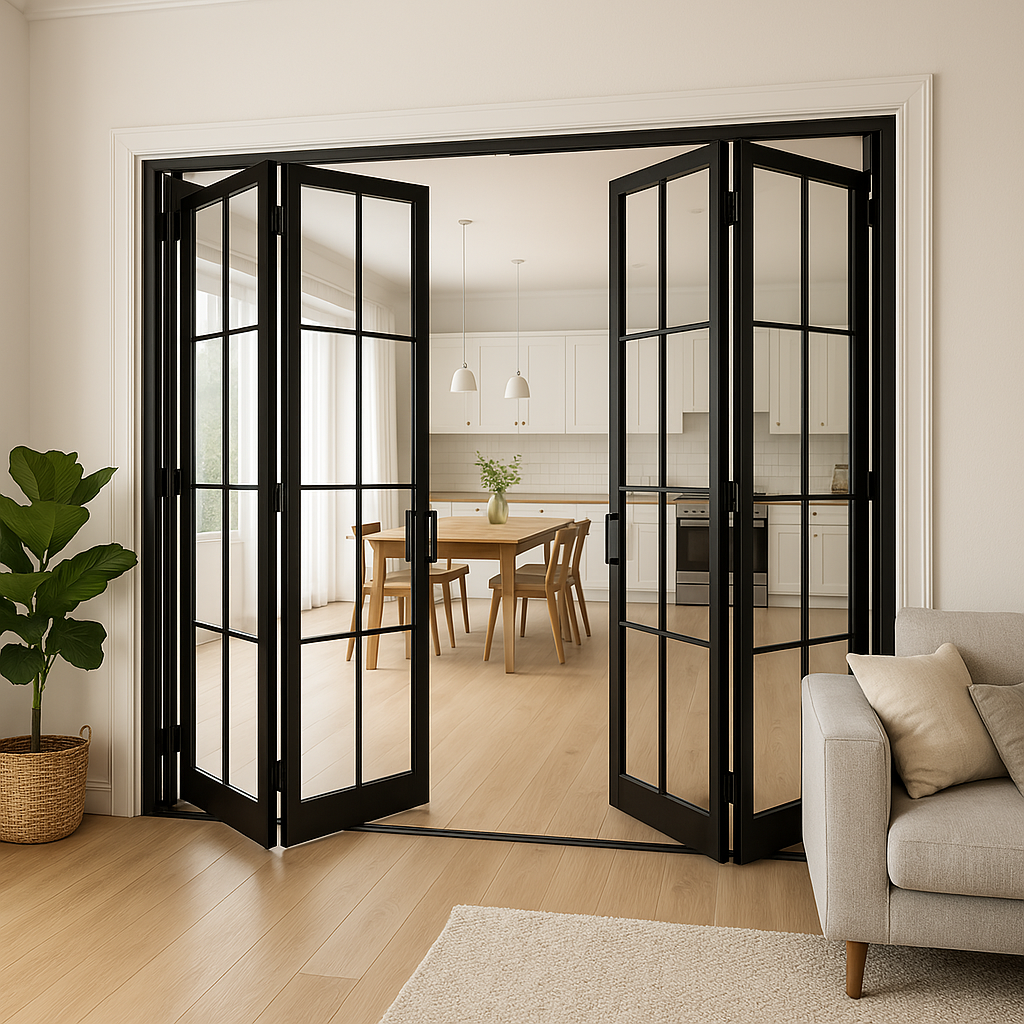
Updated November 2026. How to pick the glass for interior bifold doors: tempered, laminated, frosted, reeded or clear, with the safety rules that apply, a first-time buyer checklist, and what buyers notice when you sell.
The best glass for bifold doors is safety glass, tempered or laminated, in the finish the room needs: frosted or reeded for privacy, clear for light. As of November 2026, building code section 2406.4.1 treats glass in all bifold door panels as a hazardous location, and federal rule 16 CFR 1201 sets the safety standard for glazing in doors.
Updating before a sale? Brighter rooms photograph better. List on the major home search sites and the MLS with every photo your MLS allows and $0 due to Beycome at closing.
Jump to: 🏠 Glass types · 📸 Comparison · ⏱️ Safety rules · 🪜 How to choose · ✅ First-time checklist · ❓ FAQ
Key takeaways
- Section 2406.4.1 of the building code, as shown on UpCodes, treats glass in all panels of bifold doors as a hazardous location.
- Two exceptions: openings too small for a 3-inch sphere to pass, and decorative glazing.
- Tempered glass breaks into small particles; laminated glass holds together on a plastic layer.
- Frosted and clear describe the look. Both can be made from tempered or laminated safety glass.
Glass bifold doors are a good fix for a closet, pantry, laundry nook or home office. They fold out of the way and let light move through a room. The glass you pick decides how safe, private and easy to live with they are. Here’s how we’d choose.
What types of glass work for interior bifold doors with glass?
Think of it as two choices. First, the safety type: how the glass behaves if it breaks. Second, the finish: how much you can see through it.
Tempered glass
Tempered glass is heat-treated or chemically treated. The federal standard, 16 CFR part 1201, defines it as glass that can’t be cut, drilled or ground after treatment without breaking, and that breaks into small particles when highly tempered. That’s why it’s the usual pick for doors where kids and pets run past.
The trade-off: it must be cut to size before tempering. If you’re replacing a panel, measure carefully or order through the door maker.
Laminated glass
Laminated glass is two or more pieces of glass bonded to a plastic layer, per the same federal rule. If it breaks, the pieces tend to stick to that layer instead of falling out. It also dampens sound a little, which helps for a home office door.
Frosted glass
Frosted glass is sandblasted, acid-etched or filmed so light passes but shapes blur. It’s the go-to for bathrooms, laundry rooms and closets you don’t want on display. Ask for frosted tempered or frosted laminated so you get privacy and safety in one panel.
Clear glass
Clear glass gives the most light and makes a small room feel bigger. It suits a dining room, a sunroom or a library wall. It also shows everything behind it, so it works best where the space stays tidy.
Other finishes
Reeded or fluted glass has vertical ribs that blur the view in a softer, more decorative way. Tinted or mirrored panels are less common inside. Whatever the finish, check that the panel is safety glazing.
Which is the best glass for bifold doors? Tempered, laminated, frosted and clear compared
| Glass | What it is | Privacy | Light | Good for |
|---|---|---|---|---|
| Tempered | Safety glass; breaks into small particles | Depends on finish | Depends on finish | Busy hallways, kids, pets |
| Laminated | Safety glass; layers bonded to plastic | Depends on finish | Depends on finish | Offices, quieter rooms |
| Frosted | A finish that blurs the view | High | Medium | Bathrooms, laundry, closets |
| Reeded or fluted | A ribbed finish | Medium | Medium to high | Pantries, dining rooms |
| Clear | A transparent finish | None | High | Living and dining rooms, sunrooms |
In short, safety type and finish aren’t rivals. A frosted tempered panel is common, and so is a clear laminated one.
Do glass bifold doors need safety glass?
In most cases, yes. Section 2406.4.1 of the building code, shown on UpCodes, says glazing in all fixed and operable panels of swinging, sliding and bifold doors is a hazardous location. Hazardous locations require safety glazing. The two exceptions are openings so small a 3-inch sphere can’t pass through, and decorative glazing.
The federal standard, 16 CFR 1201, covers glazing materials used in doors, storm doors, shower and bathtub doors, and sliding patio doors. It exists to reduce serious injuries when glass is broken by human contact.
Your city or county adopts its own version of the building code, so check with the local building department before you swap glass yourself. When you buy a ready-made glass bifold door, the glass should already meet the standard. If you want to read more on what a bifold door is and how it folds, the basics are simple: two or more hinged panels that fold to one side on a top track.
How do you choose the right glass for your bifold doors?
- Start with safety: tempered or laminated, and confirm it’s rated safety glazing.
- Decide on privacy by room: frosted or reeded for bathrooms and laundry, clear for living spaces.
- Think about light: clear glass brightens a dark hall; frosted spreads light without glare.
- Check the frame: wood, aluminum or steel frames change the weight and the track you need.
- Measure the opening, including height, width and floor clearance, before you order.
- Plan for cleaning: clear glass shows smudges; frosted hides them better.
For cleaning tips that work on doors too, see our expert tips to clean window panes. If you’re upgrading windows at the same time, read the advantages of installing high-quality windows and how to keep the unwanted out. For a bathroom refresh, try making your bathroom a room of health and cleanliness.
Sell smarter
List your home on the MLS from $99
A flat fee instead of a percentage, and $0 to Beycome at closing. You stay in control of your sale.
Sell your home →Buy smarter
Get up to 2% back at closing
On homes listed by other agents, Beycome credits you up to 2% of the price at closing (1% kept, $1,499 minimum; not on FSBO homes or homes listed by Beycome sellers).
Buy a home →What should you know before buying a glass door for the first time?
Four checks cover most first-time mistakes: the glass is rated safety glazing, the finish suits the room, the opening is measured three times (height, width, floor clearance), and the track is rated for the door’s weight. The last one is where most problems start.
Glass panels are heavier than hollow wood ones, so the hardware matters. Check that the top track and pivots are rated for the door’s weight. A cheap track that sags will make the panels drag and rub, and that’s where chips start.
Leave the gap the maker asks for at the floor, so the door clears rugs and tile. Fit soft stops or bumpers so panels don’t hit the frame when they fold. If kids use the room, consider a slow-close fitting.
Handles count too. Glass doors need a pull mounted on the frame, not on the glass, unless the panel was made for it. And if you’re cutting a new opening in a wall, that’s a framing job, which may need a permit. Ask a pro if you’re unsure.
Last, think about the rooms on both sides. A frosted panel facing a bright window will glow at night with the lights on. Clear glass into a dark closet can look like a black mirror. Hold a sample up in the space before you order.
Do glass interior doors help when you sell a home?
They can make rooms photograph brighter and feel bigger, which helps online, where most buyers first see a home. They’re a modest project compared with a kitchen or bath. Choosing the best glass for each spot matters more than the number of doors; our guide on how modern glass installations enhance property value covers bigger glass projects.
When you list, mention the doors in your description and show them open and closed in the photos. Our tips on writing listing descriptions that attract buyers help. With a Beycome flat fee MLS listing, your home goes on the major home search sites and the local MLS from $99 in most states, with $0 due to Beycome at closing. For some design inspiration, browse these unusual houses around the world.
Frequently asked questions about glass bifold doors
What glass is used in interior bifold doors?
Usually tempered or laminated safety glass, in a clear, frosted or reeded finish. The building code treats glass in bifold doors as a hazardous location.
What is the best glass for bifold doors?
Tempered or laminated safety glass. Pick the finish by room: frosted or reeded where you want privacy, clear where you want light.
Do interior glass bifold doors need special hardware?
They need a top track and pivots rated for the door’s weight, plus soft stops so panels don’t hit the frame. Glass panels weigh more than hollow wood ones.
Is frosted glass safety glass?
Not by itself. Frosted is a finish. Ask for frosted tempered or frosted laminated glass to get both privacy and safety.
What’s the difference between tempered and laminated glass?
Tempered glass breaks into small particles. Laminated glass is layers bonded to plastic, so broken pieces tend to stay in place.
What should I know before buying a glass door for the first time?
Confirm the glass is safety glazing, pick the finish by room, measure the opening carefully and check the track and frame weight.
Can I replace the glass in a bifold door myself?
Sometimes, but tempered glass can’t be cut after treatment. Order a panel made to size, and check local code rules first.
Are glass bifold doors good for closets?
Yes, with frosted or reeded glass to hide what’s inside. They save swing space and let light into the room.
Code text as shown on UpCodes and the eCFR, read October 2026. Building codes are adopted and amended locally; ask your building department or a glazing contractor before replacing glass. Beycome prices as of November 2026: Basic is $99 in most states and $129 in California and Illinois; “$0 at closing” means no Beycome fee at closing, while other closing costs still apply. Beycome lists in 17 states and DC. General information, not professional advice.
Sources
- 16 CFR Part 1201, Safety Standard for Architectural Glazing Materials, read October 26, 2026.
- UpCodes, section 2406.4.1 glazing in doors, read October 26, 2026.
- Beycome, listing package features, October 2026.
Disclosure & Disclaimer
Beycome provides real estate services through affiliated licensed brokerages and has a commercial interest in the services and business models discussed on this blog. Content reflects Beycome’s perspective and may promote our services; it should not be treated as independent or neutral reporting.
Articles are provided for general informational and educational purposes only, not as financial, tax, legal, or investment advice or a recommendation for your particular situation. Reading this blog does not create a brokerage, advisory, or other professional relationship.
Information, opinions, pricing, service descriptions, and comparisons reflect the sources and information available when an article was published or last updated and may change. Although we aim for accuracy, we do not guarantee that all content is complete, current, or applicable to your circumstances. Laws, market conditions, and service availability vary by location. Examples and estimated savings are illustrative, depend on stated assumptions, and do not guarantee individual results.
Verify relevant information directly and consult qualified professionals before making decisions. Beycome services are subject to applicable agreements, eligibility requirements, and state-specific terms.

