
Updated October 2026. Figures checked against ENERGY STAR’s seal-and-insulate pages and R-value table, NAR’s energy efficiency guide and 2025 Remodeling Impact Report, and EPA radon data, read October 28, 2026.
A comfortable basement makes the whole house easier to heat and cool. As of October 2026, ENERGY STAR says sealing air leaks and adding insulation can save up to 10% on annual energy bills, and its table calls for R10 to R15 sheathing on basement walls in most colder zones. Fix moisture first, then insulate, then finish.
Jump to: 🏠 Why it matters · 🪜 Right order · 📍 R-values by zone · 💲 Savings · 🤝 Buyers · ❓ FAQ
Key takeaways
- Sealing and insulating can cut annual energy bills by up to 10% (ENERGY STAR).
- ENERGY STAR basement wall targets: R5 sheathing or R13 batt in zone 3, R10 or R13 in zones 4A and 4B, R15 or R19 in zones 4C to 8.
- 19% of homeowners who remodeled did it mainly to improve energy efficiency (NAR and NARI, 2025).
- Radon causes about 21,000 lung cancer deaths a year (EPA); test before you finish a basement.
Most owners spend on what they can see: paint, floors, fixtures. The basement gets ignored, yet it sets the tone for the rest of the house. Bring it from cold and damp to dry and steady, and the floors above feel better too.
Why does the basement affect comfort in the whole house?
Because it sits in the ground. Basement walls and floors lose heat to the soil in winter and pick up moisture year round. In many homes, that means warm air leaks out through uninsulated walls, and the furnace or heat pump runs longer to make up for it. The room stays chilly in winter and clammy in summer.
The effect climbs upstairs. A cold basement chills the floor above it. Damp air drifts through the house and feeds musty smells. Our guide on how to reduce moisture in a house covers fans, dehumidifiers and quick fixes for one room. When the lower level holds a steady temperature, upper floors get fewer hot and cold spots, and the heating and cooling system works less. That can stretch the life of equipment and trim energy use.
What’s the right order: moisture, radon, then insulation?
1. Stop the water. Look for damp spots, efflorescence (white crust on concrete), musty odors and water after storms. Check gutters and grading first, since many wet basements start outside. Our guide to basement waterproofing walks through the fixes, and if you’ve had a flood, read these tips to remodel your home after a flood.
2. Test for radon. Radon is a gas from the soil, and basements sit closest to it. EPA calls it the second leading cause of lung cancer and links it to about 21,000 deaths a year. A test kit costs little. Do it before you add walls, because mitigation is easier with open concrete. Our article on radon risks and fixes explains the steps.
3. Seal the air leaks. Rim joists, where the house frame sits on the foundation, are a classic leak. Seal gaps around pipes, wires and the dryer vent too.
4. Insulate. Good basement insulation keeps wall surfaces warmer, which cuts condensation and makes the space feel drier. Panels or rigid foam on the walls also give you a base for drywall, flooring and finishes later.
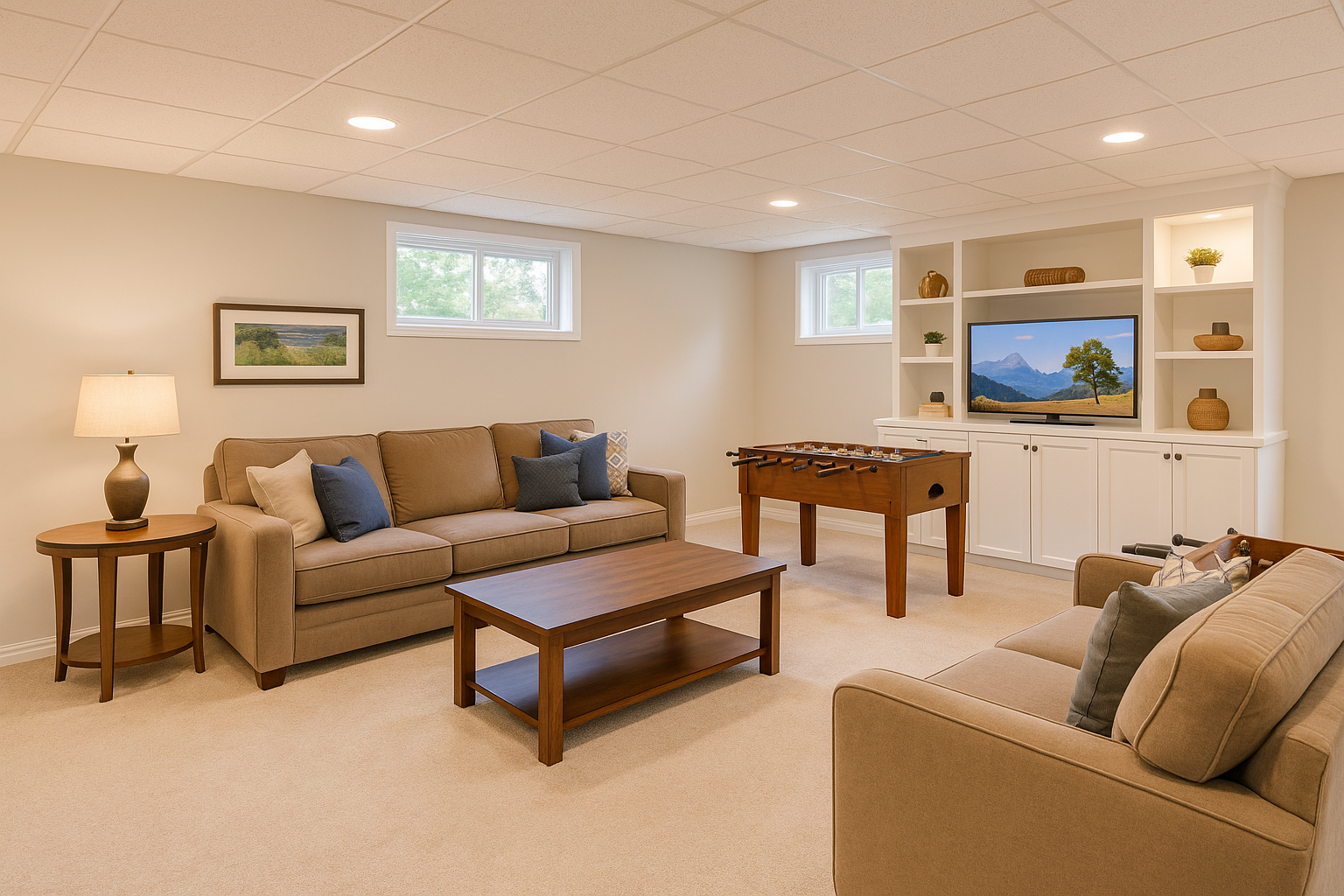
5. Finish. Only now add drywall, flooring and lighting. A dry, insulated basement can become a family room, home office or guest room.
How much basement insulation do you need?
R-value measures how well insulation resists heat flow; higher is better. ENERGY STAR’s recommended levels for basement or crawlspace walls depend on your climate zone.
| Climate zone | Insulative wall sheathing | Or batt insulation |
|---|---|---|
| Zone 3 | R5 | R13 |
| Zones 4A and 4B | R10 | R13 |
| Zones 4C and 5 to 8 | R15 | R19 |
Lower zone numbers are warmer and higher numbers are colder, which is why the targets rise as you go north. Many homes in the warmest areas sit on slabs and have no basement at all. A contractor or energy auditor can confirm your zone and the right product for damp concrete; batts need extra care against moisture.
Sell smarter
List your home on the MLS from $99
A flat fee instead of a percentage, and $0 to Beycome at closing. You stay in control of your sale.
Sell your home →Buy smarter
Get up to 2% back at closing
On homes listed by other agents, Beycome credits you up to 2% of the price at closing (1% kept, $1,499 minimum; not on FSBO homes or homes listed by Beycome sellers).
Buy a home →How much can sealing and insulating save?
ENERGY STAR says sealing and insulating can save up to 10% on annual energy bills. NAR’s energy efficiency guide gives a similar figure: adding insulation in attics, crawl spaces and basements can save an average of 10% on heating and cooling. Pair it with ENERGY STAR’s recommendations on sealing and insulation for the attic, and you’ve covered the two biggest leaks in most homes.
Owners care about this. In NAR and NARI’s 2025 Remodeling Impact Report, 19% of homeowners who remodeled said improving energy efficiency was the main reason. Ask your utility whether it offers an energy audit or rebates before you buy materials. Thinking bigger? Compare solar on the roof versus the ground.
Do buyers notice a comfortable basement?
Rarely by name. Few buyers ask about R-values, but they feel a dry, even temperature and smell the difference on a walk-through. A finished, dry basement reads as a well-kept house. A musty one raises questions about water and mold before anyone opens the inspection report.
Energy features rank with buyers too. NAR’s guide cites its sustainability report: windows, doors and siding are the efficiency features buyers value most, with 37% of Realtors rating them very important. Keep receipts and specs for any insulation work and mention it in your listing. If you’re weighing other upgrades before a sale, see whether to add AC before selling, our house remodeling tips and these recent renovation trends.
Ready to list? A flat fee MLS listing starts at $99 with $0 due to Beycome at closing (Basic is $129 in California and Illinois). Beycome lists homes in 17 states and DC.
Questions about basement comfort and value
Does insulating a basement save money?
Usually. ENERGY STAR says sealing and insulating can save up to 10% on annual energy bills; NAR cites an average 10% on heating and cooling.
What R-value do basement walls need?
ENERGY STAR suggests R5 sheathing (or R13 batt) in zone 3, R10 (or R13) in zones 4A and 4B, and R15 (or R19) in zones 4C to 8.
Should I waterproof before insulating?
Yes. Fix leaks, gutters and grading first. Insulation over a wet wall can trap moisture and lead to mold.
Should I test for radon before finishing a basement?
Yes. Radon comes from the soil, and fixing it is easier before walls go up. EPA links radon to about 21,000 lung cancer deaths a year.
Does a finished basement add value?
A dry, finished basement adds usable space buyers can see. How much it adds depends on your market, so check recent local sales.
Savings and R-values per ENERGY STAR; energy figures per NAR’s Consumer Guide: How to Make Your Home More Energy Efficient; remodeling reasons per NAR and NARI’s 2025 Remodeling Impact Report news release; radon per EPA. All read October 28, 2026. Savings vary by home, climate and energy prices.
Beycome prices as of October 2026. “$0 at closing” means no Beycome fee at closing; other closing costs and taxes still apply. General information, not professional advice.
Sources
- ENERGY STAR, Seal and Insulate, read October 28, 2026.
- ENERGY STAR, Recommended Home Insulation R-Values, read October 28, 2026.
- NAR, Consumer Guide: How to Make Your Home More Energy Efficient, read October 28, 2026.
- NAR, 2025 Remodeling Impact Report news release, read October 28, 2026.
- EPA, Health Risk of Radon, read October 28, 2026.
- Beycome, listing package features, October 2026.
Disclosure & Disclaimer
Beycome provides real estate services through affiliated licensed brokerages and has a commercial interest in the services and business models discussed on this blog. Content reflects Beycome’s perspective and may promote our services; it should not be treated as independent or neutral reporting.
Articles are provided for general informational and educational purposes only, not as financial, tax, legal, or investment advice or a recommendation for your particular situation. Reading this blog does not create a brokerage, advisory, or other professional relationship.
Information, opinions, pricing, service descriptions, and comparisons reflect the sources and information available when an article was published or last updated and may change. Although we aim for accuracy, we do not guarantee that all content is complete, current, or applicable to your circumstances. Laws, market conditions, and service availability vary by location. Examples and estimated savings are illustrative, depend on stated assumptions, and do not guarantee individual results.
Verify relevant information directly and consult qualified professionals before making decisions. Beycome services are subject to applicable agreements, eligibility requirements, and state-specific terms.

