
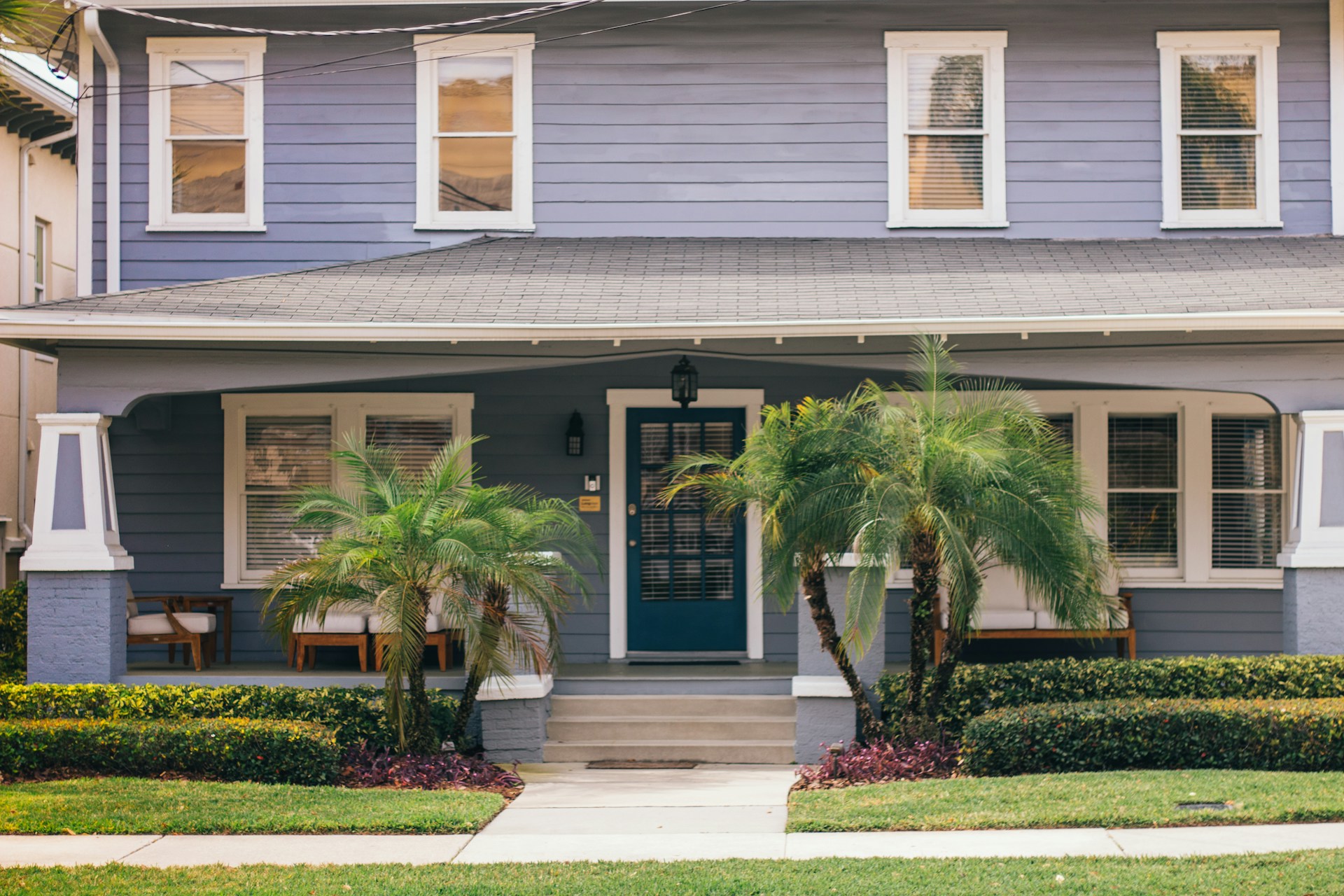
Updated October 2026. Seven design tweaks that change how your house reads from the sidewalk, with figures from Audubon, ENERGY STAR, InterNACHI and county address rules read October 29, 2026.
To make your home stand out from the street, fix what people see first: the roofline, the contrast between body and trim, one strong focal point at the door, house numbers at least 4 inches tall, and warm light after dark. As of October 2026, most of these jobs cost a weekend and a few hundred dollars, not a renovation.
Jump to: 🏠 The street view · 🪜 Roof and color · 🤝 Door and numbers · 📍 Plants and light · 📸 Selling · ❓ FAQ
Key takeaways
- People read a house from the top down: roof, then walls and trim, then the door. Work in that order.
- Many local codes ask for address numbers at least 4 inches high with a half-inch stroke, in a color that contrasts with the wall (San Bernardino County rule, read October 2026).
- An architectural asphalt roof lasts about 30 years and a 3-tab roof about 20, per InterNACHI’s life-expectancy chart.
- Outdoor bulbs at 3000K or warmer look inviting and cut glare (Lynnfield, Massachusetts light-pollution guidance).
What do people notice first from the street?
Stand across the road from your house. Better yet, take a photo from the sidewalk with your phone and look at it small, the size it would be on a listing site. That small picture is the honest test. Details vanish. What’s left is shape, color and light.
In that thumbnail, three things carry the house. The roof is the biggest single surface. The contrast between the walls and the trim tells the eye where the windows and edges are. And the front door is where the eye wants to land. If none of these stands out, the house looks flat, even if it’s spotless.
Curb appeal is the usual name for this first impression, and it isn’t only about selling. You see your house from the street every day you come home. A few deliberate choices make that moment better for you, too.
One rule helps more than any product: pick one focal point. Usually it’s the door. Everything else, from the plants to the lights, should point the eye toward it instead of competing with it. A red door, a red mailbox, red planters and a red bench all at once just look busy.
How do the roof and paint colors change the look?
Look up first. Curled shingles, dark streaks, or a roof color that fights the siding show from a long way off. InterNACHI’s life-expectancy chart puts architectural asphalt shingles at about 30 years, 3-tab asphalt at about 20 and metal at 40 to 80. If your roof is near the end of that range, it may be the tweak that matters most, even though it’s the least fun to pay for.
If you’re in Texas, ARP Roofing is one San Antonio contractor that works on roof upgrades for looks and resale. Wherever you live, get two or three written quotes and compare the same scope: tear-off or overlay, underlayment, flashing, vents and cleanup.
Color also changes how hot the house gets. ENERGY STAR cites Lawrence Berkeley National Lab research: on a typical summer afternoon, a clean white roof that reflects 80% of sunlight stays about 50°F cooler than a gray roof that reflects 20%. Light “cool roof” shingles and metal finishes come in more shades than most people expect, and they work best in hot, sunny places.
Contrast beats bold color
Paint is the quickest way to change the street view. But the trick usually isn’t a loud color. It’s contrast. A charcoal door on a white house. Navy shutters on tan siding. Crisp white trim on a gray body. The eye picks up the edges, and the house suddenly looks sharper in photos. Our guide on staging your outdoor space for a home sale shows how paint and simple styling work together.
Keep it to three colors: body, trim and one accent for the door. Test big swatches on two sides of the house, because north light and afternoon sun can make the same can look like two different colors. Matte or satin on the body, a little more sheen on the trim and door, and you’re done.
How can the front door and house numbers do more work?
The door is where people pause, so make the pause worth it. A deep teal, mustard or black door can become the house’s unofficial logo. If paint isn’t enough, look at the door’s shape and glass. A steel door with frosted glass reads modern. A wood door with a simple window reads warm. New hardware in matte black, brushed brass or hammered copper changes the mood for under $100.
Frame the door so it looks intentional. Two matching planters, a light on each side, or a clean doormat that fits the width of the door all help. Remove the clutter that collects there: old flyers, a broken chair, the bag of salt from last winter.
House numbers are the most ignored detail on most homes. They help guests, delivery drivers and, more importantly, emergency crews. San Bernardino County’s residential rule is typical: numbers at least 4 inches tall with a half-inch stroke, visible from the street, contrasting with their background, and lit at night. If the house sits 50 feet or more from the road, the county asks for a second set at the driveway. Check your own city’s rule, then pick numbers that match your door hardware.
Modern numbers mounted on a plain board, or set vertically beside the door, look sharp and pass the 4-inch test easily. Skip the tiny brass stickers from the hardware store. Nobody can read them from the car.
Sell smarter
List your home on the MLS from $99
A flat fee instead of a percentage, and $0 to Beycome at closing. You stay in control of your sale.
Sell your home →Buy smarter
Get up to 2% back at closing
On homes listed by other agents, Beycome credits you up to 2% of the price at closing (1% kept, $1,499 minimum; not on FSBO homes or homes listed by Beycome sellers).
Buy a home →Which plants and lights make a house look cared for?
Landscaping frames the house like a mat frames a photo. It just has to look alive. Skip the single row of identical shrubs. Mix heights instead: a small tree or two, a few shrubs, then grasses and perennials in front. Odd-numbered groups of three or five look more natural than straight lines.
Choose native plants where you can. Audubon notes that native plants need far less water because they’re adapted to local conditions, and it cites research showing native oak trees support over 500 species of caterpillars, the food songbirds raise their young on. Native plantings also survive a hot August better than a lot of nursery imports, so the yard still looks good in late summer.
Keep the balance. Too manicured looks stiff. Too wild looks abandoned. Edge the beds, add fresh mulch, and trim anything that blocks a window or the house numbers. Two oversized planters at the entry add color without any digging.
Light it after dark
A black driveway and a single harsh porch bulb make even a nice house look closed. Warm path lights, a soft light on a tree, and sconces by the door make the house feel welcoming. Lynnfield, Massachusetts, sums up the neighbor-friendly approach: fully shielded fixtures that point down, only as much light as you need, motion sensors for security lights, and bulbs at 3000K or warmer. For fixture types, see our guide to the main kinds of outdoor lighting.
Light the house numbers, the steps and the door. That’s often enough. A house lit like a parking lot looks less inviting, not more.
Do these tweaks help when you sell?
They help the first photo, and the first photo decides whether people click. Most buyers meet your house on a phone screen before they ever drive by. A clean roofline, sharp contrast, a door that pops and a tidy yard all show up in that small image. Shoot the front on a bright, overcast day or in the hour before sunset, with every exterior light on. Our tips on home photos that upgrade your listing walk through the shots.
If you want a bigger list sorted by budget, our curb appeal tips by budget cover projects from $200 up. For quick weekend jobs indoors and out, try these DIY projects that help your home stand out in the market. Buyers also judge the street around you, which is why many of them read up on signs that a neighborhood is safe before they book a showing.
When the house is ready, you choose how to sell it. Some owners hire a full-service agent. Others compare discount and referral models first, and our Clever reviews look at one of those options. With Beycome, you can list on the major home search sites and the MLS from $99, keep control of your price and showings, and pay $0 to Beycome at closing. More than 22,000+ homeowners have sold this way (Beycome internal data, October 2026).
Questions about making a home stand out
What makes a house stand out from the street?
A clean roofline, clear contrast between walls and trim, one focal point at the front door, readable house numbers and warm light at night. Fix them in that order, from the top down.
How big should house numbers be?
Many local rules ask for at least 4 inches tall with a half-inch stroke, in a color that contrasts with the wall, and visible from the street. San Bernardino County also wants them lit at night. Check your city’s code.
What front door color stands out most?
The one that contrasts with your siding. Black or charcoal on a white house, deep teal or red on gray, and navy on tan all read well from the street. Keep the door the only bold color.
Do native plants really help curb appeal?
Yes. They’re adapted to your climate, need less water and tend to look healthier through the hottest months, per Audubon. They also feed local birds and butterflies.
What color outdoor light bulbs look best?
Warm white, about 3000K or lower. It looks inviting, flatters brick and wood, and cuts glare for neighbors. Use shielded fixtures that point down.
Is a new roof worth it for curb appeal?
If the roof is worn or near the end of its life, it’s the biggest visual fix you can make. InterNACHI lists about 20 years for 3-tab asphalt and about 30 for architectural shingles. Get two or three written quotes first.
Figures come from the sources below, read October 29, 2026. Address-number rules vary by city and county; check yours. Roof life spans are averages, not promises. Beycome Basic is $99 as of November 2026 (Basic is $129 in California and Illinois); $0 at closing means no Beycome fee at closing, while other closing costs still apply. Beycome lists in 17 states and DC. General information, not professional advice.
Sources
- San Bernardino County, Residential Addressing, read October 29, 2026.
- InterNACHI, Standard Estimated Life Expectancy Chart for Homes, read October 29, 2026.
- ENERGY STAR, Cool Roofs, read October 29, 2026.
- Audubon, Why Native Plants Matter, read October 29, 2026.
- Town of Lynnfield, Light Pollution, read October 29, 2026.
- Wikipedia, Curb appeal, read October 29, 2026.
- Beycome, listing package features, October 2026.
Disclosure & Disclaimer
Beycome provides real estate services through affiliated licensed brokerages and has a commercial interest in the services and business models discussed on this blog. Content reflects Beycome’s perspective and may promote our services; it should not be treated as independent or neutral reporting.
Articles are provided for general informational and educational purposes only, not as financial, tax, legal, or investment advice or a recommendation for your particular situation. Reading this blog does not create a brokerage, advisory, or other professional relationship.
Information, opinions, pricing, service descriptions, and comparisons reflect the sources and information available when an article was published or last updated and may change. Although we aim for accuracy, we do not guarantee that all content is complete, current, or applicable to your circumstances. Laws, market conditions, and service availability vary by location. Examples and estimated savings are illustrative, depend on stated assumptions, and do not guarantee individual results.
Verify relevant information directly and consult qualified professionals before making decisions. Beycome services are subject to applicable agreements, eligibility requirements, and state-specific terms.

