
Updated October 2026. For homeowners who want to stop mold before it starts, and sellers who’d rather not find it on a buyer’s inspection report. EPA guidance was read on October 27, 2026.
To prevent mold growth in your home, control moisture. As of October 2026, the EPA’s advice is to keep indoor humidity below 60%, ideally between 30% and 50%, and to dry anything wet within 24 to 48 hours. Do those two things and, in most cases, mold won’t grow. A humidity meter costs about $10 to $50.
Jump to: 🏠 Why mold grows · 🪜 Prevention steps · 📍 Room by room · 🤝 Cleanup or a pro · 💲 Selling a home · ❓ FAQ
Key takeaways
- Mold needs moisture. Keep indoor humidity below 60%, ideally 30% to 50%, per the EPA.
- Dry leaks and spills within 24 to 48 hours. In most cases mold then won’t grow.
- A mold patch under about 10 square feet (roughly 3 feet by 3 feet) is usually a do-it-yourself job.
- Don’t run your HVAC system if you think it’s contaminated with mold. It can spread spores through the house.
Mold spores are everywhere, indoors and out. You can’t get rid of all of them, and you don’t need to. What you can control is water. Every mold problem in a house starts with moisture that sat too long: a slow leak under a sink, a bathroom with no fan, a damp crawl space, a wet carpet after a storm.
Why is mold growing in my home?
The EPA page why mold is growing in my home puts it simply: mold grows where there’s moisture. Wood, drywall paper, carpet backing and dust give it food. Add water and a few days, and it starts.
The usual sources are easy to list:
- Plumbing leaks inside walls, under sinks and behind toilets.
- Roof and window leaks, often slow enough to miss for months.
- Condensation on cold pipes, windows and AC ducts.
- Steam from showers and cooking with no exhaust fan.
- Flooding, sewer backups and wet basements.
- High humidity, which is a fact of life in Florida and the Gulf Coast.
Water damage and mold go together. Our guides to dealing with water damage in your home and how water damage affects property value cover the first hours after a leak.
How can you prevent mold growth?
1. Measure your humidity
Buy a cheap humidity meter. The EPA says they cost about $10 to $50 at hardware stores. Check a few rooms, including the bathroom after a shower and any basement. If you’re over 60%, act.
2. Run fans and a dehumidifier
Exhaust fans in bathrooms and kitchens should vent outside, not into the attic. Run the bathroom fan during and for a while after showers. In a damp basement or a humid climate, a dehumidifier does what a fan can’t. Empty or drain it so it keeps working.
3. Dry water within 24 to 48 hours
This is the EPA’s key number. If wet materials dry within 24 to 48 hours of a leak or spill, in most cases mold won’t grow. Pull up wet rugs, open the space, and use fans. Wet drywall or carpet pad that can’t dry in that window may need to come out.
4. Fix leaks, don’t just wipe them
A mold spot that keeps coming back is a moisture problem, not a cleaning problem. Find the source first. Check under sinks every few months, look at the ceiling below bathrooms, and inspect the attic after heavy rain.
5. Don’t leave damp things lying around
Wet laundry left in the washer, a towel on the floor, a damp gym bag in a closet: all small, all easy to fix. Move wet clothes to the dryer or a line right away, and hang towels where air can reach them.
Where does mold start, room by room?
| Room | Common cause | Simple fix |
|---|---|---|
| Bathroom | Shower steam, no fan, leaky caulk | Vented fan, wipe walls, recaulk |
| Kitchen | Sink leaks, dishwasher hose, cooking steam | Check under the sink, run the range hood |
| Laundry | Wet clothes, dryer vent issues | Dry loads quickly, vent the dryer outside |
| Basement or crawl space | Groundwater, high humidity | Dehumidifier, gutters and grading away from the house |
| Attic | Roof leaks, fans venting into the attic | Fix the roof, extend fan ducts outside |
| Bedrooms and closets | Condensation on cold walls and windows | Air flow, lower humidity |
Bathrooms deserve extra attention. After a shower, wipe down the walls and glass with a dry towel, or use a squeegee. If you can, crack a window. The EPA notes that in places that are often damp, more ventilation and more frequent cleaning will usually keep mold to a minimum. For bungalow-style homes with crawl spaces, see tips to prevent mold in a bungalow house.
When can you clean mold yourself, and when do you need a pro?
The EPA’s mold cleanup guide uses size as the first test. If the moldy area is under about 10 square feet, roughly a 3-foot by 3-foot patch, you can usually handle it yourself. Bigger than that, or after a lot of water damage, the EPA points to its remediation guidance.
Sell smarter
List your home on the MLS from $99
A flat fee instead of a percentage, and $0 to Beycome at closing. You stay in control of your sale.
Sell your home →Buy smarter
Get up to 2% back at closing
On homes listed by other agents, Beycome credits you up to 2% of the price at closing (1% kept, $1,499 minimum; not on FSBO homes or homes listed by Beycome sellers).
Buy a home →If you clean it yourself:
- Fix the water problem first, or the mold comes back.
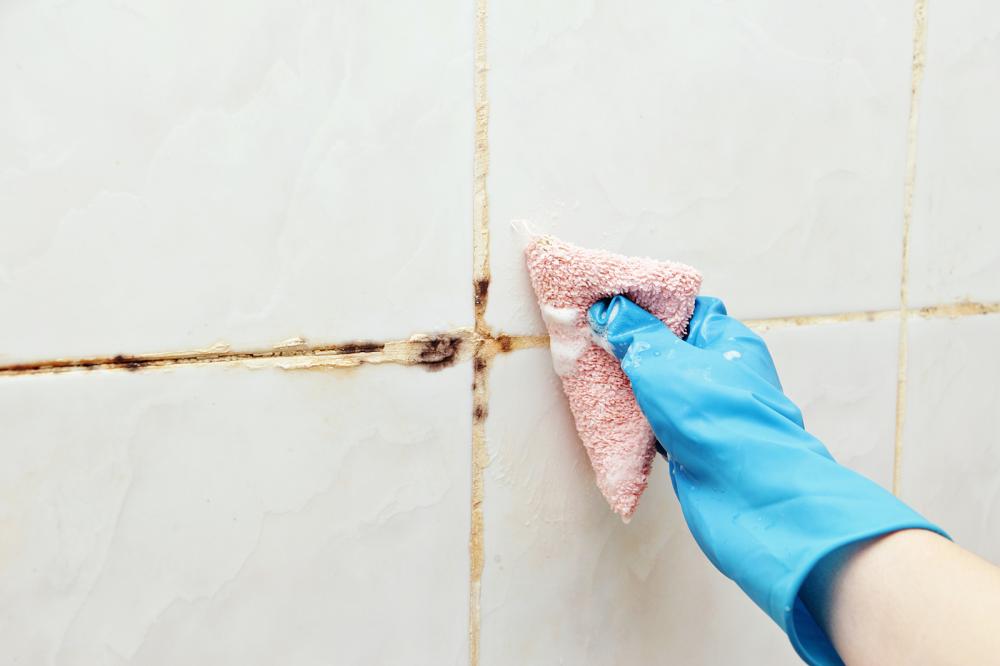
- Scrub hard surfaces with water and detergent, then dry them fully.
- Wear long gloves and goggles without vent holes. Don’t touch mold with bare hands.
- Throw out porous items that stay moldy, like ceiling tiles, carpet or upholstery.
- Don’t run the HVAC system if you suspect it’s contaminated. It can spread mold through the building.
A pro makes sense when mold covers a big area, keeps returning, or seems to be inside walls or ducts. Professional mold remediation and removal can find the moisture source, contain the area and remove damaged materials safely. Our article is mold ruining your house? covers the warning signs.
One common mistake is cleaning the wrong spot. If you can smell mold but can’t see it, look where water travels: behind the fridge, under the dishwasher, at the base of exterior walls. Make sure you know where the mold is growing before you start, or you’ll scrub one spot while the real problem keeps spreading.
What should you do about mold before selling a home?
Buyers’ inspectors look for moisture. Stains on ceilings, a musty basement or soft drywall near a tub will end up in the report, and buyers often ask for a credit or a repair. Dealing with it before you list keeps that conversation short.
- Fix the leak and keep the invoice.
- Clean or remediate the mold, and keep the report if a pro did it.
- Disclose known past problems where your state requires it. Most states expect sellers to share known defects.
- Run a dehumidifier during showings in a damp basement.
Our guide on how to tackle mold before you list your home goes step by step. In Florida, buyers also ask about radon; see radon in Florida and how to fix it.
Ready to list once the house is dry? A flat fee MLS listing puts your home on the MLS for $99 with $0 at closing, with every photo the MLS allows and unlimited listing updates. Concierge is $1,399, with experts who negotiate with you, always on your side, while you stay in control.
Buying instead? Get a full inspection, and read how to inspect appliances when buying a house, since leaks often start there. The Beycome buyer program is open to every buyer on homes listed by other agents (the commission credit can’t apply where no buyer-agent commission is offered, like most FSBO homes, or on homes listed by Beycome sellers). Beycome keeps 1% of the price, minimum $1,499, and credits the rest at closing, with lender approval.
Frequently asked questions about preventing mold
What humidity level prevents mold?
The EPA recommends keeping indoor humidity below 60%, and ideally between 30% and 50%. A $10 to $50 humidity meter tells you where you stand.
How fast does mold grow after a leak?
Quickly. The EPA says to dry wet materials within 24 to 48 hours; if you do, in most cases mold won’t grow.
Can I remove mold myself?
Usually, if the area is under about 10 square feet. Fix the water source, scrub with water and detergent, dry it, and wear gloves and goggles.
When should I call a mold remediation company?
When mold covers more than about 10 square feet, follows major water damage, keeps coming back, or may be in your walls or HVAC system.
Do exhaust fans really help prevent mold?
Yes, if they vent outside. Run bathroom fans during and after showers and use the range hood when cooking.
Do I have to disclose mold when selling my house?
Rules vary by state, but most states expect sellers to disclose known defects. Fix the cause, keep the records, and disclose past problems as your state requires.
Humidity, drying time, cleanup size and safety advice: U.S. Environmental Protection Agency mold pages, read October 27, 2026. Beycome prices as of October 2026; “$0 at closing” means no Beycome fee at closing. Concierge is $1,399 and Basic is $129 in California and Illinois. Buyer credit: minimum $1,499, lender approval, not on FSBO homes or homes listed by Beycome sellers. General information, not medical or legal advice; disclosure rules vary by state.
Sources
- EPA, why is mold growing in my home?, read October 27, 2026.
- EPA, a brief guide to mold, moisture and your home, read October 27, 2026.
- EPA, mold cleanup in your home, read October 27, 2026.
- Beycome, listing package features, October 2026.
Disclosure & Disclaimer
Beycome provides real estate services through affiliated licensed brokerages and has a commercial interest in the services and business models discussed on this blog. Content reflects Beycome’s perspective and may promote our services; it should not be treated as independent or neutral reporting.
Articles are provided for general informational and educational purposes only, not as financial, tax, legal, or investment advice or a recommendation for your particular situation. Reading this blog does not create a brokerage, advisory, or other professional relationship.
Information, opinions, pricing, service descriptions, and comparisons reflect the sources and information available when an article was published or last updated and may change. Although we aim for accuracy, we do not guarantee that all content is complete, current, or applicable to your circumstances. Laws, market conditions, and service availability vary by location. Examples and estimated savings are illustrative, depend on stated assumptions, and do not guarantee individual results.
Verify relevant information directly and consult qualified professionals before making decisions. Beycome services are subject to applicable agreements, eligibility requirements, and state-specific terms.

