
Updated October 2026. A step-by-step plan for a DIY in-ground fire pit, the safety distances fire officials give, Florida’s burn rules, and what a fire feature does for resale. Federal and Florida sources were read on October 28, 2026.
A homemade in-ground fire pit takes a weekend and a few hundred dollars in stone if you plan it right. Call 811 a few business days before you dig, and place the pit 10 to 30 feet from your house, wood piles and propane tanks, as the U.S. Fire Administration advises (read October 2026). Dig about 12 inches deep and 4 feet across, then line it with stone.
Jump to: 📍 Where to put it · 🪜 Build steps · ⏱️ Burn rules · 💲 Resale value · 🏠 Selling · ❓ FAQ
Key takeaways
- The USFA says to keep fire pits, wood piles and propane tanks 10 to 30 feet from your home.
- 811 is free. Contact it a few business days before any digging, even for a small pit.
- Florida’s statewide rules allow recreational fires in a contained outdoor device if someone attends the fire and it’s fully out before you leave.
- NAR’s 2023 outdoor report put a typical fire feature at $9,000, with about 56% of the cost recovered at sale.
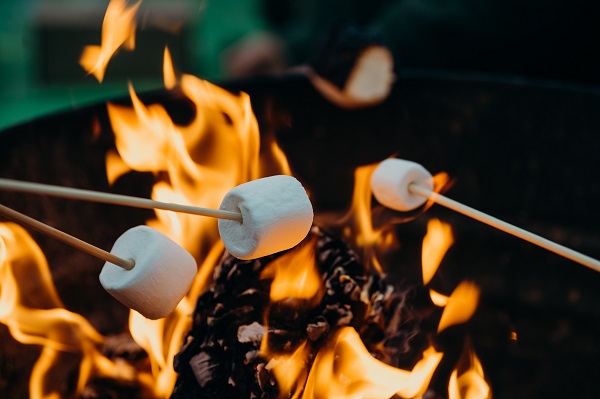
A fire pit gives you the feel of a fireplace outside, with room for everyone around it. S’mores, a late drink, a long talk after the kids go to bed. It’s also one of the cheaper ways to make a backyard feel like a place people want to be. Below is the build we’d follow, plus the rules and resale numbers most DIY guides leave out.
Where should you put a backyard fire pit?
Start with distance. The U.S. Fire Administration’s guidance is to keep fire pits, wood piles and propane tanks 10 to 30 feet from your home. More is better on a windy lot. Pick a flat spot clear of overhanging branches, sheds, fences and the neighbor’s hedge. Look up, too. String lights, pergolas and low palm fronds catch sparks.
Check your city or county code before you commit. Many local fire departments set their own setback, and some cities ban open flames in certain zones. If you’re in an HOA, read the rules. Some allow gas fire tables but not wood-burning pits. A quick call now beats tearing out a finished pit later.
Think about how you’ll use the space. Leave at least a few feet behind each chair so people can stand up and walk around without stepping near the fire. A path from the back door helps at night. If the yard slopes, put the pit on the high side so rain drains away from it.
How do you build an in-ground fire pit step by step?
1. Pick your season. Frozen ground is hard to dig. Early fall, spring and summer are easier. In Florida and Texas, winter is the nicer time to work outside and the season you’ll use the pit most.
2. Call 811. The U.S. Department of Transportation’s advice is to call 811 or visit your state’s 811 site before you dig. The service is free. Locators mark buried gas, power, water and cable lines with paint or flags so you don’t hit one. DOT says people who call before they dig have a 99% chance of avoiding an incident. Plan a few business days for the marks.
3. Gather materials. You’ll need a shovel, a tape measure, a level, gravel for drainage, and stone or fire brick. Larger stones dry-stacked in two or more rows make the wall. Smaller stones or bricks line the inside. Use fire-rated brick or a steel ring for the inner layer where you can. Some river rock holds water and can crack when it heats up.
4. Dig. Once the area is marked and clear, dig a circle about 4 feet across and about 12 inches deep. That’s a common size for four to six chairs. Tamp the bottom flat and add 2 to 3 inches of gravel. It lets rain drain so the pit doesn’t turn into a puddle.
5. Stack and line. Dry-stack the outer stones at least two layers high, checking level as you go. Then set the inner stones or fire brick. Don’t pack the inner layer too tight; leave small gaps for drainage. Some builders add a ring of pavers around the top as a cap and a place to rest a mug.
6. Furnish it. Chairs, a small side table and a lidded metal can for ash. A cover keeps rain and leaves out. A large sheet of outdoor-grade plywood works as a cheap one; just let the pit cool completely before you slide it on. Keep a hose or extinguisher within reach every time you light it.
For more on picking a style, read How To Choose The Top Fire Pit For Your Backyard. If the pit is part of a bigger yard project, 4 Ways To Improve Your Backyard and How To Make Your Backyard Look Stunning have more ideas. Stone lovers may like Beautiful Ways To Incorporate Stone Into Your Kitchen Design too.
What are the rules for backyard fire pits in Florida?
Florida’s statewide rules, as summarized by Wakulla County Fire Rescue, allow recreational burning of vegetative debris and untreated wood in a campfire, outdoor fireplace or “other contained outdoor heating or cooking device.” The condition is simple. Someone must attend the fire at all times, and it must be completely out before you leave. Burn only clean, dry firewood. No trash, no treated lumber, no painted pallets.
Sell smarter
List your home on the MLS from $99
A flat fee instead of a percentage, and $0 to Beycome at closing. You stay in control of your sale.
Sell your home →Buy smarter
Get up to 2% back at closing
On homes listed by other agents, Beycome credits you up to 2% of the price at closing (1% kept, $1,499 minimum; not on FSBO homes or homes listed by Beycome sellers).
Buy a home →Yard-debris burning is a different matter, with bigger setbacks: 150 feet from occupied buildings, 50 feet from public roads and 25 feet from wildlands or brush. Other burning needs a Florida Forest Service permit. Check the Forest Service fire danger map before you light up, since burn bans happen in dry spells. Cities and counties can be stricter, so read your local code as well.
Even in a warm city like Miami, a pit gets plenty of use from December through March. An ugly-sweater night around the fire with s’mores and Mexican hot chocolate is a South Florida winter tradition in a lot of backyards.
Does a fire pit add value to your home?
It adds appeal more than dollars. NAR’s 2023 Remodeling Impact Report on outdoor features, done with the National Association of Landscape Professionals, put the typical cost of a professionally built fire feature at $9,000. REALTORS estimated that about 56% of that cost would come back at sale. That tied the in-ground pool for the lowest recovery among the 11 projects.
| Outdoor project (NAR, 2023) | Typical cost | Cost recovered at sale |
|---|---|---|
| Standard lawn care service | $415 | 217% |
| Landscape maintenance | $4,800 | 104% |
| Outdoor kitchen | $15,000 | 100% |
| Landscape lighting | $6,800 | 59% |
| Fire feature | $9,000 | 56% |
So a DIY pit makes sense mostly for your own enjoyment. The cheaper it is, the better that ratio looks. A $400 weekend build doesn’t have to “pay back” anything. And 92% of REALTORS in the same report said they suggest sellers improve curb appeal before listing. Basic lawn and yard care scored highest on cost recovery, so tidy the whole yard before you spend on extras.
Should you build a fire pit before selling your house?
Only if the yard already looks cared for. A fresh pit in a patchy lawn reads as a weekend project, not a feature. Mow, edge, trim and mulch first. Then stage the pit with four matching chairs and a clean ash-free bowl for the listing photos. Our guide to staging your outdoor space for a home sale covers the shot list.
Investors weighing a yard upgrade on a rental can run the same numbers. Our Rental Property Guide: How to Purchase Your First Rental Property explains how small upgrades fit into rent and resale.
When you’re ready to sell your home in Florida or another covered state, Beycome lists it on the local MLS for a flat fee, in 17 states and DC. Basic is $99 and Enhanced is $399, with $0 at closing. Concierge gives you experts with full support through offers and negotiation while you stay in control. It’s $1,399. Basic is $129 in California and Illinois.
Fire pit questions homeowners ask
How far should a fire pit be from a house?
The U.S. Fire Administration advises 10 to 30 feet from your home, and the same for wood piles and propane tanks. Local codes can require more.
Do I need to call 811 before digging a fire pit?
Yes. 811 is free, and you should contact it a few business days before any digging so buried utility lines get marked.
How deep should an in-ground fire pit be?
About 12 inches deep and 4 feet across is a common size, with 2 to 3 inches of gravel at the bottom for drainage.
Are backyard fire pits legal in Florida?
Statewide rules allow recreational fires in a contained outdoor device if the fire is attended and fully out before you leave. Your city or county may add rules.
Does a fire pit increase home value?
Some. NAR’s 2023 report estimated a $9,000 fire feature recovers about 56% of its cost at sale. A cheap DIY pit is mostly for your own enjoyment.
What should I not burn in a fire pit?
Burn only clean, dry, untreated wood. Skip trash, painted or treated lumber and pallets.
Distance guidance per the U.S. Fire Administration. 811 facts per the U.S. DOT and 811beforeyoudig.com. Florida recreational fire and yard-debris rules per Wakulla County Fire Rescue’s summary of statewide regulations. Cost and cost-recovery figures per NAR and NALP’s 2023 Remodeling Impact Report: Outdoor Features, as reported by Florida Realtors and GAAR. All read October 28, 2026. Build sizes are common practice, not code. Check local rules; general information, not legal advice.
Beycome prices as of October 2026. “$0 at closing” means no Beycome fee at closing; other closing costs still apply.
Sources
- U.S. Department of Transportation, Call 811 Before You Dig (linked above), read October 28, 2026.
- 811 Before You Dig, read October 28, 2026.
- U.S. Fire Administration, Keep Fire Pits, Propane Tanks Away From Your Home, read October 28, 2026.
- Wakulla County Fire Rescue, Burning Regulations, read October 28, 2026.
- Florida Realtors, NAR: 9 Out of 10 Realtors Tout Curb Appeal, read October 28, 2026.
- GAAR, NAR Remodeling Impact Report: Outdoor Features, read October 28, 2026.
- Beycome, listing package features, October 2026.
Disclosure & Disclaimer
Beycome provides real estate services through affiliated licensed brokerages and has a commercial interest in the services and business models discussed on this blog. Content reflects Beycome’s perspective and may promote our services; it should not be treated as independent or neutral reporting.
Articles are provided for general informational and educational purposes only, not as financial, tax, legal, or investment advice or a recommendation for your particular situation. Reading this blog does not create a brokerage, advisory, or other professional relationship.
Information, opinions, pricing, service descriptions, and comparisons reflect the sources and information available when an article was published or last updated and may change. Although we aim for accuracy, we do not guarantee that all content is complete, current, or applicable to your circumstances. Laws, market conditions, and service availability vary by location. Examples and estimated savings are illustrative, depend on stated assumptions, and do not guarantee individual results.
Verify relevant information directly and consult qualified professionals before making decisions. Beycome services are subject to applicable agreements, eligibility requirements, and state-specific terms.

