
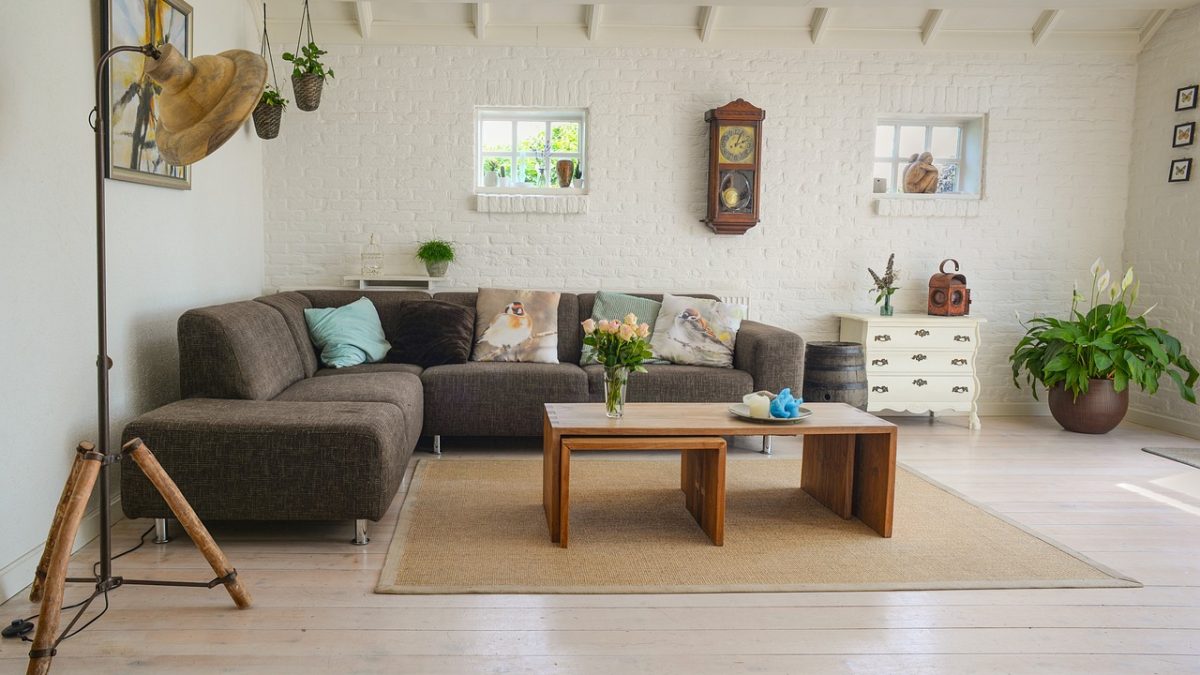
Updated November 2026. An interior designer helps you find your own style. A home stager helps buyers see theirs. If you’re selling, that difference decides who you hire. BLS, NAR’s 2025 Profile of Home Staging and Florida Statutes read November 12, 2026.
Before you sell, hire a home stager, not an interior designer, unless the house needs real design work first. A stager sets up rooms for photos and showings; a designer plans spaces for the people who’ll live in them. As of November 2026, NAR’s latest staging report puts the median cost of a staging service at $1,500, and 29% of sellers’ agents saw offers rise 1% to 10%.
Jump to: 🏠 The difference · 💲 Costs · 📈 Does staging work · 🛋️ Which rooms · 🎨 When a designer helps · ❓ FAQ
Key takeaways
- Designers serve the owner’s taste and daily life. Stagers serve the next buyer’s first impression.
- Median cost of a staging service: $1,500, or $500 when the agent stages the home (NAR 2025).
- Living room (37%), primary bedroom (34%) and kitchen (23%) are the rooms buyers’ agents say matter most to stage.
- Interior designer licensing varies by state. Florida exempts residential interior design from licensing.
- Photos carry the listing: 73% of buyers’ agents called listing photos highly important to their clients.
What is the difference between an interior designer and a home stager?
Who they work for. An interior designer works for you, in the home you’ll keep. The Bureau of Labor Statistics says interior designers make indoor spaces functional, safe and beautiful. They choose colors, lighting and materials, read blueprints, follow building codes and work with architects and contractors. A good one helps you find your personal style and builds rooms around how you live.
A home stager works for the sale. The goal is a home that looks clean, roomy and neutral in photos and in person, so buyers can picture their own life there. A stager often removes things more than adds them, then brings in furniture, rugs and art for a few weeks or months.
| Interior designer | Home stager | |
|---|---|---|
| Works for | You, and how you live | The sale, and the next buyer |
| Typical work | Layouts, finishes, lighting, furniture you keep | Decluttering, rented furniture, arranging for photos |
| Timeline | Weeks to months | Days before listing photos |
| Licensing | Varies by state | No state license in most places |
| Best for | A home you’ll stay in, or one that needs a redesign to sell | A home that’s ready, but doesn’t show well |
The stager licensing row is a general observation, not a state-by-state survey. For a designer, the BLS notes that some states license the work, some only the title “interior designer,” and some neither. Florida is one that exempts homes: under Florida Statutes 481.229(6)(a), the interior design licensing rules don’t apply to interior design or decorator services for any residential application.
How much does home staging cost compared with a designer?
Staging usually costs less, because it’s short-term. NAR’s 2025 Profile of Home Staging found that the median cost of using a staging service was $1,500. When the seller’s agent handled the staging, the median was $500. Who paid varied: 23% of sellers’ agents said they offer to stage the home themselves, and 17% said the seller pays.
Design fees are harder to pin down. Each designer sets a fee structure, and the furniture and finishes are usually extra. For context on what the field earns, the BLS puts the median annual wage for interior designers at $67,190 in May 2025. Ask any designer for a written proposal with the fee basis, what’s included and who orders the furniture.
Does staging help sell a house?
It helps many sales, though not all. In NAR’s 2025 report, 29% of sellers’ agents said staging led to a 1% to 10% increase in the dollar value offered. Almost half (49%) said it cut the time on market. Among buyers’ agents, 83% said staging made it easier for a buyer to picture the home as their own.
The same report shows limits. Sixty percent of buyers’ agents said staging affected some buyers, but not always, and 12% said it had no effect. More than half of sellers’ agents (51%) didn’t stage before listing; they told sellers to declutter and fix faults instead. That’s the floor every seller can reach for free. Our post on whether home staging helps sell a house goes deeper on the data, and vacant vs lived-in staging plans covers the setup.
Which rooms should you stage first?
Start with the rooms buyers care about most. NAR’s buyers’ agents ranked them like this in 2025:
- Living room, 37%.
- Primary bedroom, 34%.
- Kitchen, 23%.
The guest bedroom came last, at 7%. Sellers’ agents staged the living room most often (91%), then the primary bedroom (83%), dining room (69%) and kitchen (68%). If your budget covers one room, make it the living room. If you’re still living in the house, our guide to staging a house while living in it works room by room.
Watch the TV effect. In the same report, 48% of agents said buyers expected homes to look like they were staged on TV, and 58% said buyers were let down by how homes looked compared with those shows. Good light and empty counters do more than one dramatic accent wall.
When does it make sense to hire an interior designer before selling?
When the problem is the house, not the furniture. A dark layout, a dated bathroom or a kitchen that doesn’t flow are design problems. A designer can plan a fix that a stager can’t. Hire one for a short, scoped job, like choosing paint, lighting and finishes for a pre-listing refresh, and keep the bill small.
Sell smarter
List your home on the MLS from $99
A flat fee instead of a percentage, and $0 to Beycome at closing. You stay in control of your sale.
Sell your home →Buy smarter
Get up to 2% back at closing
On homes listed by other agents, Beycome credits you up to 2% of the price at closing (1% kept, $1,499 minimum; not on FSBO homes or homes listed by Beycome sellers).
Buy a home →Choose a designer the way you’d choose any pro. Look at a portfolio of finished homes, not only renderings. Ask for references and a written scope. A residential interior designer should be able to show past projects in homes like yours. In states that license the title, check the license. And remember the BLS point: designers coordinate with contractors, but in Florida, section 481.229 says a designer can’t act as a contractor without a contractor license.
Staying put instead? Then the designer is the right call, and your own taste should lead. Our posts on designing your own home and interior design trends for 2026 help you start, and enhancing your home decor shows how to tone it down later to sell.
How do staging and photos work together?
Staging is for the camera first. In NAR’s 2025 report, 73% of buyers’ agents called listing photos highly important to their clients. Most buyers will see your rooms online before they see them in person.
Every Beycome package puts your listing on the major home search sites and the MLS with the maximum number of photos your MLS allows. Basic is from $99 in most states ($129 in California and Illinois), and you can add a professional photo shoot for $189. Enhanced ($399) includes a photo session with 25 professional HD pictures. You can add, swap or reorder photos from your dashboard at any time, even after staging changes. Our FAQ shows how to change the order of your listing photos. Thinking of skipping the rented furniture? Read our guide to virtual staging tools and listing photo tips and MLS rules.
Want an expert with you on pricing, showings and offers whenever you need it? Concierge is $1,399, and every decision stays yours. See the listing packages, with $0 due to Beycome at closing. 22,000+ homeowners have used Beycome (Beycome internal data, October 2026).
Interior designer or stager: questions
Do I need an interior designer or a stager to sell my house?
Usually a stager, or simply a good declutter. A designer helps only when the house itself needs design changes before it can sell.
What is the difference between an interior designer and a home stager?
A designer plans rooms for the people who will live there. A stager prepares rooms for photos and showings so buyers can picture themselves in the home.
How much does home staging cost?
The median cost of a staging service was $1,500 in NAR’s 2025 Profile of Home Staging, or $500 when the seller’s agent did the staging.
Does staging help sell a house?
Often. 29% of sellers’ agents saw a 1% to 10% higher offer and 49% saw less time on market when homes were staged (NAR, 2025).
Which rooms should I stage when selling?
The living room first, then the primary bedroom and kitchen. Those three topped buyers’ agents’ list in NAR’s 2025 report.
Do you need a license to be an interior designer in Florida?
Not for homes. Florida Statutes 481.229(6)(a) exempts interior design and decorator services for any residential application from the licensing rules.
Staging figures per NAR’s 2025 Profile of Home Staging press release (May 6, 2025); survey of Realtors, February 2025. Designer duties, pay and licensing per BLS Occupational Outlook Handbook; Florida exemption per Florida Statutes 481.229 (2025). All read November 12, 2026. Stager licensing note is a general observation. General information, not legal advice.
Prices as of November 2026: Basic from $99 ($129 in California and Illinois), pro photo option $189 on Basic, Enhanced $399, Concierge $1,399. “$0 at closing” means no Beycome fee at closing; taxes and other closing costs still apply. Beycome lists in 17 states and DC.
Sources
- NAR, 2025 Profile of Home Staging press release, read November 12, 2026.
- BLS, Occupational Outlook Handbook: Interior Designers, read November 12, 2026.
- Florida Statutes 481.229, Exceptions; exemptions from licensure, read November 12, 2026.
- Beycome, listing package features, read November 12, 2026.
Disclosure & Disclaimer
Beycome provides real estate services through affiliated licensed brokerages and has a commercial interest in the services and business models discussed on this blog. Content reflects Beycome’s perspective and may promote our services; it should not be treated as independent or neutral reporting.
Articles are provided for general informational and educational purposes only, not as financial, tax, legal, or investment advice or a recommendation for your particular situation. Reading this blog does not create a brokerage, advisory, or other professional relationship.
Information, opinions, pricing, service descriptions, and comparisons reflect the sources and information available when an article was published or last updated and may change. Although we aim for accuracy, we do not guarantee that all content is complete, current, or applicable to your circumstances. Laws, market conditions, and service availability vary by location. Examples and estimated savings are illustrative, depend on stated assumptions, and do not guarantee individual results.
Verify relevant information directly and consult qualified professionals before making decisions. Beycome services are subject to applicable agreements, eligibility requirements, and state-specific terms.

