
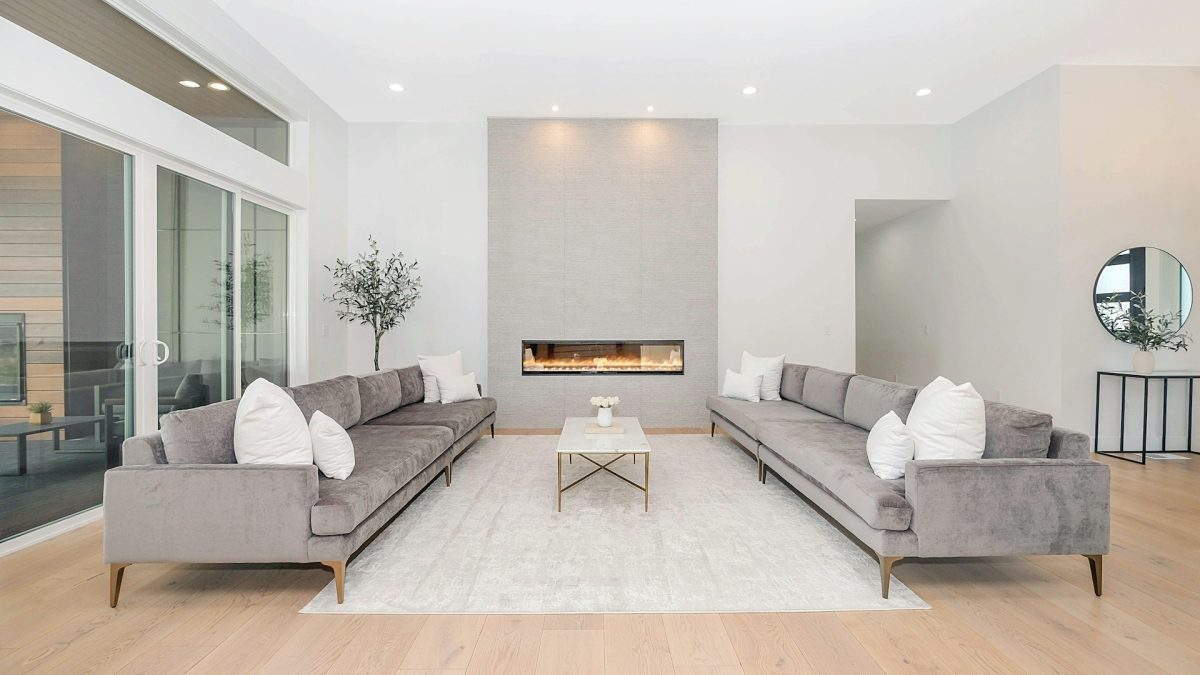
Updated November 2026. A buyer’s checklist for rugs in the living room: construction, fiber labels, what to check on a retailer’s page, and how rugs help when you stage a home for sale.
Rugs in a living room work best when they’re big enough for the front legs of the sofa and chairs, usually an 8×10, and built for the room’s traffic. As of November 2026, U.S. rug labels must list each fiber by percentage of weight under FTC textile rules, so the label tells you more than the photo. Wool and nylon wear best.
Getting the room ready to sell? Clean floors and the right rug help your listing photos, and a flat fee MLS listing puts them in front of buyers from $99 in most states.
Jump to: 🏠 Layout · 📍 Open plan · 🪜 How it’s made · 🏠 Fiber labels · 💲 Shopping online · 📸 Rugs and selling · ❓ FAQ
Key takeaways
- FTC rules cover “rugs, carpets and mats”: labels must give fiber names and percentages by weight, with a 3% tolerance.
- Fibers under 5% of the weight can be grouped as “other fiber”, so a “wool blend” may be mostly synthetic. Read the numbers.
- Hand-knotted rugs last longest; tufted and machine-made rugs cost less and suit busy rooms.
- The living room is the room most often staged for a sale: 91% of sellers’ agents who stage named it in NAR’s 2025 Profile of Home Staging.
An area rug in a living room does real work. It quiets echoes, protects floors and pulls a seating group together. It’s also one of the easiest things to buy wrong, because two rugs that look the same in a photo can be built very differently. This guide is about choosing the rug itself. For sizes and layouts, see our living room area rug size guide.
What should you decide before you shop for a living room rug?
Three things: the size, the job and the budget. Size comes from your seating group. In most living rooms an 8×10 lets the front legs of the sofa and chairs sit on the rug. Small rooms often take a 5×8; large or open rooms a 9×12.
The job is about traffic and mess. A rug in front of the TV in a home with kids and a dog needs to handle spills and grit. A rug in a quiet formal room can be softer and more delicate. Be honest about which one you have.
Set the budget last, once you know the size and the fiber you need. A cheap rug that flattens in a year costs more than a good one that lasts ten.
How should an area rug sit in a living room?
Living rooms with area rugs usually follow one of three layouts. Pick the one your room and budget allow:
| Layout | What it looks like | Works best |
|---|---|---|
| All legs on | Sofa, chairs and tables sit fully on the rug | Large rooms; a 9×12 or bigger |
| Front legs on | Front legs on the rug, back legs on the floor | Most rooms; usually an 8×10 |
| Floating | A smaller rug under the coffee table only | Small rooms or a tight budget; can look undersized |
Leave a border of bare floor around the rug, roughly 8 to 18 inches in most rooms, so it doesn’t look like wall-to-wall carpet. A rug that’s too small is the most common mistake. When in doubt, go one size up. Our area rug size guide has the measuring steps.
What matters for a rug in an open-concept living and dining area?
In an open plan, each rug marks a zone. The living rug anchors the seating group, and a separate dining rug sits under the table. Key factors to weigh:
- Size each rug to its zone, not to the whole room.
- Under a dining table, let the rug run about 24 inches past the table edge, so chairs stay on it when pulled out.
- Pick a flatweave or low pile under the table; it’s easier to clean and chairs slide.
- Coordinate the two rugs with one shared color or a similar pattern scale. They don’t need to match.
- Keep a clear walkway of bare floor between zones.
How is a rug made, and why does it matter?
Flip the rug over. The back tells you how it was built, and that predicts how long it will last.
| Construction | How to spot it | Lasts | Good for |
|---|---|---|---|
| Hand-knotted | The pattern shows clearly on the back; fringe is part of the rug | Decades with care | Main living rooms, heirloom pieces |
| Hand-tufted | A canvas or felt backing glued on the back | Several years | Plush looks at a mid price |
| Flatweave | No pile; looks almost the same on both sides | Long, and reversible | Busy rooms, under dining tables |
| Machine-made (power-loomed) | Very even pattern; fringe often sewn on | Varies with fiber | Budget rooms, rentals, staging |
| Washable | Thin, low pile, often a separate pad | Shorter, but easy to clean | Pets, kids, entryways |
Pile height matters too. Low pile is easy to vacuum and lets chairs roll. High pile and shag feel soft but trap crumbs and show footprints. In a living room with a coffee table and people walking through, low to medium pile is the safe choice.
What does the fiber label on a rug tell you?
More than most shoppers know. Under the Textile Fiber Products Identification Act, the FTC says covered products include “rugs, carpets and mats.” The label must give the generic fiber names and their percentages by weight, plus the maker or seller and the country where it was made.
- Fibers are listed from the most to the least by weight.
- Fibers under 5% can be grouped as “other fiber”, so they may not be named one by one.
- The FTC allows a 3% tolerance: a label saying 40% may mean 37% to 43%.
- Backings and pads under rugs aren’t covered, so the label describes the face fiber.
Here’s what each common fiber means for a living room:
- Wool: soft, springy, resists dirt and wears for years. It sheds at first and costs more.
- Nylon: the toughest synthetic, a good pick for kids and pets.
- Polyester: bright colors at a low price, but it flattens faster.
- Polypropylene (olefin): shrugs off spills and fading, feels less plush.
- Cotton, jute and sisal: natural texture and a casual look, but stains are hard to remove.
- Viscose or “art silk”: a silky shine at a low price, but it marks easily and doesn’t like water.
Want ideas for how a rug ties into the rest of the room? Forbes has a roundup of decorative statements for living rooms, and our tips on existing décor schemes help you work with what you already own.
How do you evaluate a rug on a retailer’s website?
Whether you shop a big-box chain like Target, a furniture store or a rug specialist, the product page should answer a few questions. If it doesn’t, ask, or keep looking.
Sell smarter
List your home on the MLS from $99
A flat fee instead of a percentage, and $0 to Beycome at closing. You stay in control of your sale.
Sell your home →Buy smarter
Get up to 2% back at closing
On homes listed by other agents, Beycome credits you up to 2% of the price at closing (1% kept, $1,499 minimum; not on FSBO homes or homes listed by Beycome sellers).
Buy a home →- Exact size in feet and inches, not just “8×10.” Many rugs run a few inches small.
- Fiber content with percentages, matching the FTC label rules above.
- Construction: hand-knotted, tufted, flatweave or machine-made.
- Pile height in inches.
- Care instructions and whether the rug can be spot-cleaned or washed.
- Return window and who pays return shipping. A rolled 9×12 is heavy and costly to send back.
Read reviews that include photos taken in real rooms, and look for comments on shedding, color accuracy and how the rug held up after a few months. Browse a wide range of living room rug options online to compare price per square foot for the same size and fiber. That’s the fairest way to compare two rugs.
Always budget for a pad. A good rug pad stops slipping, adds cushion and protects the floor underneath.
How do you pick a rug color and pattern for a living room?
Pull one or two colors from things that are hard to change: the sofa, the floor or the wall color. A rug that repeats a color from your upholstery makes a room feel finished. A neutral rug gives you room to change pillows and art later.
- Busy patterns hide stains and wear, which helps in family rooms.
- Light solid colors make a small room look bigger but show dirt.
- Dark solids show lint and pet hair.
- Round or oval rugs suit curved sofas and conversation areas.
If the room has wall-to-wall carpet, layer a flatweave or low-pile rug on top to define the seating area. Choosing carpet for other rooms? See our tips on how to choose a carpet for your bedroom.
Do rugs help when you’re selling a house?
They can, if they’re the right size and clean. NAR’s 2025 Profile of Home Staging found that 83% of buyers’ agents said staging made it easier for buyers to picture a home as their own. The living room was the most staged room (91%), ahead of the primary bedroom (83%) and dining room (69%).
- Roll up worn, stained or undersized rugs. A clean floor beats a tired rug.
- Show off hardwood with a rug that leaves a wide border.
- Pick neutral colors for listing photos so the room, not the rug, gets attention.
- Don’t hide floor damage with a rug. Inspectors look, and known defects must be disclosed.
Our home staging tips cover the rest of the room, and floor polishing strategies help the floors around the rug shine. Area rugs are personal property, so they usually leave with you unless the contract says otherwise.
When the living room is ready for photos, a Beycome flat fee MLS listing puts your home on the major home search sites and the local MLS from $99 in most states ($129 in California and Illinois), with $0 due to Beycome at closing, and carries the most photos the MLS allows. More decorating ideas: take your interior design to the next level.
Living room rug FAQ
How do I buy a rug for a living room?
Measure your seating group, decide how much traffic and mess the rug will face, then compare construction and fiber. Check the exact size, fiber percentages and return policy before you order.
Should a rug go under the couch in a living room?
Usually the front legs, yes. That ties the seating group together. In a large room, the whole sofa can sit on the rug.
How do you choose rugs for an open living and dining room?
Use one rug per zone, size each to its furniture, and link them with a shared color. Under the table, go about 24 inches past the edge.
What size area rug works in most living rooms?
An 8×10. It lets the front legs of a sofa and two chairs sit on the rug with bare floor around the edges.
What is the most durable rug fiber for a living room?
Wool and nylon. Wool resists dirt and springs back; nylon is the toughest synthetic and handles kids and pets well.
How can I tell if a rug is good quality?
Look at the back. A clear pattern on the back and fringe that’s part of the rug point to hand-knotting. Dense pile and a fiber label with clear percentages are good signs.
Do I need a pad under a living room rug?
Yes. A pad keeps the rug from slipping, adds cushion and protects the floor underneath.
Should I leave my rugs down for listing photos?
Yes, if they’re clean, neutral and the right size. Roll up worn or undersized rugs and show off good floors.
Rug sizes, construction and fiber notes are general guidance; follow each maker’s care instructions. Labeling rules summarize the FTC’s business guidance on the Textile and Wool Acts. Beycome price as of November 2026 and subject to change: Basic $99 ($129 in California and Illinois). “$0 at closing” means no Beycome fee at closing; taxes, title fees and any agreed buyer-agent compensation still apply. Photo count is the maximum the local MLS allows. General information only.
Sources
- FTC, Threading Your Way Through the Labeling Requirements Under the Textile and Wool Acts, read October 26, 2026.
- NAR, 2025 Profile of Home Staging, read October 26, 2026.
- Beycome, listing package features, November 2026.
Disclosure & Disclaimer
Beycome provides real estate services through affiliated licensed brokerages and has a commercial interest in the services and business models discussed on this blog. Content reflects Beycome’s perspective and may promote our services; it should not be treated as independent or neutral reporting.
Articles are provided for general informational and educational purposes only, not as financial, tax, legal, or investment advice or a recommendation for your particular situation. Reading this blog does not create a brokerage, advisory, or other professional relationship.
Information, opinions, pricing, service descriptions, and comparisons reflect the sources and information available when an article was published or last updated and may change. Although we aim for accuracy, we do not guarantee that all content is complete, current, or applicable to your circumstances. Laws, market conditions, and service availability vary by location. Examples and estimated savings are illustrative, depend on stated assumptions, and do not guarantee individual results.
Verify relevant information directly and consult qualified professionals before making decisions. Beycome services are subject to applicable agreements, eligibility requirements, and state-specific terms.

