
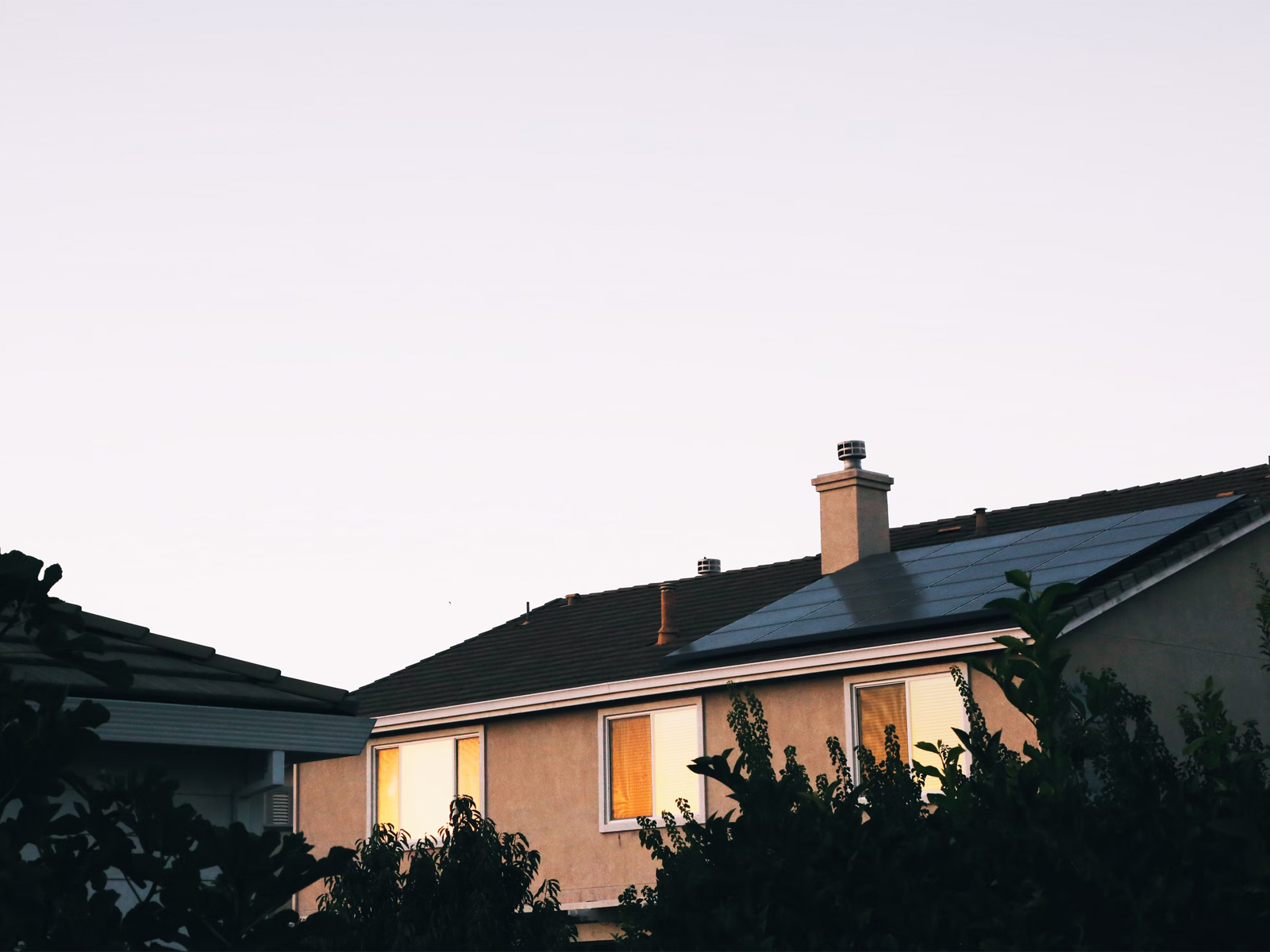
Updated October 2026. How solar works and how to size a home system, with DOE, NREL, EIA and IRS pages read October 30, 2026.
Solar panels turn sunlight into direct current (DC) electricity, and an inverter changes it into the alternating current (AC) your home uses. To size a system, start with your yearly electricity use. The average US home bought 10,791 kWh in 2022, according to the EIA, and NREL’s analyses use a 7.15 kW system as the average home size (DOE, read October 2026).
Jump to: 🏠 How it works · 🪜 System parts · 📸 Sizing · 💲 Money in 2026 · 🤝 Getting started · ❓ FAQ
Key takeaways
- Home solar uses photovoltaic (PV) panels. The other kind of solar power, concentrating solar-thermal, runs power plants, not roofs.
- The average US residential customer used about 899 kWh a month in 2022 (EIA). Your own bill is the number that counts.
- NREL’s average home system is 7.15 kW DC, within a 3 to 11 kW range (DOE).
- The 30% federal Residential Clean Energy Credit isn’t available for systems placed in service after December 31, 2025 (IRS).
If you’re just starting to look into solar, or already looking for solar energy quotes, the jargon gets thick fast. Kilowatts, kilowatt-hours, inverters, net metering. This guide keeps it plain. We cover what happens inside a panel, what’s in a home system, and how to work out the size you need before anyone gives you a sales pitch.
How do solar panels make electricity?
The Department of Energy describes two main solar technologies: photovoltaics (PV) and concentrating solar-thermal power (CSP). PV is what you see on roofs. CSP uses mirrors to focus sunlight and drive turbines at large plants.
Inside a PV panel are many cells, usually made of silicon. When sunlight hits a cell, its energy creates electrical charges that move because of an electric field built into the cell. That movement is electricity. No moving parts, no fuel, no noise.
Panels make the most power in strong, direct sun. They still work on cloudy days, just less. The DOE notes that panels are built to work in all climates. What matters more is how much sun reaches your roof over a full year, and how much shade trees or buildings cast on it.
For a wider look at solar energy facts and figures, Forbes Advisor keeps a long list. Below, we stay focused on your house.
What’s in a home solar system?
A typical grid-tied home system has five parts:
- Panels. They make DC power. Their size is rated in watts; a system’s size is the total, in kilowatts (kW).
- Racking. The mounts that hold panels to the roof or to a frame on the ground.
- Inverter. It turns DC into AC. It can be one central box, or small microinverters under each panel.
- Meter and grid connection. Your utility tracks what you use and what you send back.
- Optional battery. Storage keeps daytime power for the evening or an outage.
Two units confuse almost everyone. A kilowatt (kW) is how big the system is. A kilowatt-hour (kWh) is how much energy it makes or you use over time. Your electric bill is in kWh. A 7 kW system running at full power for one hour would make 7 kWh, but real output changes with sun angle, heat and shade all day.
What size solar system do you need?
Here’s a method you can do at your kitchen table.
- Add up 12 months of kWh from your electric bills. Use a full year, because summer and winter differ a lot.
- Run your address through NREL’s free PVWatts calculator. It estimates how many kWh a system of a given size makes per year where you live.
- Divide your yearly use by the kWh that PVWatts says 1 kW of panels makes at your address. The result is the system size, in kW, that would cover your use.
- Decide how much you want to cover. Some people size for 100%. Others go smaller to fit the roof or the budget.
Here’s an example with made-up output, just to show the math. Say your home uses the 2022 US average, 10,791 kWh a year. If PVWatts said each kW of panels at your address made 1,400 kWh a year, you’d need about 7.7 kW (10,791 ÷ 1,400). Your own number will differ, so run the tool with your address.
| Number | Value | Source |
|---|---|---|
| Average US home electricity use, 2022 | 10,791 kWh a year (about 899 a month) | EIA |
| Highest state average, 2022 | Louisiana, 14,774 kWh | EIA |
| Lowest state average, 2022 | Hawaii, 6,178 kWh | EIA |
| Average system size in NREL analyses | 7.15 kW DC (range 3 to 11 kW) | DOE |
The DOE notes that a 7.15 kW system is, per EnergySage, enough to meet all the energy needs of an average home in Austin, Texas. Your house isn’t average, though. A pool pump, an electric car or a heat pump changes the math. If you plan to add one, size for it now.
Roof space can cap the size. Our guide to putting solar on your roof, or on the ground covers roof age, slope and the ground-mount option.
What does solar cost and save in 2026?
The big change: the IRS says the 30% Residential Clean Energy Credit covered systems installed from 2022 through December 31, 2025, and isn’t available for property placed in service after that date (read October 30, 2026). If you’re buying in 2026, run the numbers without it.
What’s left are state, utility and local programs, plus net metering rules that decide how your utility pays for power you send back. The DOE says net metering depends on your state and your utility, so ask your utility first. We broke down the bill savings in how solar can lower your electricity bills, and what incentives still exist in our 2026 solar incentive guide.
Sell smarter
List your home on the MLS from $99
A flat fee instead of a percentage, and $0 to Beycome at closing. You stay in control of your sale.
Sell your home →Buy smarter
Get up to 2% back at closing
On homes listed by other agents, Beycome credits you up to 2% of the price at closing (1% kept, $1,499 minimum; not on FSBO homes or homes listed by Beycome sellers).
Buy a home →Thinking about solar for resale? Owned systems are simple to explain to buyers. Leased systems come with a contract the buyer must take over or the seller must pay off. Our page on five checks before going solar covers buy vs lease in detail.
How do you get started with home solar?
The DOE recommends a few steps before you sign anything:
- Check your roof’s age, shade, size and slope. Panels do best on south-facing roofs with a slope of 15 to 40 degrees.
- Use a qualified installer. The DOE points to NABCEP certification as the industry standard.
- Get several quotes and compare the same system size and equipment.
- Read the consumer advisories that Treasury, the CFPB and the FTC issued on August 7, 2024, before signing a loan, lease or power purchase agreement.
Don’t own your home, or have a roof that won’t work? Community solar lets several people share one solar array, on or off site, according to the DOE.
Buying a home that already has panels? Ask for the contract, the warranty and 12 months of production data. The Beycome buyer program has no upfront fee and is open to every buyer on homes listed by other agents (the commission credit can’t apply where no buyer-agent commission is offered, like most FSBO homes, or on homes listed by Beycome sellers). Selling one? List with a flat fee MLS package from $99 and put the system details up front. Beycome has helped 22,000+ homeowners save over $225 million (Beycome internal data, October 2026).
Solar energy questions
How do solar panels work, in simple terms?
Sunlight hits silicon cells in the panel and creates an electric current. That current is DC. An inverter turns it into AC, the kind your outlets use.
What size solar system does an average house need?
NREL’s analyses use 7.15 kW as the average home system, within a 3 to 11 kW range. Divide your yearly kWh by what PVWatts says 1 kW makes at your address to get your own size.
How much electricity does a house use per year?
The average US residential customer bought 10,791 kWh in 2022, about 899 kWh a month, per the EIA. Louisiana was highest at 14,774 kWh and Hawaii lowest at 6,178 kWh.
Is the federal solar tax credit still available in 2026?
Not for new systems. The IRS says the 30% Residential Clean Energy Credit doesn’t apply to property placed in service after December 31, 2025. State and utility programs may still help.
Do solar panels work on cloudy days?
Yes, but they make less power. The DOE says panels are built to work in all climates. Yearly sun hours and shade on your roof matter most.
What is net metering?
It’s how your utility credits you for solar power you send to the grid. Rules depend on your state and utility, so ask your utility before you size a system.
General information, not tax or financial advice. Solar output, costs and incentives depend on your location, roof and utility. The sizing example uses an illustrative output figure, not a forecast.
IRS, DOE, NREL and EIA pages as read October 30, 2026.
Prices as of November 2026: Basic $99, Enhanced $399, Concierge $1,399; Basic is $129 in California and Illinois. “$0 at closing” means no Beycome fee at closing; other closing costs, taxes and title fees still apply. Beycome lists in 17 states and DC.
Buyer program: no upfront fee; Beycome keeps 1% of the price (minimum $1,499) and credits the rest of the buyer-agent commission at closing, with lender approval; not on FSBO homes or homes listed by Beycome sellers.
22,000+ homeowners and over $225 million saved: Beycome internal data, October 2026.
Sources
- US Department of Energy, How does solar energy work?, read October 30, 2026.
- US Department of Energy, Homeowner’s guide to solar, read October 30, 2026.
- US Energy Information Administration, How much electricity does an American home use?, read October 30, 2026.
- PVWatts calculator (developed by NREL), read October 30, 2026.
- IRS, Residential Clean Energy Credit, read October 30, 2026.
- Beycome, listing package features, October 2026.
Disclosure & Disclaimer
Beycome provides real estate services through affiliated licensed brokerages and has a commercial interest in the services and business models discussed on this blog. Content reflects Beycome’s perspective and may promote our services; it should not be treated as independent or neutral reporting.
Articles are provided for general informational and educational purposes only, not as financial, tax, legal, or investment advice or a recommendation for your particular situation. Reading this blog does not create a brokerage, advisory, or other professional relationship.
Information, opinions, pricing, service descriptions, and comparisons reflect the sources and information available when an article was published or last updated and may change. Although we aim for accuracy, we do not guarantee that all content is complete, current, or applicable to your circumstances. Laws, market conditions, and service availability vary by location. Examples and estimated savings are illustrative, depend on stated assumptions, and do not guarantee individual results.
Verify relevant information directly and consult qualified professionals before making decisions. Beycome services are subject to applicable agreements, eligibility requirements, and state-specific terms.

