
Updated October 2026. Five ways to clear junk out of a closet, garage or basement without sending it all to the landfill, with the IRS donation rules and EPA waste figures checked this month.
The easiest way to get rid of junk is to sort it into four piles: sell, donate, recycle and haul away. Then deal with each pile in one go. As of October 2026, EPA’s latest data shows Americans throw out 4.9 pounds of trash per person per day, and about 50% of it ends up in landfills, so selling and donating first really does keep stuff out of the ground.
Jump to: 🪜 Sort first · 💲 Sell it · 🤝 Donate it · 🏠 Haul the rest · 📸 Before you move · ❓ FAQ
Clearing junk, in short
- U.S. households and businesses generated 292.4 million tons of municipal solid waste in 2018; 146.1 million tons were landfilled (EPA).
- Donated clothing and household items are deductible only in good used condition or better, and only if you itemize (IRS Publication 526).
- Claiming more than $500 for noncash donations means filling in Form 8283, Section A (IRS).
- A dumpster or junk removal crew is the fastest option for broken furniture, remodel debris and yard waste.
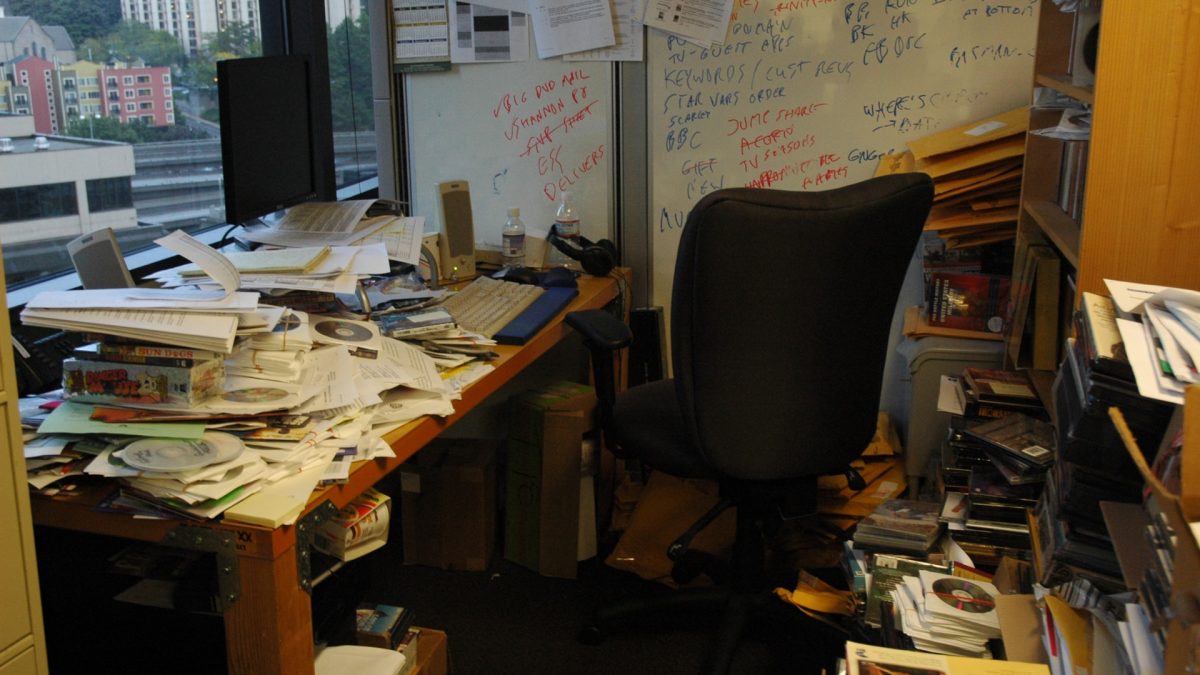
Maybe it’s the closet you can’t shut, or the garage where the car no longer fits. You haven’t touched most of it in years and probably never will. That’s normal. Life gets busy and storage fills up quietly. The hard part isn’t the hauling; it’s deciding. So make the decisions simple and fast, and save the heavy lifting for one weekend.
How should you sort the junk before you start?
Bring four boxes or tarps into the room and label them: sell, donate, recycle, trash. Pick up each item once and put it in a pile. No “maybe” pile. If you can’t decide in ten seconds, it goes to donate.
Work one room or one shelf at a time. A whole basement in a day sounds heroic and usually ends at 4 p.m. with everything spread across the floor. Our 6 Easy Steps to Freeing Up Space in Your Home has a room-by-room order that works well, and if you keep finding more, read Is Junk Piling Up And You Don’t Have A Solution For It? Here’s Some Help.
How do you sell the things worth money?
Host a garage sale

A garage sale clears a lot fast, especially big items: furniture, washers, dryers, couches, fridges. Put bright signs up at the nearest corners the day before. Price everything with stickers so you’re not negotiating every item from scratch. List the sale on Craigslist and local groups with a photo of the best pieces; that brings serious buyers early.
Plan for what’s left. Load the leftovers straight into the car for the donation drop-off that afternoon, so nothing goes back into the garage.
Sell online
For things with real value, online beats a yard sale. Set each item in a bright corner, take two or three clear photos and write an honest description with the price. Facebook Marketplace and local yard sale groups reach people a few miles away who can pick up the same day.
Clothes do well on resale sites like ThredUp and Poshmark. Electronics sell best with the original charger and box. Not everything sells on the first try. Drop the price after a week, and after two, move it to the donate pile.
What can you donate, and can you deduct it?
Most of what’s left is useful to someone. Clothes, shoes, toys, cookware, furniture, appliances and books can all go to charities such as the Salvation Army, Goodwill and Habitat for Humanity. Giving them away keeps them out of landfill sites, and it’s a nice feeling, too.
The scale is real. EPA says 292.4 million tons of municipal solid waste were generated in 2018, about 4.9 pounds per person per day. Only 32.1% was recycled or composted, and about 146.1 million tons went to landfills. Furniture, textiles and appliances all show up in that number.
If you want a tax deduction, the IRS has rules. You can deduct donations to qualified organizations only if you itemize. Clothing and household items must be in good used condition or better. If your noncash donations add up to more than $500, you file Form 8283, Section A. Ask the charity for a receipt at drop-off and snap a photo of what you gave.
Not sure what the house really needs to keep? Our post on Why Having Storage Space Is Useful When Organizing And Cleaning Your Home helps you set up storage so the pile doesn’t come back.
Sell smarter
List your home on the MLS from $99
A flat fee instead of a percentage, and $0 to Beycome at closing. You stay in control of your sale.
Sell your home →Buy smarter
Get up to 2% back at closing
On homes listed by other agents, Beycome credits you up to 2% of the price at closing (1% kept, $1,499 minimum; not on FSBO homes or homes listed by Beycome sellers).
Buy a home →When should you hire a dumpster or junk removal crew?
When the trash pile is bigger than your car, or it’s heavy. Broken furniture, old carpet, remodel debris and yard waste are the usual suspects. Hiring a junk removal service or renting a dumpster turns a month of dump runs into one day.
A rented dumpster sits in the driveway for a few days and you fill it at your own pace. A junk removal crew does the lifting for you. The junk removal pros load it, sort what can be recycled and dispose of the rest responsibly. Ask for a quote by volume and check what they won’t take: paint, chemicals, tires and some electronics often need a separate drop-off.
Doing a remodel at the same time? Our tips on Hassle-Free Ways to Handle Waste During Your Home Remodel cover permits and dumpster sizes.
Should you clear junk before you sell or move?
Yes, and earlier than you think. Clutter makes rooms look smaller in listing photos and buyers notice packed closets during showings. NAR’s 2025 Profile of Home Staging found that 83% of buyers’ agents say staging makes it easier for buyers to picture a home as theirs. Staging starts with empty surfaces and half-empty closets.
Moving costs are usually charged by weight or truck size, too, so every box you sell or donate is one you don’t pay to move. Our checklist of what to check before you move house fits right after the clear-out. Landlords get the same benefit: see Enhancing Rental Property Appeal with Smart Storage Solutions.
When the house is clear, a Beycome flat fee MLS listing starts at $99, with $0 due to Beycome at closing, in 17 states and DC. Every plan includes e-signature, unlimited listing updates and Artur AI, and support runs 7 days a week, with Artur AI 24/7. Buying your next place? The Beycome buyer program has no upfront fee: Beycome keeps 1% of the price (minimum $1,499) and credits the rest of the buyer-agent commission at closing, with lender approval. It’s open to every buyer on homes listed by other agents (the commission credit can’t apply where no buyer-agent commission is offered, like most FSBO homes, or on homes listed by Beycome sellers).
Junk removal questions
What is the easiest way to get rid of junk?
Sort everything into sell, donate, recycle and trash, then handle each pile in one trip. Hire a dumpster or junk removal crew for anything heavy or broken.
Can I deduct donated household items on my taxes?
Only if you itemize and the items are in good used condition or better. Over $500 in noncash donations, you also file Form 8283, Section A (IRS Publication 526).
Where do I sell used furniture fast?
Facebook Marketplace and local yard sale groups work best for local pickup. A garage sale clears large items in a weekend.
Is a dumpster or a junk removal service cheaper?
A dumpster usually costs less if you can do the loading yourself. A junk removal crew costs more but does the lifting. Get quotes for both by volume.
What can’t go in a dumpster?
Paint, chemicals, tires, batteries and some electronics often need a special drop-off. Ask the rental company for its list before you fill it.
Should I declutter before listing my house?
Yes. Clear rooms photograph larger, and 83% of buyers’ agents say staging helps buyers picture the home as theirs (NAR, 2025).
Waste figures: EPA Facts and Figures, data through 2018 (latest published). Tax rules: IRS charitable contribution pages and Publication 526; this is general information, not tax advice. Beycome prices as of October 2026; “$0 at closing” means no Beycome fee at closing (other closing costs, taxes and title fees still apply). Basic is $129 in California and Illinois ($99 elsewhere). Buyer credit: minimum $1,499, lender approval, not on FSBO homes or homes listed by Beycome sellers.
Sources
- EPA, National Overview: Facts and Figures on Materials, Wastes and Recycling, read October 27, 2026.
- IRS, Publication 526, Charitable Contributions, read October 27, 2026.
- IRS, Charitable contribution deductions, read October 27, 2026.
- NAR, 2025 Profile of Home Staging, read October 27, 2026.
- Beycome, listing package features, October 2026.
Disclosure & Disclaimer
Beycome provides real estate services through affiliated licensed brokerages and has a commercial interest in the services and business models discussed on this blog. Content reflects Beycome’s perspective and may promote our services; it should not be treated as independent or neutral reporting.
Articles are provided for general informational and educational purposes only, not as financial, tax, legal, or investment advice or a recommendation for your particular situation. Reading this blog does not create a brokerage, advisory, or other professional relationship.
Information, opinions, pricing, service descriptions, and comparisons reflect the sources and information available when an article was published or last updated and may change. Although we aim for accuracy, we do not guarantee that all content is complete, current, or applicable to your circumstances. Laws, market conditions, and service availability vary by location. Examples and estimated savings are illustrative, depend on stated assumptions, and do not guarantee individual results.
Verify relevant information directly and consult qualified professionals before making decisions. Beycome services are subject to applicable agreements, eligibility requirements, and state-specific terms.
